Many away days may be focused around PowerPoints and presentations, but at our latest away day in York, AccessArt trustees and team members enjoyed a practical making session. We used boats and seascapes as metaphors to explore how AccessArt might best show up in the current climate and serve our arts education community…
One of the things I love most about AccessArt is the extent to which our values are at the heart of how we think, act and make daily decisions. They shape the way we support one another as a team, the way we develop resources and opportunities, and the way we work with teachers, artists and educators. Beyond AccessArt, these core beliefs also describe how we can enable creativity to flourish as a community, whatever our setting or audience.
My role is at its most fulfilling when I can focus on the doing: the creative acts of making and sharing. Sometimes this involves envisioning new projects, working with artists, educators and team members to create new resources, or making new videos to share ideas and build understanding of pedagogy. At these times, it is easy to be guided by our core values, and the work feels productive.
But over the past few years, and especially over the last few months, I have spent an increasing amount of time in what feels like fight mode. There are many reasons why the art education landscape is tough right now, and AccessArt, along with many others, has been campaigning long and hard, using our voice and expertise to try to put things right.
When we are identifying issues, campaigning and speaking out, it can feel as though we’ve shifted from a mode of productive creativity to one of constant vigilance and problem-solving. Watching for threats and seeking solutions is demanding, yet as both a Subject Association and a charity, we have a responsibility to advocate for and defend our subject. In those moments, our organisational values continue to guide everything we do, even if they become less visible.
Our away day in York was a reminder that, at the same time as we campaign and advocate from the top, we must also protect and enjoy the positive energy created when we act as a beacon on the ground, providing a place of value-centred refuge, invention, creativity and hope for the arts education community.
AccessArt Trustees and members of our team used the metaphor of a boat at sea to explore how AccessArt can best navigate the current art education landscape. Together, we considered how our values shape the boat’s structure and character, how our team shows up as its crew, and how the challenges of the surrounding seascape present opportunities to realign with our vision and better serve the AccessArt community.
Our values and aspirations were at the centre of our thinking:
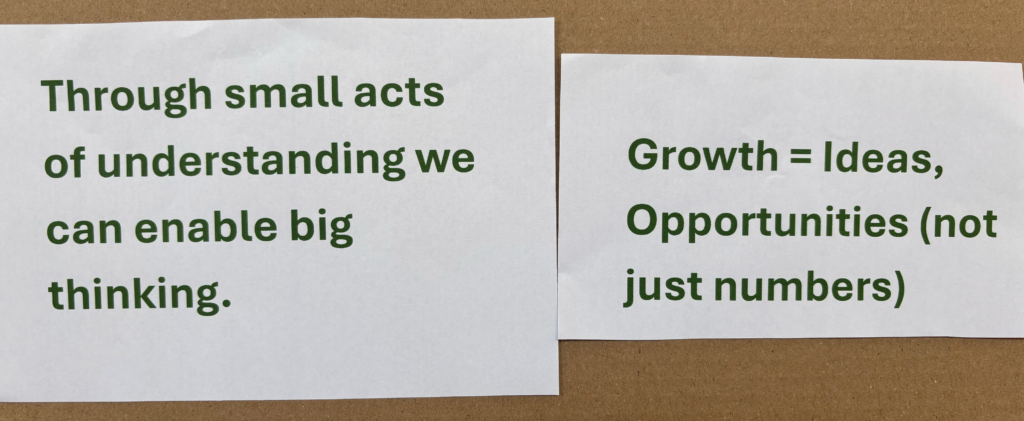
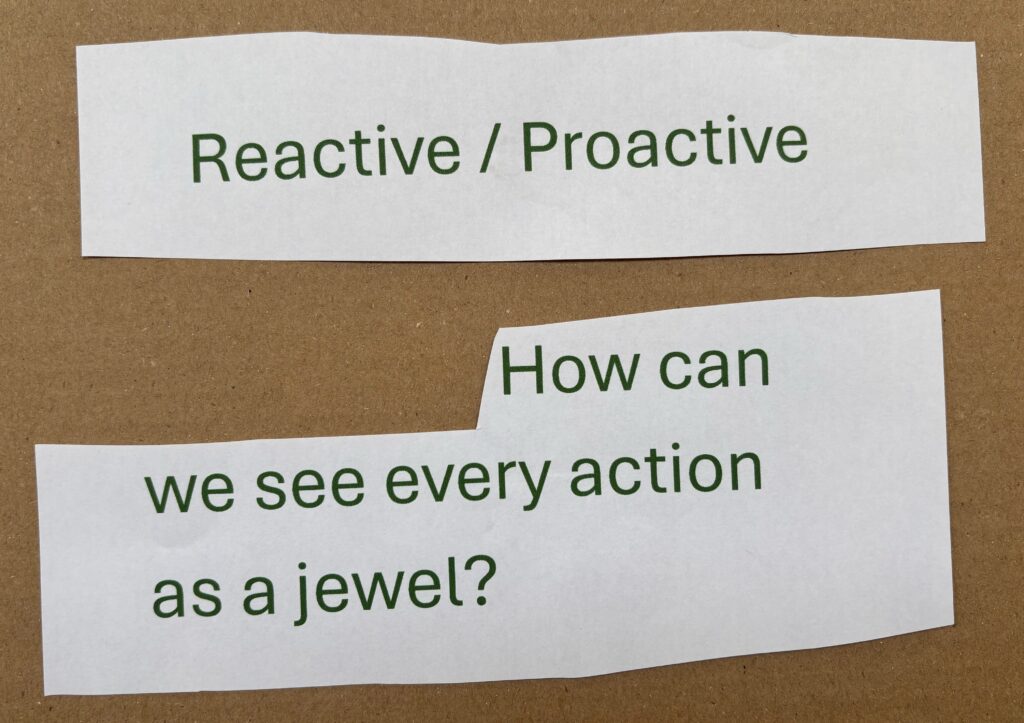
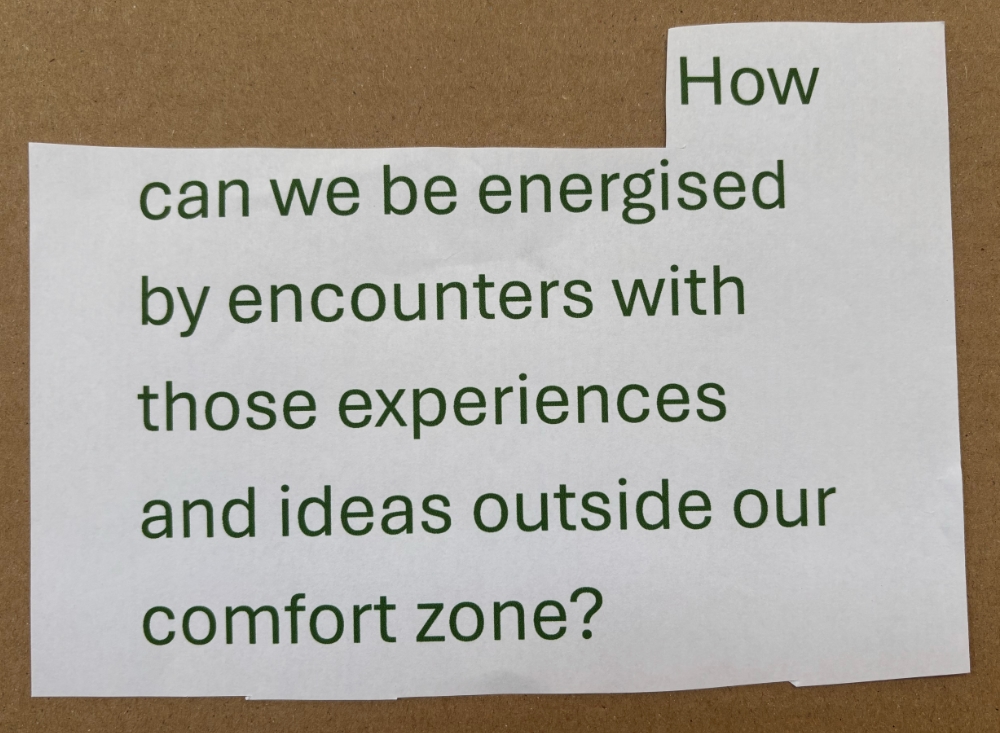
We asked ourselves metaphor-rich questions, for example:
• “If AccessArt is a boat, how do our values appear as structural, practical and necessary elements?”
• “What are we navigating by?”
• “What would a safe but ambitious passage look like?”
• “What should remain our north star?”
• “What is the weather doing around us?”
• “What is happening beneath the surface?”
• “What storms have we already weathered?”
• “What is changing with the tide?”
• “Which values keep us afloat?”
• “Which values protect the crew?”
• “Which values give us courage to enter open water?”
• “How do our values become useful in rough weather?”
• “Who is on deck?”
• “Who is watching the horizon?”
• “Who is tending the engine?”
• “Who is making sure the crew is nourished?”
• “Where do we need more hands?”
• “What skills are already aboard?”
• “What do we need from each other for the next part of the journey?”
• “Where is our harbour?”
• “What helps us recover after a storm?”
• “What are we carrying that is too heavy?”
• “What would sustainable speed feel like?”
• “How do we know when to pause?”
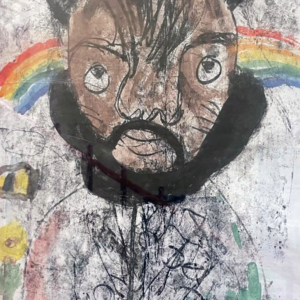
We each drew versions of the boat we would never want AccessArt to become. This helped us clarify and share what was important to us as individuals.
AccessArt would never become a cargo ship…
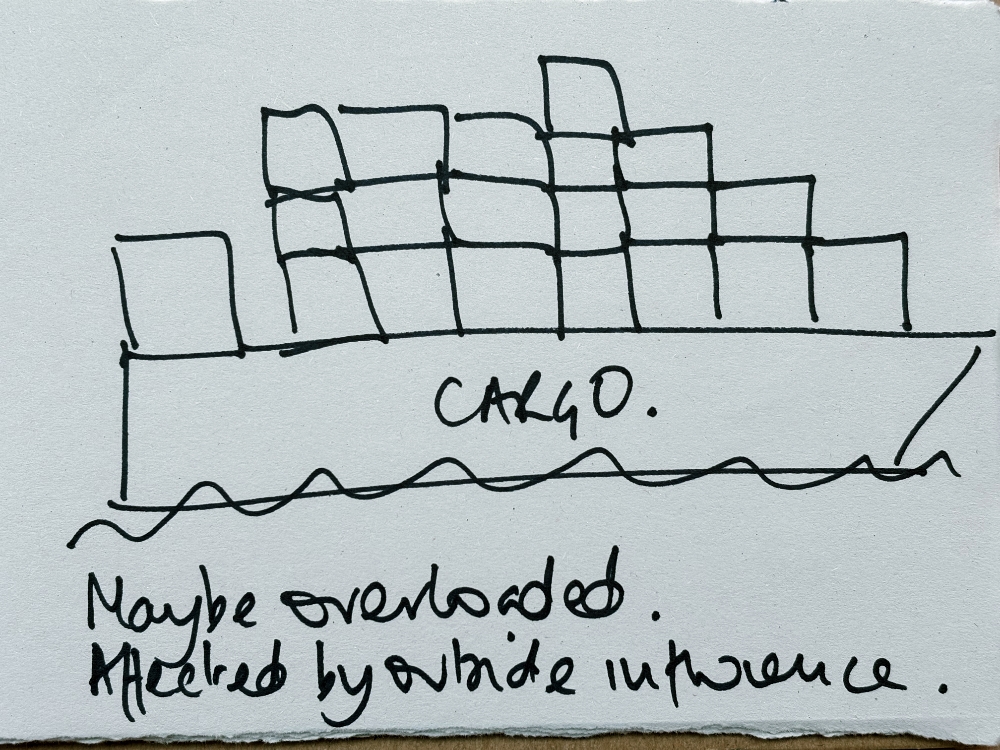
Or a cruise ship…
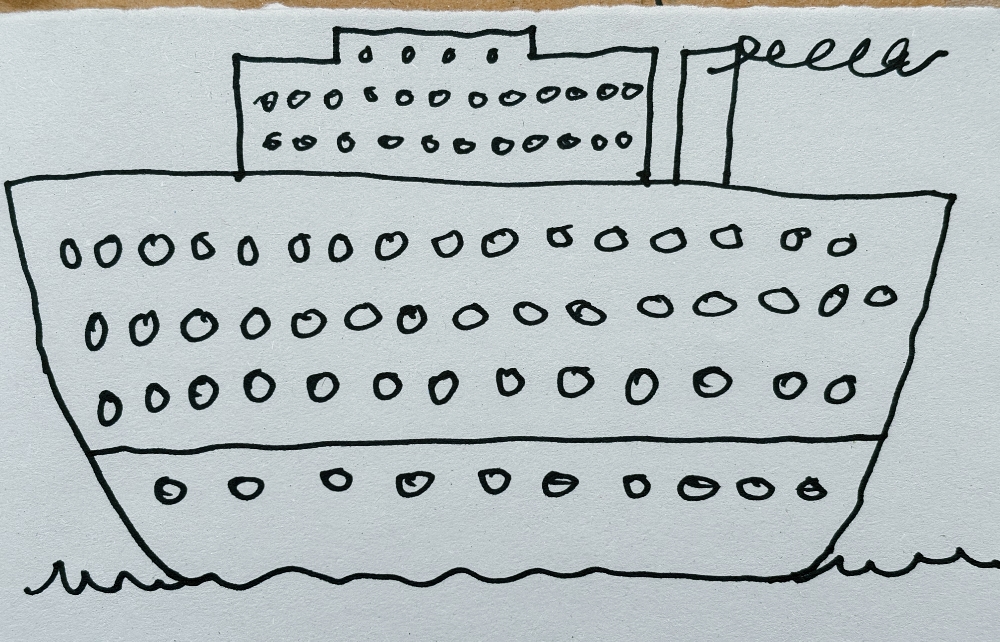
Or a work horse…
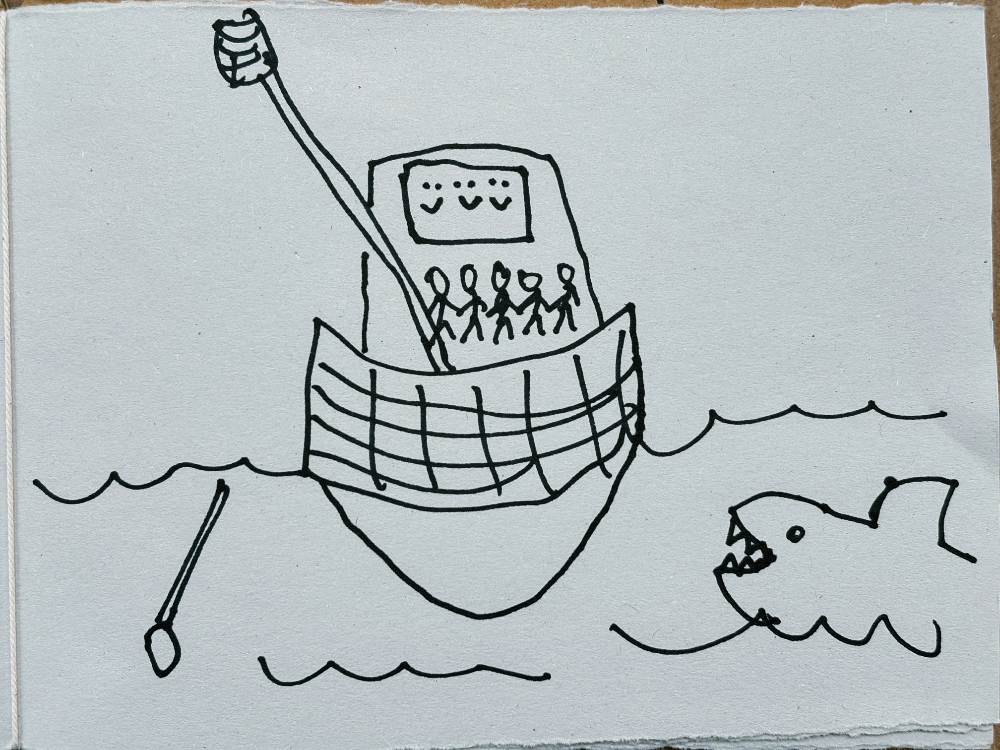
And then we drew pictures of boats which felt representative of the values and aspirations held by AccessArt.
A boat which is buoyant… sits high in the water. Solid, cared for, well kept. Has a sense of “holding” the occupants whilst being able to communicate to smaller boats that might follow….
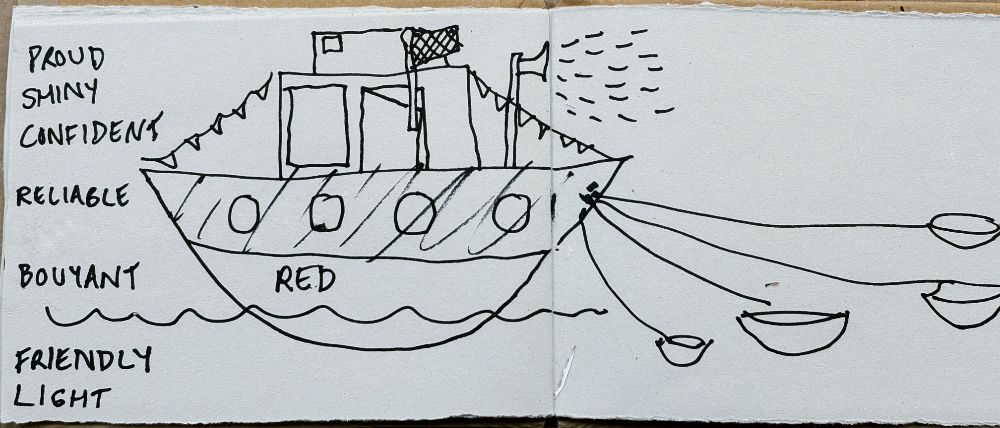
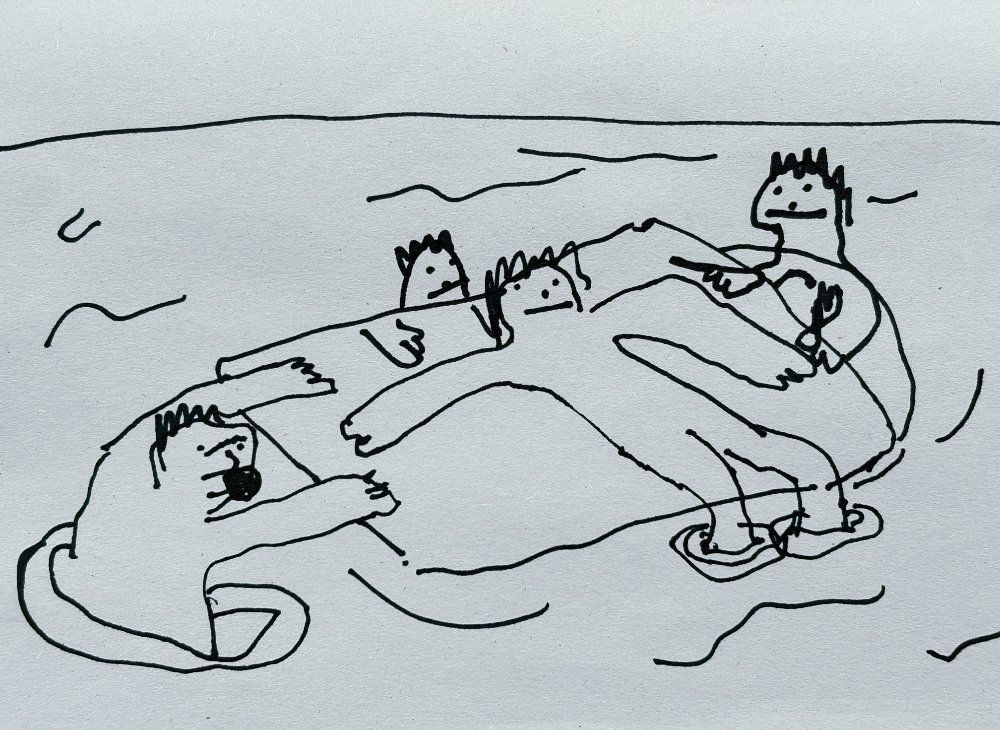
A flotilla…
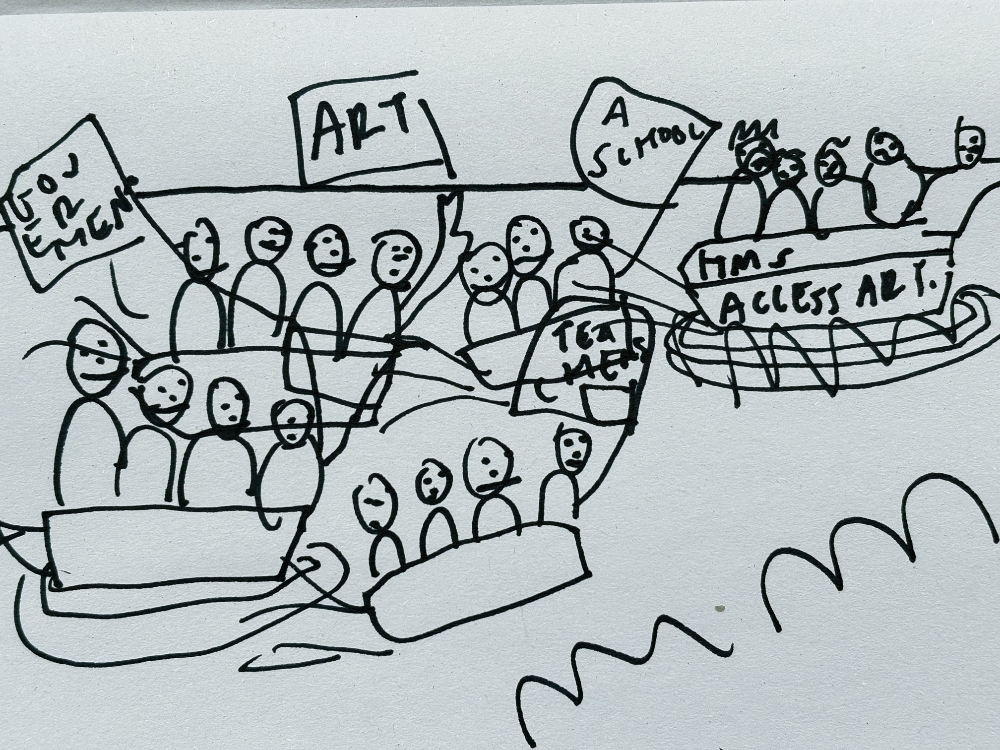
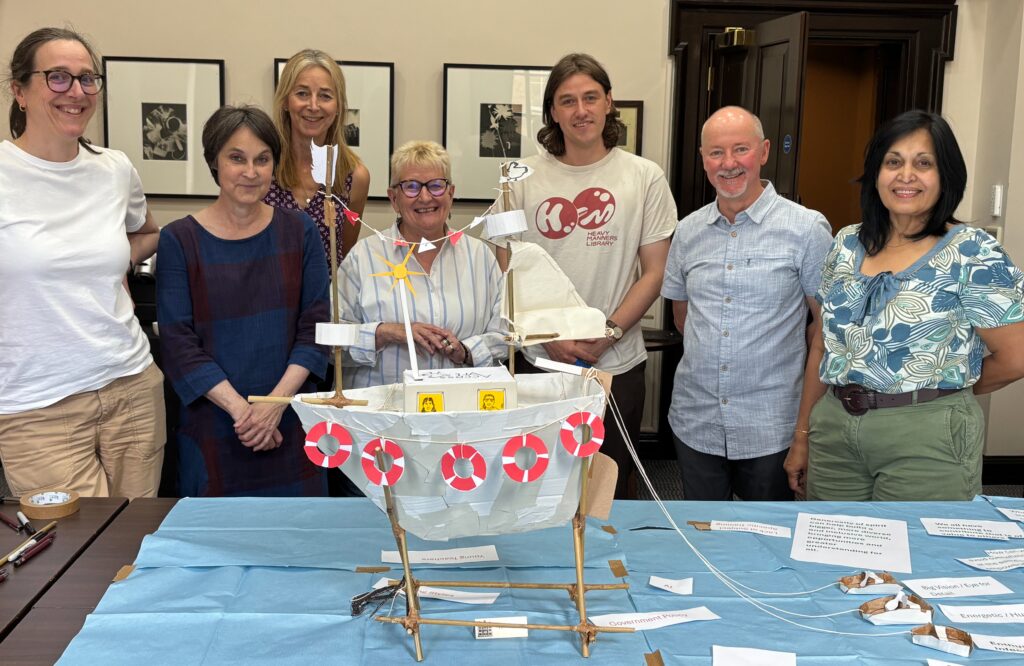
And then finally we worked as a team to construct a cardboard boat which felt representative of the values we hold, and worthy of navigating the current art education seascape.
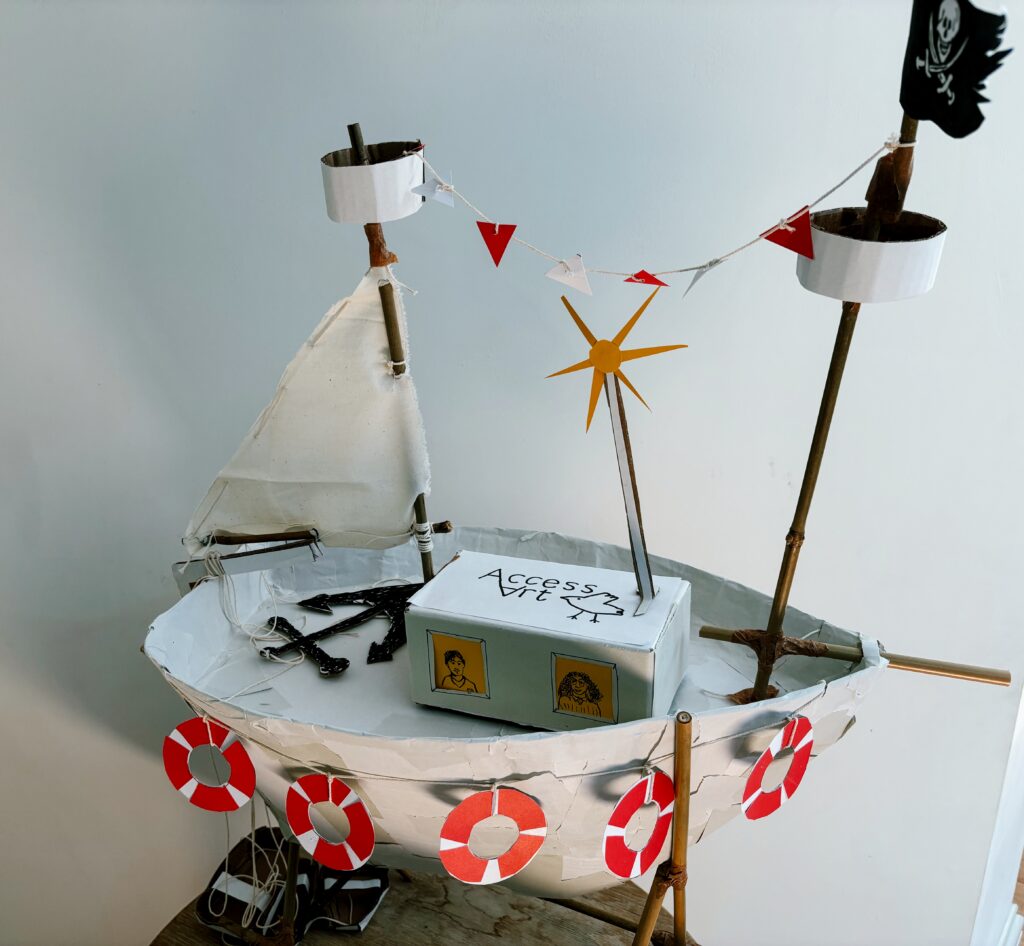
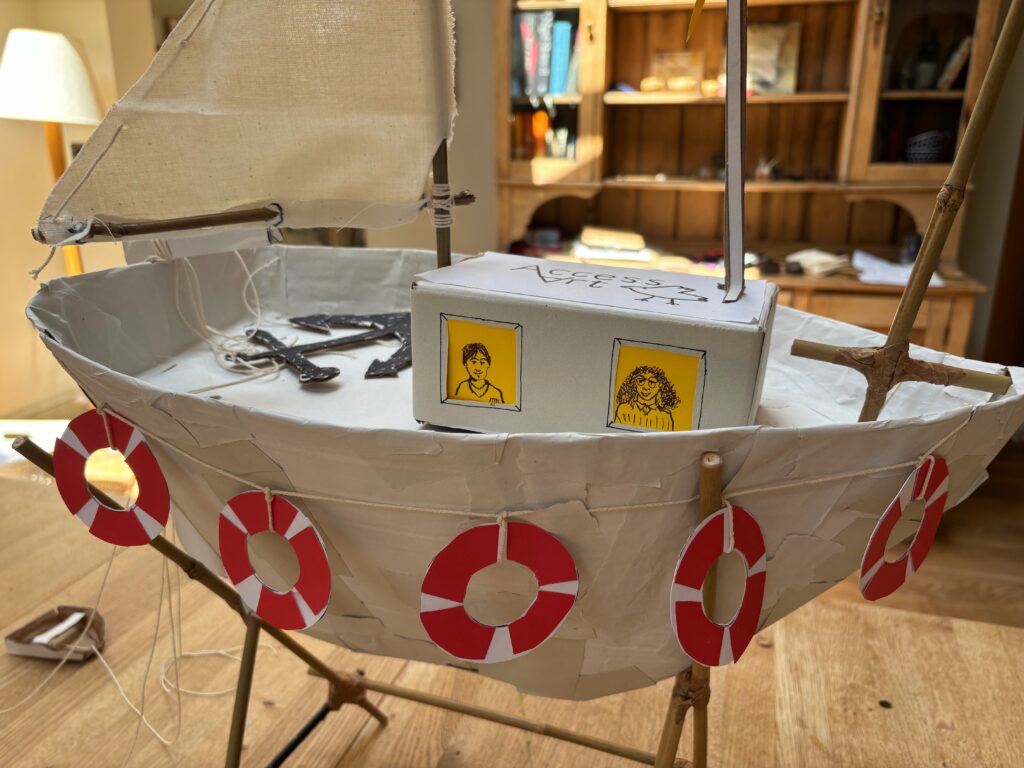
Thank you to the AccessArt Trustees and team members. These conversations are just the start and will continue over the coming months. I am always so grateful that AccessArt is made possible entirely by income from memberships. We receive no core or revenue grants; instead, every membership fee contributes to us being a self-sufficient arts organisation, bringing us great security and autonomy. Thank you to all our AccessArt members. We truly value your support and hope you feel inspired, enabled and connected.
This is a sample of a resource created by UK Charity AccessArt. We have over 1500 resources to help develop and inspire your creative thinking, practice and teaching.
AccessArt welcomes artists, educators, teachers and parents both in the UK and overseas.
We believe everyone has the right to be creative and by working together and sharing ideas we can enable everyone to reach their creative potential.
See This Resource Used in Schools
What We Like About This Resource…
“I really like how this playful resource helps us to make a creative response inspired by a stimulus, ensuring that the stimulus is only an entry point into an outcome that will look totally different. Exploring the themes of colour, texture and composition through the lens of different artists also helps us see how we can interpret (and re-interpret) colours and materials in a meaningful way. Viewfinders and collage are also great tools for those who experience ‘fear of the white page’ and will allow learners to make conscious creative decisions as they go.” – Tobi, AccessArt
You May Also Like
Adapting AccessArt: Colour and Composition
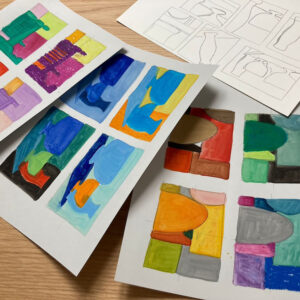
Cut Paper Collage Still Life

Cooking with collage

What We Like About This Resource…
‘This resource really demonstrates how art can successfully bring awareness to important humanitarian issues, promote inclusivity and can give a platform to those who otherwise wouldn’t be heard. The links between text, photos and drawings are really strong and demonstrate the creative process used by Olivier from start to finish. I really like the inclusion of suggestions for students within the post, which encourage students to learn more about their community and to understand the experience of being displaced. This is turn will hopefully inspire the next generation to be part of an inclusive and empathetic society.‘ – Tobi, AccessArt
What We Like About This Resource….
“You can get a real sense of the environment in this post and how this could provide so much inspiration for creative projects. We are aware there the challenges to exploring the outdoors when many schools are in towns and cities. A way around this could be to have a regular collection of natural objects within the classroom and using them as a stimulus to respond creatively in sketchbooks or in extended projects” – Andrea, AccessArt
You Might Also Like….
Woodland Exploration

Visual Arts PLanning: Tees, Forest and Landscapes
You May Also Like…
Pathway: Music and art
Mark Making & Sound: Part Two
Mark Making & Sound: Part Three
Drawing to a Slow Rhythm
Inspired by Miro
Drawing to Music