Modelling the Head in Clay Part 3 – Skull

By Melissa Pierce Murray

In the previous two posts, we concentrated on creating a solid armature and clay foundation for our clay heads. In this post we concentrate on developing the shape of the cranium and forehead, the structure of the eye sockets, cheekbones, jaws and teeth.

Referring to anatomical drawings or to a model of a skull will help students begin to see this bony underpinning to the skin and muscles of the head. The angular solidity of the bone structure will add dynamism to the fluid forms of the final clay head.

The tendency when making a clay head is to go right to the features of the face, and to concentrate on that which we know or what is familiar.  With this class, I encouraged the teens to slow down, to try to learn about the bony structure of the skull by using a rigorous and methodical methodology.  Of course, this isn’t the only way to approach learning, but it was an opportunity to explore and apply a different set of skills.

See all resources in this series here: Modelling the Head in Clay
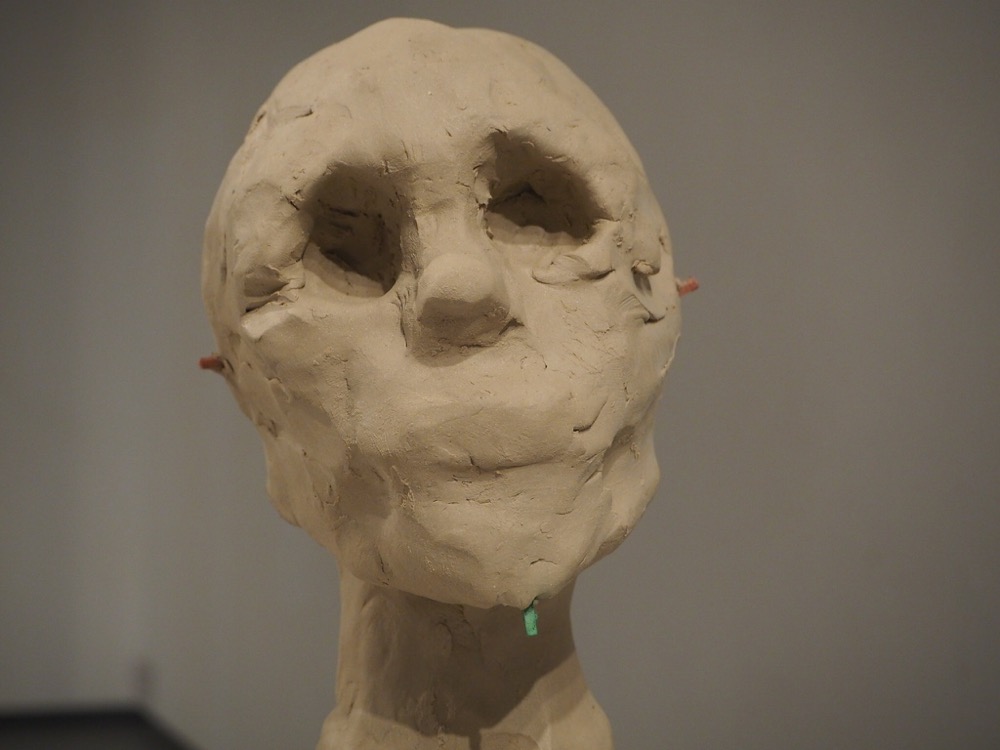
Modelling the Head in Clay Part 3: Skull by Melissa Pierce Murray


Please log in here to access full content.

Username
Password


Remember me
Forgot Password


To access all content, I would like to join as…
An Individual

Creative practitioners, educators, teachers, parents, learners…


An Organisation…

Schools, Colleges, Arts Organisations: Single and Multi-Users


AccessArt is a UK Charity and we believe everyone has the right to be creative. AccessArt provides inspiration to help us all reach our creative potential.

Modelling the Head in Clay Part 2 – Preparations


Modelling the Head in Clay Part 1 – Armature


Pimp That Snack! Large Scale Food Sculptures


Introduction to ‘Tone’ by Hester Berry


7 & 8 Year Olds Explore MonoPrinting & Oil Painting


Making Papier-Mache Marionette Puppets Inspired by Characters in a Historical Painting


Pop-Up Puppets Inspired by a Historical Painting


Drawing with Scissors: Screen Printing Workshop in 3 Stages, Inspired by Matisse


Painting a Bluebell Forest in Cyan, Magenta and Process Yellow on a Large Scale

Be Inspired to Inspire

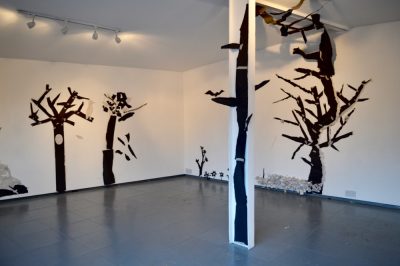
Students take on the challenge of transforming the studio into their own bluebell forest.

Teenagers take on the challenge of transforming a studio into their own bluebell forest.

See how a group of young artists create an enchanted installation.

Exploring Primary Colours and Progressing from Powder Paint to Gouache and Acrylic

Mastering colour mixing

Mastering colour mixing

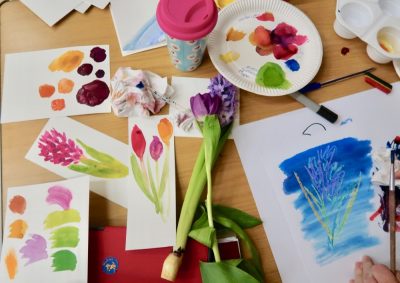
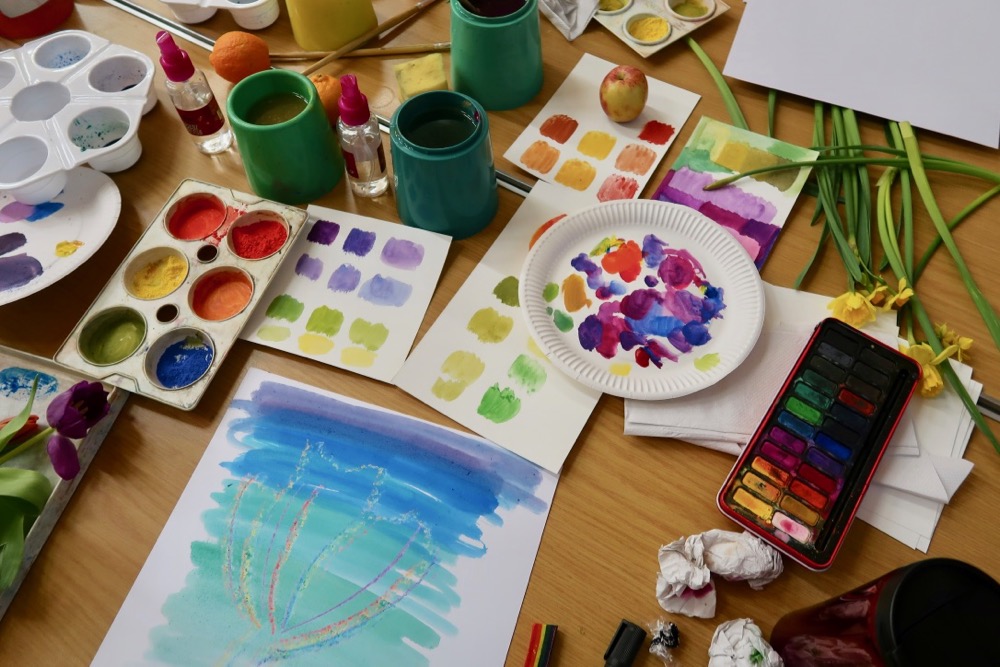
This resource is based on methods shared during an AccessArt InSET session for primary school teachers at New Hall School, Chelmsford, to ultimately enable their pupils to develop colour skills. Teachers explored using their intuition and experience to mix primary colours, creating coloured swatches that matched the colours of spring flowers, whilst comparing painting mediums.


Withy Butterflies


Inspired by Edgar Degas: Printmaking, Drawing & Sculpture at the Fitzwilliam Museum Cambridge with AccessArt


Making Sculpture Inspired by Degas


How to Make Beautiful, Liquid Drawings Inspired by Degas


Making Monotypes Inspired by Degas


Colour Wheel for Infants and Juniors

Exploring Primary Colours and Progressing from Powder Paint to Gouache and Acrylic

By Sheila Ceccarelli

By Sheila Ceccarelli


Sculpture from Sculpture


An Exploration of Artwork by Shepard Fairey


Screen Printing with Screen Mesh: Screen Printing Hack


Find Your Message (To The World)


You May Also Like…

Pathway: Print & Activism

This is featured in the 'Print & Activism' pathway

This is featured in the ‘Print & Activism’ pathway

Talking Points: Luba Lukova

Luba Lukova Vimeo Screenshot https://vimeo.com/34541872

Talking Points: Faith Ringgold

Faith Ringgold Youtube Screenshot

Talking Points: Kate DeCiccio

Adobe- Art As Activism Vimeo Screenshot

Talking Points: Shepard Fairey

Shepard-ProtectEachOther