By Mike Barrett
Mike is an artist, digital creative and photographer whose work combines words, drawings, photographs, music and sound. This resource continues the work started in Step 1 and shows young learners how to enhance their autobiographical portraits by adding a vibrant background.
Teachers Notes
What is the aim of this exercise?
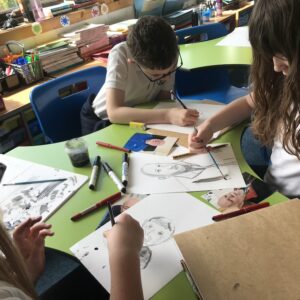
This resource offers children and teenagers an opportunity to build on the work done in Part 1, and enhance their portraits using collage and mixed media techniques. The activity is experimental in nature; learners are encouraged to use a range of materials to create striking visual effects.
What age can this exercise be used with?
This resource can be used with ages 6 and upwards. Is particularly suitable for secondary-age learners (ages 11-16).
What materials will the learners need?
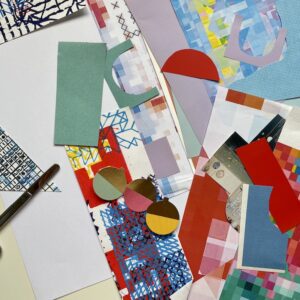
For this activity, the learners will need A3 card, a pencil, a range of collage materials (such as old magazines, newspapers or books, scrap paper, old envelopes, bubble wrap etc.), glue sticks or PVA glue, a paintbrush, a pot of water, and some watered-down ink/acrylic/watercolour paint. You can also use any materials you may already have, such as Posca pens, Sharpies, metallic markers etc.
How long does this exercise take?
This exercise will take between 20 minutes and an hour. A maximum time limit of an hour is recommended, to allow for progression to Step 3 of layered portrait creation.
How do I measure success?
Success will be measured by the children’s enjoyment of the activity, and their willingness to experiment with the materials. The children’s portraits may not be about the “likeness” to the person, but more about expressiveness and energy contained in their images. More able or engaged learners may be willing to engage creatively with the collage materials, and produce more sophisticated effects with the media. Encourage children to approach the activity with an open mind and engage them in the creative play process. Offering a wider range of materials and demonstrating different ways of using them may promote children’s interest in this activity.
What can we try after this exercise?
Life Drawing: Drawing the Head by Hester Berry
Sketchbook warm ups by Jo Blaker
Explore another medium to create a decorative profile of a head using lettering in Clay Art Medals
Explore creating abstract portrait drawings taking inspiration from Abstract Face – Relief Sculptures
Introducing drawing materials and mark making
Graffiti art and ‘Missing You’ pavement art
Try other DrawAble exercises and projects.
Which artists might we look at?
SNUB23 street art
John Wentz and Ann Gale paint fractured surfaces integrating the figure
Ed Fairburn integrates the figure with maps and start charts
Julie Mehretu layer architectural drawings, plans, charts and maps with intense mark making on a large scale but ideas could easily be adapted for portrait backgrounds
You may also want to look at Mike’s other projects.
To Begin
We’re going to create a background for the portrait to sit in. We’re going to be using collage, ink, and paint. We’re also going to start to add elements of our narrative hidden within the imagery. I’m a musician as well as an artist, so I’m going to base my narrative on music. So, Step 2 – the background!
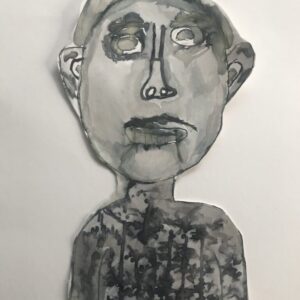
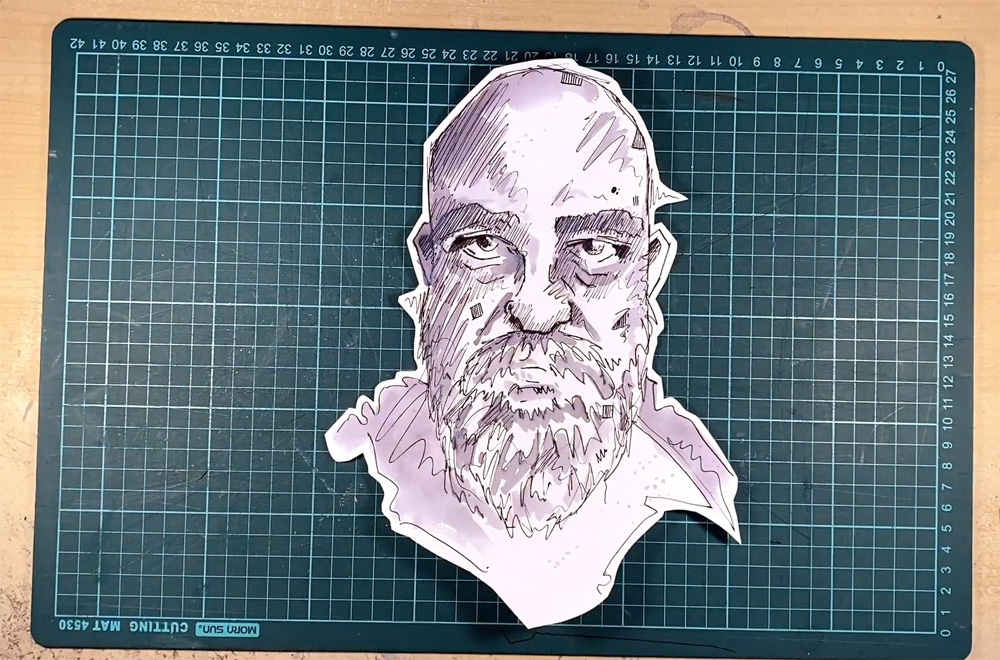
I start by using an A3 piece of card, placing my illustration in the centre of it and where it will sit in my finished piece, and then I’m going to create around it. You can put your image wherever you want – down at the bottom, off to the side, at an angle. You can do it landscape, or you can do something completely abstract. It’s entirely up to you – absolutely anything goes.
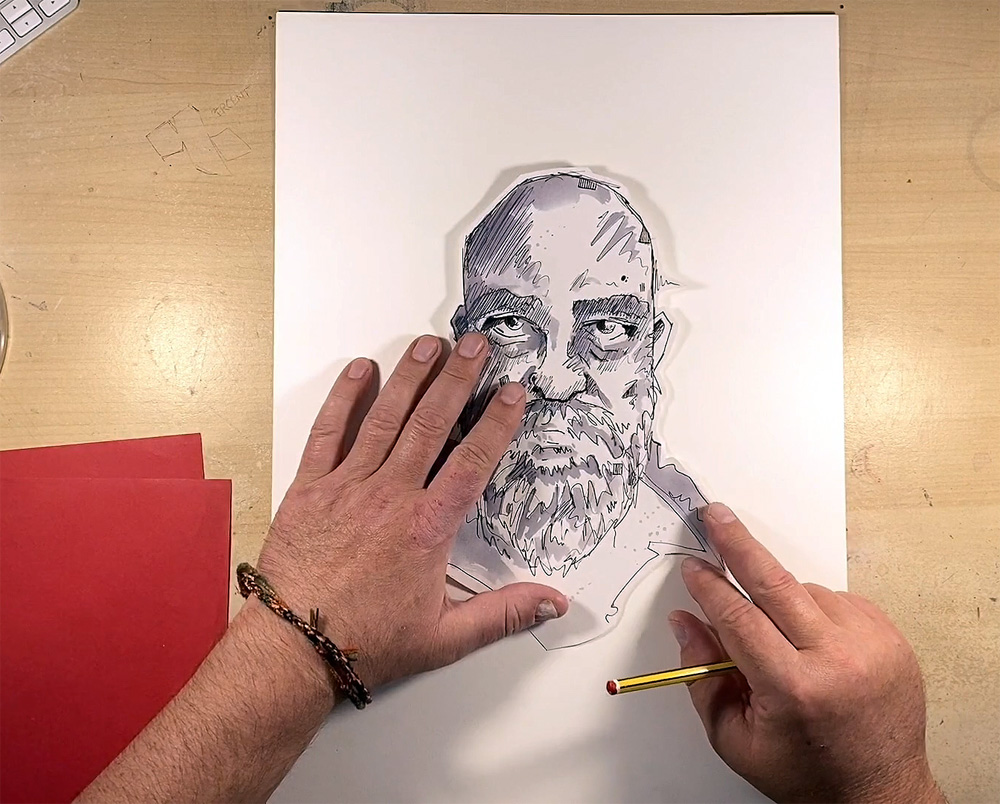
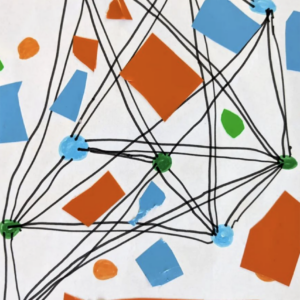
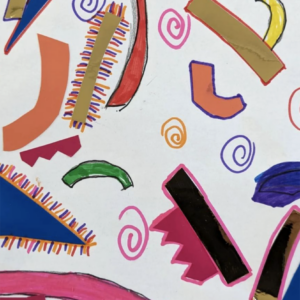
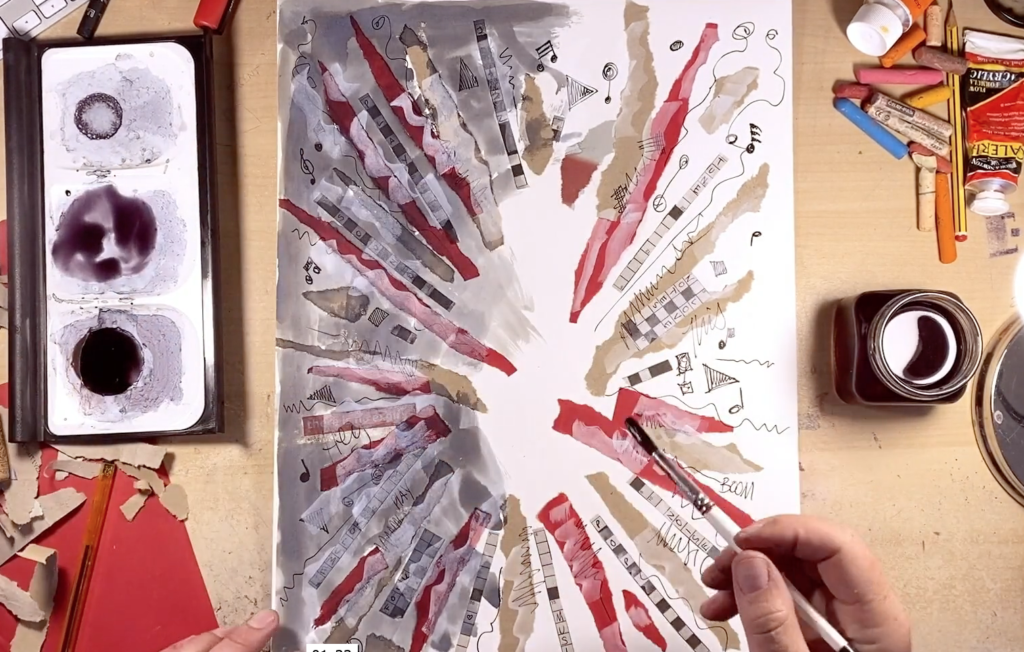
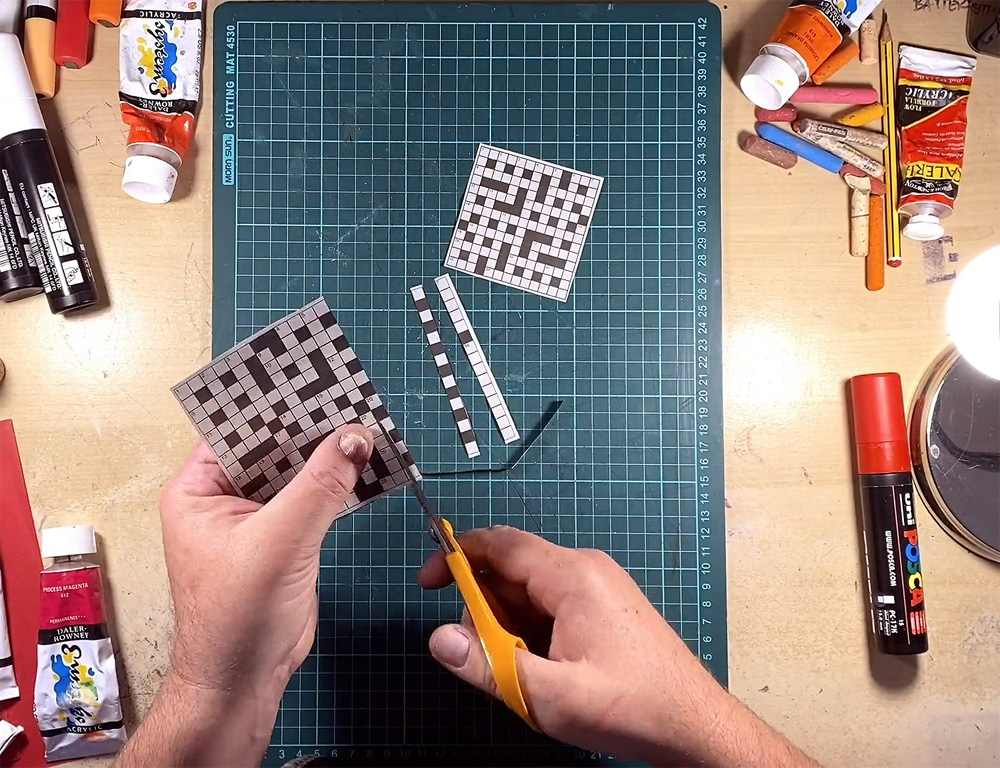
Next, I’m going to use some collage relief for the background. So I’m going to cut some things out of a newspaper. I’m going to use these crossword squares to cut strips out of them. These will be used to stick to the paper, and eventually I’ll write little messages in the squares.
I’m also tearing strips out of coloured card and brown envelopes, and these strips will be used to create an exploding feature out from the centre of the canvas – I want it to be high energy.
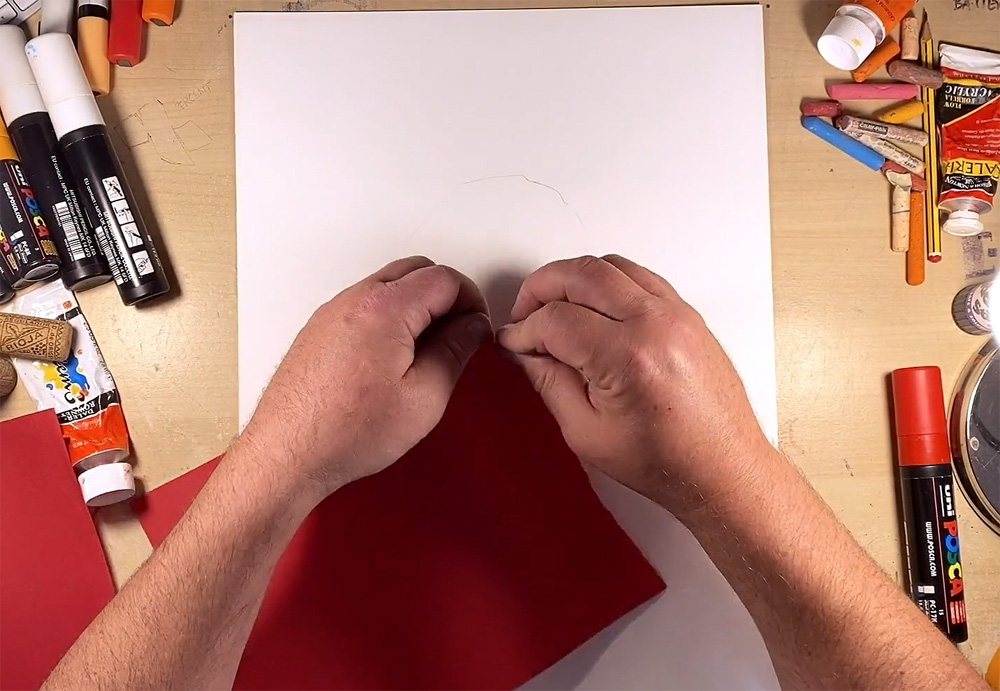
I’ve decided to use a limited colour palette on this image as well, so I’m going to go for reds, oranges, and browns to keep it quite warm. The reason I do this is to keep it quite stylized.
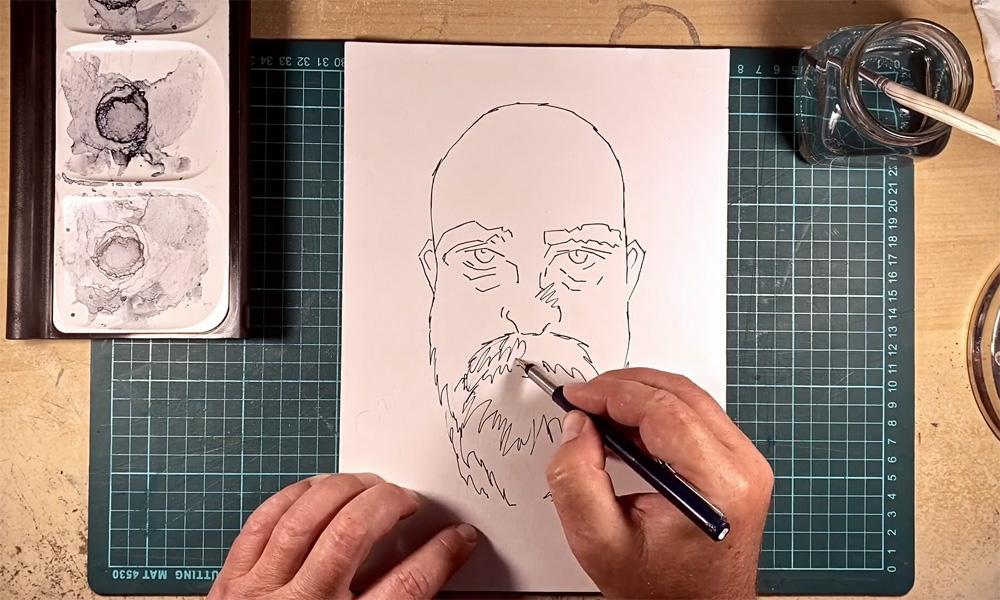
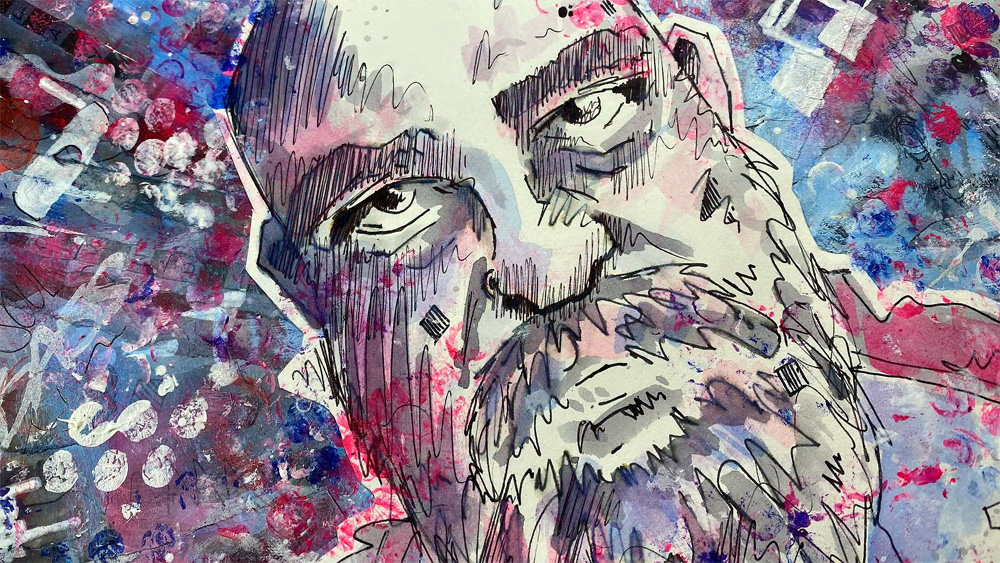
We’re going to create a background for the portrait to sit in. We’re going to be using collage, ink, and paint. We’re also going to start to add elements of our narrative hidden within the imagery. I’m a musician as well as an artist, so I’m going to base my narrative on music. So, Step 2 – the background!
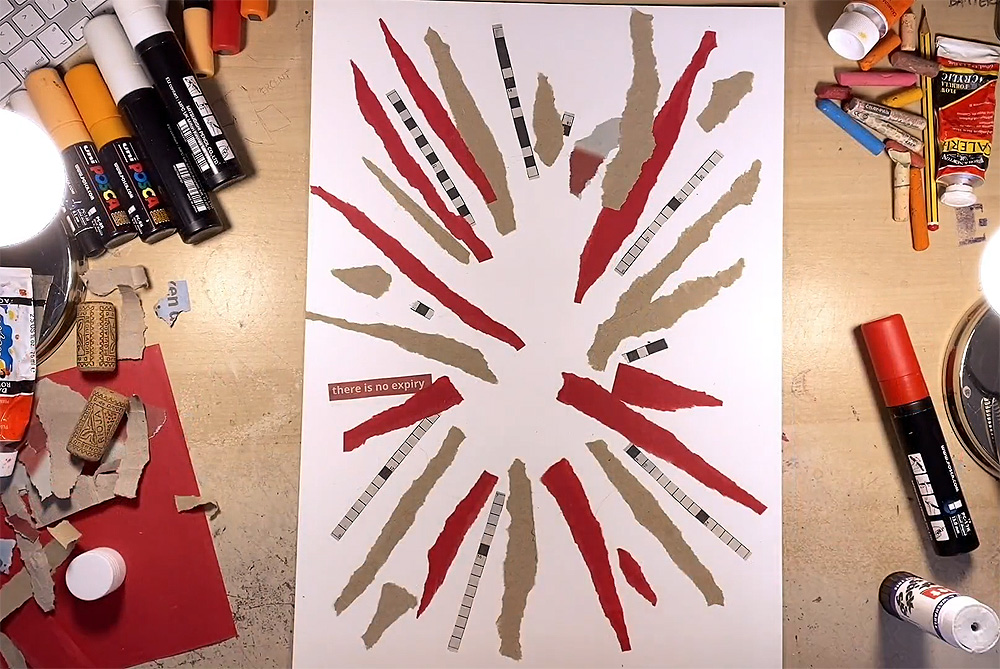
Next, I’m going to use some watered down inks to go over everything that I’ve made with the collage strips, and then let it dry a little bit. Then I’m going to go over it again with some darker ink, watering it down as I go. I don’t want that ink to soak into all of the collage relief that I’ve put on the page, so I’m just putting some dabs and splits of ink straight from the jar. The ink is very dark, so it gets more texture in there and creates some more interest. Finally, I’m just dabbing off the excess water so that the card will dry properly – taking it off bit by bit, making sure it’s all gone.
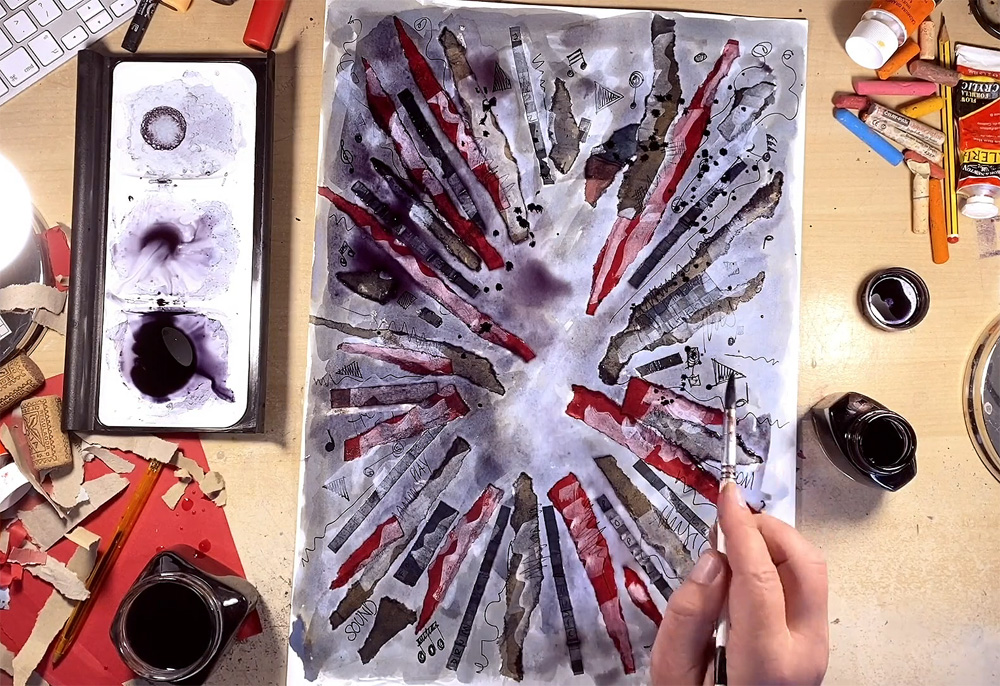
Now I can pop the illustration of my face back, to see how it’s looking. I’m quite happy with that! That’s fairly good, but I think I need a few more elements of texture…
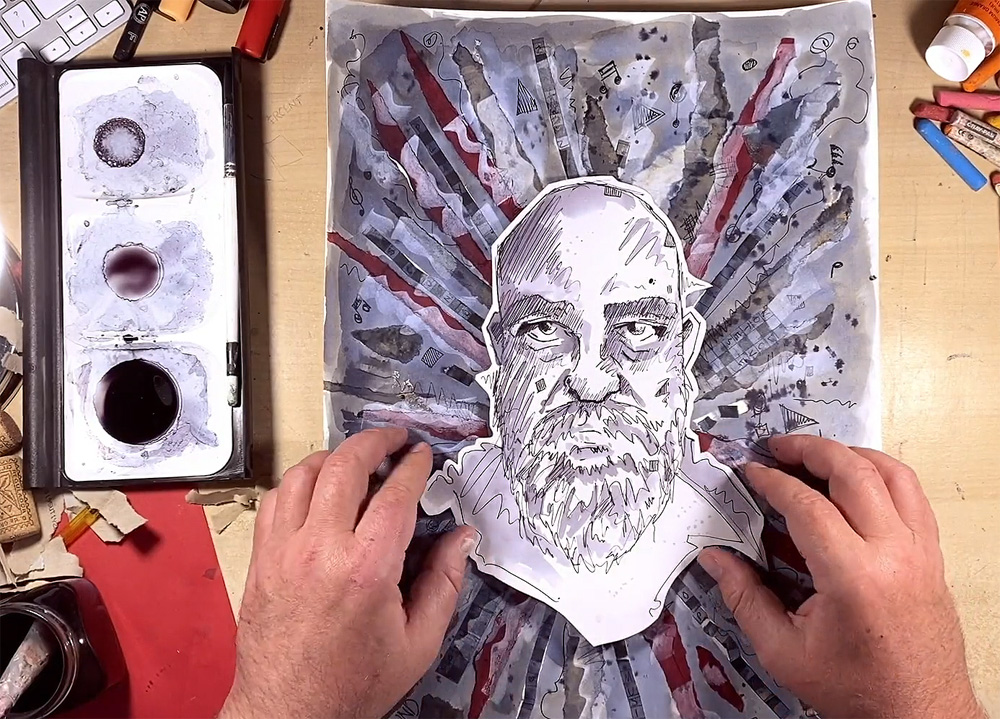
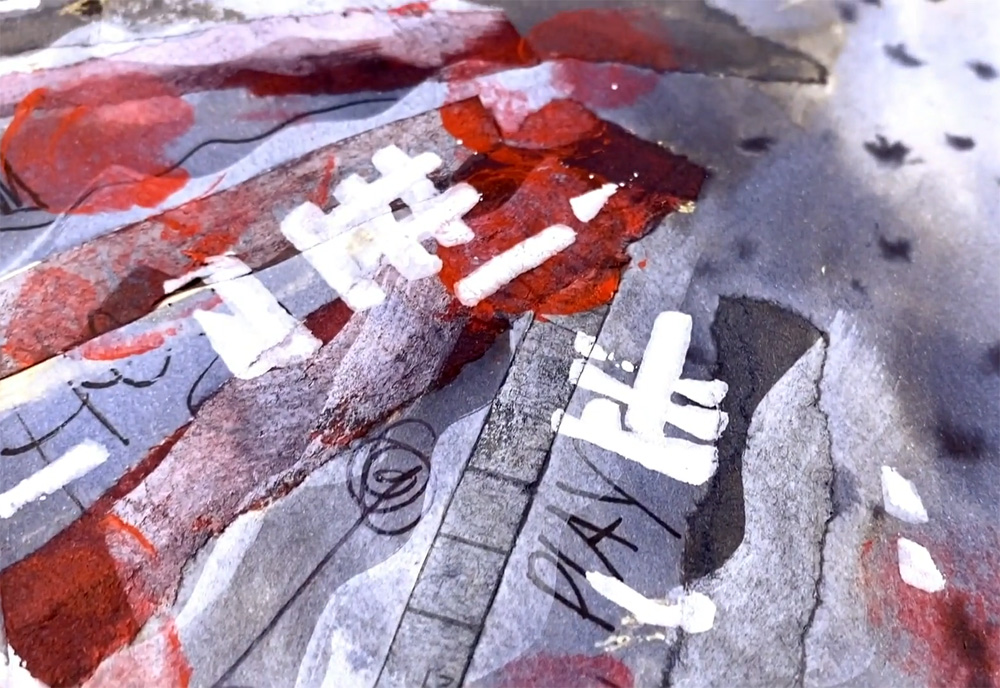
So I’m going to use a cork to add extra detail. Dabbing the bottom of the cork in some acrylic paint, I’m going to splodge it over the canvas and then blend it in with my hand a little bit, just adding a bit more texture. Then I’m going to use a bit of Posca pen as well, just bringing it all together.
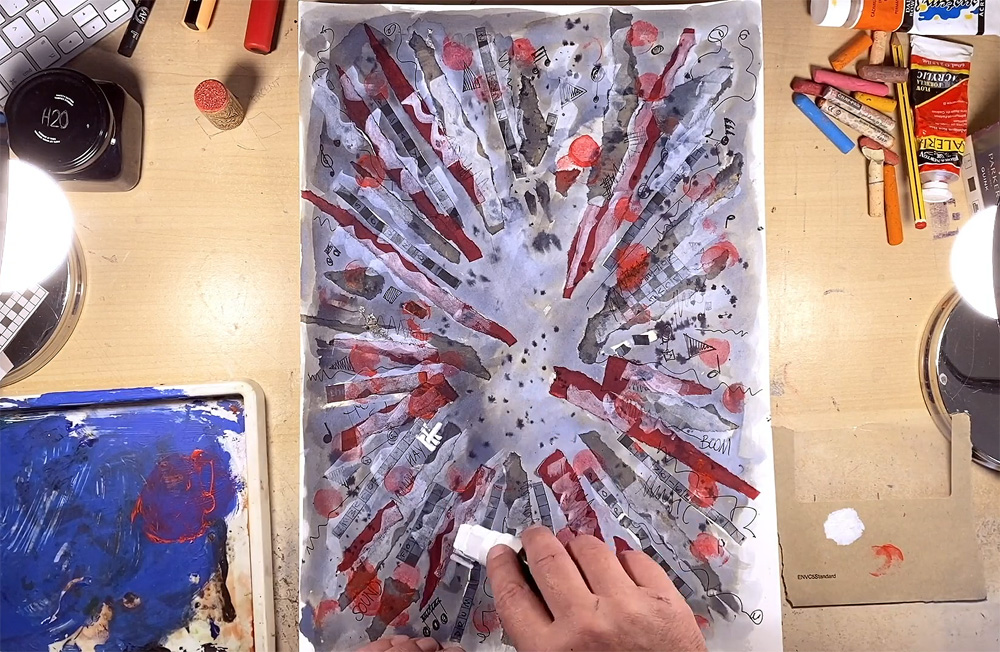
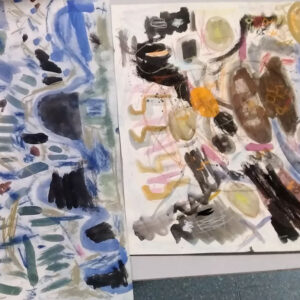
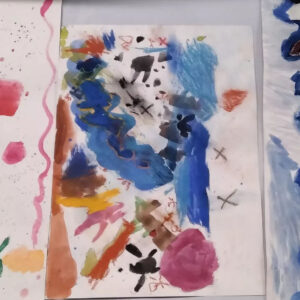
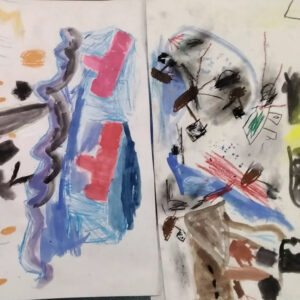
I’m quite happy with that as a textured background – it has some good texture, strong marks and interesting graphic elements, and it’s a good background to place my portrait illustration on to move to the next stage. You could do yours any way you please – it’s just about experimenting with collage elements. You can use paints, inks, acrylics, poster paint… absolutely anything.
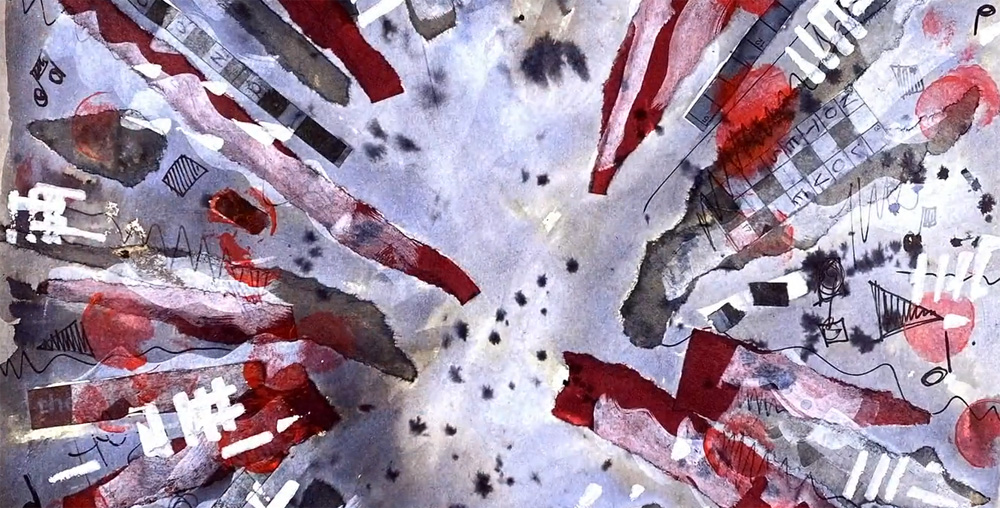
Hope you enjoyed that. That was really good fun, putting that together. I love building textures and layering things up on top of each other and see how they turn out. The next stage will be putting all these elements together – introducing our portrait to our background and putting the final touches to our artwork.
This is a sample of a resource created by UK Charity AccessArt. We have over 1500 resources to help develop and inspire your creative thinking, practice and teaching.
AccessArt welcomes artists, educators, teachers and parents both in the UK and overseas.
We believe everyone has the right to be creative and by working together and sharing ideas we can enable everyone to reach their creative potential.
See This Resource Used In Schools…
You May Also Like…
Pathway: Exploring Identity
This is featured in the ‘Exploring Identity’ pathway
Talking Points: Njideka Akunyili Crosby