What Did Your Child Make With Their Hands This Week? (and why it is important)

By Paula Briggs and Sheila Ceccarelli

If you are a parent of a primary-aged child, please ask yourself “What did my child make with their hands this week?

For many years, AccessArt has been actively inspiring making through the sharing of excellent practice. However small the making journey, and whether the outcome leans towards craft, fine art or design, the very act of transforming the materials of the world is one of empowerment, and the skills involved need time, space and input just like any other area of learning.
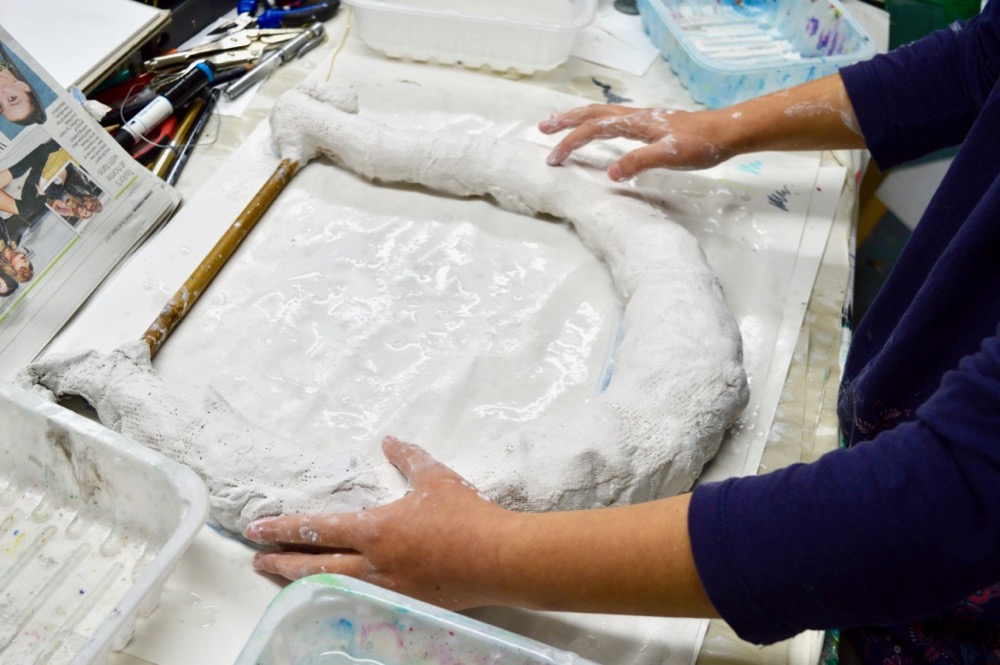
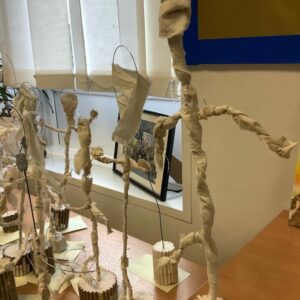
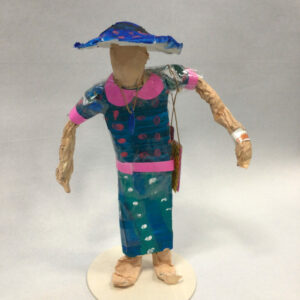
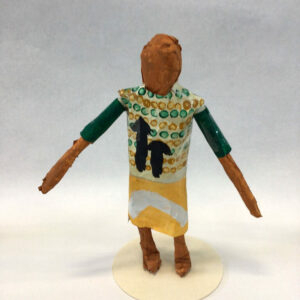
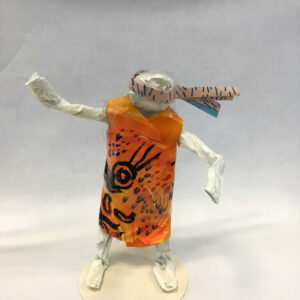
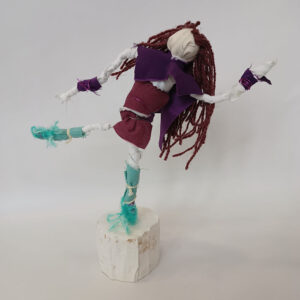
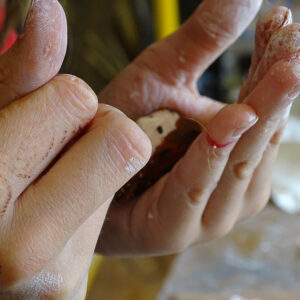
Working the Modroc with fingers and hands to create the form and smooth the texture - Portia lyre SC

We are always so grateful to be in contact with the many thousands of inspirational supporters of visual arts education – the advocates, teachers, artist-educators, facilitators, parents, arts organisations and of course the learners themselves, who all understand the value of visual arts education, and all of whom work so hard to help nurture creativity.

However, now more than ever AccessArt is becoming aware that many children are not being given the opportunities to explore making. Schools face great time pressure to deliver “more academic” subjects, and there is a shortage of specialist teachers. Whilst many children do benefit from fantastic art teaching, others do not have art lessons on a regular basis, and the teaching can be less rigorous than in other subjects.

Evidence suggests that in 2012, 1 in 12 people worked in the creative industries, and the cultural and creative industries are the fastest growing industries in the UK*. If we do not provide our children with the opportunity to develop their creativity, and we as parents do not demand a place for creativity within our schools, then we are failing to enable our children to meet their potential, and we are not preparing them adequately for the future:

“The pipeline to the creative industries begins at preschool, continues through primary school, through to secondary school and into HE and FE. At each of these stages, and every time we fail to provide an opportunity for children and young people to explore their relationship with the world through making and drawing, we weaken this pipeline, and potentially prevent the next generation of creative individuals from helping build the creative industries of the future.” Paula Briggs, AccessArt

As parents, we want to support our schools and our children’s education, and we recognise teachers work very hard to deliver the best education possible. However, if you feel your school might do more to support your child’s creativity, then there are some simple positive things which can be done:

Show your Support and Interest

You probably know what your child is learning about in maths and english, but what about in art?

Take an active interest in art in school and find out what your child is learning about. How often do they have art lessons? What are the lessons like? What are they learning about? Which materials are they experiencing?

Ask!

Time spent making, or time spent drawing, is never time wasted: it is an investment. Art should have an equal weight to other curriculum areas, and in fact there is a body trying to move away from a focus on STEM (Science, Technology, English, Maths) towards STEAM (Science, Technology, English, Art, Maths).

If you do feel your child would benefit from more time spent on creativity, then do express your concerns to the school. There may be many reasons for the perceived lack:

  • Priority given to other subject areas/time pressure on the school day. Some schools choose not to timetable art for a short time each week and instead choose to run art weeks. If a school offers pupils 1 hour art per week, that equates to approximately 39 hours of art per year. Find out how your school timetables art lessons, and if art seems thin on the ground due to time pressure, request art as a subject is given more weight. You might also want to contact the school governors with your concern.
  • Lack of specialist teaching/knowledge. Most primary schools have an art or creativity coordinator who will help teachers plan the curriculum in this area. Subject knowledge can be built through organisations such as AccessArt, which aims to inspire and enable schools through the sharing of resources, or NSEAD, who have regional networks to support teachers. Make sure your school knows about these organisations and about how they support art teachers.

Please get in touch if you would like more help as a parent to help support creativity in children.

Bob and Roberta Smith Message from Sophie Leach Nsead on Vimeo.

You May Also Like…

Make, Build, Create: Sculpture Projects for Children by Paula Briggs
Published by Black Dog Books

Published by Black Dog Books

#WHATDIDMYCHILDMAKE
A collection of resources to consider how you can increase opportunities for making

A collection of resources to consider how you can increase opportunities for making


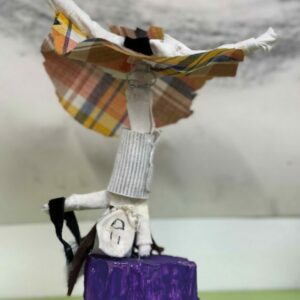
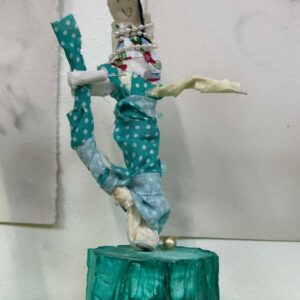
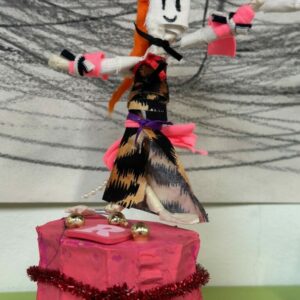
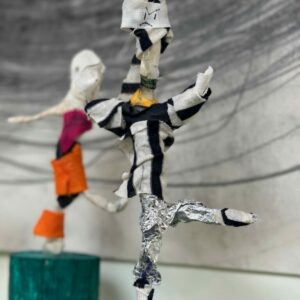
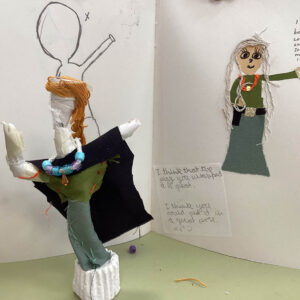
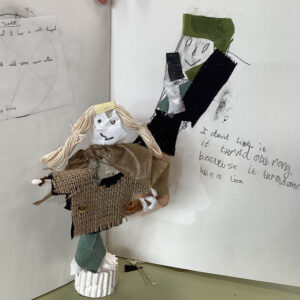
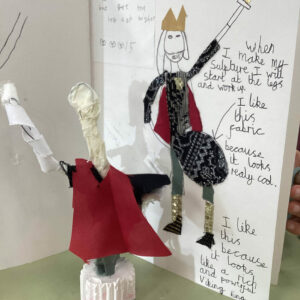
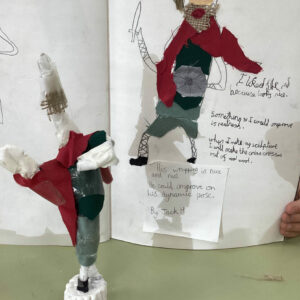
Plinth People: Sculptural Self Portraits

See This Resource Used In Schools…

Y4 Whitchurch Primary school
Wadebridge Primary School
Year 4, St Michaels Community Academy
Year 5/6, Kaikorai School

You May Also Like…

Pathway: The Art of Display

This is featured in the 'The Art of Display' pathway

This is featured in the ‘The Art of Display’ pathway

talking points: What is a plinth

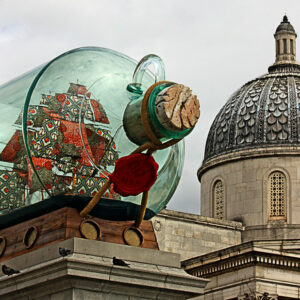
Yinka Shonibare's message in a bottle, Photograph by Feggy Art

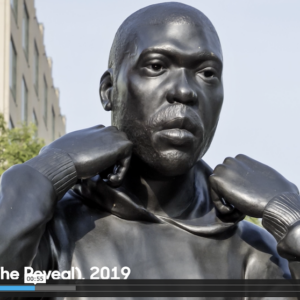
talking points: Thomas J Price

Ordinary Men: Interview with Thomas J Price https://vimeo.com/366788282

Adapting AccessArt: Plinth People

Plinth People Inspired by “Children’s Games” by Pieter Bruegel the Elder by Charlotte Puddephatt


Miniature Matchbox Museums by Anna Linch


Street Drawing: Exploring Vanishing Points with Masking Tape


Animal Sculpture and Collage with Students at Philip Southcote School, Surrey


Teenagers Make Small Sculptures: Exploring Felt-Making and Transforming Materials


Paper Sculptures: Dipping Objects in Paper Pulp


Dragons & Birds in Eggs: Hidden and Revealed

You May Also Like….

Visual Arts Planning Collections: Birds

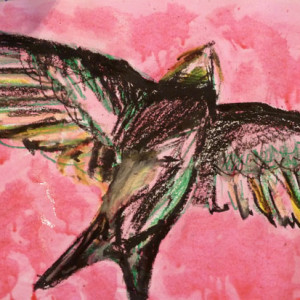
Drawing Birds with Oil Pastels and Washes

monoprinting with carbon copy paper

Drawing feathers


Inspired by Google Earth: Making


Houses from Around the World: International Day at Monkfield Primary School

See This Resource Used In Schools…

Year 2, Sydenham High School Prep
The Radstone Primary School in Brackley, Northants, Hawksmoor Learning Trust


Recording & Communicating through Narrative with Degree Level Contemporary Craft Students by Vanessa Marr


Exploring Materials: Merino Wool and Water and Making Felt


Talking Points: The Story of Cupid and Psyche by Jacopo del Sellaio

<< Back To: Inspire: Fitzwilliam Museum

An exploration of the painting ‘The Story of Cupid and Psyche’ by Jacapo del Sellaio, written by Kate Noble.

Please note that this page contains links to external websites and has videos from external websites embedded. At the time of creating, AccessArt checked all links to ensure content is appropriate for teachers to access. However external websites and videos are updated and that is beyond our control. 

Please let us know if you find a 404 link, or if you feel content is no longer appropriate. 

We strongly recommend as part of good teaching practice that teachers watch all videos and visit all websites before sharing with a class. On occasion there may be elements of a video you would prefer not to show to your class and it is the teacher’s responsibility to ensure content is appropriate. Many thanks. 

ages 5-8
ages 9-11
ages 11-14
ages 14-16

This is one in a series of resources created in collaboration with Kate Noble from the Fitzwilliam Museum. The ‘Inspire 2020’ project aims to encourage teachers to use collections in local galleries and museums as a source for exploration in art lessons.

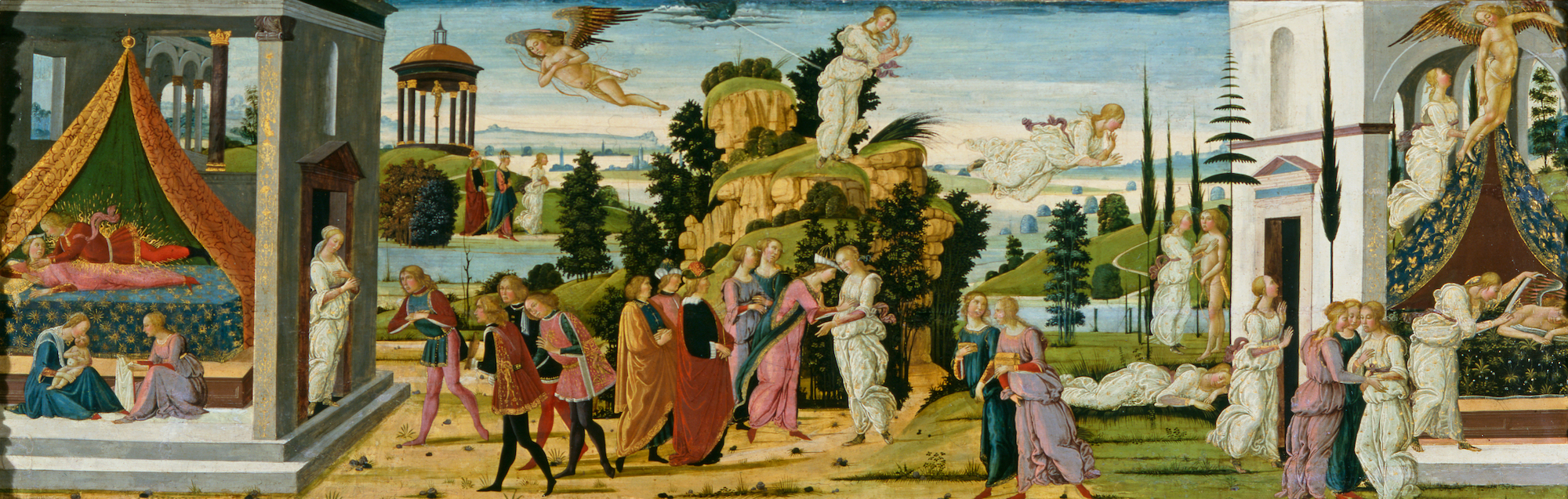
The Story of Cupid and Psyche by Jacopo del Sellaio (1442 – 1493)  

The Story of Cupid and Psyche. Sellaio, Jacopo del (Italian, 1441/2-1493). Egg tempera with gold on panel, height 59cm, width 178.8cm. Florentine School. One of a pair of cassone panels.

The Story of Cupid and Psyche. Sellaio, Jacopo del (Italian, 1441/2-1493). Egg tempera with gold on panel, height 59cm, width 178.8cm. Florentine School. One of a pair of cassone panels.

The painting above tells the first half of the ancient Greek story of a human princess, Psyche, who marries the god of love, Cupid. It was painted for a very grand bedroom in fifteenth-century Florence, which doubled as an entertaining space for the wife’s friends. The bedchamber was furnished at the time of a wedding, with a bed and chests but also painted stories that celebrated the love of a newly married couple. This story highlights the loyalty of the bride to the groom, as was expected in the fifteenth century. 

The Story of Cupid and Psyche 

The story is read from left to right like a cartoon strip. 

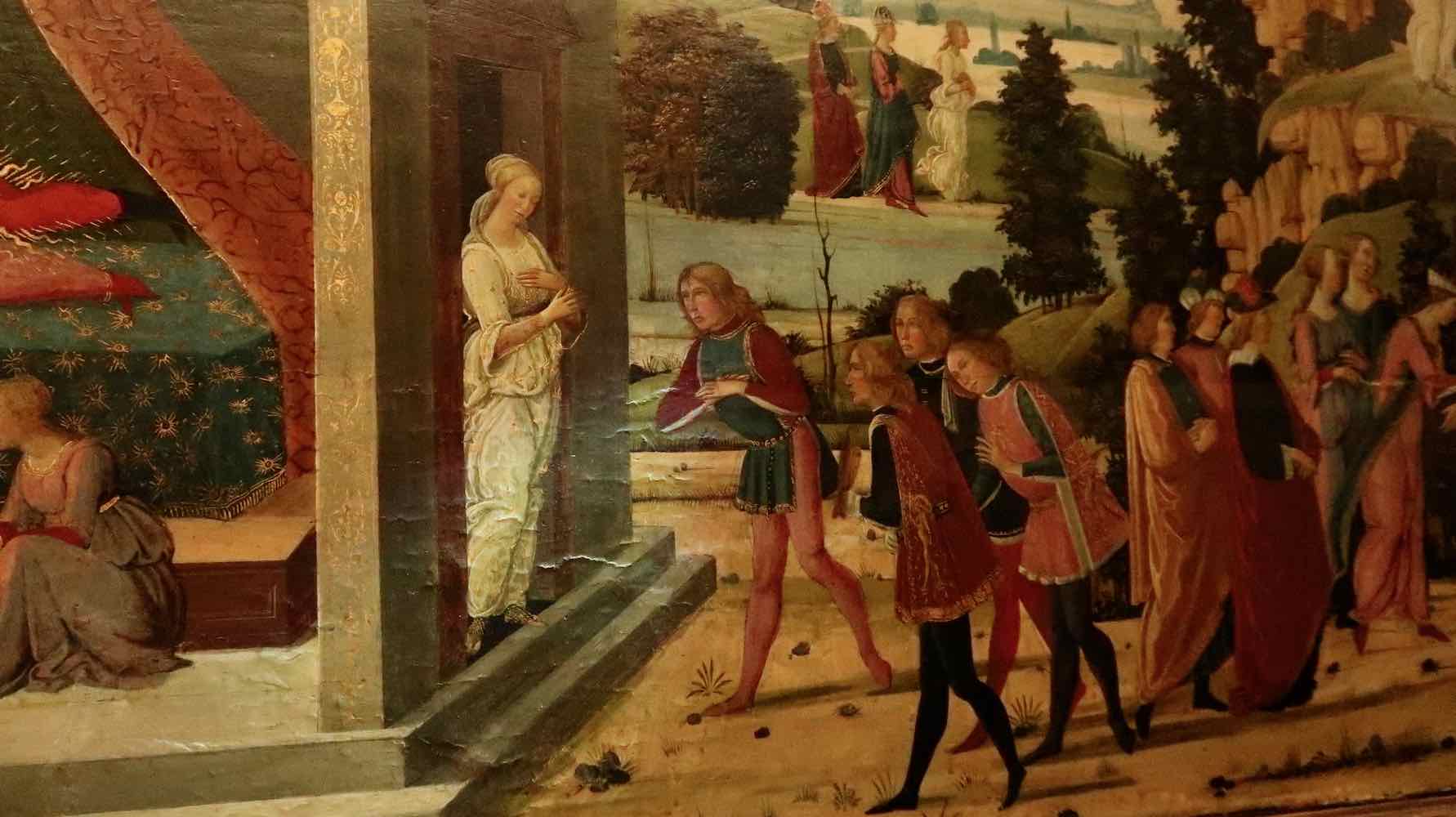
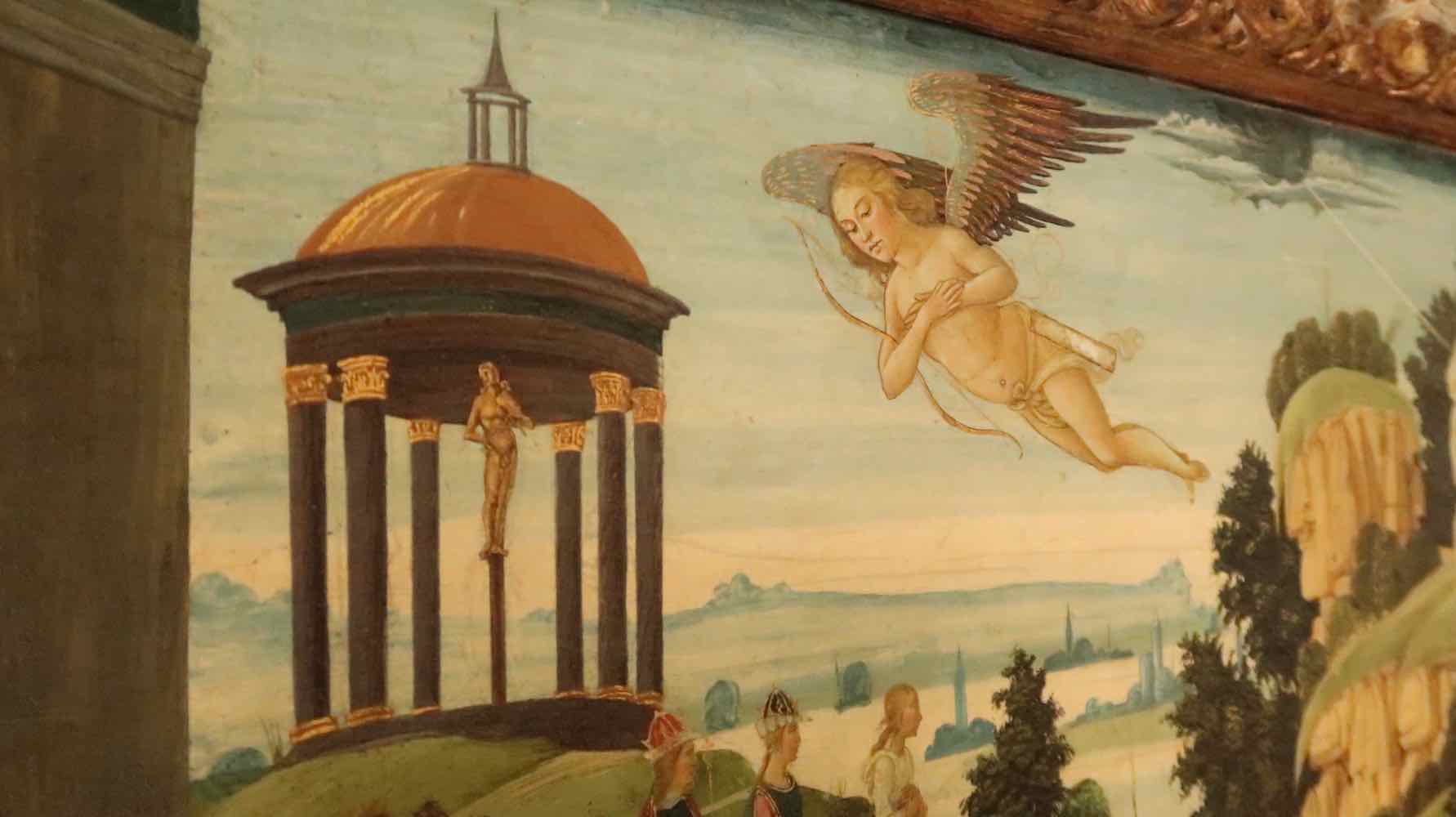
Young Psyche with her courtiers when Cupid first sets eyes on her - a close up of Del Sellaio's Cupid and Psyche painted in 1473 in the Fitzwilliam Museum, Cambridge

‘Young Psyche with her courtiers when Cupid first sets eyes on her – a close up of Del Sellaio’s Cupid and Psyche painted in 1473 in the Fitzwilliam Museum, Cambridge.’

Cupid is sent to cast a spell on Psyche by his mother Venus, who is jealous of Psyche’s beauty.

Cupid sets eyes of Psyche and cannot follow through his mother, Venus's, evil plan - close up of Cupid and Psyche by Del Sellaio 1473 at the Fitzwilliam Museum, Cambridge

‘Cupid sets eyes of Psyche and cannot follow through his mother, Venus’s, evil plan – close up of Cupid and Psyche by Del Sellaio 1473 at the Fitzwilliam Museum, Cambridge’

Cupid falls in love with Psyche and is unable to carry out Venus’ evil plan.

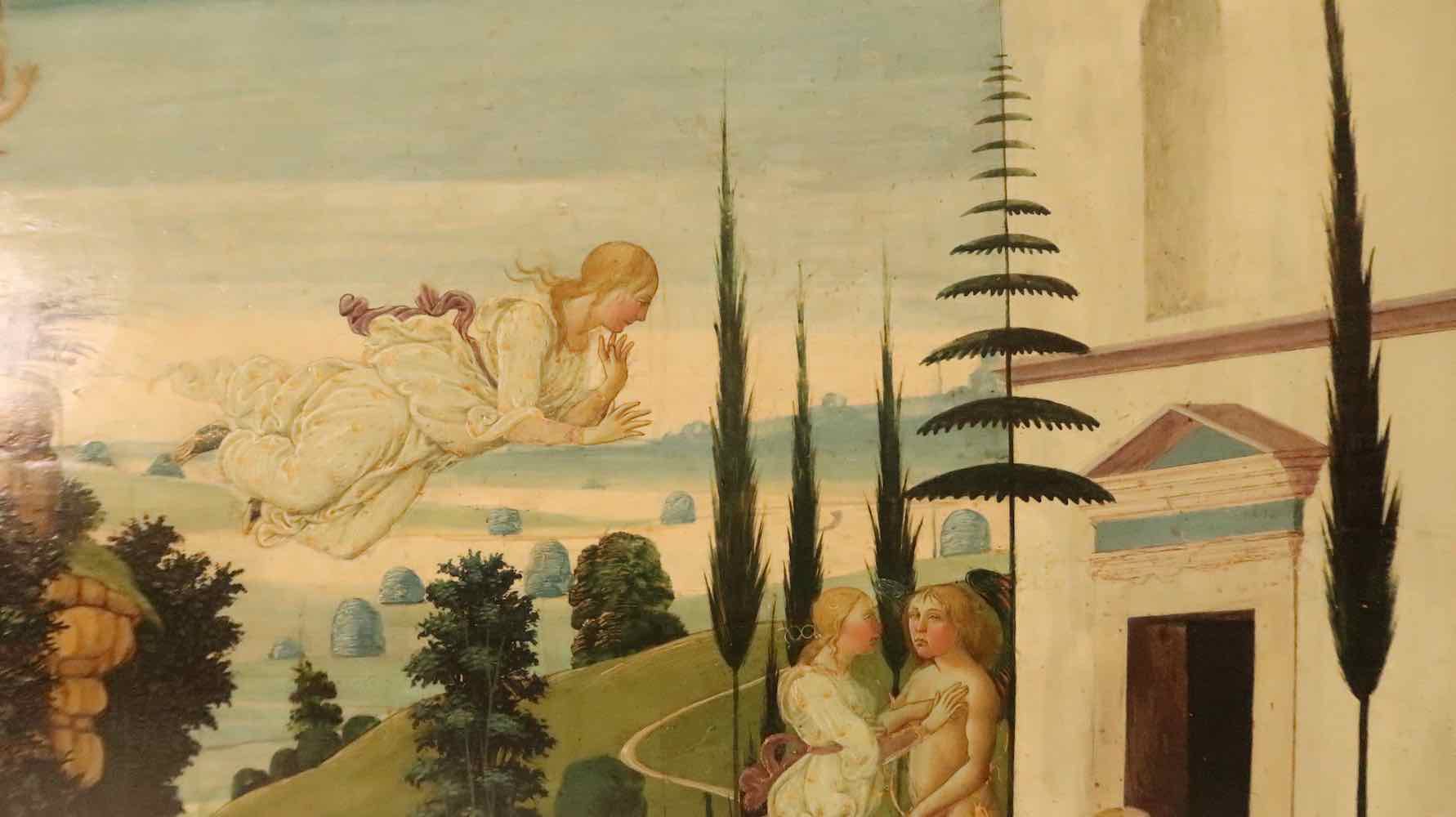
Psyche is blown off the hill by Zephyrus the wind - a detail in a painting by Del Sellaio of Cupid and Psyche painted in 1473

‘Psyche is blown off the hill by Zephyrus the wind – a detail in a painting by Del Sellaio of Cupid and Psyche painted in 1473’

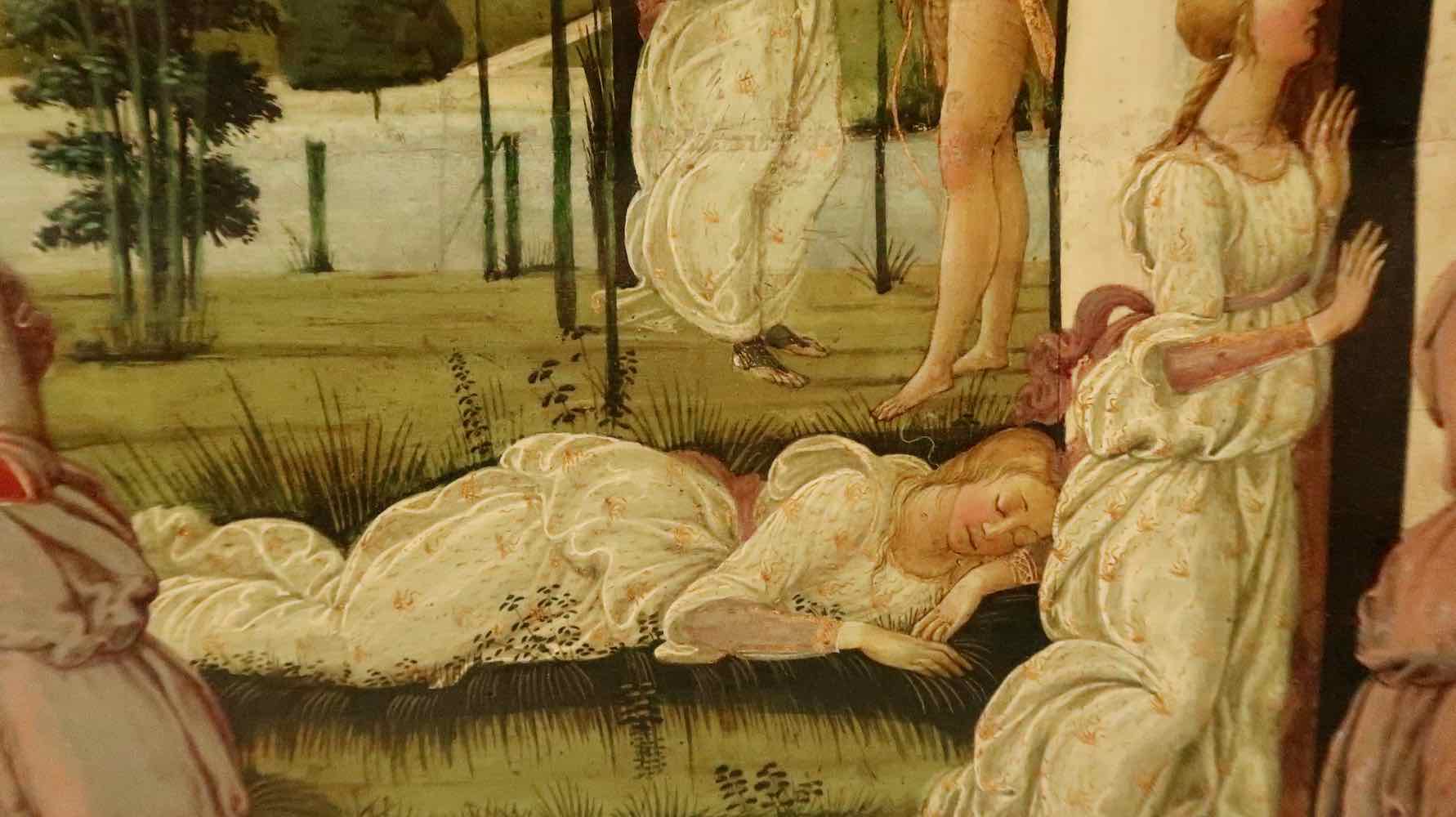
Psyche is blown off the top of a mountain by the god Zephyr who carries her safely down to rest in a soft bower.

Psyche lands on a soft bower - a detail in a painting by Del Sellaio of Cupid and Psyche painted in 1473

‘Psyche lands on a soft bower’ – a detail from Cupid and Psyche by Del Sellaio painted in 1473

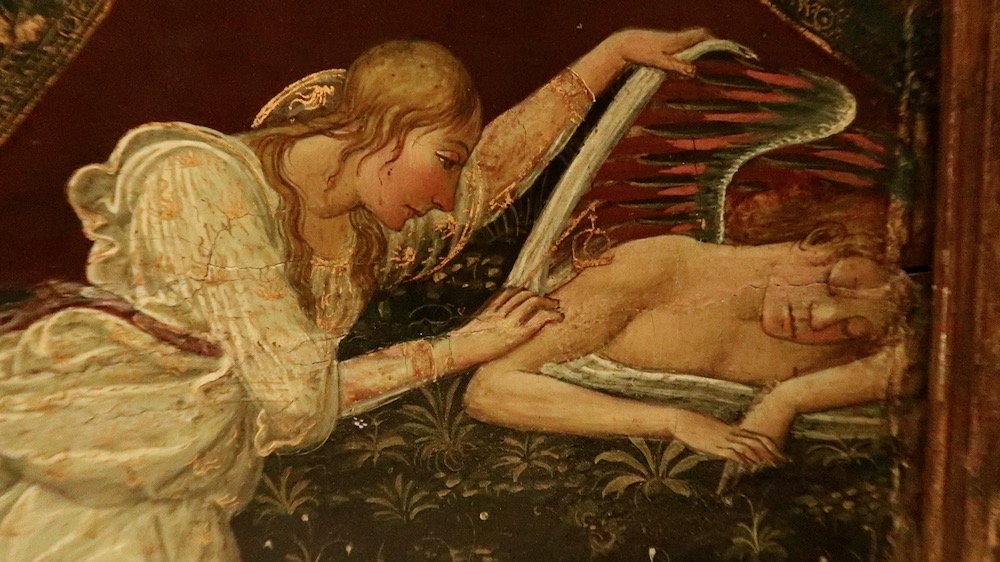
When she awakes, she finds herself at a beautiful palace where she is welcomed by an invisible, but kind, master (Cupid, in hiding from his mother). He invites Psyche to live with him on the condition that she will never ask his true identity. They are happy for a while but then Psyche’s sisters persuade her to look at him whilst he sleeps. A drop of oil lands on his skin, he wakes up and is angered by Psyche’s lack of trust.   

This is an image from a Renaissance painting painted in the 15th Century by a painter named Jacopo Del Sellaio. This is a close up of the character Psyche lifting Cupids wing. Follow this link to find out How this painting became loved by primary school children in Cambridgeshire

Detail: Psyche lifting Cupid’s wing; The Story of Cupid and Psyche c.1473; Sellaio, Jacopo del; painter; Italian artist, 1441/2-1493; Tempera and gold on a wooden panel

The story continues in a second panel (in a private collection). Cupid returns to his mother, Psyche searches for him and is captured and enslaved by Venus. Cupid pleads with Jupiter, king of the gods, to free Psyche. He agrees, and Cupid and Psyche are married.  

Questions to Ask Children 

Does this story remind you of any other fairy tales you know?


Exploring Materials: Plaster and String


Printing Patterns on Jewellery Pieces


Inspired by Google Earth: Drawing


Flat Yet Sculptural? Drawing, Collage, Construction

See This Resource Used In Schools…

Dean CE Primary School
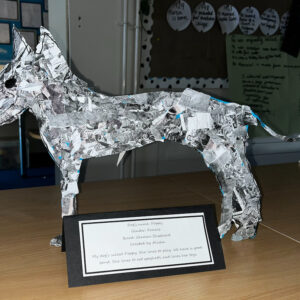
Greenlands Community Primary School, Preston, Year 6.
Year 5, Cathedral Primary School, Bristol

You May Also Like…

Pathway: 2D Drawing to 3D Making

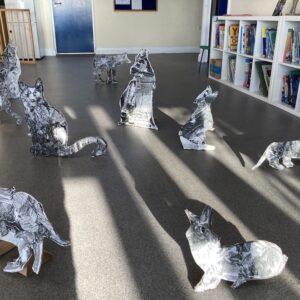
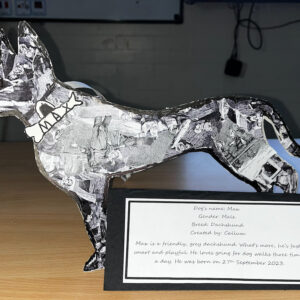
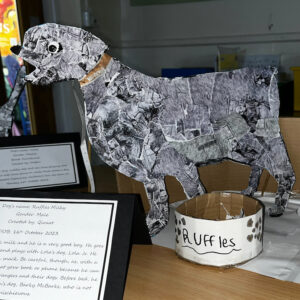
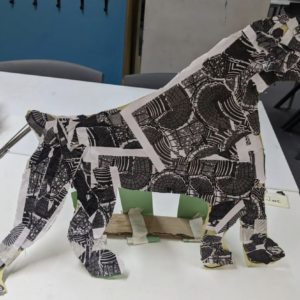
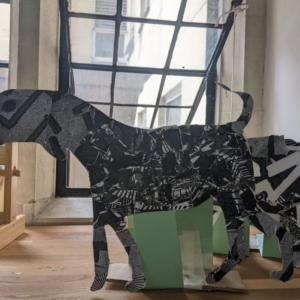
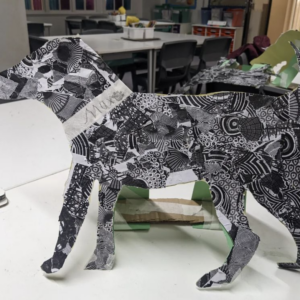
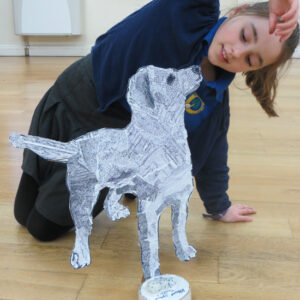
"Flat yet sculptural" standing dog!

This is featured in the ‘2D Drawing to 3D Making’ pathway

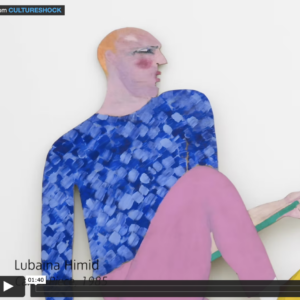
Talking Points: Lubaina Himid

Lubaina Himid


Exploring Materials: Paper and Water and Making Paper


Exploring Three Dimensions with Lego: Drawing and Collage

You May Also Like…

Pathway: Exploring Form Through Drawing

This is featured in the 'Exploring Form Through Drawing' pathway

This is featured in the ‘Exploring Form Through Drawing’ pathway

Adapting AccessArt: From 2D to 3D

Drawings of Paper Sculptures by Yu-Ching Chiu


Exploring Materials: Clay and Water