
2026 – Time for a New Relationship?


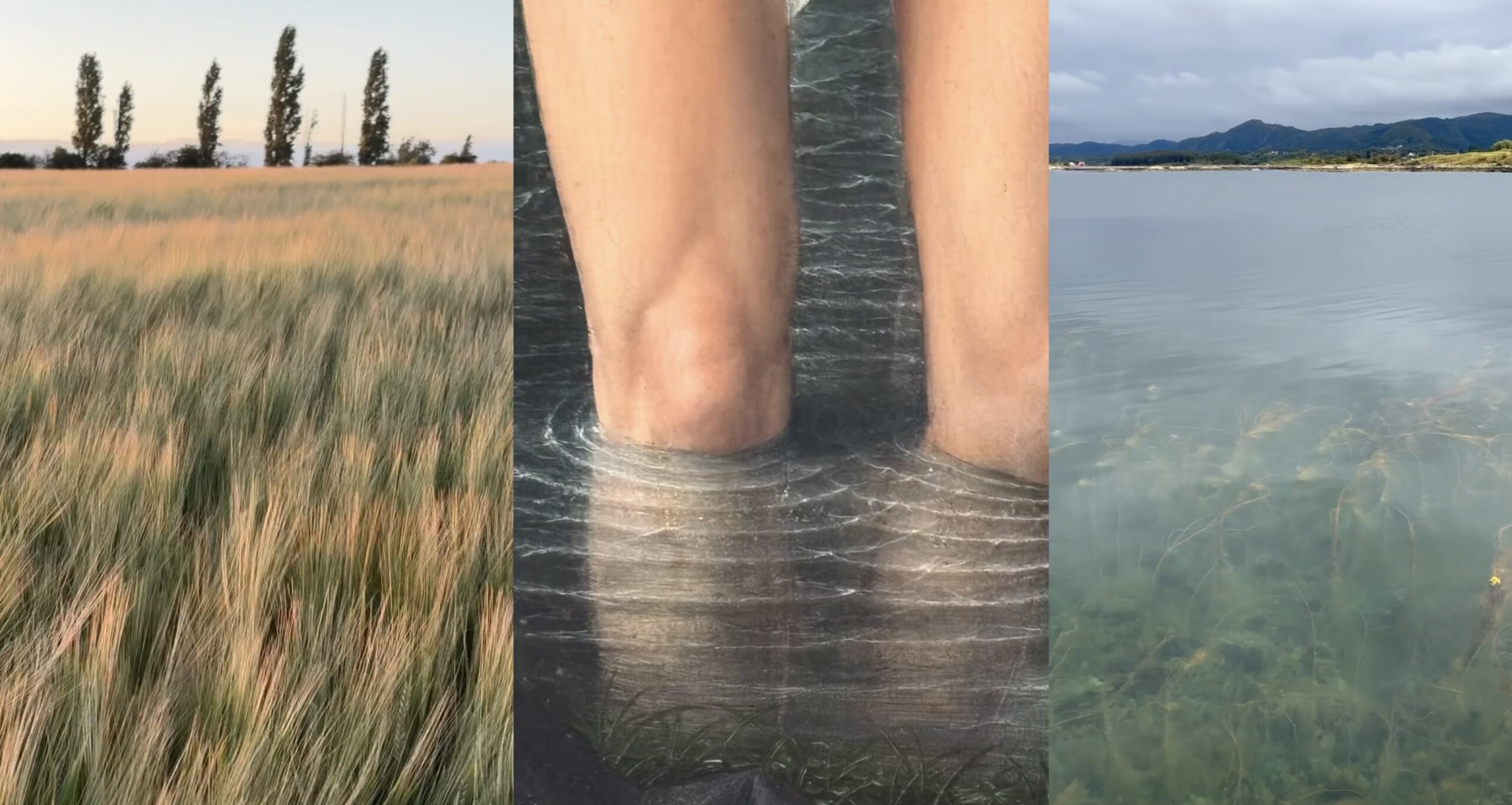
What can art educators learn from non-extractive practices?
As we welcome in a new year, starting a new term and imagining new ways of being, perhaps we can, as art educators, turn also towards new ways of understanding our relationship with our sense of creative purpose.
It would, of course, be ideal to start the new year with a sense of optimism and energy—and for many, that will be the case—and if so, all good. But we do need to recognise that for many people, both educators and those we educate, we ended the year with a feeling of overwhelm and perhaps even exhaustion.
If we were lucky, it was great to be able to step off our productivity-driven, daily grind. Returning (and again, lucky us to have something to return to) has made me think about how we might begin to look in on this driven culture from a slightly different angle, especially in the light of learning to re-see what the visual arts can offer us, to help us be happier, healthier, more connected human beings. How can we learn to move forward, incrementally, in a way which is more sustainable, to both ourselves (as cyclical beings) and the planet? How can we help lay the groundwork so that the children and young people we teach and care for can imagine a more sustainable approach to their own lives?
The notion of non-extraction comes from a critical understanding of extractive economies, as applied to industry, the environment or colonialism. Any mechanism, organisational structure, or way of being which takes more out than it puts back in (intentionally or otherwise), leaving the source or those in its path depleted, might be seen as extractive. Non-extractive practices on the other hand, attempt to preserve, value, and enhance, helping to sustain energy, resources and ways of being.
As we go about our work as art educators and artists, perhaps 2026 can be the year we examine our current attitude to extractive and non-extractive practices as they relate to teaching, learning and the visual arts. Let’s think expansively and become aware of where we might be guilty of perpetuating the myth that extractive processes are the only way. Once we become aware, we can then start to use our creativity to make small (or large) changes to our day-to-day practices, which enable the ecosystems in which we operate to function with kindness, energy and sustainability.
AccessArt will be returning to these themes of course, but for now, a few gentle questions to help us start examining our attitudes to extractive / non-extractive practices as teacher, learner and artist. Some of these questions are deliberately tangled to encourage divergent thinking. They are not intended to be used as tools with which to punish ourselves. Instead, enjoy them as challenges to explore. New approaches – new energy.
Physical
-
Where do the materials you use come from? How do you navigate the balance between providing enough materials to aid exploration without encouraging waste? How do the things you make exist in the world? What is material value? How much do you talk about these issues with other makers/learners?
Cultural
-
How do you relate to the images and ideas you come across from other cultures? How much do you understand and respect the starting points/legacy which created these works? What does “borrowing” look like for you? Does it feel ok?
-
How much do you impose on others? Are there ways you could create space for the cultural experiences of those you work with to be seen and heard?
Creative Process
-
Is our creativity endless? Is it cyclical? What does creative rest look like? How do we value intention? Do we need to measure? What does respect to ourselves as creative beings look like?
Susan Deaville
January 9, 2026 @ 11:00 am
Hello Paula,
I can’t thank you enough for this last email.
Your posts last year, directed at the Government, made me believe that we can make our own change and I began myself, within my own classroom and work environment, to challenge and make slight adjustments to be kinder to myself and kinder to my pupils. My new year has continued this with an analysis of the New National Curriculum, to use the publication to structure a more sustainable and creative learning environment for our Y4 class. This work is ongoing and has been helped by reading your ideas on ‘invasive’ and ‘non-invasive’ approaches. Thank you, this has given structure to and expanded my less than cohesive thoughts!
I am so grateful for the outspoken lead you have taken. I was privileged to have an arts education and have fought to maintain this in primary teaching. It is still a fight, but one that I hope (with the help of people like you) will gain its rightful position in education.
With the best regards,
Sue Deaville
Y4 Class Teacher, Chinley Primary School
Paula
January 9, 2026 @ 3:53 pm
Thanks for getting in touch Sue – good luck and please do keep us up to date with how things go
Philippa McDonald
January 13, 2026 @ 9:24 am
Thank you Paula, this has been incredibly helpful and inspiring to read. I really appreciate your words of wisdom. Happy New Year.
Best wishes
Philippa
Creative Days
Paula
January 13, 2026 @ 9:33 am
Thank you Philippa – i hope things are going well