Talking Points: Olympic and Paralympic Stadiums


How have the Olympic Stadiums changed over time?
Stadiums have been crucial to the Olympic Games ever since the first Games in 6 B.C., evolving and adapting to reflect the culture, society, and needs of each era.
Use the below images and videos to explore the Olympic stadiums and how they are designed, built and have evolved over their long history.
Please Note:
This page includes links and videos from external sites, verified at publication but subject to change.
Teachers should review all content for classroom suitability.
Report any issues, and check school firewall settings if videos don’t play.




Since the first Ancient Olympic games held in Olympia in 6 B.C. Olympic stadiums have developed to hold huge capacities of spectators and house a multitude of different sports.
The Paralympics began in 1948 at the military hospital Stoke Madeville as a way to speed up recovery of paraplegic War Veterans after World War Two. Sir Ludwig Guttmann, a German-British neurologist, came up with the idea of organising a series of sports competitions to be held at the same time as the Olympic Games in London. Since 1988 the Paralympics have always been held in the same city and stadiums as the Olympics. – Paris 2024
Ancient Olympia Stadium
“The stadium of Ancient Olympia was a holy place for the ancient Greeks, where all the sports activities were held dedicated to the god Zeus. Originally, the stadium was constructed in such a manner that spectators could view the events from the slopes of Mount Cronion. But the stadium was gradually moved further east, and eventually, it was placed outside the temple of Zeus.” – Greeka
The first Olympics in 6 B.C. had mud seats made for 20,000 spectators. When the stadium was rebuilt in 5 B.C., it had capacity for 45,000 spectators.
Find out more information about the Olympia Stadium here.
Explore the first Olympic Stadium and surrounding grounds. You may find this resource useful for finding out about the names of the different areas around the stadium.
Questions to Ask Children
Can you picture what the stadium might’ve looked like in 6 B.C. and then again in 5 B.C.?
Why do you think all that’s left is the track field?
What kind of sports do you think the Ancient Greeks would’ve competed in on this track?
Beijing 2008
The Beijing National Olympic Stadium was created by Swiss architect firm Herzog & de Meuron. The stadium housed the opening ceremony of the Olympics in 2008 and the Winter Olympics in 2022. The stadium is nicknamed ‘The Nest’ due to its interesting steel frame. See the development of the stadium here.
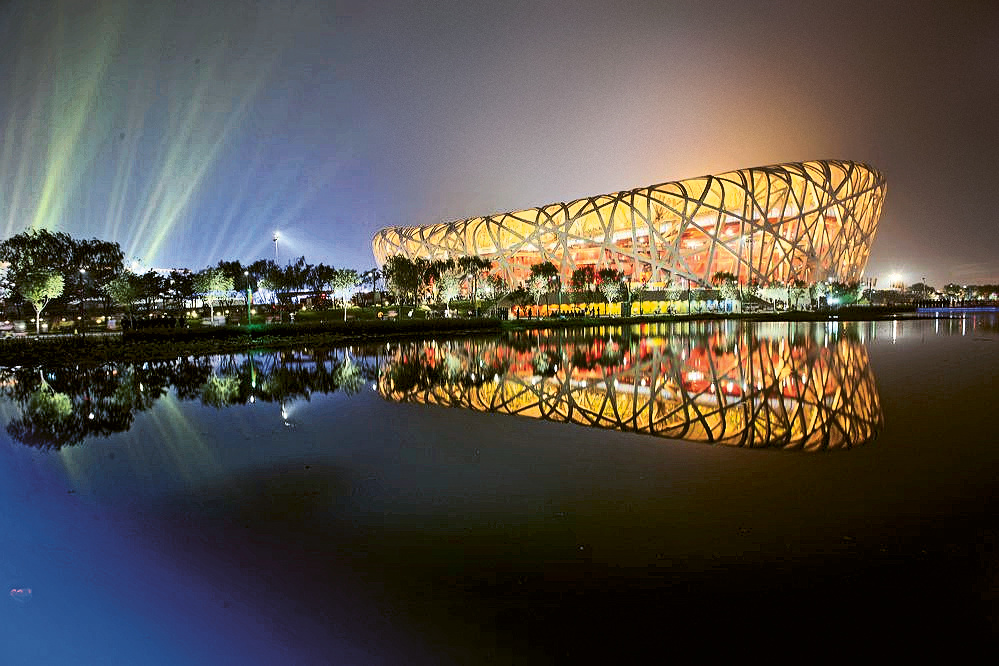
© Iwan Baan
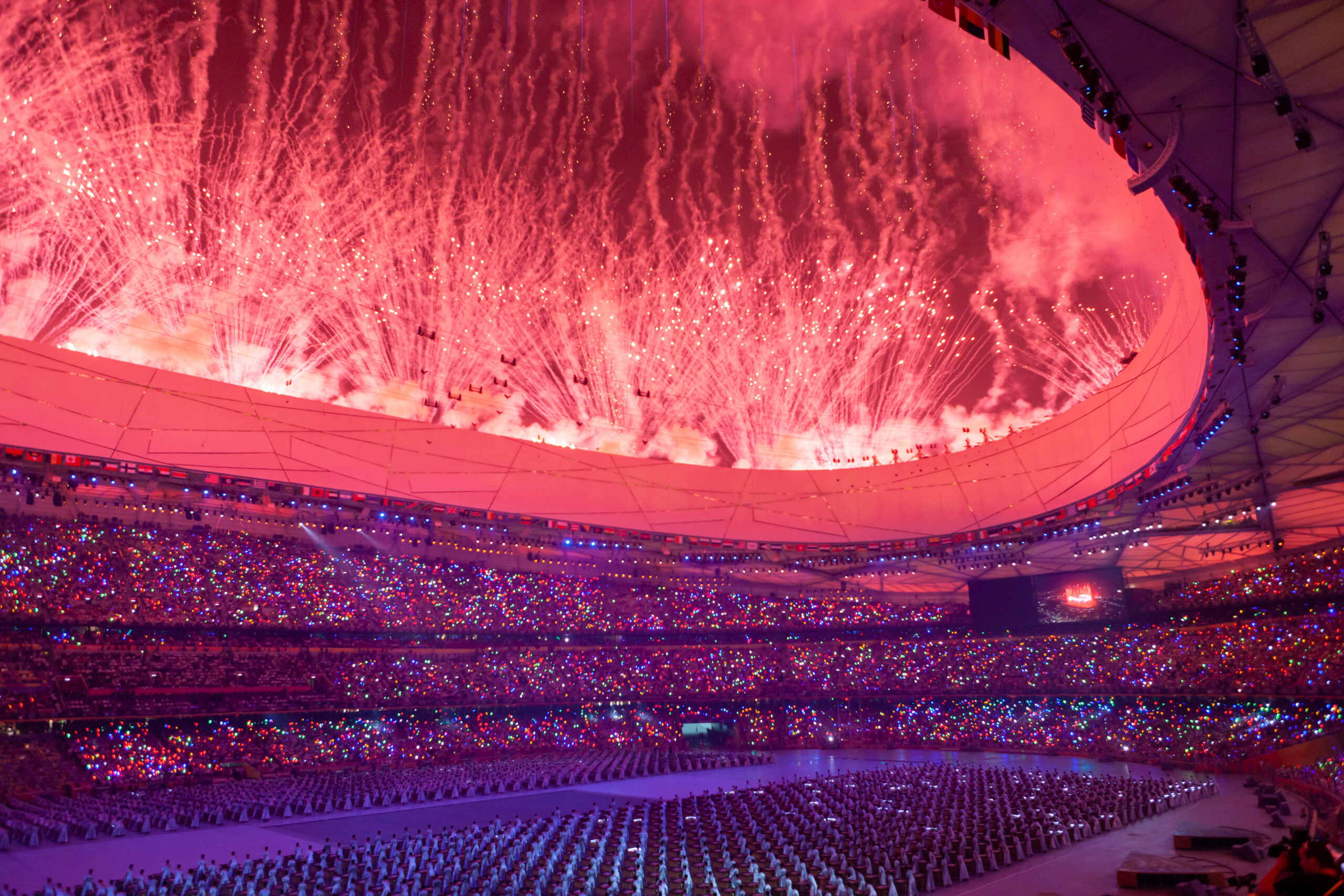
© Iwan Baan