Zoom Access Link: Drawing Progression Across the AccessArt Primary Art Curriculum

Drawing Progression Across the AccessArt Primary Art Curriculum.

Wednesday 11th February 2026, 4.00pm-5.00pm GMT.

In this session to help support teachers using the AccessArt Primary Art Curriculum and other AccessArt resources, we look at what progression in drawing might look like across Key Stages 1 and 2.

We recognise the challenges faced during curriculum planning, where knowledge is expected to be linear and to progress sequentially. This can be particularly challenging in drawing, where an emphasis on the formal elements can come at the expense of a creative journey.

AccessArt’s approach has always been to open up what drawing can be, both as an activity and as an outcome, to help pupils (and teachers) better understand its potential as an art form. In practice, this means balancing convergent drawing exercises, which can be repeated over time, with more divergent, project-based activities. We encourage schools to work with a wide range of media and subject matter, exploring different intentions and working at different scales. By combining observational drawing with more imaginative and experimental mark making, we give all pupils an opportunity to succeed.

In this session we share valuable approaches and tips for teachers, advise on curriculum planning, and help schools understand what progression in art might look like.

The session is suitable for teachers of all pupils, including those with SEND, and for schools using the AccessArt Split Curriculum as well as those teaching art each week.

This session will be recorded and available to AccessArt Members a few days after the event.

Log in below to access the link to the session.

If you have any issues logging in please contact andrea@accessart.org.uk.


Please log in here to access full content.

Username
Password


Remember me
Forgot Password


To access all content, I would like to join as…
An Individual

Creative practitioners, educators, teachers, parents, learners…


An Organisation…

Schools, Colleges, Arts Organisations: Single and Multi-Users


AccessArt is a UK Charity and we believe everyone has the right to be creative. AccessArt provides inspiration to help us all reach our creative potential.

CPD Recording: What’s Next for Art, Craft & Design in Schools?


Zoom Access Link: In the Studio: The AccessArt Treehouse Challenge


Drawing With Two Hands

You May Also Like…

see three shapes

3shapes

Feely Drawings

Sketching as you feel

Ten minutes, five times a week

Continuous line drawing of a Hoola Hoop


AccessArt Response to the Curriculum & Assessment Review and to the Government Response to that Review

On November 5th 2025, the Curriculum and Assessment Review Team, headed by Professor Becky Francis CBE, published their final report,  Building a World Class Curriculum for All.

The government published their response to this review.

As a Subject Association for Art, and a Visual Arts Education Charity, this post shares AccessArt’s initial response from an art, craft and design subject perspective.


Key Successes Within the Curriculum and Assessment Review (CaAR):

  • The EBacc has been removed. Introduced in 2010 by the Coalition Government to measure school performance based on a student’s GCSE results in the core subjects. The Review has listened and recognised that the EBacc results in fewer pupils taking arts subjects.

  • Progress 8 will be reformed to include equal weighting for arts, languages, and humanities. Progress 8 is a school performance measure that shows how much progress pupils have made from the end of primary school (Key Stage 2) to the end of secondary school (GCSEs).

During the CaAR process, the review team remained certain that Art, Craft and Design as a subject was doing well – a viewpoint contended by many subject experts. The CaAR therefore makes the following recommendations:

“We recommend that the Government:

  • Makes limited revisions to the Key Stage 1 to 3 Art and Design Programmes of Study to clarify and exemplify the knowledge and skills pupils should develop, including through their own creative practice, reflection and critical engagement.

  • Works with Ofqual and awarding organisations to clarify the volume and range of coursework students are expected to produce for GCSE Art and Design.” (pp 55 & 56 CaAR)

Encouragingly, the government’s response to the CaAR goes much further, and AccessArt is grateful for the explicit messaging within their response. In particular, we celebrate:

  • “Improve arts education – we will revitalise arts education as part of the reformed national curriculum and through high-quality support for teachers of these subjects.” (p9, second bullet point of the Executive Summary)

  • “The curriculum should be enriching in every single subject, including the arts subjects which are a fundamental part of the rich and broad education. The arts subjects are an entitlement rather than an optional extra and are disciplines in their own right, with unique pedagogies that the best schools teach with expertise and rigour. For example, the study of creative subjects can allow pupils to harness the process of creative endeavour, generating original works, fluency of communication and teamwork. Under this government, access to a high-quality arts education will not be the preserve of the 15 privileged few, but the entitlement of every child. That , is why we are committing to revitalise arts education as part of the reformed national curriculum and through high-quality support for teachers of these subjects.” (p14)

It is a huge win that the language the government uses around the arts indicates that, at long last, they are beginning to understand the arts as unique subjects, with unique demands and which bring very particular and powerful values to society.

Additionally:

  • “The response commits to ensuring that the new programmes of study have the right level of specificity to support effective sequencing, including for foundation subjects.”

  • That “Arts & Culture” are one of five core enrichment areas. (p40)

Opportunities yet to be Developed

There are several additional areas that AccessArt views as opportunities; however, these either currently lack the necessary detail to provide reassurance that they will have the intended impact or have been omitted from the documents altogether.

The Purpose of Art, Craft and Design Education

Whilst the government’s response does acknowledge the need for a rich curriculum with the arts at its centre, it would have been positive to see a statement in the CaAR or the government response that explicitly recognises the value a rich arts education brings to the whole child – and the benefits to individuals and to future society of learning through the arts as well as about the arts.

PE receives rightful acknowledgment of the personal and social benefits of the subjects:

“Redrafts the purpose of study for PE, retaining the importance of competitive sports, but clarifying the significance of providing all pupils with opportunities to learn in a physical environment and emphasising its physical, social, cognitive and emotional benefits that complement and enhance overall academic performance and general wellbeing.”

The CLA Capabilities Framework makes it clear the benefits of a rich expressive arts education for all, and the DfE are keen to encourage Curriculum Coherence across subjects, developing skills like oracy. A single sentence recognising the ways art, craft and design as a subject contribute to a holistic education would be welcomed. Whilst this is recognised within Enrichment Entitlement, it is also important that these qualities, values and capabilities are recognised within the curriculum subject itself.

Enrichment Entitlement

AccessArt, of course, welcomes the inclusion of art and culture within the Enrichment Entitlement for all pupils; however, we await further details on how this will be implemented. In particular, we caution against the loss of any statutory entitlement within the subject area itself. We are also interested in seeing what mechanisms will be put in place to ensure that all pupils receive the same high-quality enrichment offer.

National Centre for Arts and Music Education

The proposed National Centre for Arts and Music Education was announced earlier this year. As there appeared to be no consultation before its announcement, the CLA undertook their own consultation which can be found here. There is still no real detail on what the centre is to be, or how it is to be funded. Whilst we welcome the Centre in principle, we await the detail before we comment.

Progress 8

We welcome the idea that the creative subjects are to be placed on equal footing with languages and humanities, and we understand that further consultation is underway to inform the exact format of the “buckets”. However, we are concerned that schools will carry forward the legacy attitude that the arts are not to be valued as much as other subjects, and we look to the government for messaging to counteract this. We are also concerned that if there is an uptake in Art GCSE, we will not have the specialist teachers to meet the need in many schools due to previous declines (see below).

Art as a Unique Subject: Assessment

Whilst Ofsted and the government response to the Review both recognise that art is a unique subject with unique qualities and requirements, neither the government response nor the CaAR itself makes it clear what these unique qualities are. In turn, many SLTs do not understand these either, and we see many teachers struggle being asked to apply similar metrics and processes to art as are applied to other subjects. We believe there is a very real danger that with increased and continued testing at Primary and KS3, SLT and teachers will fail to understand that a) they do not need to apply the same metrics and processes to art as other subjects, and b) that any kind of assessment in art can have the unintentional impact of stifling creativity and exploration.

Instead, AccessArt would like to see it stated explicitly that it may not be in the pupils (or schools) best interests to attempt to assess art in similar ways to other subjects. Such a statement would in effect give schools permission to educate themselves on more appropriate ways to assess art, and therefore avoid a situation created through misunderstanding of the subject area which risks damaging pupils’ relationship with their own creativity.

Art as a Unique Subject: Knowledge and Sequencing

Likewise, it is important that schools are clear on the unique forms of knowledge within art, craft and design, and crucially, how pupils accumulate, embody and demonstrate this knowledge. CLA have written an article on the types of knowledge in art here.

And again, whilst the reviews talk about Curriculum Coherence, it is worth adding here that coherence and sequencing might look very different in expressive arts subjects to other subjects, and that those differences are profound. An example of this would be where purposeful “dissonance” could play a vital part in enabling creativity in art lessons, as a counterbalance to “coherence”.

Clear messaging from government would show it understands and is ready to promote these differences of approach, to the benefit of the subject.

Curriculum Change

If we are to see effective curriculum change as a result of the CaAR, even with the modest changes the CaAR recommends to art, craft and design, we do need to acknowledge:

  • Initial Teacher training and CPD – In 2024/25, the government funded 680 Initial Teacher Training (ITT) bursaries awarded for Art and Design. Future bursaries have now been withdrawn. There is already a shortage in specialist art teachers. We have yet to hear how CPD will be funded (and how it will be provided) for teachers to enable them to reskill.

  • Budgets for Materials and Resources – Earlier this year, we surveyed school budgets for art materials. Without budgets being addressed, schools will continue to find it hard or even impossible to resource a curriculum.

  • Oak – Frequent mention of Oak National Curriculum resources is made in both the CaAR and in the government’s response to the review:

“Bodies such as Oak National Academy may be able to support teachers in this area by providing teachers with resources, progression scaffolds and exemplification of good practice.” (p53 CaAR)

“In addition, we note that this ambition could be supported in a number of additional ways, such as exemplification resources (such as those produced by Oak National Academy) and encouraging publishers and exam boards to continue to offer a wide selection of texts and accompanying materials.” (p78 CaAR)

“Such practice might be bolstered through exemplification resources, such as those published by Oak National Academy.” (p86 CaAR)

It is clear that the government considers Oak has a role to play in delivering any redeveloped curriculum. As an organisation that turned down the opportunity to create resources for Oak, AccessArt raises the following points:

AccessArt Summary

We recognise this is just the beginning of the proposed changes, and we are ready to share our passion and expertise:

  • We will continue to develop the work of AccessArt, as Subject Association for Art, helping thousands of schools develop their aspirational visual arts education offer.

  • We will continue offering our expertise to Government.

  • We will continue presenting our ideas at the All Party Parliamentary Group for Art, Craft and Design Education.

  • We will continue to share our expertise and support others via:

    • NEU Arts & Minds Campaign

    • Museum and Gallery Task Force (CaAR)

    • CLA, Save our Subjects Campaign and beyond


Paula Briggs, CEO & Creative Director, AccessArt
November 2025


Adapting AccessArt: Plinth People

This Project Uses The Following Resources…

Plinth people: Sculptural Self Portraits

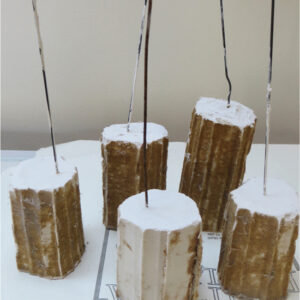
Once the plaster was set the cardboard was removed. The corrugations gave the plinths an architectural feel

Quick Clay Figurative Sketches

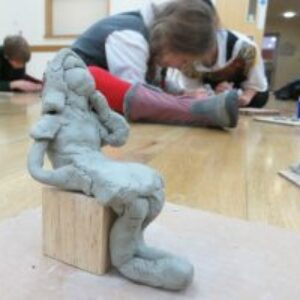
Quick clay figurative sketch


Landscapes Inspired by John Piper


How I use my Sketchbook as a Painter and Maker, by Rowan Briggs Smith


CPD Recording: The CLA Capabilities Framework: What Is It and How Might It Inform Art Education in your School?


Transforming Letters

You May Also Like…

cut out typography

Cut Out Typography By Tobi Meuwissen

typography for children

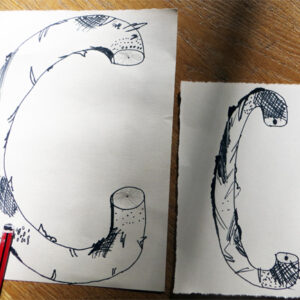
Upper and lower case "C" inspired by twigs

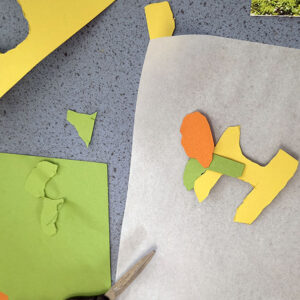
drawing with scissors

AccessArt Survey for Primary Schools

CPD Recording: Transforming Letters

Cutting and Arranging Letters by Charlotte Puddephatt


CPD Recording: Sketchbook Share


Talking With Your Hands


Destroying to Create


Art Budgets in Schools – Spend per Pupil

In 2025 we invited schools to tell us how much you had to spend on art resources each year. Here is a summary of what you told us:


AccessArt Becomes a Member of the British Educational Suppliers Association (BESA)

BESA LogoAccessArt is proud to announce that we have become a member of the British Educational Suppliers Association (BESA).
BESA is the UK’s trade association for educational suppliers, championing companies that deliver high-quality products and services to schools. Their Code of Practice ensures trust and excellence, giving educators confidence in their choices. Through research, insights, industry events, and policy advocacy, they help members navigate the evolving education landscape.

With over 90 years of experience, BESA is committed to advancing the sector and driving best practice, shaping the future of learning in the UK and globally.

As a member, AccessArt commits to the BESA Code of Practice.

We hope this membership demonstrates to our audience our continued commitment to providing the very highest service in helping to provide educational materials to schools and other learning environments, both in the UK and overseas.

Find out more about AccessArt


AccessArt Wins The InSEA Advocacy Award for Organisations 2025

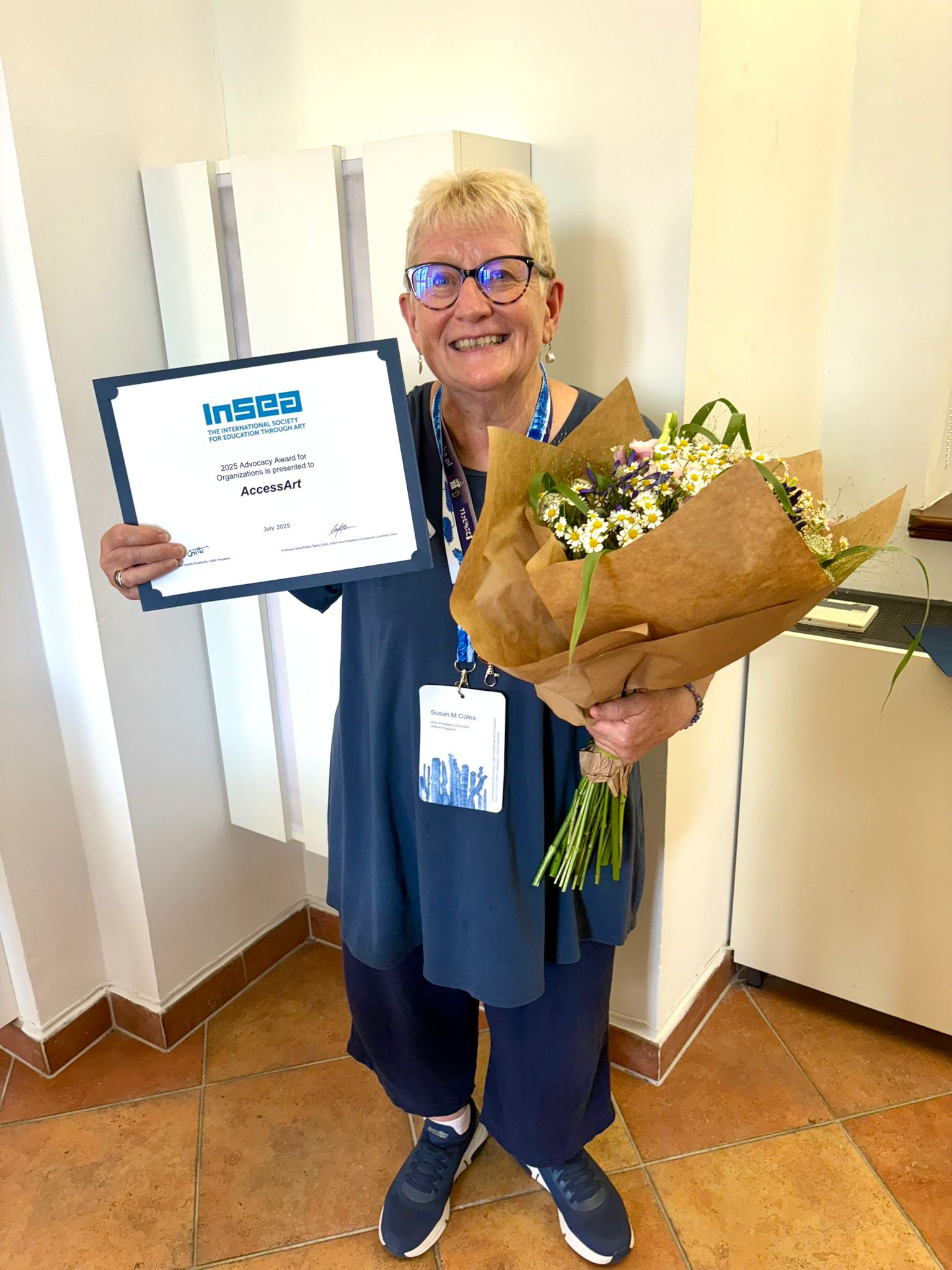
AccessArt is thrilled to announce that we were awarded the InSEA Advocacy Award for Organisations 2025 at the 38th InSEA World Congress held in Olomouc, Czech Republic. 

InSEA (International Society for Education through Art) is the official UNESCO organisation for global visual art education.

The award is presented to organisations that support the mission of InSEA— “the encouragement and advancement of creative education through art and crafts in all countries and the promotion of research and praxis about art education to foster international understanding”.

This award recognises the contributions of InSEA member organisations that have actively worked to further these goals. The InSEA Advocacy Award also serves as an incentive for cross-organisational collaboration, spotlighting contributions that align with InSEA’s mission.

AccessArt is a proud member of InSEA. Thank you to Susan Coles for accepting the award on our behalf.

Susan Coles accepting the InSEA award


Co-Design in the Classroom

You May Also Like…

Our Creative Community: A pupil-led Project

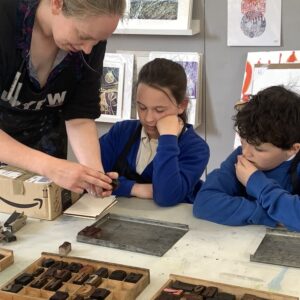
Prepping Letterpress by Natalie Deane

Visual Arts Pedagogy

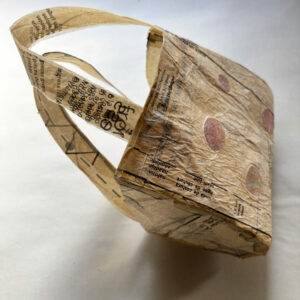
paper bag


Art in Times of Ill Health

You May Also Like…

AccessArt treehouse

AccessArt Treehouse Logo

AccessArt Wellbeing Resources

Tying the Drawing Together by Rowan

Which Artists: Merlin Evans

Visualising Mental Health By Merlin Evans


Dreaming With Watercolour

You May Also Like…

let me inspire you by emma burleigh

Colourful mixed media painting by Emma Burleigh

Globe paintings

Globe Paintings with Stephanie Cubbin

introduction to watercolour

Creating a watercolour wash

See all send resources

Benton Dene School by Clare Boreham


AccessArt Birds

At AccessArt, creativity is at the heart of everything we do. So, when it came to refreshing our team page, we wanted to reflect the imaginative, playful spirit that connects us all.

The AccessArt bird has been part of our logo since 1999. It was inspired by a wire bird created by a child during one of our early workshops. Therefore, instead of using traditional photographs, we decided to introduce ourselves through images of birds. Each bird was carefully chosen by a team member to represent a personal connection, a memory, or a specific personality trait.

Beautifully illustrated by Tobi Meuwissen, this joyful and diverse flock reflects not only who we are as individuals but also the collaborative spirit that defines AccessArt.

Once we’d each chosen our bird, it was over to Tobi to turn our ideas into beautiful, characterful illustrations. Using a blend of traditional drawing instincts and digital tools, Tobi captured the spirit of each bird and each team member. Below, she explains how the process unfolded.


Birds Together by Tobi Meuwissen

As a trained illustrator, I love it when projects where I can use my skillset come up, and this was no different – spending hours drawing away on my iPad brought me lots of joy. Usually, I would begin all of my illustrations on paper in my sketchbook, but I felt that with so many birds to do, Procreate would be my friend.

Procreate is a creative app that acts as a digital sketchbook; with many different pens, colours and textures to choose from, it makes the drawing and editing process quick and polished (although it doesn’t compare to the joy and discovery of working with real materials).

We began by inviting each team member to choose which bird they would like to represent them, and then I started one-by-one with the drawings.

Starting a project can feel a bit like trial and error; going in without a plan and seeing what happens can be enabling to get over the fear of the blank page. I didn’t follow the same formula for every bird; some started with bold and loose outlines, and others were tighter and more controlled.

Bird Outlines by Tobi Meuwissen

The ease of Procreate is that it works with different layers, so you can see below how I built up the different marks and colours to create texture and tone.

Owl Development by Tobi Meuwissen

Altogether, we have 15 different birds representing all team members, founders and trustees, ranging from the quirky, such as the Silver Polish Rooster, to the bright and brilliant Puffin and the familiar-feeling birds that frequent our gardens daily, such as the Sparrow and Blackbird.

As well as sharing the type of bird we wanted to be represented by, we thought it would be nice to share the reasons why that particular bird resonated with us…


AccessArt Co-Founders

“I love watching Sparrows – always on the move and happily chirping together in hedgerows. As CEO of AccessArt, I thought hard about how I wanted the bird I chose to represent the qualities I think I can help engender in the team. I do see us as a flock – and I like that Sparrows symbolise joy, happiness, resilience, adaptability, freedom, and protection – all words I think can be applied to AccessArt as an organisation.” Paula (Current CEO and Creative Director)

“We’ve put Swift boxes up this year and enjoyed watching them all summer. That’s my favourite bird at the moment.” – Sheila (Retired 2020)


AccessArt Team

AccessArt Team by Tobi Meuwissen

“I’ve always loved living near the sea, and the Oyster Catcher has been a constant sentry to my life as a consequence, especially when in the wilder, more northern places. It’s insistent, shrill call is oddly comforting, and its stylish orange beak makes me smile.” – Alison

“When I’m out walking and hear the Thrush, perched high in the sycamore trees, its song always lifts my heart and brings a small moment of joy.” – Andrea

“I love the way Indian Runner Ducks move and interact with each other with lots of energy and curiosity, their oddities make me smile.” – Tobi

“My bird choice is a Robin, as my daughter and nieces have always said it’s their Grandad’s spirit coming back to visit them! I love the constancy of Robins, with their singing and presence felt even in the coldest and darkest times of the year.” – Rachel

“I chose to be represented by a Tawny Owl as I’m always looking all around.”  Joe

“I have unruly grey-streaked brown curly hair, so my son chose the Silver Polish Rooster for me, as it was ‘hairy-headed Mo

“I’ve always loved the Blackbird’s song – it’s a reminder to stay grounded, observant and find joy in small, everyday things.” Lou

Flamingos are tall (like me), pink (my favourite colour) and spend a lot of time standing on one leg (I do a lot of yoga!)” – Louise


Trustees

Trustees by Tobi Meuwissen

“I chose the colourful Greenfinch because it always makes me think of the joy it brings my parents to see the ‘charm’ of finches that would enjoy the feast they left for them in their garden.” – Kate

“Blackcap – Small, not a snazzy dresser, often seen in woodland, and never stops chirping at the top of its voice. A creature after my own heart…” – Chris

“Their loyalty, unique beaks, and expressive faces make them both adorable and fascinating to watch. I love Puffins.” – Susan

“Watching the beautiful Blue Tits zoom and dive in the hedgerows uplifts me and gives me a feeling that all is well in the world.” – Anne

<< Find Out More About The AccessArt Team