Sculpture Balance
Pathway: Exploring Identity
Pathway for Years 5 & 6
Disciplines:
Collage, Drawing, Sketchbooks
Key Concepts:
-
That artists embrace the things which make them who they are: their culture, background, experiences, passions – and use these in their work to help them create work which others can relate to.
-
That people are the sum of lots of different experiences, and that through art we can explore our identity.
-
That we can use techniques such as working with layers to help create imagery which reflects the complex nature of our identities.
-
That as viewers we can then “read” imagery made by other people, unpicking imagery, line, shape, colour to help us understand the experience of the artist.
In this pathway children are introduced to artists who explore their identity within their art.
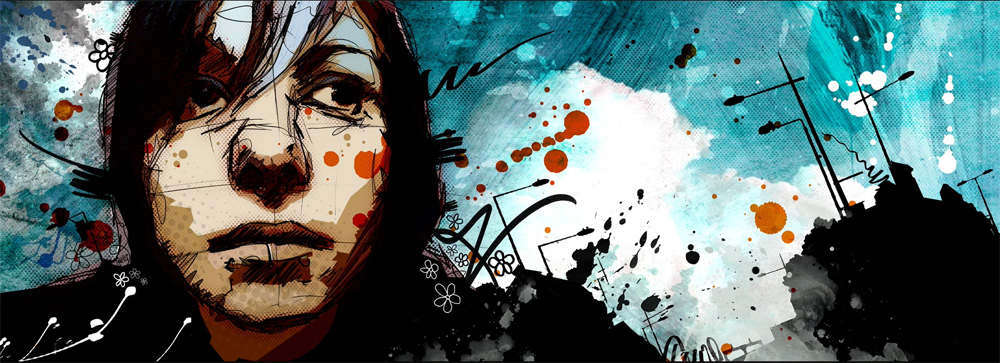
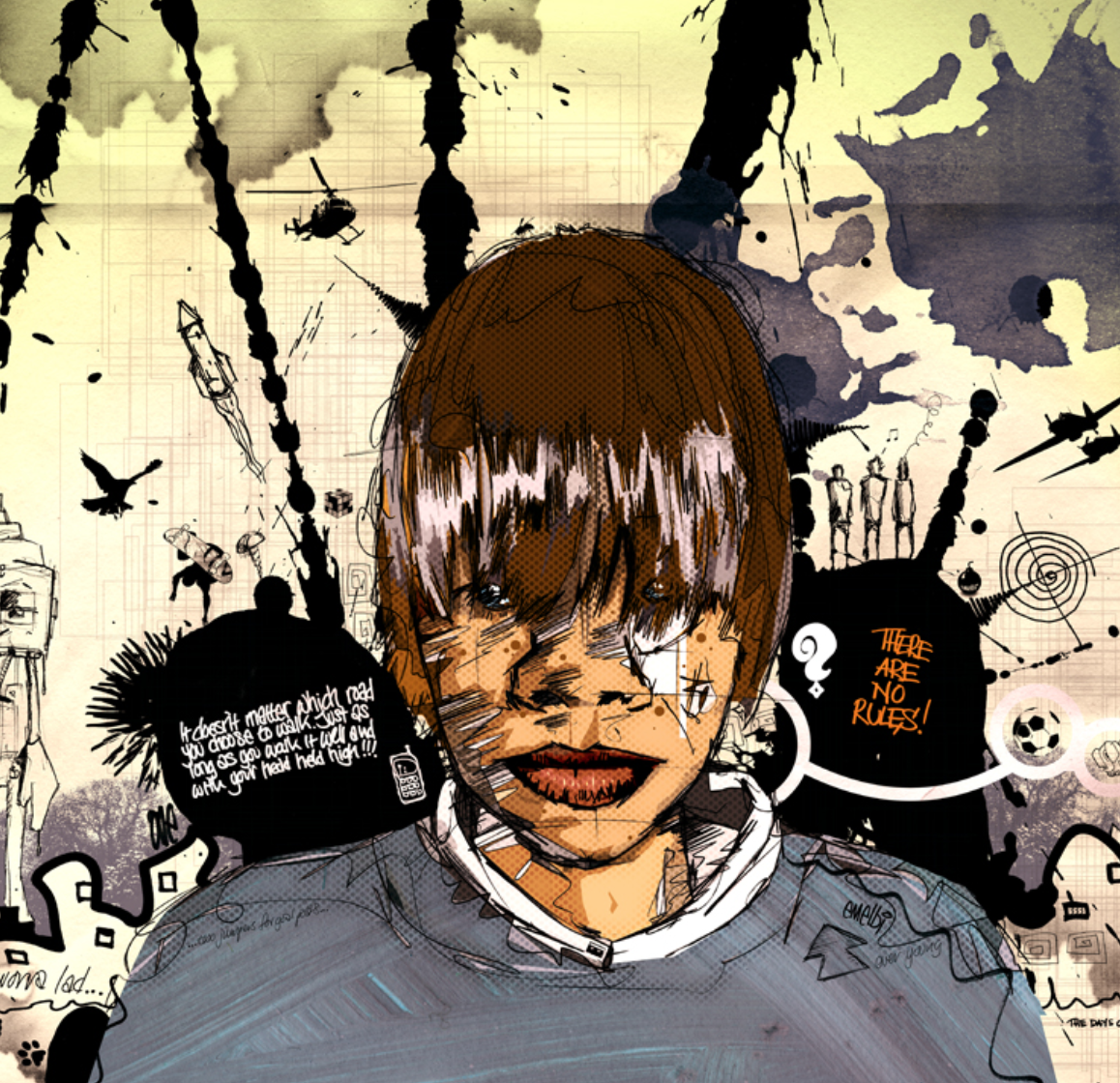
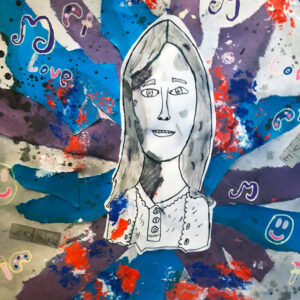
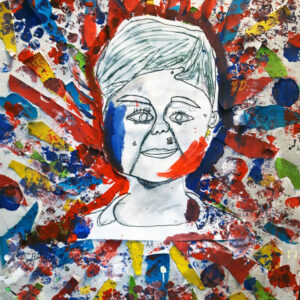
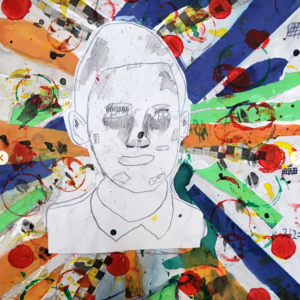
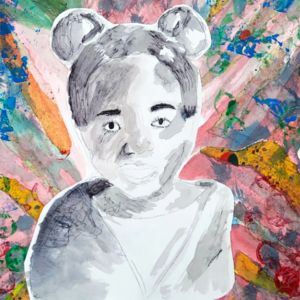
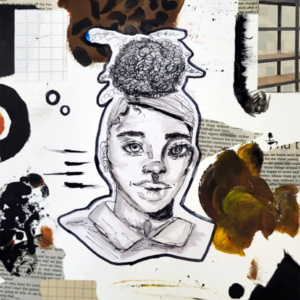
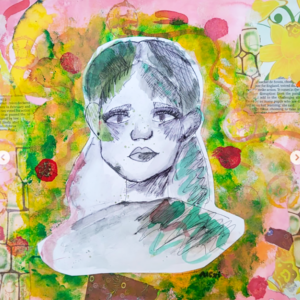
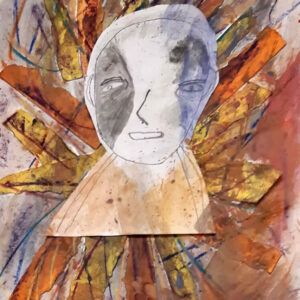
Pupils explore how artists use various aspects of their identity, creating imagery which explores many different aspects within one image by using layers and juxtaposition. Children listen to how the artists construct their work, before working physically in drawing and collage or digitally on a tablet to make their own layered and constructed portrait.
Pupils also use sketchbook throughout to help them generate ideas, experiment with materials and techniques, and record and reflect.
Medium:
Drawing Materials, Tablet (if digital), Paper
Artists: Njideka Akunyili Crosby, Yinka Shonibare, Thandiwe Muriu, Mike Barrett
This pathway will take approximately half a term, based upon a weekly art lesson.
If you use this resource in your setting, please tag us on social media: #InspiredBy @accessart (facebook, twitter) @accessart.org.uk (instagram) and share the url. Thank you!

Teaching Notes
Find the MTP for this pathway here.
Curriculum Links
History: Explore the identity of a figure from your chosen history topic.
PSHE: Collaboration, Peer Discussion, Different Religions, Ethnic Identity.
I Can…
-
I have seen how artists explore their identity by creating layered and constructed images. I can share my response to their work with my classmates.
-
I can use my curiosity to think about how I might adapt techniques and processes to suit me.
-
I can use my sketchbook to record, generate ideas, test, reflect and record.
-
I can work digitally or physically to create a layered portrait to explore aspects of my identity, thinking about line, shape, colour, texture and meaning.
-
I can share my work with my classmates, articulate how I feel about the journey and outcome. I can listen to feedback from my classmates and respond.
-
I can appreciate the work of my classmates and I can reflect upon the differences and similarities of their work (and experience) to mine. I can share my response to their work.
-
I can take photographs of my artwork, thinking about lighting, focus and composition.
Time
This pathway takes 6 weeks, with an hour per week. Shorten or lengthen the suggested pathway according to time and experience. Follow the stages in green for a shorter pathway or less complex journey.
Materials
Soft B pencils, handwriting pens, sharpies, oil/chalk pastels, acrylic or ready mixed paints, inks, brushes, A4 cartridge paper, collage papers, digital devices (tablets) if working digitally.
Pathway: Exploring Identity
A PDF of this pathway can be found here.
-
Aims of the Pathway
The aim of this pathway is to enable children to explore how artists embrace aspects of their experience of life – using their background, culture, race, gender, and interests to inform and shape their artwork.
- Week 1: Introduce
Discover Artists & Approaches
Explore the free to access Talking Points below and introduce pupils to artists who work with notions about identity.
Explore as few or as many of the artists below as you would like:
-
Talking Points: Njideka Akunyili Crosby
-
Talking Points: Yinka Shonibare
-
Talking Points: Thandiwe Muriu
Have sketchbooks open and make time during the exploration to use the “Making Visual Notes” resource. For example pupils might make references, collect ideas, jot down methods of working, draw equivalents etc.
-
- Week 2: Sketchbook work
Portrait Club
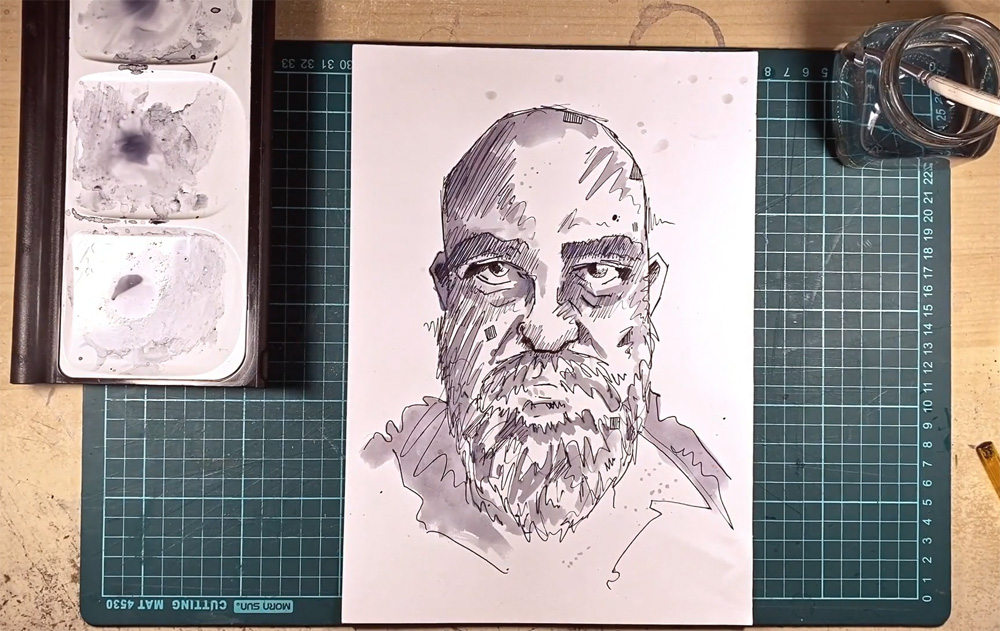
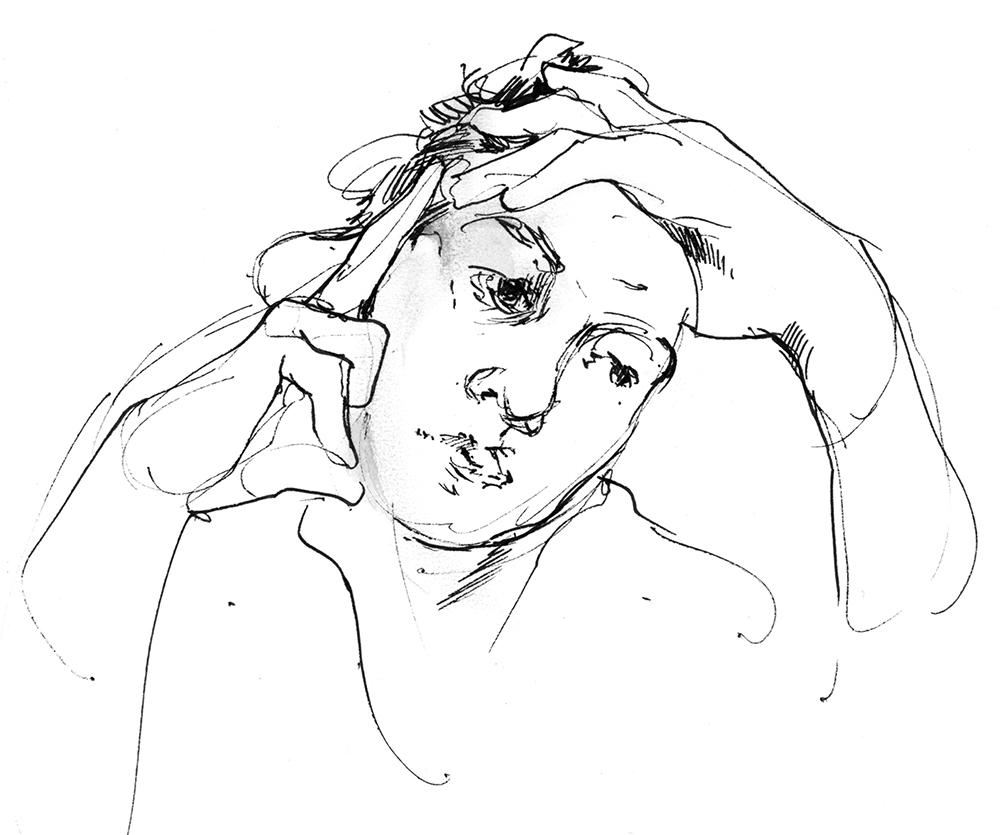
Bring portraiture into the classroom in a light-hearted flexible way with the “Portrait Club” resource. Encourage open and intuitive observational drawing.
- Weeks 3, 4 & 5: Explore & Create
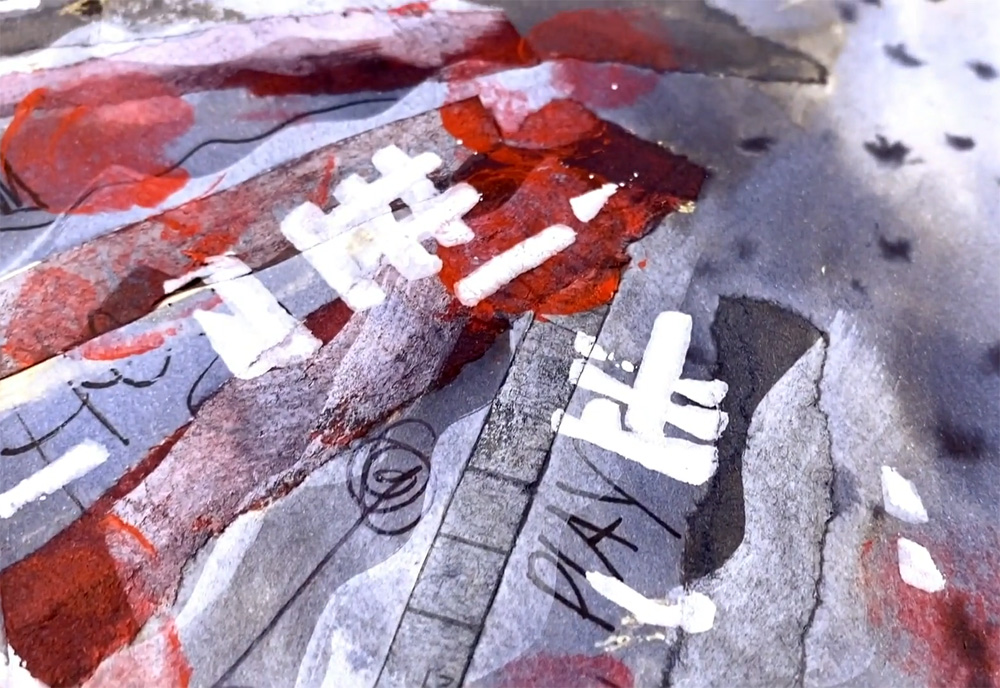
Making Layered Portraits
Use the “Let Me Inspire You: Mike Barrett” resource to enable a physical (using drawing materials, paper, collage), or digital exploration of how to make a layered portrait which captures aspects of your personality and identity.
The resource consists of 4 parts: a video from Mike introducing himself and then 3 stepped stages to the project.
Use sketchbooks throughout to help explore and focus, test and reflect.
- Week 6: Present & Share
Share, Reflect, Discuss
Time to see the work which has been made, talk about intention and outcome.
If you have class cameras or tablets, invite the children to document the work, thinking about lighting, focus and composition.
Use the resource here to help you run a class “crit” to finish the project.
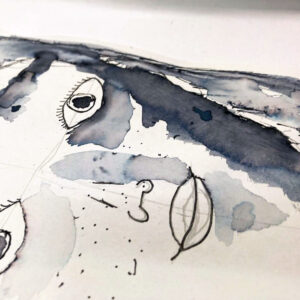
See the Pathway Used in Schools…
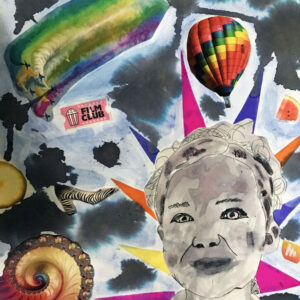
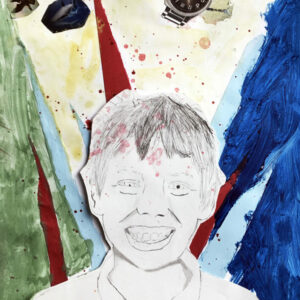
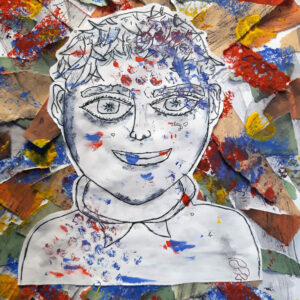
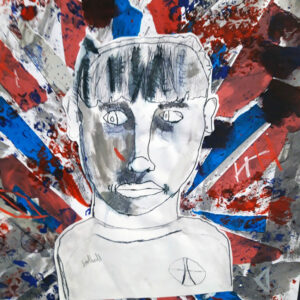
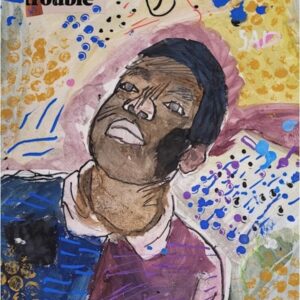
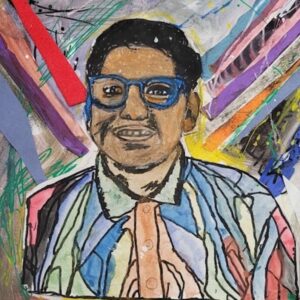
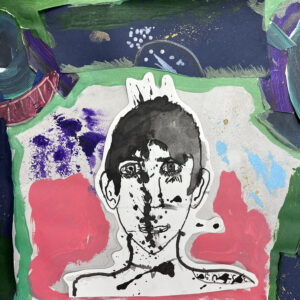
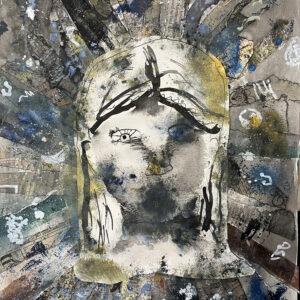
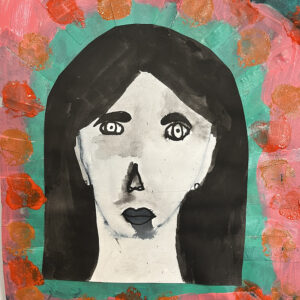
If You Use AccessArt Resources…
You might like to…
Join our Facebook Group
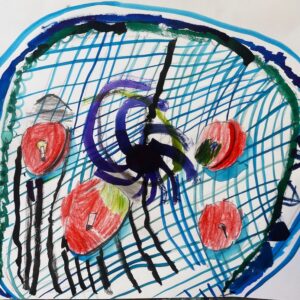
Join the AccessArt Network group on Facebook and ask questions of others using our resources
Share and Tag
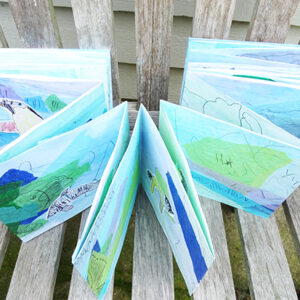
Share photos of work made by tagging us on social media
You May Also Like…
Self Portraiture photography
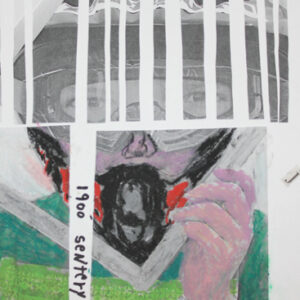
Explore photography, drawing and mixed media activities
Celebrating class success
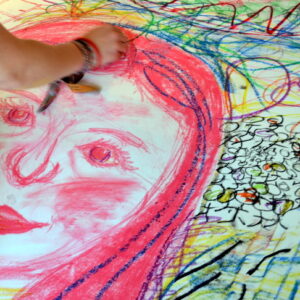
Create large scale drawings of classmates using pastels
Exploring Portraits
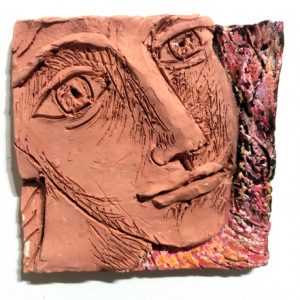
Explore features through collage, clay and/or print
escaping wars and waves by Olivier Kugler
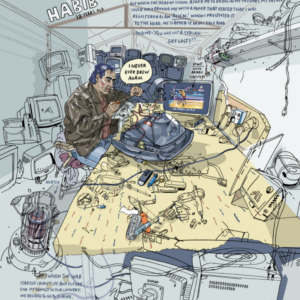
Explore Illustrator Olivier Kugler Book exploring stories of Syrian Refugees
Repetitive Life Drawing Exercise
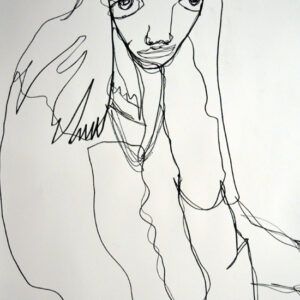
Create continuous line drawings of classmates inspired by Matisse
Pathway: Fashion Design
Pathway for Years 5 & 6
Disciplines:
Fashion, Painting, Collage, Sketchbooks
Key Concepts:
-
That designers bring their own culture, experiences and passions into their designs, for other people.
-
That as individuals we can grow our experience of the world by experiencing (seeing, listening, taking the time to understand) the creativity expressed by other people.
-
That we can use colour, pattern, line, shape, form, material, texture to express our creativity.
-
That when we design fashion, we can understand what it might feel like to wear the clothes. How would they change the person wearing or seeing them?
-
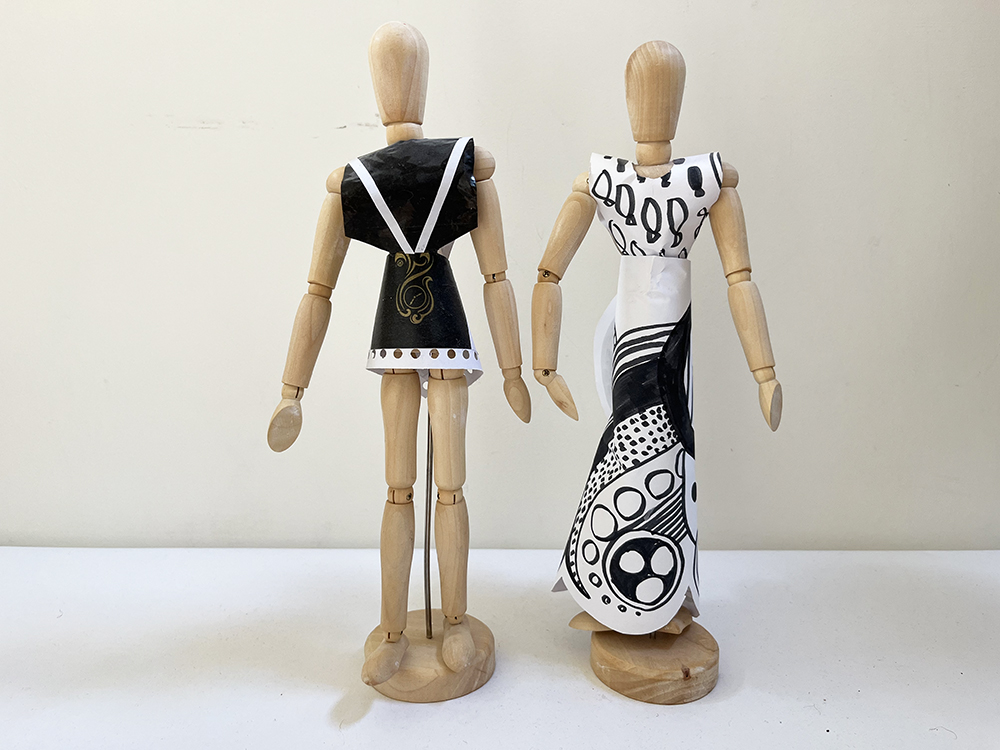
That when we design clothes, we can build an awareness of how 2d shapes might become 3d forms.
In this pathway children are introduced to the idea that design is often about relationships – between the designer/artist and the person who then sees, buys or wears the end result. Where and how do the experiences and passions of both designer and viewer meet? How is one affected by the other and what can we learn from each other?
Children are introduced to contemporary fashion designers and use sketchbooks to record things about the designers which interest them, or to note ways of working which may be useful.
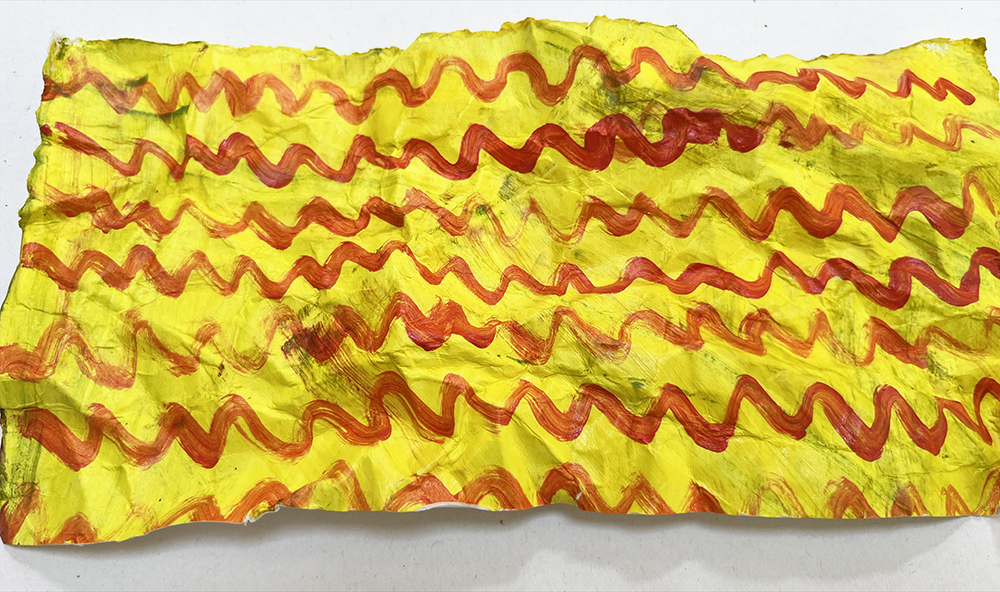
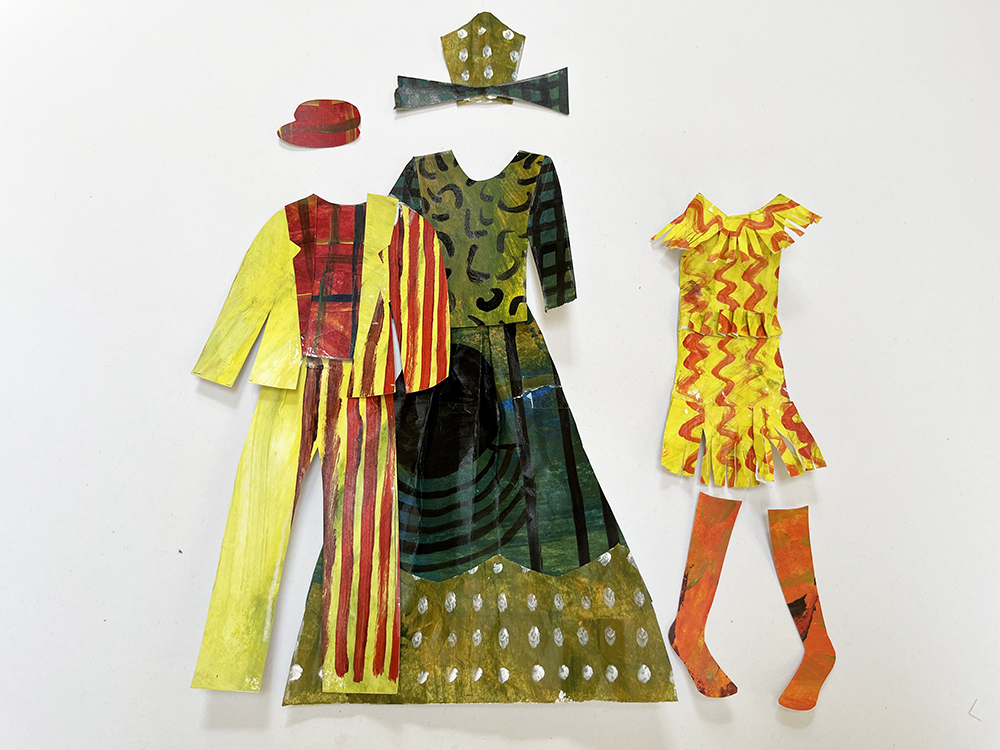
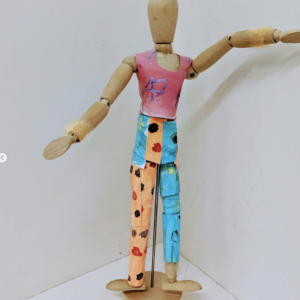
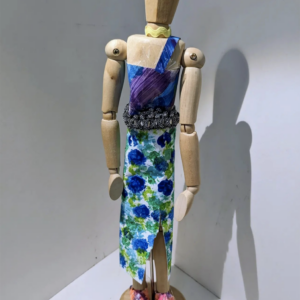
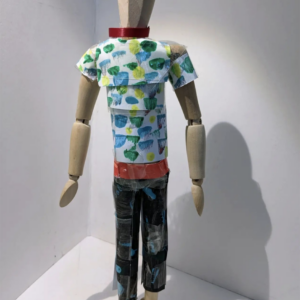
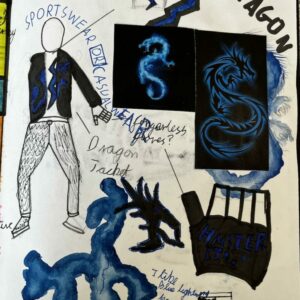
Pupils are then given a design brief and invited to make their own designs, again working in sketchbooks to explore and test, before making decorate papers through which they can bring their designs to life in 2d or 3d.
Medium:
Paper, Acrylic Paint, Tape
Artists: Alice Fox, Rahul Mishra, Pyer Moss, Tatyana Antoun, Hormazd Narielwalla
If you use this resource in your setting, please tag us on social media: #InspiredBy @accessart (facebook, twitter) @accessart.org.uk (instagram) and share the url. Thank you!
Teaching Notes
Find the MTP for this pathway here.
Curriculum Links
Geography: Trade links and the history of importing textiles from other continents.
History: Design clothing inspired by your chosen civilisation topic e.g. Ancient Greek elite, slaves, gods or goddesses.
Maths: 2D / 3D shapes, measuring.
Music & Drama: Create costumes for, or in response to, drama or music productions.
PSHE: Responsibility to the planet, Collaboration, Peer Discussion, Different Religions, Ethnic Identity.
I Can…
-
I have explored the work of contemporary fashion designers and I can see how their interests and experiences feed into their work.
-
I can share my own response to their work, articulating what I like or don’t like about their work.
-
I can use my sketchbook to make visual notes to capture key ideas about how the designers work.
-
I can listen to a design brief, and use my sketchbook to generate and test ideas, explore colour, line, shape, pattern in response to the brief.
-
I can use my sketchbook work to inform how I make a 2d (or 3d) design, using paint, paper and collage.
-
I can understand how 2d shapes can become 3d form and the relationship they have to our bodies.
-
I can share my designs and outcomes with my classmates and articulate my journey. I can listen to their feedback and respond.
-
I can appreciate the work of my classmates and reflect upon similarities and differences. I can share my response to their work.
-
I can take photographs of my work, thinking about presentation, lighting and focus.
Time
This pathway takes 6 weeks, with an hour per week. Shorten or lengthen the suggested pathway according to time and experience. Follow the stages in green for a shorter pathway or less complex journey.
Materials
Soft B pencils, graphite, handwriting pens, sharpies, coloured pencils, watercolour, acrylic paint, brushes, assorted coloured papers and fabrics, A4 cartridge paper, cardboard or wooden mannequins, clear tape (and ideally tape holders), scissors, glue sticks.
Pathway: Fashion Design
A PDF of this pathway can be found here.
-
Aims of the Pathway
This pathway aims to present pupils with an opportunity to see how designers work to bring their own background, culture, passions and concerns into their fashion design. The pathway invites pupils to work to a design brief and express their response in two or three dimensions.
- Week 1: Introduce
Fashion Designers & Artists
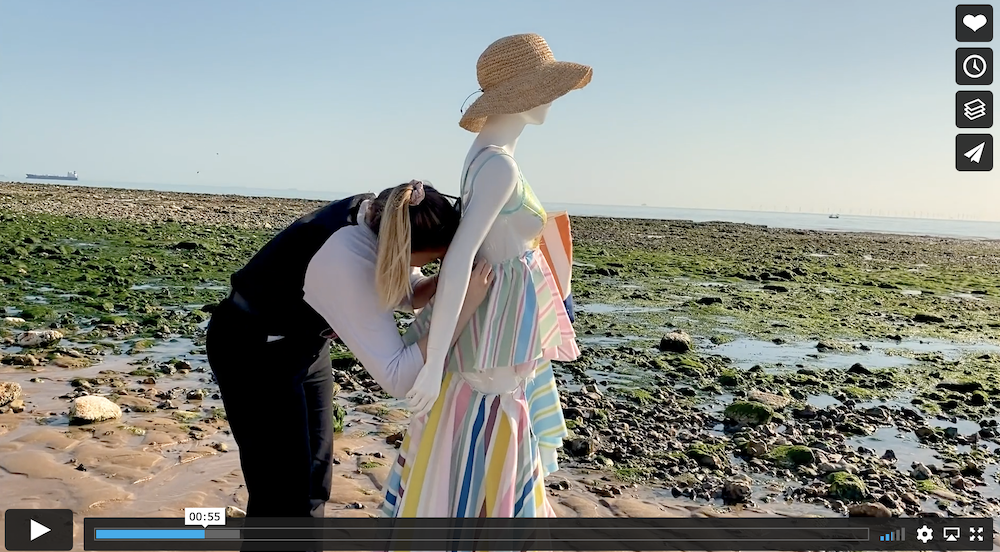
Choose 2 or 3 of the designers below and explore their work via the free to access Talking Points resources.
As you explore as a class, use the “Making Visual Notes” resource to help pupils to make visual notes in their sketchbooks.
Alice Fox
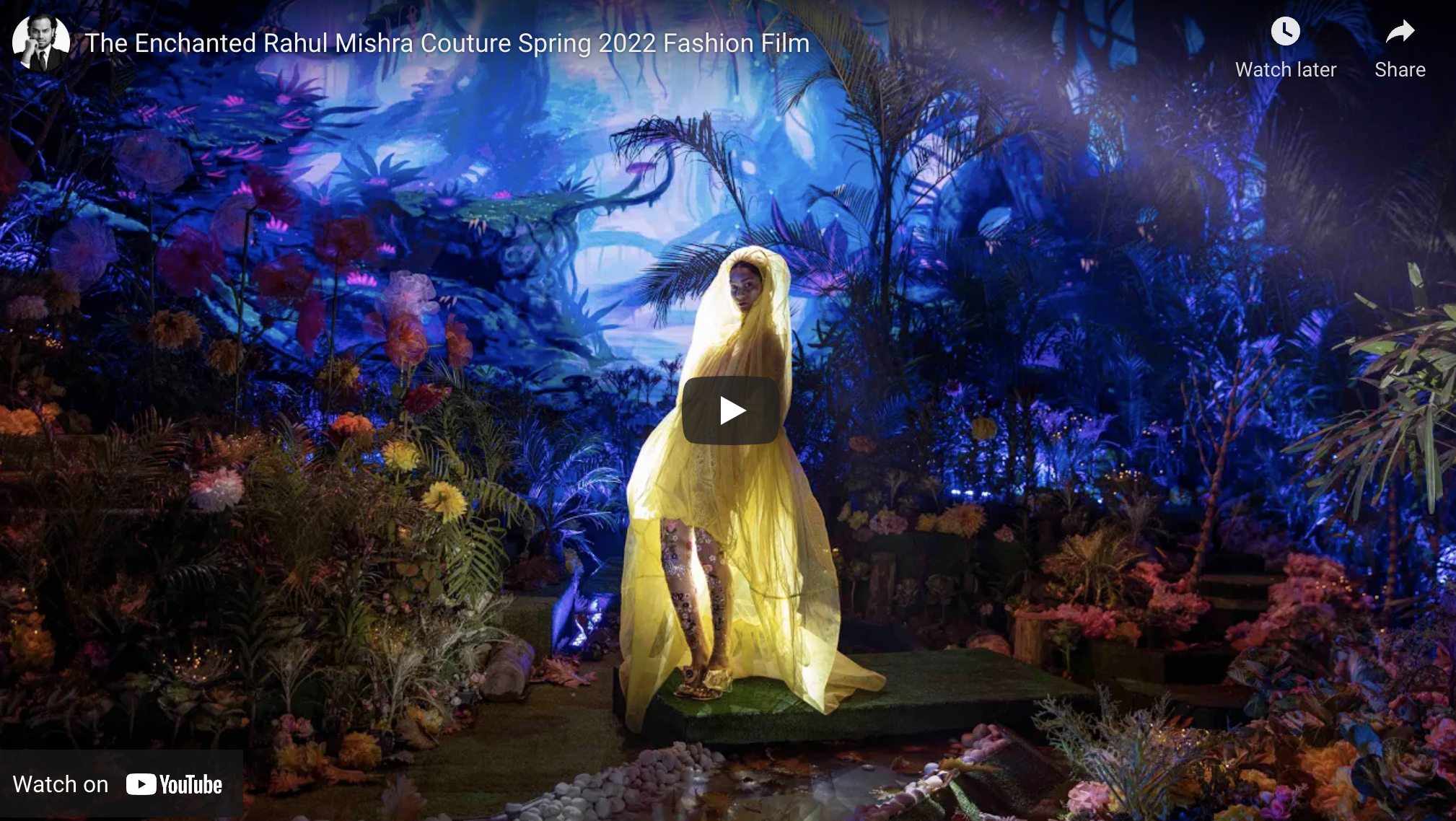
Rahul Mishra
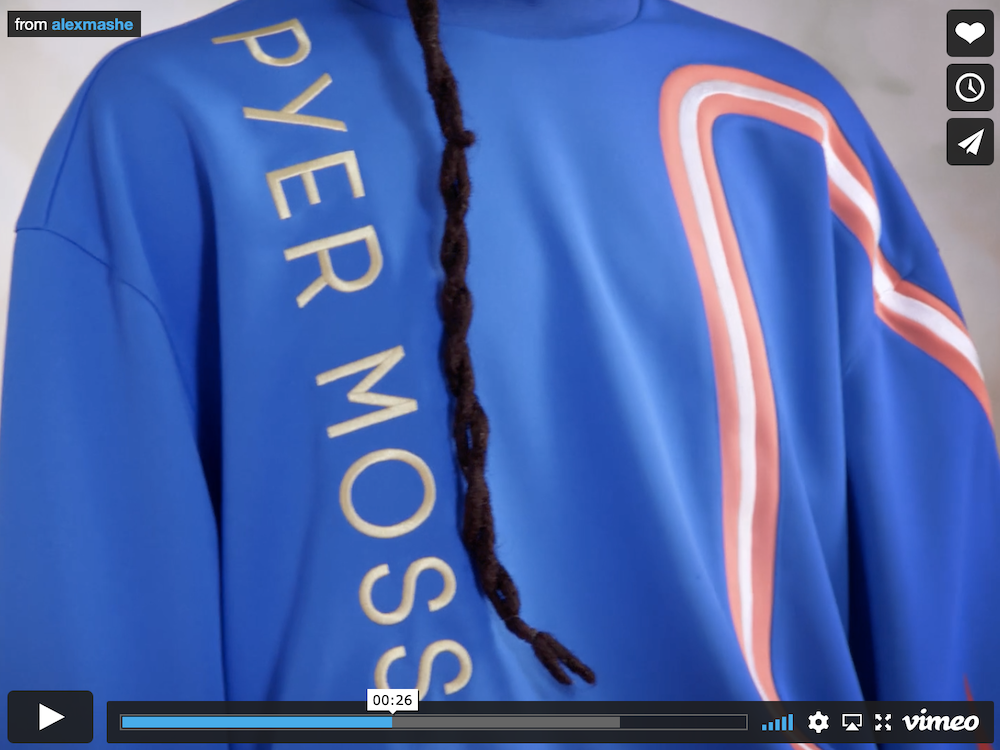
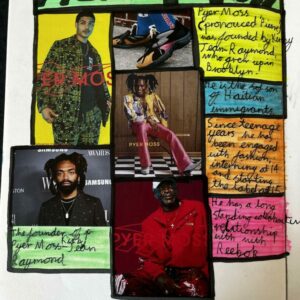
Pyer Moss
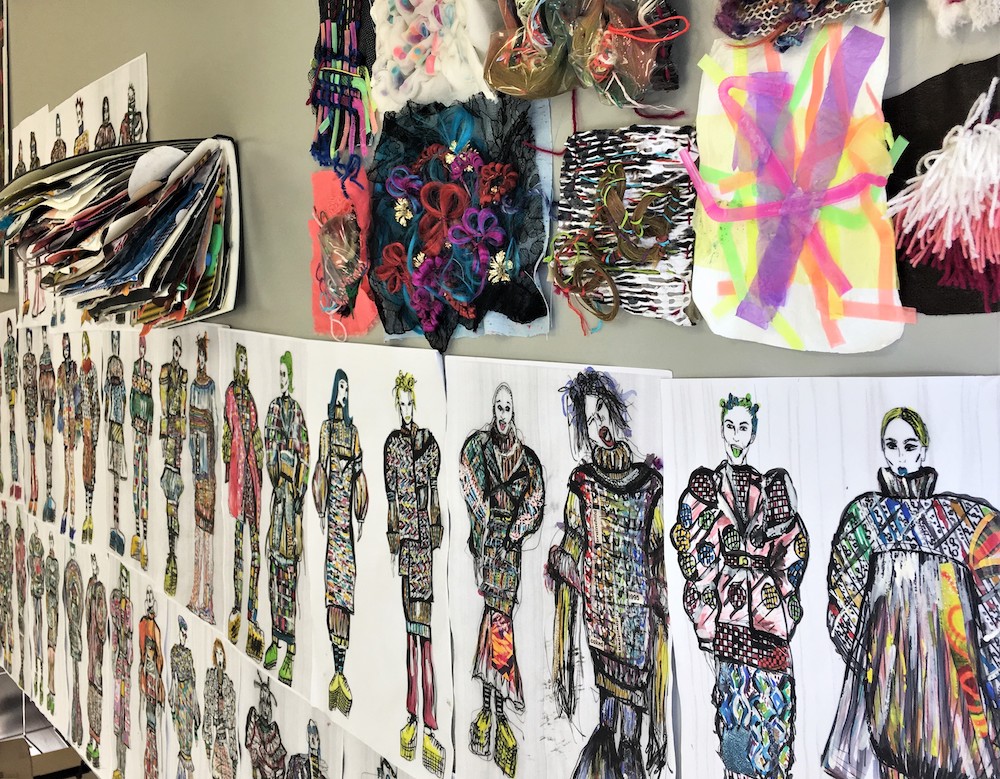
Tatyana Antoun
- Week 2: Brief
Working in Sketchbooks
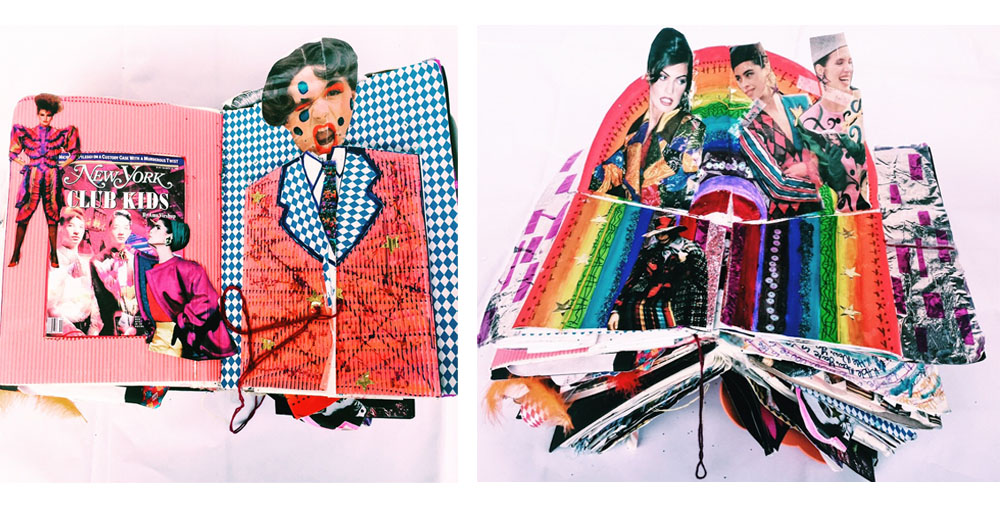
Set a design brief. You might decide that pupils have free choice to design whatever fashion they like, or you might like to tie the project in with another curriculum theme, for example designing for another culture, era or geography. Be creative in your brief setting, i.e. If I was living in Ancient Greece, what would I wear which combines what I like about todays fashion, with what they used to wear? Or, If we live on Mars, what might we wear which reminds us of Earth?
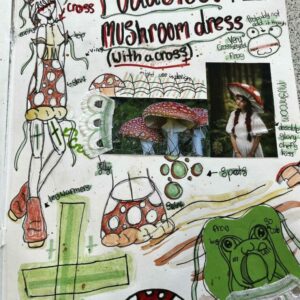
Revisit sketchbook work from last week to remind pupils how the designers you looked at work. Pupils will use sketchbooks to generate and test ideas, experiment with shape and form, pattern, colour and texture. They will think creatively about what elements can be added and stuck into sketchbooks, e.g. paper, fabric, thread etc.
Remember: Whatever the theme brief, once you get children to start generating ideas on paper, you must be able to provide suitable paint/paper for next weeks session so that they can continue the development.
- Weeks 3, 4, & 5: Explore & Make
Fashion 2D & 3D
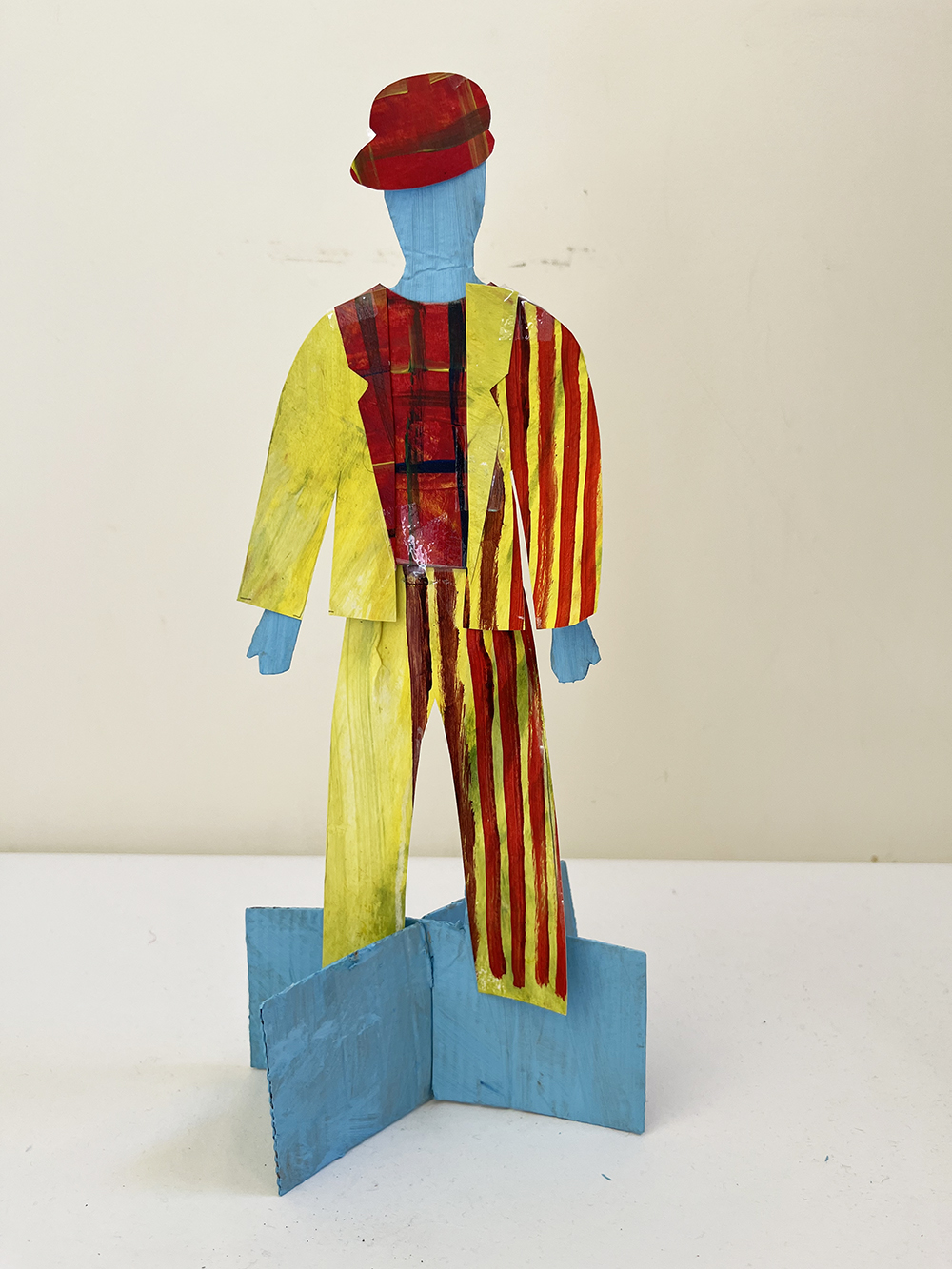
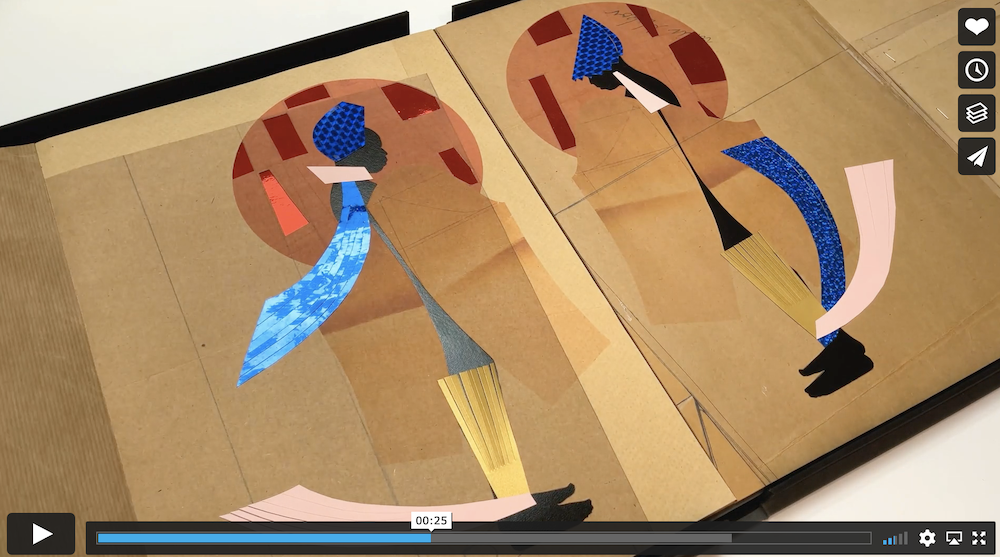
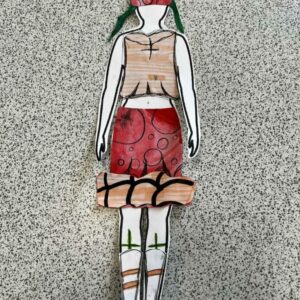
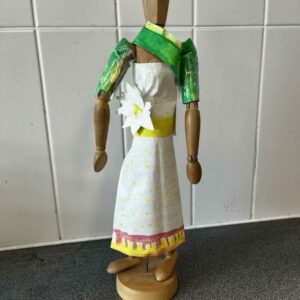
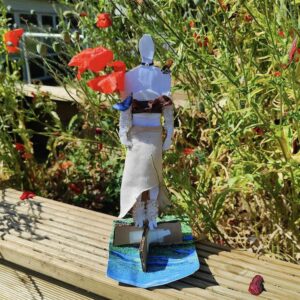
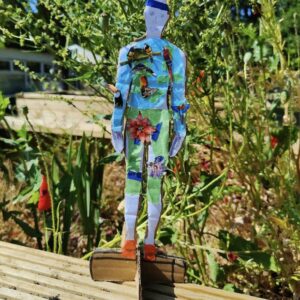
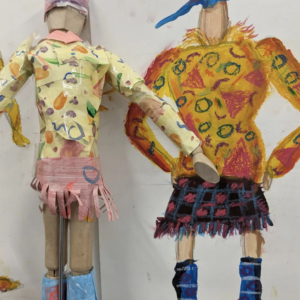
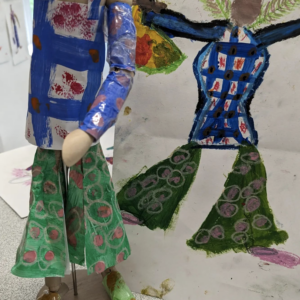
Use the “Making 2d & 3d Fashion Designs with Painted and Decorated Paper” resource to enable an exploration of fashion design.
Have sketchbooks open so that pupils can refer to previous weeks work, and also encourage them to keep adding to the sketchbooks as they explore and create.
If pupils need inspiration using collage, you may also like to explore the free to access “Talking Points: Hormazd Narielwalla” resource.
- Week 6: Present and Share
Share, Reflect, Discuss
Time to see the work which has been made, talk about intention and outcome.
Display their work in a clear space, and walk around the work as if they are in a gallery. Give the work the respect it deserves. Remind the children of their hard work.
Use the resource here to help you run a class “crit” to finish the project.
If you have class cameras or tablets, invite the children to document their work, working alone or in pairs, thinking about presentation, lighting and focus. Explore how children can take high quality photographs of 3d artwork with this resource.
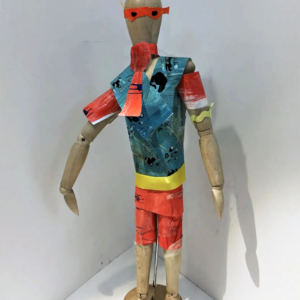
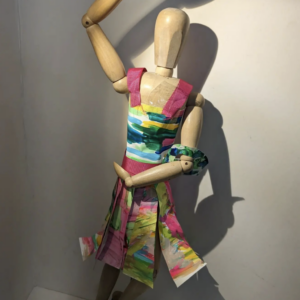
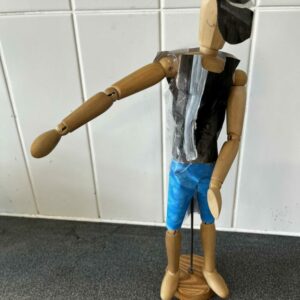
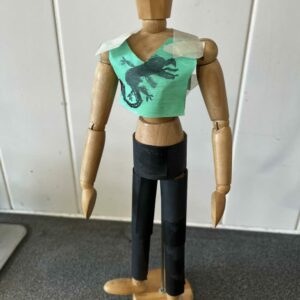
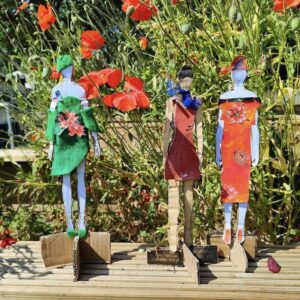
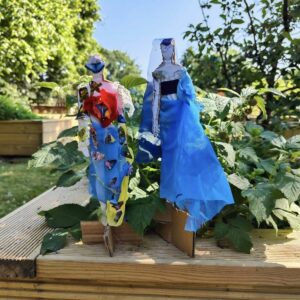
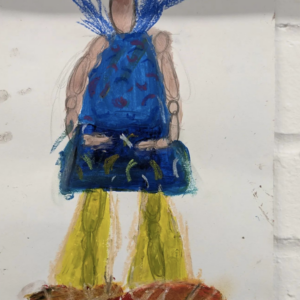
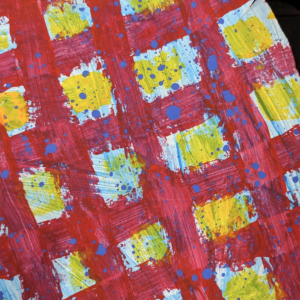
See the Pathway Used in Schools…
If You Use AccessArt Resources…
You might like to…
Join our Facebook Group
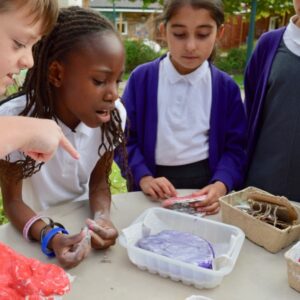
Join the AccessArt Network group on Facebook and ask questions of others using our resources
Share and Tag
Share photos of work made by tagging us on social media
You May Also Like…
Pin and Paper Fashion
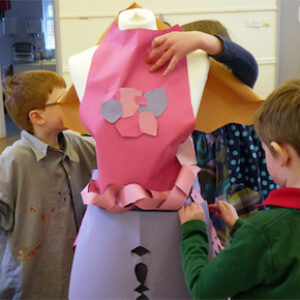
Make a co-created fashion statement
Osakana
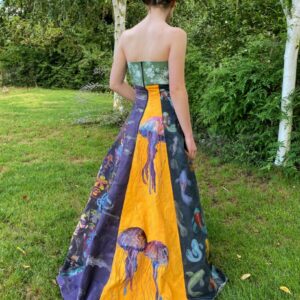
Painted and Sewn Dress
Psyche’s Dress
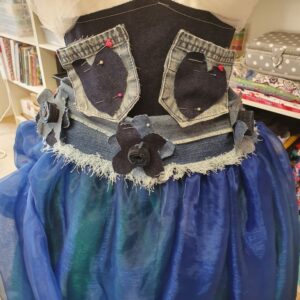
Co-created Dress Made from Old Clothes
Barbie & Ken transformation
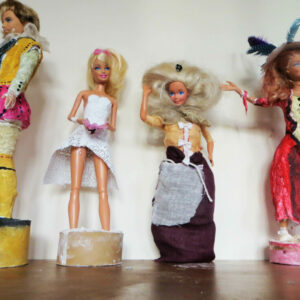
Transform Barbie dolls using paper, fabric, modroc and paint
Puppets inspired by historical paintings
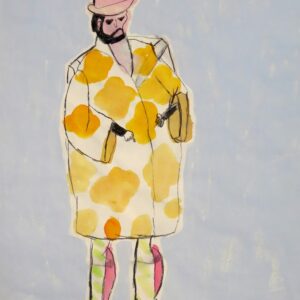
Take inspiration from paintings to create a pop up puppet
Simple Easter Sketchbook
AccessArt & The Guardian
“If we want a world full of innovative, entrepreneurial thinkers, we need to enable and sustain making from a very young age”
Paula Briggs from AccessArt writes about the importance enabling making in schools.
Drawing Source Materials: Athletes in Action
A collection of imagery and sources which you can use to prompt drawing in schools and community groups.
Please note that this page contains links to external websites and has videos from external websites embedded. At the time of creating, AccessArt checked all links to ensure content is appropriate for teachers to access. However external websites and videos are updated and that is beyond our control.
Please let us know if you find a 404 link, or if you feel content is no longer appropriate.
We strongly recommend as part of good teaching practice that teachers watch all videos and visit all websites before sharing with a class. On occasion there may be elements of a video you would prefer not to show to your class and it is the teacher’s responsibility to ensure content is appropriate. Many thanks.
These resources are free to access and are not a part of AccessArt Membership.

Athletes
Use this collection of films as source material for pupils exploring the human form during sports. In the first instance you might want to pause the videos as suitable points to enable the children to carefully look at the main forms and details. Try to create a sense of momentum – for example you might pause the video 4 times and ask the pupils to make a 1 minute, 2 minute, 3 minute and 4 minute drawing at each pause.
Encourage close and slow looking by talking as they draw – use your voice to attract their attention to features of the athletes.
When pupils are more experienced, you can also try getting them to make their drawings as the videos play – making quick gestural sketches.
You May Also Like…
AccessArt Olympics Resources
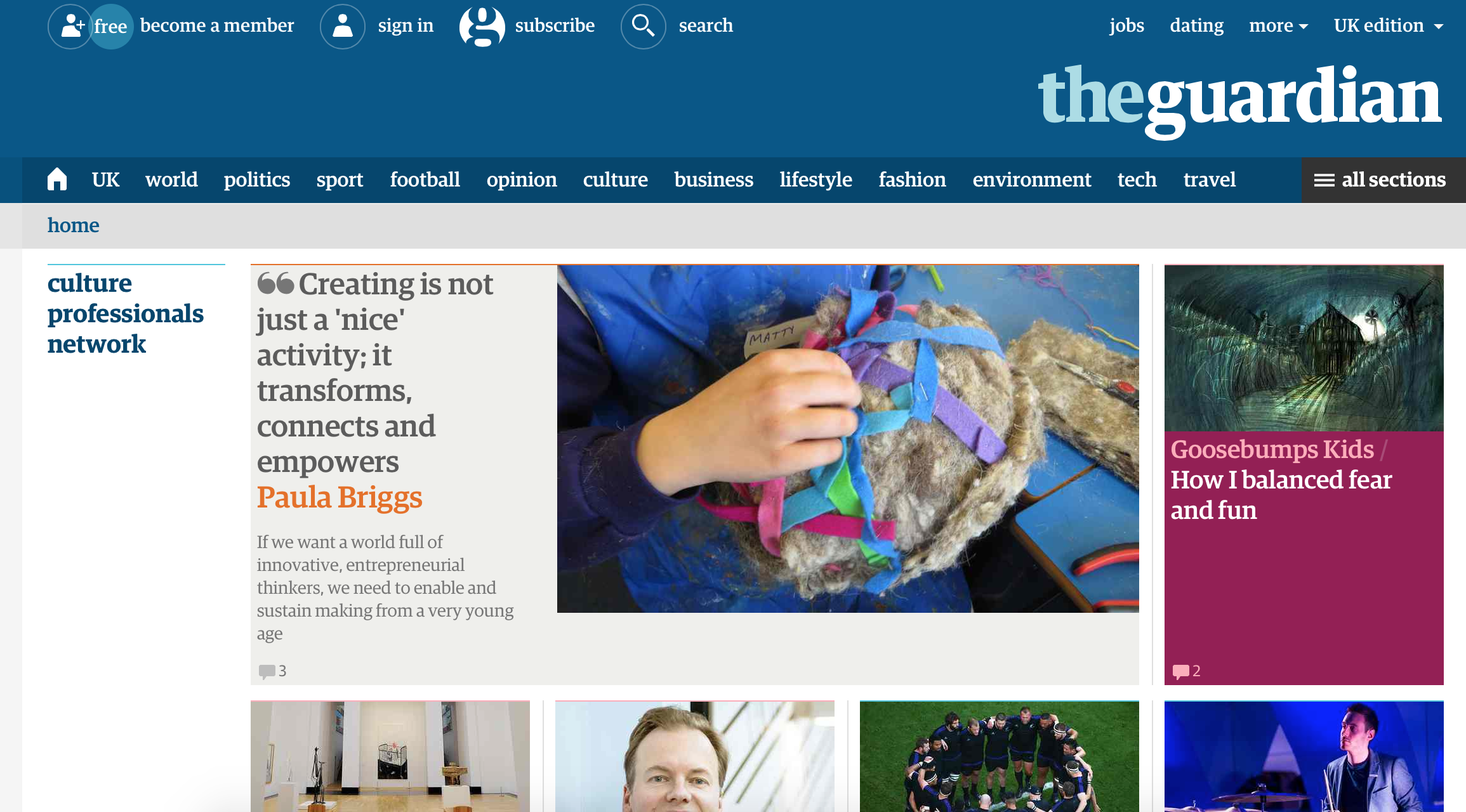
Explore projects to celebrate the 2024 Olympics
Visual Notes
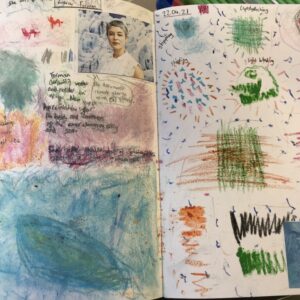
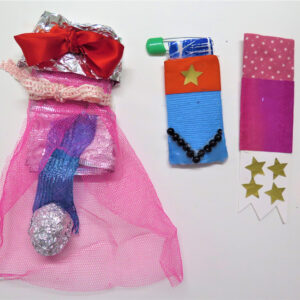
Find out how pupils can respond to artists work in sketchbooks
Show me what you see
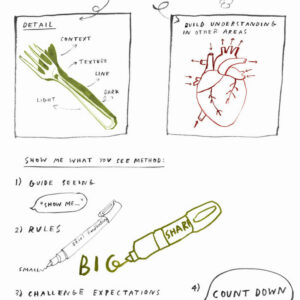
Enable close looking and drawing with this exercise
Talking Points: Inspired by Olympian Artists
A collection of imagery and sources designed to introduce children to the Olympic artists.
Please note that this page contains links to external websites and has videos from external websites embedded. At the time of creating, AccessArt checked all links to ensure content is appropriate for teachers to access. However, external websites and videos are updated and that is beyond our control.
Please let us know if you find a 404 link, or if you feel content is no longer appropriate.
We strongly recommend as part of good teaching practice that teachers watch all videos and visit all websites before sharing with a class. On occasion there may be elements of a video you would prefer not to show to your class and it is the teacher’s responsibility to ensure content is appropriate. Many thanks.
*If you are having issues viewing videos it may be due to your schools firewall or your cookie selection. Please check with your IT department.*
This resource is free to access and is not a part of AccessArt membership.




Olympic Artists
“For the first four decades of competition, the Olympics awarded official medals for painting, sculpture, architecture, literature and music, alongside those for the athletic competitions. From 1912 to 1952, juries awarded a total of 151 medals to original works in the fine arts inspired by athletic endeavour’s.” – Smithsonian
In more recent times, the Olympics is celebrating art through their Olympian Artists programme, whereby Olympians who are also artists get to showcase their work. Below you will find a selection of Olympian Artists work.
Laureene Ross
Questions to Ask Children
What do you see in her collages?
How does Laureen combine her passion of skiing with a passion for creating?
What do you like/dislike about her work? Why?
How do her collages make you feel? Why?
Luc Abalo
Questions to Ask Children
For Luc, what are the similarities between sport and art? Can you think of any other similarities?
What do you like/dislike about his work? Why?
Ye Qiaoba
Questions to Ask Children
Ye Qiaobo talks a lot about ‘time’, how does ‘time’ relate to speed skating and painting?
How does her work represent the Olympic Values?
You May Also Like…
AccessArt Olympics
Explore projects to celebrate the 2024 Olympics
Visual Notes
Find out how pupils can respond to artists work in sketchbooks
Show me what you see
Enable close looking and drawing with this exercise
Drawing Source Material: Ceremonies and Celebrations
A collection of imagery and sources which you can use to prompt drawing in schools and community groups.
Please note that this page contains links to external websites and has videos from external websites embedded. At the time of creating, AccessArt checked all links to ensure content is appropriate for teachers to access. However external websites and videos are updated and that is beyond our control.
Please let us know if you find a 404 link, or if you feel content is no longer appropriate.
We strongly recommend as part of good teaching practice that teachers watch all videos and visit all websites before sharing with a class. On occasion there may be elements of a video you would prefer not to show to your class and it is the teacher’s responsibility to ensure content is appropriate. Many thanks.
These resources are free to access and are not a part of AccessArt Membership.
Ceremonies and Celebrations
Use this collection of films as source material for pupils exploring ceremonies and celebrations. In the first instance you might want to pause the videos as suitable points to enable the children to carefully look at the main forms and details. Try to create a sense of momentum – for example you might pause the video 4 times and ask the pupils to make a 1 minute, 2 minute, 3 minute and 4 minute drawing at each pause.
Encourage close and slow looking by talking as they draw – use your voice to attract their attention to features of the ceremony.
When pupils are more experienced, you can also try getting them to make their drawings as the videos play – making quick gestural sketches.
You May Also Like…
AccessArt Olympics Resources
Explore projects to celebrate the 2024 Olympics
Visual Notes
Find out how pupils can respond to artists work in sketchbooks
Show me what you see
Enable close looking and drawing with this exercise
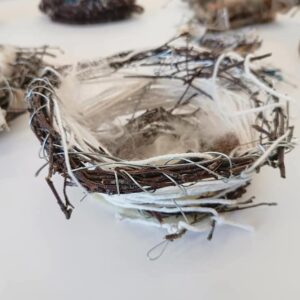
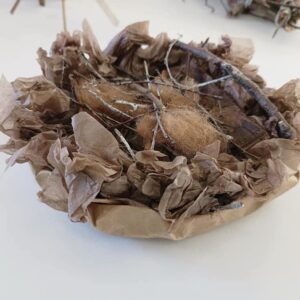
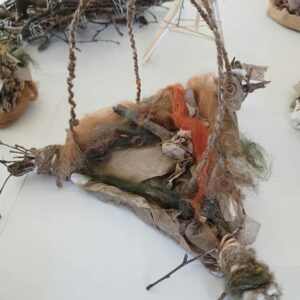
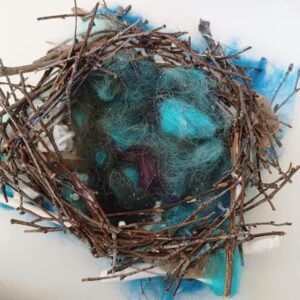
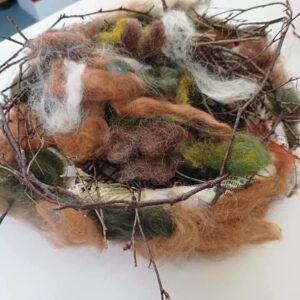
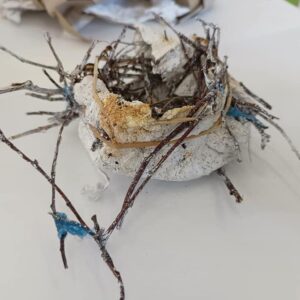
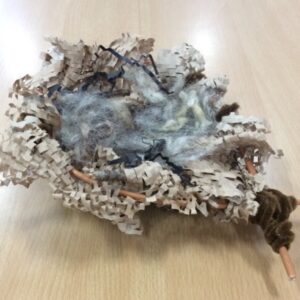
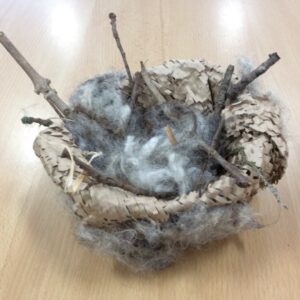
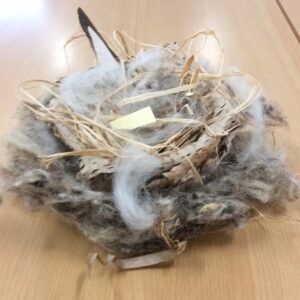
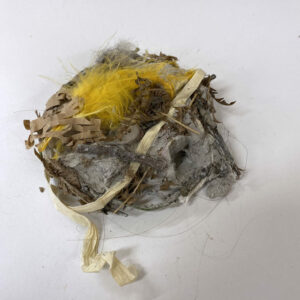
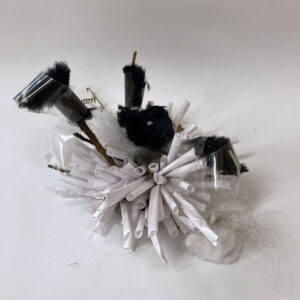
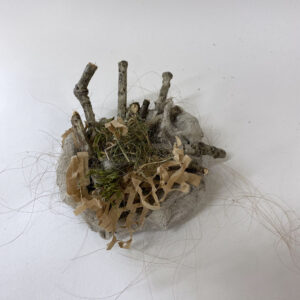
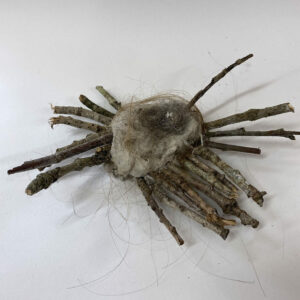
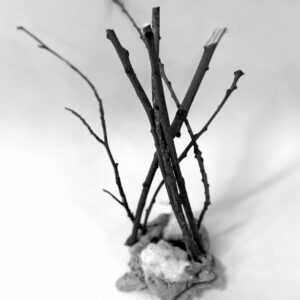
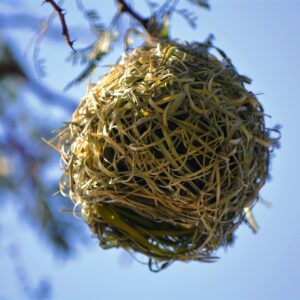
Perseverance, Determination and Inventiveness: Building Nests
See This Resource Used In Schools…
You May Also Like…
Pathway: Sculpture, Structure, Inventiveness & determination
This is featured in the ‘Sculpture, Structure, Inventiveness & Determination’ pathway
Talking Points: What can we learn from birds
Drawing source material: nests
Playing with tape, projectors, Wicky Sticks and so much more!
Drawing Source Material: Mountain Top Landscapes
Talking Points: Etel Adnan
Explore this resource to help you talk about the work of painter Etel Adnan.
Please note that this page contains links to external websites and has videos from external websites embedded. At the time of creating, AccessArt checked all links to ensure content is appropriate for teachers to access. However external websites and videos are updated and that is beyond our control.
Please let us know if you find a 404 link, or if you feel content is no longer appropriate.
We strongly recommend as part of good teaching practice that teachers watch all videos and visit all websites before sharing with a class. On occasion there may be elements of a video you would prefer not to show to your class and it is the teacher’s responsibility to ensure content is appropriate. Many thanks.
*If you are having issues viewing videos it may be due to your schools firewall or your cookie selection. Please check with your IT department.*
This resource is free to access and is not a part of AccessArt membership.

Etel Adnan
‘Born in Beirut, Etel Adnan moved to California in the 1950s and built a painting practice inspired by her cross-cultural experiences and spiritual engagement with the natural world. She creates her intimate, small-scale compositions with a palette knife instead of a paint brush, which results in rich, geometric fields of color that evoke sunsets, valleys, and mountains. Mount Tamalpais, a peak in Marin County, California, has been a frequent subject. Adnan studied philosophy at the Sorbonne in Paris and established herself as a poet, academic, and essayist before she began to make art.’ – Artsy
Questions to Ask Students
In the first video, what similarities & differences did you see between Adnan’s work and the work of Van Gogh?
Choose a painting to show students and ask the following…
What can you see in Adnan’s painting? Describe the shapes and colours as well as the landscape.
What do you like / dislike about the painting?
What season do you think it was when Adnan painted the landscape?
What was the weather like that day? What makes you think this?
How does the painting make you feel?
Compare and contrast two different paintings by Adnan.
You May Also Like…
Pathway: How can the relationship between time and landscape be captured through painting?
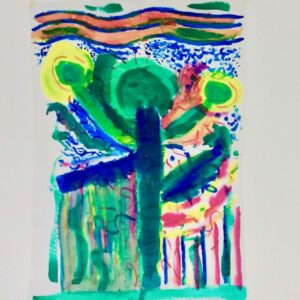
In this pathway aimed at ages 11-16, explore the relationship between landscape and time through paint
using sketchbooks to make visual notes
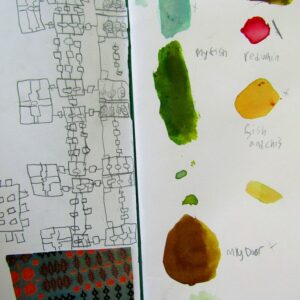
Find out how pupils can respond to artists work in sketchbooks
Show me what you see
Enable close looking and drawing with this exercise
Talking Points: Karen Wicks
Explore the work of printmaker, Karen Wicks.
Please note that this page contains links to external websites and has videos from external websites embedded. At the time of creating, AccessArt checked all links to ensure content is appropriate for teachers to access. However external websites and videos are updated and that is beyond our control.
Please let us know if you find a 404 link, or if you feel content is no longer appropriate.
We strongly recommend as part of good teaching practice that teachers watch all videos and visit all websites before sharing with a class. On occasion there may be elements of a video you would prefer not to show to your class and it is the teacher’s responsibility to ensure content is appropriate. Many thanks.
*If you are having issues viewing videos it may be due to your schools firewall or your cookie selection. Please check with your IT department.*
This resource is free to access and is not a part of AccessArt membership.
Karen Wicks
“My practice has developed out of a love of surface and process and through trying to find a medium to record and express my fascination with sense of place and the memories that can be held from previous human habitation. I have always been interested in pushing print processes and using them in ways that perhaps are not standard. For me, making art is about recording your ideas but in a way that is non-permanent.
Collagraph printing always reveals surprises and I think that is why I continue to explore its limits: by using household packaging to create intaglio ‘drawings’ I like to incorporate the accidental and play with what can make marks. I also like that there is zero waste from using low-fi print methods at home: everything can be recycled.” – HAUS-A-REST
Her work is inspired by derelict buildings and captures the presence and intrigue of these abandoned structures using intaglio print techniques. Her work uses recycled packaging which becomes fragile and disintegrates over time, which reflects the subject matter of the ‘ghost buildings’ that inspire her. Ghostbuildings
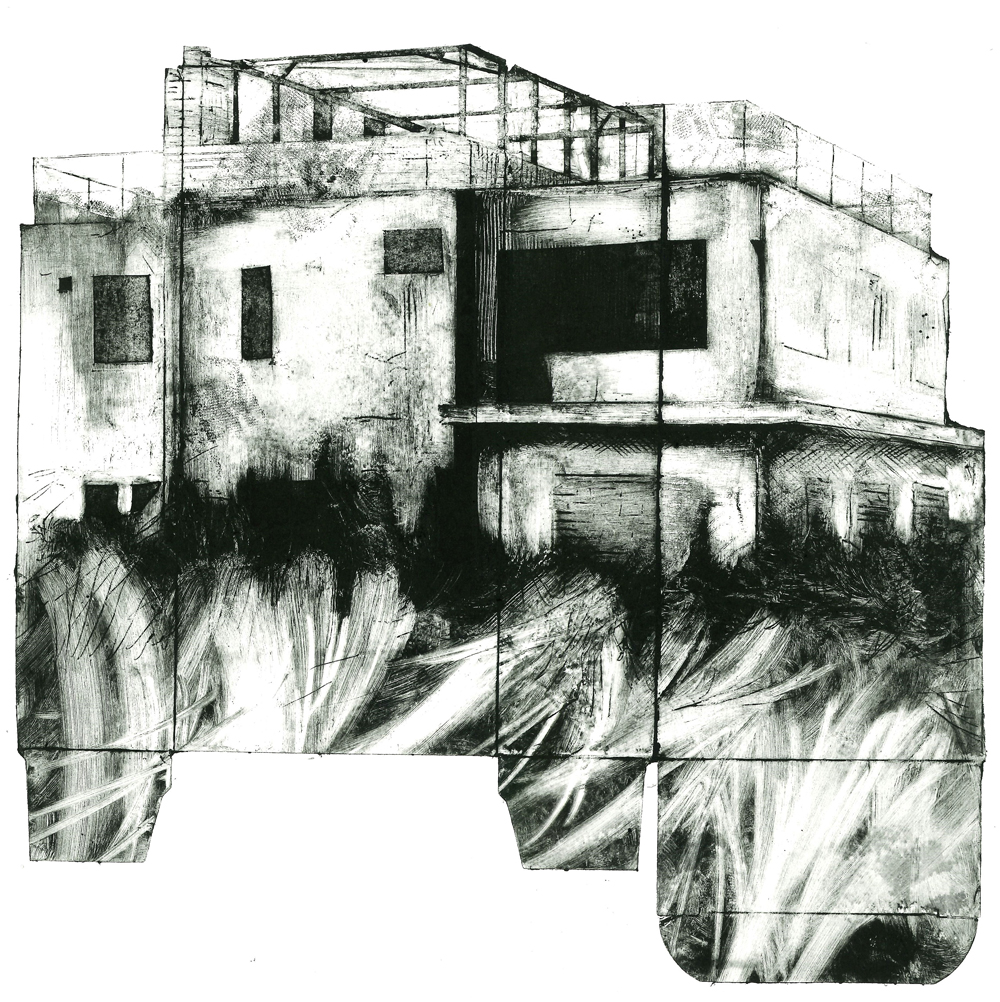
RAF Tangmere by Karen Wicks Medium: Collagraph Paper Type: Fabriano Unica (250gsm) Year: 2022 Print dimensions: 22.5cm x 22cm
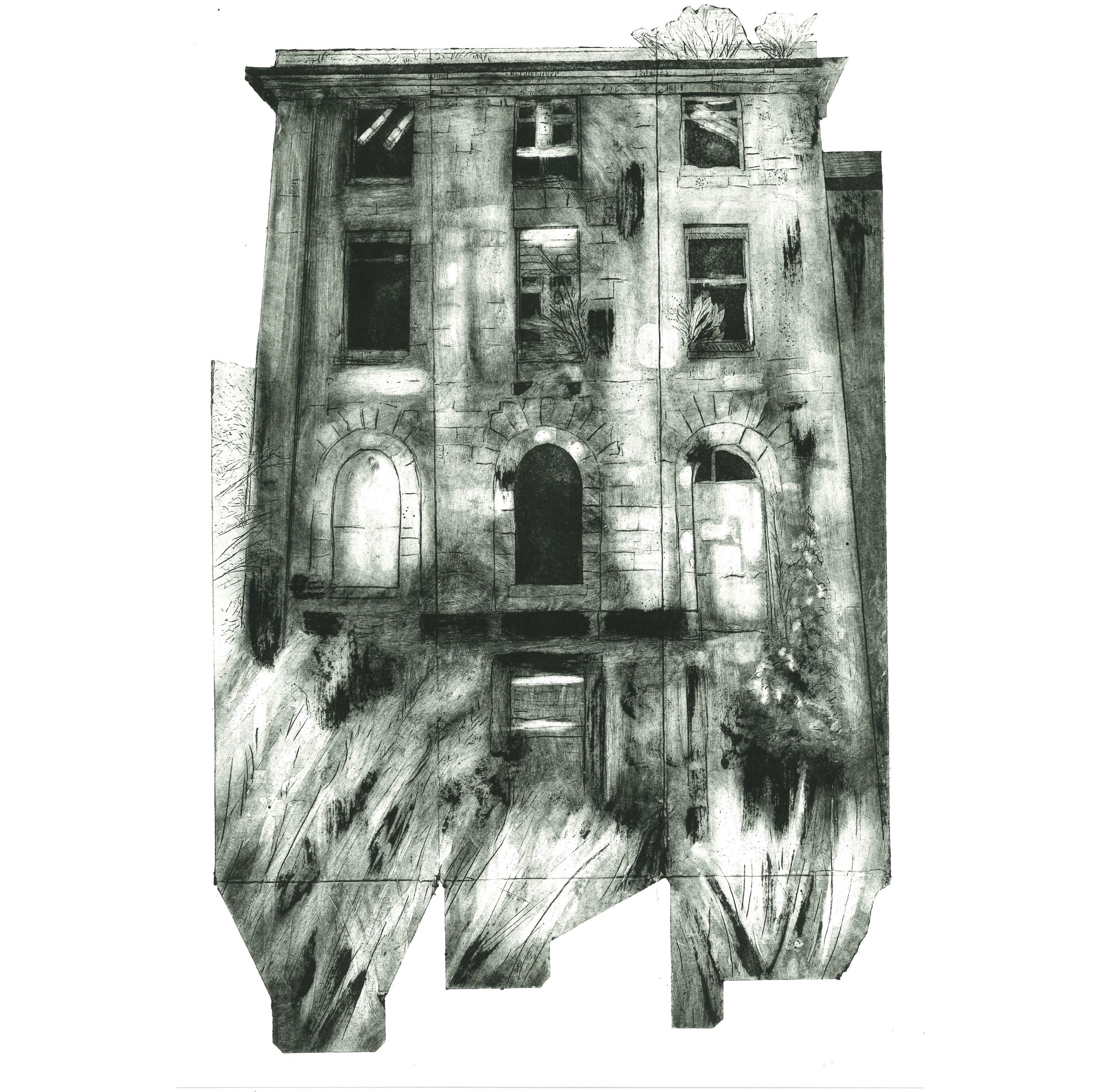
Commodore Hotel, Collagraph print, H 380 x W 280 mm
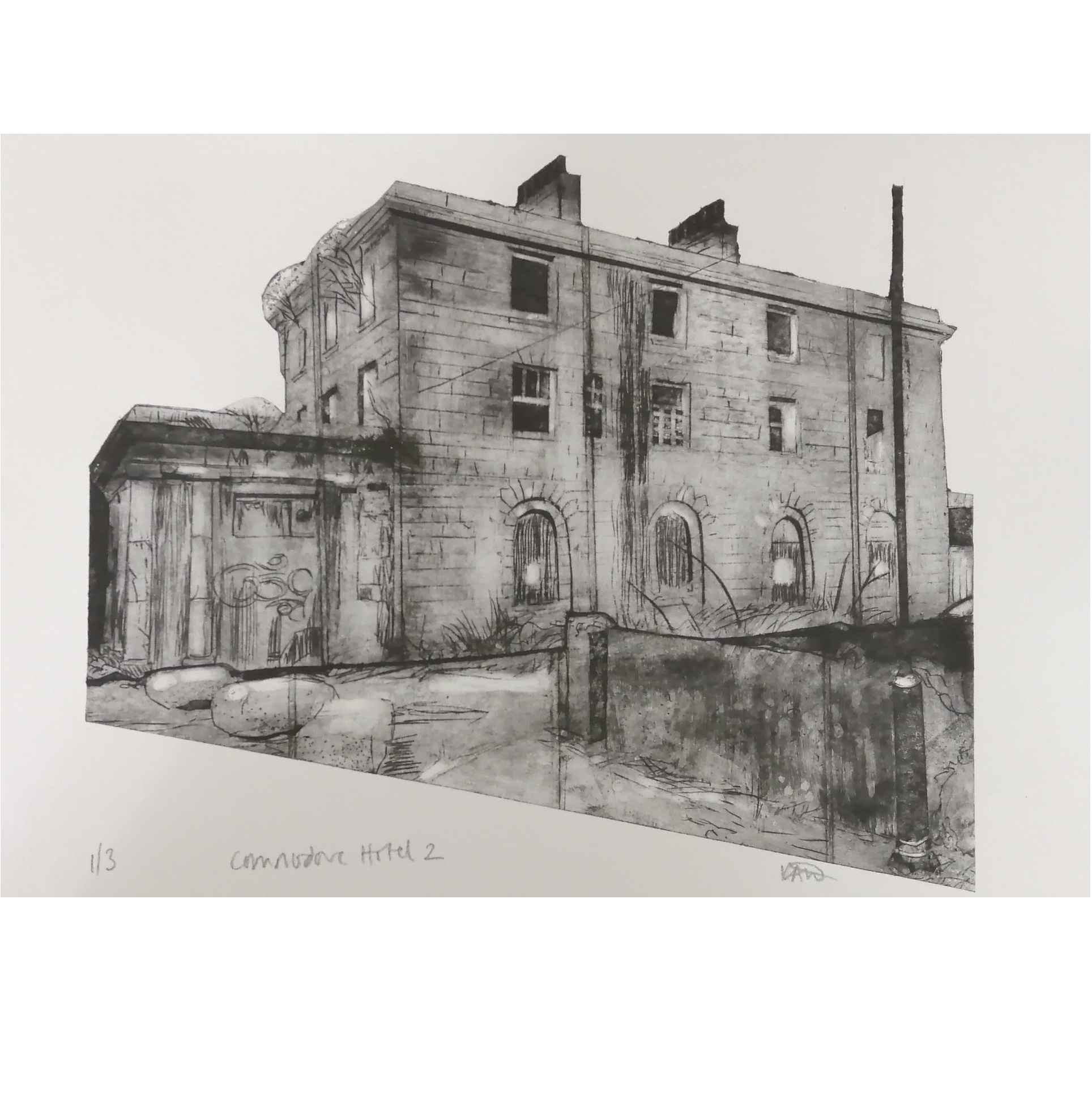
Commodore Hotel 3/3 by Karen Wicks Tetrapak print, H 280 x W 380 mm
Questions to Ask Students
What kind of mark-making can you see within the print?
How would you describe the tonal range?
What kind of atmosphere do the prints capture? How do you think this has been achieved?
How do you feel when you like at the prints?
What do you like about the work?
Can you name some similarities and differences between the prints made by Karen and prints made by Gail Brodholt?
You May Also Like…
Show me what you see
Enable close looking and drawing with this exercise
using sketchbooks to make visual notes
Find out how pupils can respond to artists work in sketchbooks
Astronaut Paper Body Casts by Gillian Adair McFarland
See This Resource Used In Schools…
Rowan: Making a Clay Bird from a Mould
Talking Points: Gail Brodholt
Videos and sources to help you explore the work of Printmaker Gail Brodholt.
Please note that this page contains links to external websites and has videos from external websites embedded. At the time of creating, AccessArt checked all links to ensure content is appropriate for teachers to access. However external websites and videos are updated and that is beyond our control.
Please let us know if you find a 404 link, or if you feel content is no longer appropriate.
We strongly recommend as part of good teaching practice that teachers watch all videos and visit all websites before sharing with a class. On occasion there may be elements of a video you would prefer not to show to your class and it is the teacher’s responsibility to ensure content is appropriate. Many thanks.
*If you are having issues viewing videos it may be due to your schools firewall or your cookie selection. Please check with your IT department.*
This resource is free to access and is not a part of AccessArt membership.
Gail Brodholt
“I suppose what I’m really interested in is those unconsidered and unnoticed places that people pass through. They are on their way to somewhere else, presumably more important – on the escalators, on the tube, train station platforms, motorways….
“I like the sense we all have that between here and there anything can happen. Although of course it almost always doesn’t. When you are travelling you are free from normal life with all the anticipation of an adventure ahead of you.”
Gail is both a painter and a printmaker and finds that working in one medium informs and enhances the other. – Gail’s Website
Questions to Ask Students
What do you notice about Gail’s process?
What can you spot any themes running through her prints?
How would you describe Gail’s poster for the London Transport System? Consider line and colour.
What do you like about Gail’s work?
Do you prefer the black and white work or the coloured work? Why?
You May Also Like…
Pathway: HOW CAN I USE PRINTMAKING TO EXPLORE THE STRUCTURE OF A BUILDING?
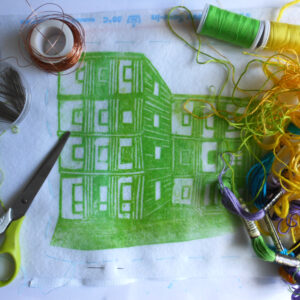
Explore printmaking in urban settings with this pathway
Show me what you see
Enable close looking and drawing with this exercise
using sketchbooks to make visual notes
Find out how pupils can respond to artists work in sketchbooks
Art Curriculums: How to Get Started and Avoid Overwhelm
Talking Points: Edgar Heap of Birds
A collection of imagery and sources designed to explore the work of artist Edgar Heap of Birds.
Please note that this page contains links to external websites and has videos from external websites embedded. At the time of creating, AccessArt checked all links to ensure content is appropriate for teachers to access. However external websites and videos are updated and that is beyond our control.
Please let us know if you find a 404 link, or if you feel content is no longer appropriate.
We strongly recommend as part of good teaching practice that teachers watch all videos and visit all websites before sharing with a class. On occasion there may be elements of a video you would prefer not to show to your class and it is the teacher’s responsibility to ensure content is appropriate. Many thanks.
*If you are having issues viewing videos it may be due to your schools firewall or your cookie selection. Please check with your IT department.*
This resource is free to access and is not a part of AccessArt membership.
Edgar Heap of Birds
‘Based in Oklahoma City and on tribal land, where he has lived since 1981, Heap of Birds consistently creates works that confront repressed or unacknowledged histories of state and settler violence against Native communities in the United States. His work often draws parallels between historical violence and ongoing injustices today. By employing the contemporary term “active shooter” to characterize massacres committed by U.S. troops against Native Americans over a century ago, Heap of Birds reanimates the past in the language of the present. In so doing, he points to the violence of history itself: the power of a dominant culture to erase, forget, or otherwise obscure its own acts of oppression.’ –MoMA
Find more work on Edgar Heap of Birds Website
At 00.55 there is an artwork in the background with language you may not want to show young students.
Questions To Ask Students
How does Edgar Heap of Birds incorporate his identity into his artwork?
How would you describe the monoprints?
What do you like about the physical appearance prints?
How does the work make you feel?
Are these prints important? Why? Consider both the artist and the audience in your answer.
Talking Points: Sinclair Ashman
Videos and sources to help you explore the work of Printmaker Sinclair Ashman.
Please note that this page contains links to external websites and has videos from external websites embedded. At the time of creating, AccessArt checked all links to ensure content is appropriate for teachers to access. However external websites and videos are updated and that is beyond our control.
Please let us know if you find a 404 link, or if you feel content is no longer appropriate.
We strongly recommend as part of good teaching practice that teachers watch all videos and visit all websites before sharing with a class. On occasion there may be elements of a video you would prefer not to show to your class and it is the teacher’s responsibility to ensure content is appropriate. Many thanks.
*If you are having issues viewing videos it may be due to your schools firewall or your cookie selection. Please check with your IT department.*
This resource is free to access and is not a part of AccessArt membership.
Sinclair Ashman
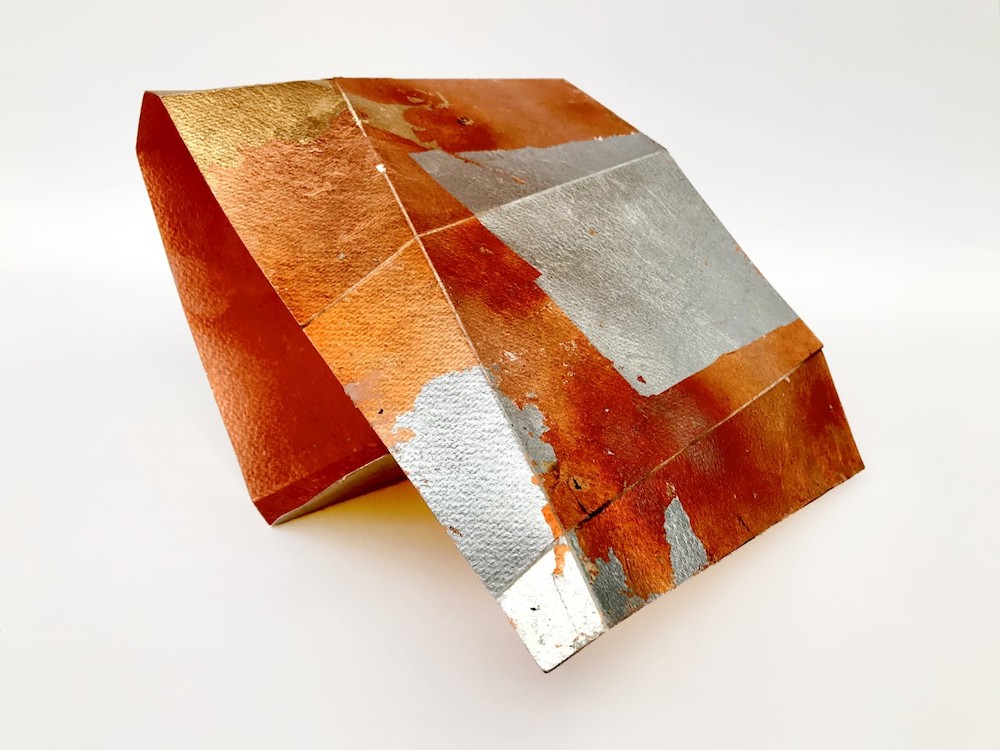
Sinclair Ashman’s practice as a printmaker is in deliberate, stark contrast to his controlled, client-focused work as a graphic designer. His highly textured, largely abstract prints are elemental expressions of mood and immediate, unplanned responses to everyday materials. In essence, he sees the print as a three-dimensional medium, often employing deep impressions in thick, high quality papers.
His creative process starts not with thinking about the print, but with the printing plate. This is a direct response to the chosen materials, which are stuck down onto a board base. Sketches are rarely used. Instead, plates are created in response to ‘what the materials want to do’. – Derby Print Open
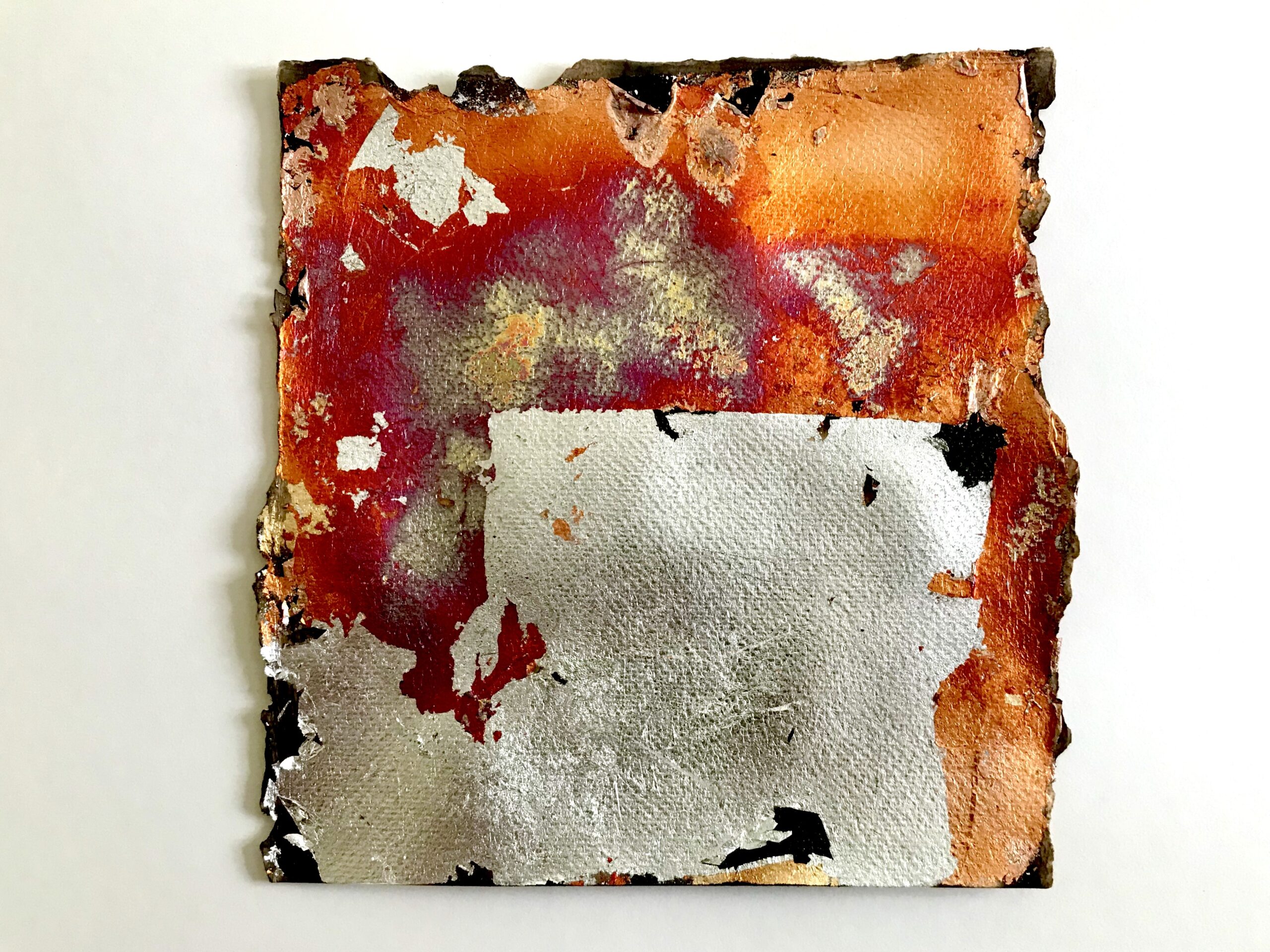
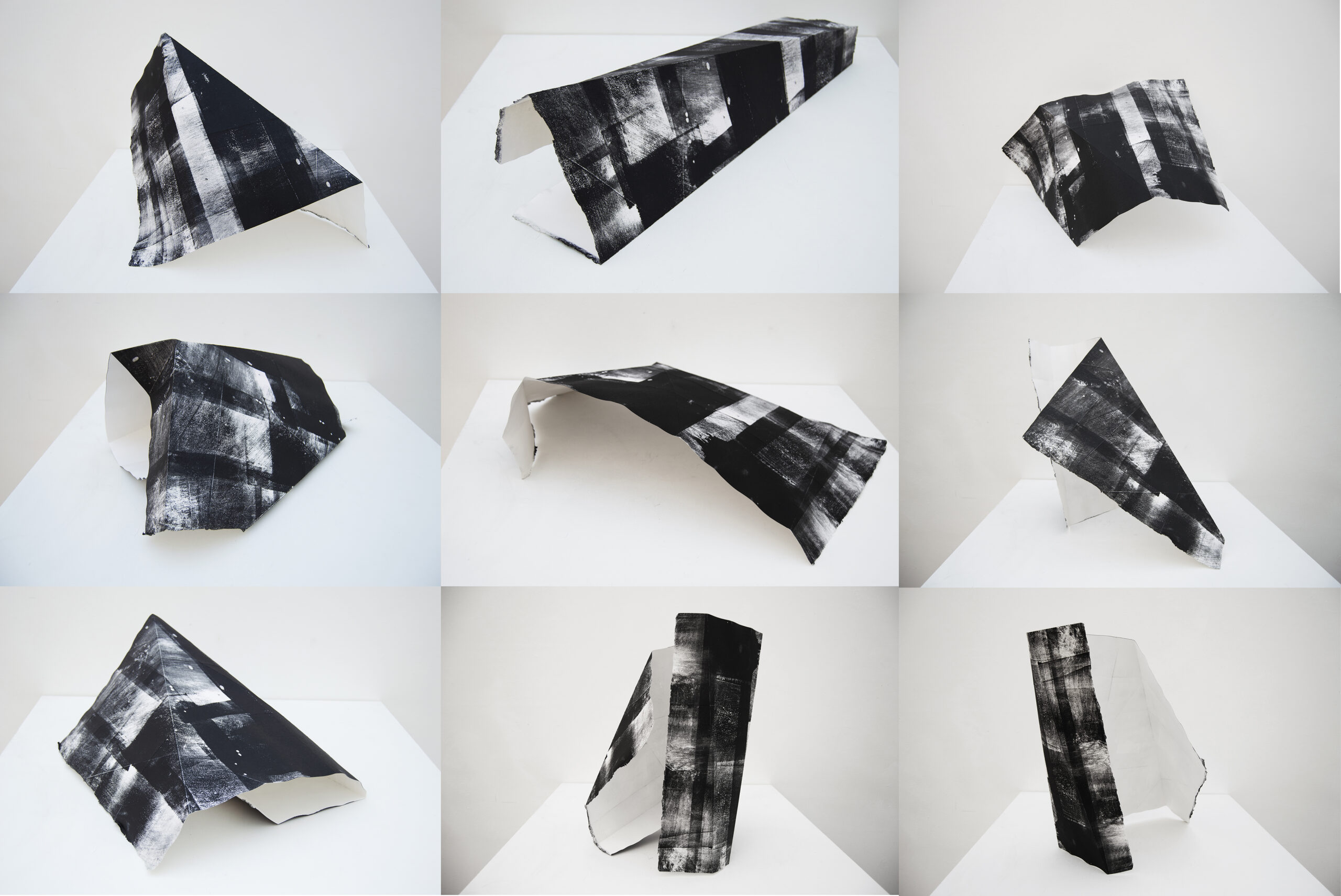
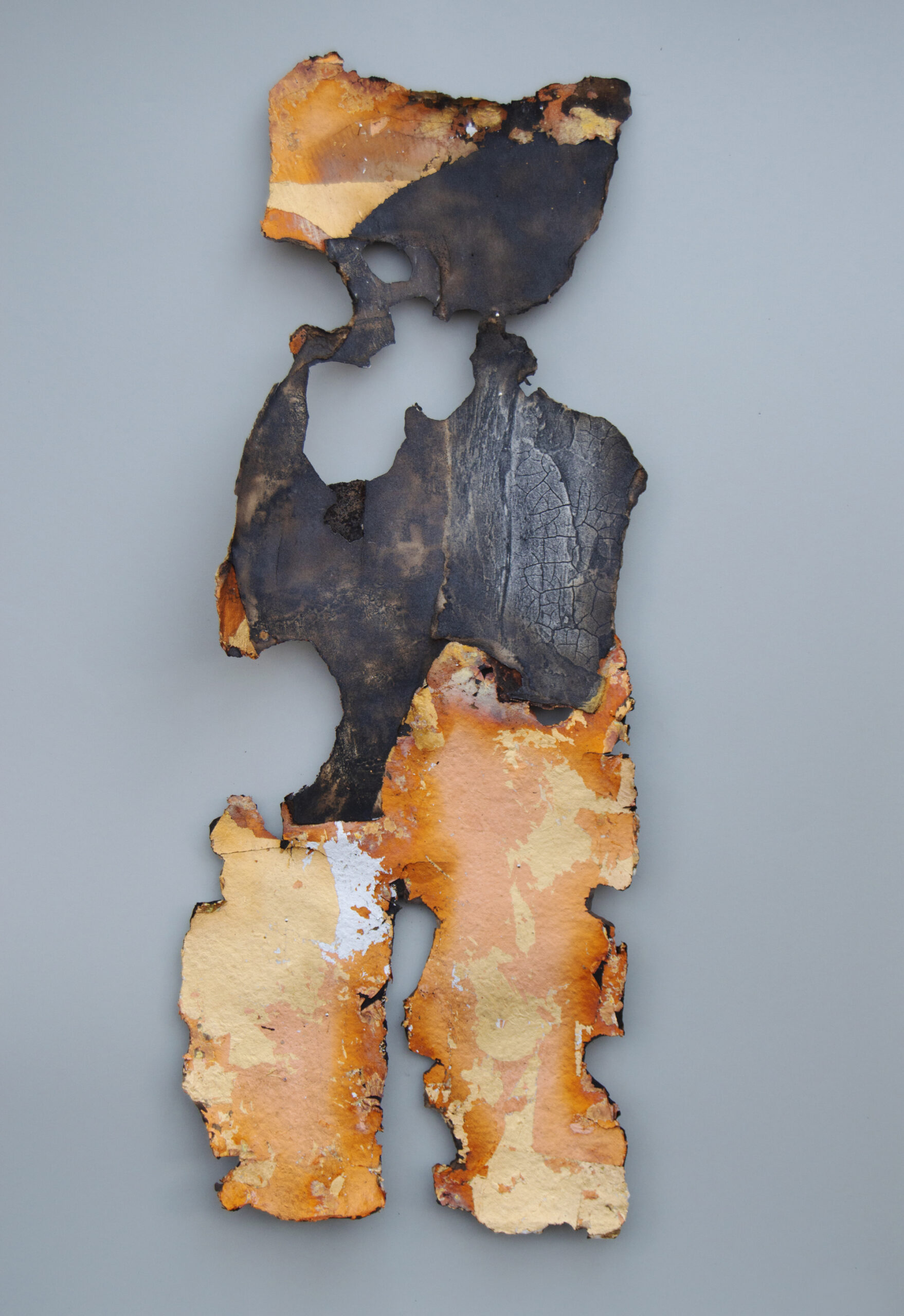
Questions to Ask Students
How do you think that Sinclair’s collagraph process differs from his graphic design job?
Can you spot some of the different materials Sinclair sticks to his collograph plates to make marks?
How would you describe the kinds of marks you can see in his prints? What techniques do you think he’s used?
What do you like about the work?
Do you prefer the flat prints or the sculptural prints? Why?
How does the work make you feel?
You May Also Like…
Pathway: how can i create experimental marks using printmaking?
This is featured in a pathway exploring experimental printmaking, aimed at 11-14 year olds
using sketchbooks to make visual notes
Find out how pupils can respond to artists work in sketchbooks
Show me what you see