Serendipity Drawing

This is the second of six resources in the series: ‘Drawing for Science, Invention & Discovery Even If You Can’t Draw’ by Paul Carney, educational consultant and author.  The projects enable teachers of both art and science to approach drawing from a new perspective. You can see all of the resources here.

By Paul Carney 

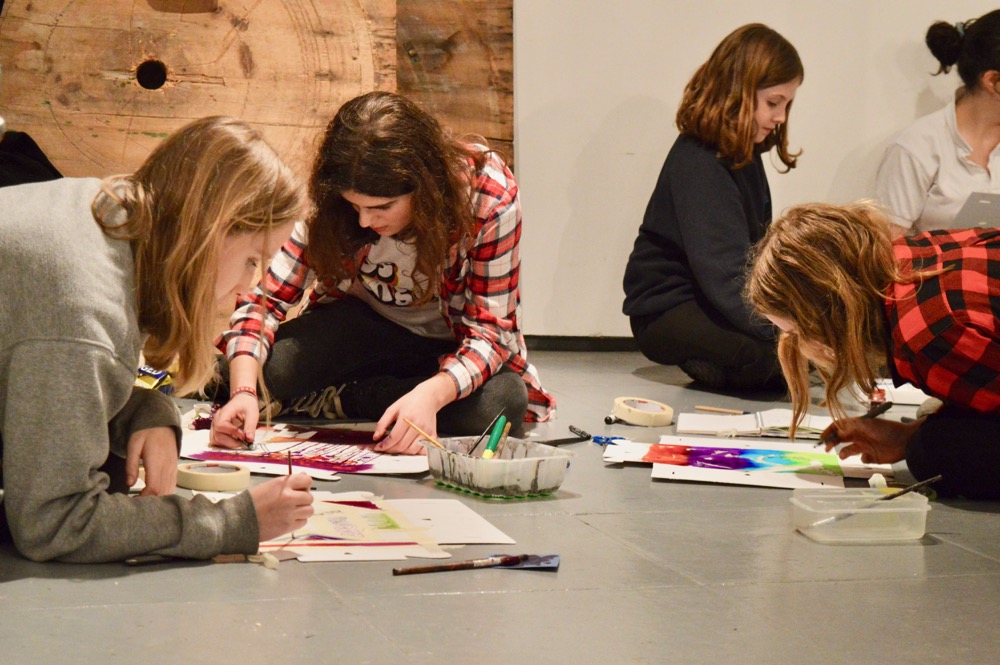
Introduction: Many of the world’s greatest inventions have occurred by chance. This activity shows you how chance plays an integral part of the making process in art and shows you how artists try to manipulate it to further their creative purposes.
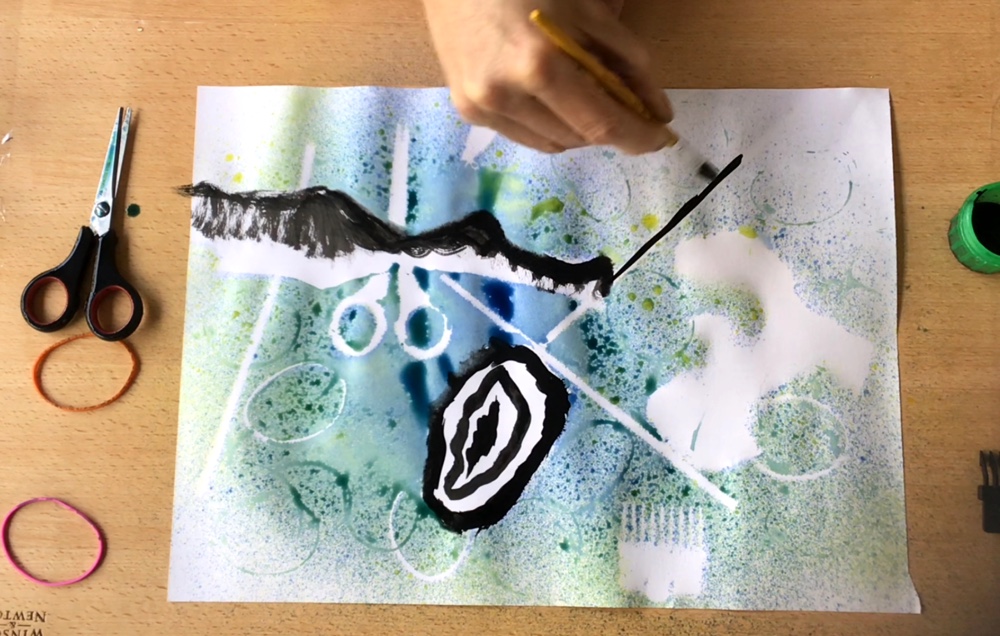
Serendipity Drawing by Paul Carney


Notes for Teachers

  • Learning Objectives

    • To discover new, abstract ways of drawing using chance and random events.
    • To learn how to control and manipulate chance as part of the creative making process.
    • To learn that the sciences often employ serendipitous triggers to spark information based ideas.
  • Age range

    The activity is suitable for 7-16 years.

  • Time Required

    The activity takes approximately one hour

  • National Curriculum Targets: Art & Design

    Key Stage 2: Pupils should be taught to improve their mastery of art and design techniques, including drawing, painting and sculpture with a range of materials (for example, pencil, charcoal, paint, clay), and learn about great artists, architects and designers in history.

    Key Stage 3: Pupils should be taught to develop their creativity and ideas, and increase proficiency in their execution. They should develop a critical understanding of artists, architects and designers, expressing reasoned judgements that can inform their own work.

  • National Curriculum Targets: Science

    Upper KS2: The development of scientific thinking and the ways in which scientific methods and theories develop over time. They should encounter more abstract ideas and begin to recognise how these ideas help them to understand and predict how the world operates.

    Key Stage 3: The development of scientific thinking and the ways in which scientific methods and theories develop over time. Teachers should feel free to choose examples that serve a variety of purposes, from showing how scientific ideas have developed historically to reflecting modern developments in science.

    Key Stage 4: The development of scientific thinking and the ways in which scientific methods and theories develop over time.

    (The lesson might use scientific examples to illustrate serendipity such as the chance discovery of x-rays, penicillin, microwave ovens etc. It might also show how this lesson relates to artistic practice of Hans Arp to create chance collages.)

  • Things You’ll Need

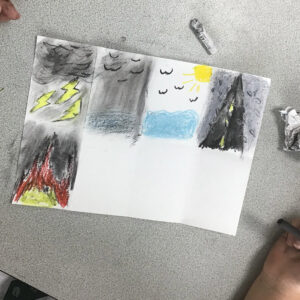
    A3 and A4 paper, spray ink bottles filled with Brusho ink powder or similar, assorted scrap objects with interesting shapes, black ink and brush or dip pens.

  • Extending The Lesson

    Use constant repetition of the exercise and allow pupils to take more control of the process; adding or omitting items, changing the art materials and allowing more freedom.

  • Supporting The Lesson

    Limit the use of objects and media, encourage them to think about the composition of the fallen objects and the spaces between them.

  • Assessment Guidance

    Confident outcomes should demonstrate greater manipulation of the materials in the process. They will show they can build greater tension in certain areas by building and layering colour and leaving space between some objects. They will use the black ink carefully and deliberately to create interesting visual compositions. Pupils with less successful outcomes will rely completely on chance and have not demonstrated how they have manipulated it to suit an intention.

  • Artist Links

    Hans Arp

    https://www.moma.org/learn/moma_learning/jean-hans-arp-untitled-collage-with-squares-arranged-according-to-the-laws-of-chance-1916-17/

    Sophie Taeuber

    https://nmwa.org/explore/artist-profiles/sophie-taeuber-arp

  • Cross-Curricular

    Investigating how chance discoveries have shaped understanding in other subject areas such as maths, history, English, music and technology for example.


Please log in here to access full content.

Username
Password


Remember me
Forgot Password


To access all content, I would like to join as…
An Individual

Creative practitioners, educators, teachers, parents, learners…


An Organisation…

Schools, Colleges, Arts Organisations: Single and Multi-Users


AccessArt is a UK Charity and we believe everyone has the right to be creative. AccessArt provides inspiration to help us all reach our creative potential.
Simple Easter Sketchbook


Playing with tape, projectors, Wicky Sticks and so much more!


Show Me The Shadows


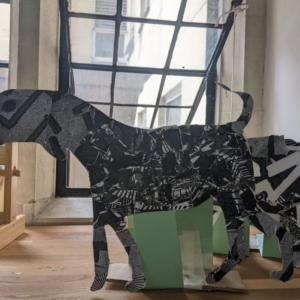
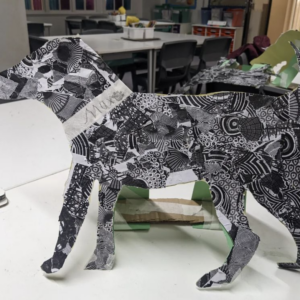
Year 3 & 4 Making Club: Articulated Beasts

You May Also Like…

Pathway: Making Animated Drawings

This is featured in the 'Making Animated Drawings' pathway

This is featured in the ‘Making Animated Drawings’ pathway

Talking points: Making drawings move

Firekites - AUTUMN STORY - chalk animation by Lucinda Schreiber

Talking Points: paper cut puppets

Paper Puppet Showreel by Holly Summerson https://vimeo.com/689215908

Talking Points: Lauren child

Lauren Child video

Talking Points: Lotte reiniger

Lotte Reiniger - The unsung heroine of early animation BBC Ideas by Infocandy


“Flock” at Prospect House School, Inspired by Veronica Lindsay-Addy

You May Also Like….
Visual Arts Planning Collections: Birds

Drawing Birds with Oil Pastels and Washes

Swoop

Drawing feathers

How To Make an Origami Bird

melaniejohns


Printing at Battyeford Primary, Inspired by Hester Cox


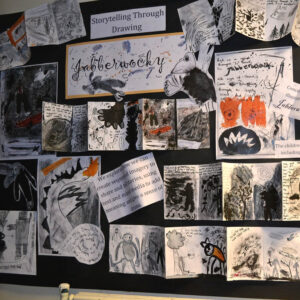
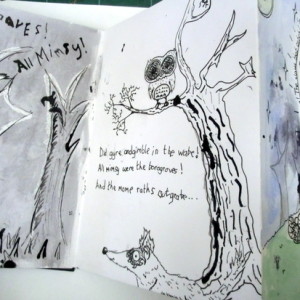
Illustrating ‘The Jabberwocky’

See This Resource Used in Schools…

Year 4, Ashley Manor Preparatory School
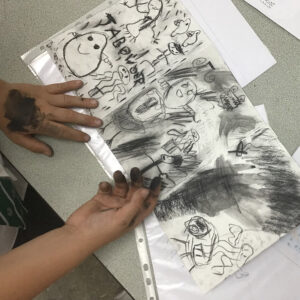
Child's hand using charcoal in sketchbook
The Grange School

You May Also Like…

Pathway: Storytelling through drawing

This is featured in the 'Storytelling Through Drawing' pathway

This is featured in the ‘Storytelling Through Drawing’ pathway

Talking Points: Laura Carlin

Laura Carlin The King of the Sky https://vimeo.com/266949422

Talking Points: Shaun Tan

The Arrival by Shaun Tan https://vimeo.com/139679090


Printmaking with Salvaged Sticky Back Aluminium Foil, Mixed Media and Cardboard


Chimera – A Drawing Workshop with Eleanor Somerset

You May Also Like…

Visual Arts Planning Collections: Literacy

Units Painted on Paper by Yu-Ching Chiu

Wax Resist with Coloured Inks and Sgraffito on Foamboard

Drawing feathers

Chimera Drawings into Beautiful Terracotta Tiles

Painting white slip onto terracotta tiles


Dragons & Birds in Eggs: Hidden and Revealed

You May Also Like….

Visual Arts Planning Collections: Birds

Drawing Birds with Oil Pastels and Washes

monoprinting with carbon copy paper

Drawing feathers


Houses from Around the World: International Day at Monkfield Primary School

See This Resource Used In Schools…

Year 2, Sydenham High School Prep
The Radstone Primary School in Brackley, Northants, Hawksmoor Learning Trust


Inspired by Google Earth: Drawing


Flat Yet Sculptural? Drawing, Collage, Construction

See This Resource Used In Schools…

Dean CE Primary School
Greenlands Community Primary School, Preston, Year 6.
Year 5, Cathedral Primary School, Bristol

You May Also Like…

Pathway: 2D Drawing to 3D Making

This is featured in the '2D Drawing to 3D Making' pathway

This is featured in the ‘2D Drawing to 3D Making’ pathway

Talking Points: Lubaina Himid

Lubaina Himid


Exploring Three Dimensions with Lego: Drawing and Collage

You May Also Like…

Pathway: Exploring Form Through Drawing

This is featured in the 'Exploring Form Through Drawing' pathway

This is featured in the ‘Exploring Form Through Drawing’ pathway

Adapting AccessArt: From 2D to 3D

Drawings of Paper Sculptures by Yu-Ching Chiu


Using Negative Space to Believe What You See ( & Scaling Up)

You May Also Like…

Pathway: 2D Drawing to 3D Making

This is featured in the '2D Drawing to 3D Making' pathway

This is featured in the ‘2D Drawing to 3D Making’ pathway

Talking Points: Lubaina Himid

Lubaina Himid


How to Make a Tessellated Design

You May Also Like…

Pathway: Exploring pattern

This is featured in the 'Exploring Pattern' pathway

This is featured in the ‘Exploring Pattern’ pathway

Talking points: Andy Gilmore

Andy Gilmore


The Drawing Machine – A Workshop in Perspective and How to Look by Drawing Machine and Sarah Wright


Drawing as Support Activity


Making Drawings using a Lightbox