Exploring Macbeth Through Art: Heath Landscapes

By Rachel Thompson.

Using chalk to smudge into charcoal

In this first of six resources on Shakespeare’s Macbeth, children are invited to explore the atmosphere of moorland or heaths using charcoal.

The aim of the session is to encourage an exploratory approach to using charcoal, and to move towards creating a landscape drawing that captures the dramatic and foreboding atmosphere at the play’s opening. We recommend leaving the finer details and approach open for the children to interpret.

Back to all six sessions here.
Session One: Heath Landscape Painting
Warm Up: 15 minutes
Main Activity: 45 minutes
Materials Needed: Sketchbooks, A2 Cartridge paper, newsprint, buff sugar paper, soft pencils, dry brushes, charcoal, coloured pencils, erasers
Focus Theme/s: Order and Disorder


Time to warm up! Exploring charcoal through guided drawing prompts.

Take a piece of sugar or cartridge paper, or your sketchbook. We’re going to explore the types of marks you can create using charcoal.
Remember, this is not about creating a ‘picture’. There is no subject matter. It’s just some time and space to explore this material and see what it does.

Get quiet and settled. Take a moment to hold and feel the charcoal in your hands.

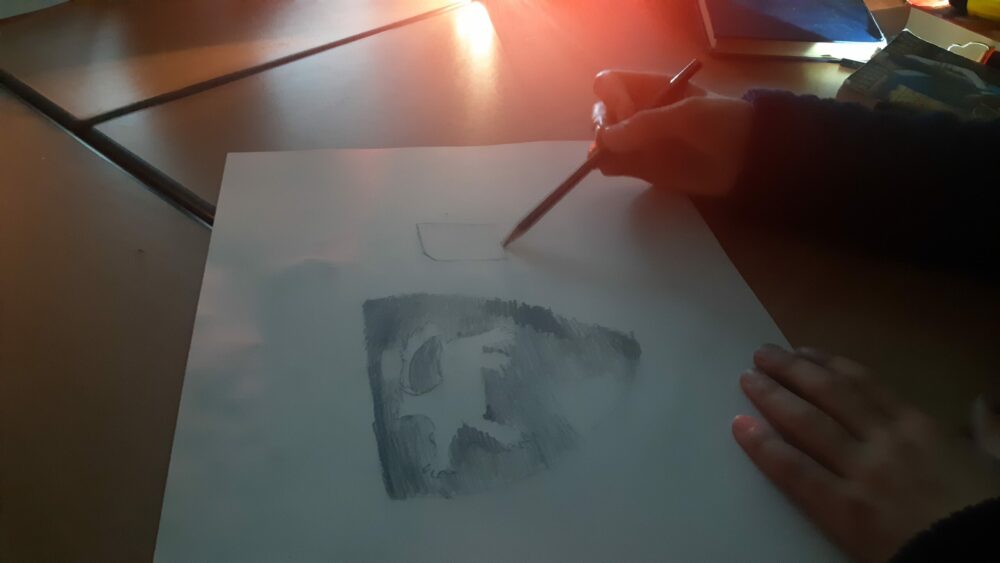
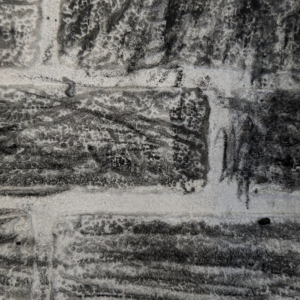
When you are ready: Hold the charcoal on its side and move it across the paper. Cover lots of the paper. You’ll see it produces lots of dust. Use your finger to smudge the dust into the paper. Create a grey ‘blanket’ background.

Using charcoal to cover a large piece of paper.


Charcoal on large scale paper


Covering a page in charcoal.

Work into this background using an eraser. Can you erase the charcoal completely back to the paper or does some grey still show?

Using an eraser in charcoal

Using the end of the charcoal, press harder into to paper to create sharper lines. Draw some hard lines from one end of the paper to the other. Do the same, but this time with softer pressure.

Making sharper lines with charcoal.

Circle and spiral the charcoal.

A charcoal exploration on paper

Dot and dash the charcoal.

Charcoal on paper


Dot and dash marks made using charcoal.

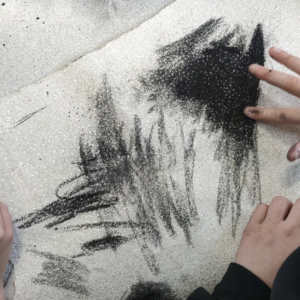
Crush a little section in your hands and sprinkle it on the paper. Press is down or smudge it.

Crushing charcoal onto paper

Scrub the crushed charcoal into the page with a dry brush.

Using a dry paint brush to smudge charcoal into paper

What happens when you add a (tiny) amount of water?

Using water with charcoal


Adding water to to crushed charcoal on paper


Starter discussion:
At the start of the play we meet the witches gathered on the wild moors of Scotland. They discuss how they plan to meet Macbeth.
Shakespeare’s description of the landscape is very short – and yet it evokes a particular type of atmosphere. What does the description in Act 1 Scene 1 tell us about this atmosphere?
An open place. Thunder and Lightning

What type of landscape do you imagine the witches are in and how does this add to the sense of foreboding?
How is our perception of this landscape deepened by the following words in the same scene?

Fair is foul, and foul is fair:
Hover through the fog and filthy air

Say these words out loud several times as a group. Notice the words you emphasise the most.

Context:
The witches’ line, ‘Fair is foul and foul is fair’ applies to both the weather and the country’s disorder due to its history of war and battles for power. The theme of disorder is key to the play Macbeth and Shakespeare often uses the weather to communicate this in his plays.
The idea of social order was important in Shakespeare’s time. It was believed that God brought power to the universe and that Kings were appointed by God to preserve this order.

How can we explore this through drawing?


Main Activity: Heath Landscapes.

Building on the techniques used in the warm up, take a large sheet of paper, some charcoal, some drawing pencils and an eraser.
Take a moment to imagine the landscape where we meet the witches. Has anyone ever visited a moor or a spooky landscape before? How did it make you feel?

Using your charcoal in the different ways used during the warm up, begin to create your impression of that landscape.


Creating a landscape inspired by Macbeth


Beginning to form images of the heath.

If you don’t want to work on the large paper straight away, work in your sketchbooks (that’s what they’re for!), developing your ideas, until you feel more confident.
Perhaps you want to create a grey blanket background, using smudging to create areas of light; use line to draw features such as low-lying hills or undulations in the landscape; or use pressure to create dark areas of shadow.

Using charcoal in experimental ways.

You didn’t use pencils or other drawing materials in the warm up, but use them now to see how they look alongside the charcoal. How do they differ? Can you build one material over the other?

Layering pastels over charcoal.

Consider what the sky looks like – how can you depict ‘fog and filthy air’?

Depicting a feeling of fog an filthy air.


Using charcoal to create fog and filthy air.


Using layering to create atmosphere.
Are there any plants and trees in the foreground or distance? Can you create a sense of perspective?

Using charcoal to draw figures and trees.


Using trees to create perspective.

Think again about the theme of disorder. How can you communicate this theme through the marks you’re making?

Creating a sense of disorder.


Lightning using charcoal.

Remember this is your personal impression and your opportunity to use your imagination.

Creating hills and mountains.


Creating a sense of landscape using charcoal.

Take your time – you have about 45 minutes to complete your picture – but if you run out of time, come back to it another day. Keep building the layers until you are happy.

A sense of perspective with hills and mountains.

Some descriptive words to keep in mind: Wild, lonely, frightening, threatening, windy, eerie, impending, dark.

Refining ideas and making a landscape drawing.


Landscape drawing using charcoal inspired by Macbeth


Creating a sense of place when drawing with charcoal.


Reflection:
Pin your work up or take it turns to hold your work up.
What techniques did you find made it easier to create your heathland?
What did you find challenging?
Why do you think Shakespeare begins his play in this setting and how does this set the tone for what is to come?

Move onto session two here.

This is a sample of a resource created by UK Charity AccessArt. We have over 1500 resources to help develop and inspire your creative thinking, practice and teaching.

AccessArt welcomes artists, educators, teachers and parents both in the UK and overseas.

We believe everyone has the right to be creative and by working together and sharing ideas we can enable everyone to reach their creative potential.


Sculptural Environments Inspired by Hockney

See This Resource Used In Schools…

Year 3, Ruth at Carden Primary School


Making Painted & Sewn Landscapes

See This Resource Used In Schools…

Year 3, Haydon Wick Primary School
Year 3 at The Holt Primary School Skellingthorpe Lincoln
Year 2/3 Cawthorne Primary
Year 3, Goose Green Primary School
Process Art at Humphrey Park, Ages 7-13

You May Also Like…

Pathway: Cloth, thread, paint

This is featured in the 'Cloth, Thread, Paint' pathway

This is featured in the ‘Cloth, Thread, Paint’ pathway

Talking Points: Frank Bowling

Frank Bowling – From Figuration to Abstraction | Artist Interview | TateShots

Talking Points: Hannah Rae

Textiles by Hannah Rae

Talking Points: Alice Kettle

Sea Figure by Alice Kettle


A Visual Poetry Zine with Monotype

See This Resource Used In Schools…

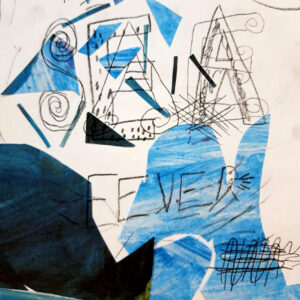
Littleport Community Primary School Year 5 Making Monotypes - these were inspired by Sea Fever the poem by John Masefield

You May Also Like…

Pathway: Making Monotypes

This is featured in the 'Making Monotypes' pathway

This is featured in the ‘Making Monotypes’ pathway

Talking points: What is a monotype?

Monotype Vimeo Screenshot

Talking Points: Kevork Mourad

Kevork Mourad: the making of Seeing Through Babel https://vimeo.com/347106795


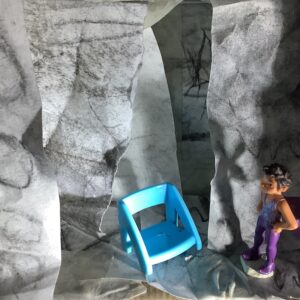
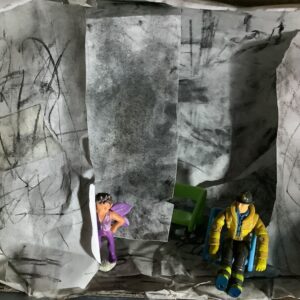
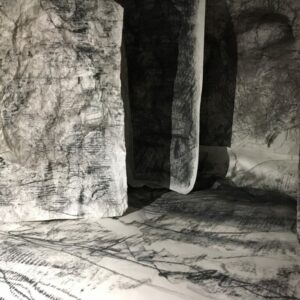
Charcoal Cave

See This Resource Used In Schools…

Year 6, Ruth at Carden Primary School

You May Also Like…

Pathway: Gestural Drawing with charcoal

This is featured in the 'Gestural Drawing with Charcoal' pathway

This is featured in the ‘Gestural Drawing with Charcoal’ pathway

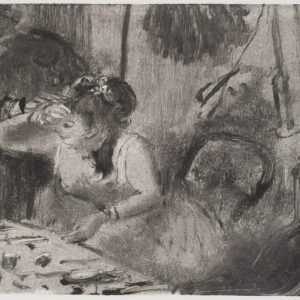
Talking points: Edgar degas

"Edgar Degas (1834-1917), Intimacy, c. 1877-80. kks9159, kks9159" by SMK Statens Museum for Kunst (officiel) is marked with CC0 1.0.

Talking Points: What is Chiaroscuro?

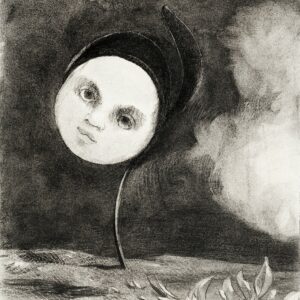
Strange Flower (Little Sister of the Poor) (1880) by Odilon Redon. Original from the Art Institute of Chicago

Talking Points: Cave Art

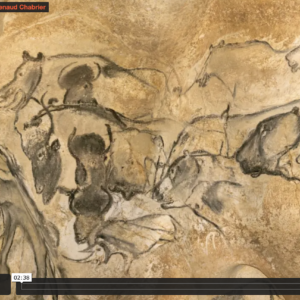
Chauvet Cave https://vimeo.com/171478742

Session Recording: exploring Charcoal

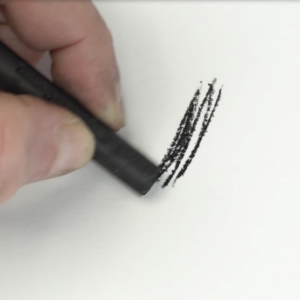
Compressed Charcoal Using Point By Lancelot Richardson


Cut Out Typography

See This Resource Used In Schools…

Year 5
Year 5
Oxley Primary School Typography @oxley_primary
Year 5, Bramber Primary School, Worthing
Year 5, Selborne Primary School
St Hilary School, Year 5

You May Also Like…

Pathway: Typography and Maps

This is featured in the 'Typography and Maps' pathway

This is featured in the ‘Typography and Maps’ pathway

Talking Points: What is typography?

What is typography

Talking Points: Louise Fili

Louise Fili video


Creating Repeat Patterns With Rachel Parker

What We Like About This Resource…

“This is a great activity for really tuning into colour and shape. The process is ultimately quite a refined one (ie making a pattern balanced and repeated ‘correctly’) – but there’s plenty of scope for exploring pattern in a more experiential way prior to the refinement page. Try one of the recommended resources below to introduce pattern and begin with some open ended activities to build skill and confidence.” – Andrea, AccessArt
You Might Also Like…

Pathway: Exploring pattern

This is featured in the 'Exploring Pattern' pathway

This is featured in the ‘Exploring Pattern’ pathway

Talking points: Andy Gilmore

Andy Gilmore

talking points: Louise Despont

Louise Despont

Inspired by Rachel Parker

Wallpaper Mockup Rachel Parker

Teachers Explore Pattern, Shape and Texture

Belvue_INSET -week 1 - SC

Block Printing Repeat Patterns

Andy McKenzie and Jan Ayton stamp printing


Still Life Compositions: Inspired by Cezanne

What We Like About This Resource….

“This activity walks through a number of different processes and taps into multiple skills.This provides a rich exploratory project for children to fully immerse themselves in. Cezanne was the focus artist for this project, but other contemporary still life painters could be used as starter inspiration. We actually advocate showing the work of more than one artist as this builds knowledge of how approaches to painting, drawing etc differ. This also helps children move towards a personal response rather than creating a ‘copy’ of one particular artist’s work” – Rachel, AccessArt

You Might Also Like….

Pathway: Exploring Still Life

This is featured in the 'Explore Still Life' pathway

This is featured in the ‘Explore Still Life’ pathway

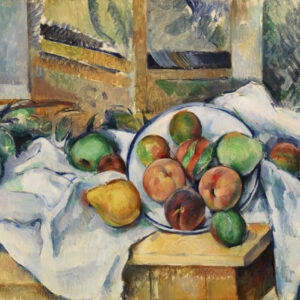
Talking Points: Paul Cezanne

image-from-rawpixel-id-2035657-jpeg

talking points: Contemporary still life

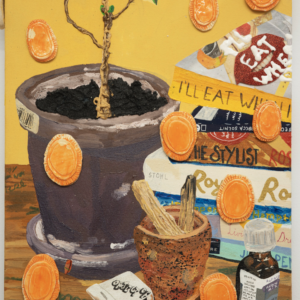
Still Life by Nicole Dyer

talking points: Flemish and Dutch Still Life Painters

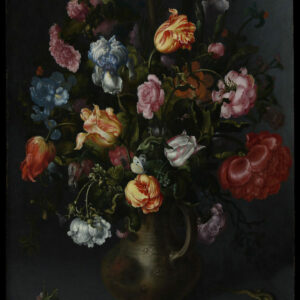
A Vase with Flowers Artist: Jacob Vosmaer (Dutch, Delft ca. 1584–1641 Delft) Date: probably 1613 Medium: Oil on wood Dimensions: 33 1/2 x 24 5/8 in. (85.1 x 62.5 cm) Classification: Paintings Credit Line: Purchase, 1871


Making A Banner At Woking College

What We Like About This Resource….

Working collaboratively towards a shared aim provides an alternative experience to working on individual projects. Creating together encourages listening, peer feedback and creative problem solving – all of which are hugely valuable in all areas of education” – Rachel, AccessArt

You May Also Like….

Animal Habitat Mural

Animal Habitat Mural

Collaborative Public Mural

Collaborative Public Mural

Mural and Workshop Project

Mural and Workshop Project


Collage Streets

What We Like About This Resource….

“This project provides a real opportunity for children to engage with a range of different processes to produce truly individual final results. Jan Miller is an experienced teacher and connects her projects well with learning outcomes. In this case, children are encouraged to have a loose approach and to make their own creative decisions – which is such a valuable part of any child (or adults!) creative education”. – Rachel, AccessArt

You Might Also Like….

Painted Houses

placing roof over house frame

One Line Street

Teaching Drawing

Responding to Place

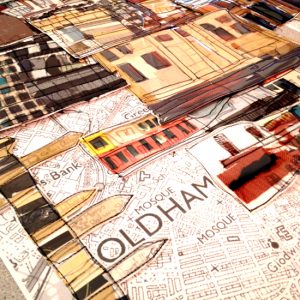
Collaged landmarks of Oldham ready for display - Claire Mather


Creativity Medals

See the Resource Used in Schools…

Year 1, Ruth at Carden Primary School, Brighton

What We Like About This Resource….

“The sentiment behind this resource idea is lovely and it provides an opportunity to really develop some fine motor skills as well as independence of approach. Taking ownership of the medal design means the sense of achievement is heightened beyond the children just being given one. You can really imagine the positive energy that would surround this activity within a classroom, with each child working on a shared project but embarking on their own creative journey.”  – Rachel, AccessArt
You May Also Like….
Pathway: Playful Making

Featured in the 'Playful Making' pathway

Featured in the ‘Playful Making’ pathway

Talking Points: Introduction to sculpture

What is Sculpture

Clay Art Medals

Clay Art Medals by Sharon Gale

Talking Points: Nnena Kalu

Jennifer Lauren Gallery Work By Nnena Kalu

Talking Points: Linda BEll

Linda Bell at Arts Fringe


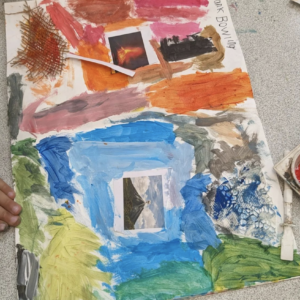
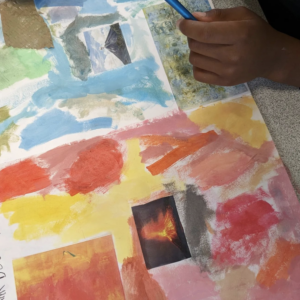
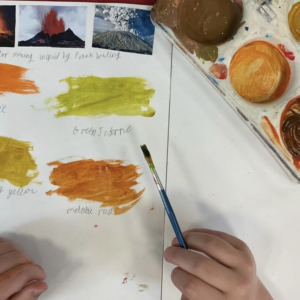
Volcano Painting inspired by Frank Bowling

See This Resource Used In Schools…

Year 3, Ruth at Carden Primary School
Year 5, Goose Green Primary School
Mrs Nicky Davies, Year 4, St Hilary's School
Ruth at Carden Primary School, Brighton

What We Like About This Resource….

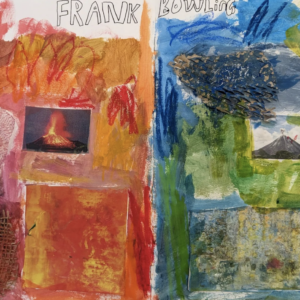
“We love how this activity provides an opportunity to explore a well known Artist’s work, through focussing on their materials and techniques. The children looked at Frank Bowling’s work before creating their own individual responses that retained individual ownership – something we advocate as part of a rich and balanced visual arts education. It was also great to see how a professional artist visited the school to further enhance the children’s experience.” – Rachel, AccessArt

You May Also Like…

Pathway: Cloth, thread, paint

This is featured in the 'Cloth, Thread, Paint' pathway

This is featured in the ‘Cloth, Thread, Paint’ pathway

Talking Points: Frank Bowling

Frank Bowling – From Figuration to Abstraction | Artist Interview | TateShots

Talking Points: Hannah Rae

Textiles by Hannah Rae

Talking Points: Alice Kettle

Sea Figure by Alice Kettle


The Art Of Zines

You Might Also Like…

Pathway: Print & Activism

This is featured in the 'Print & Activism' pathway

This is featured in the ‘Print & Activism’ pathway

Talking Points: Luba Lukova

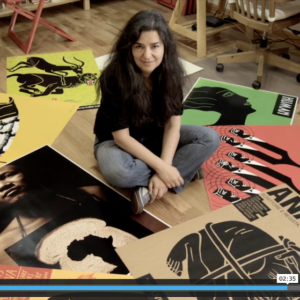
Luba Lukova Vimeo Screenshot https://vimeo.com/34541872

Talking Points: What is a Zine?

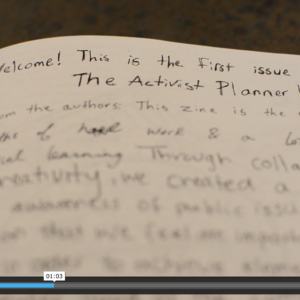
The Activist Planners Vimeo Screenshot

Making Large Scale, Screenprinted, Collaged, Co-Created Campaign Posters!

Finished poster

Making an Artist’s Book

Making an Artist's Book by Paula Briggs

Book Artists

Snow Queen Illustration by Su Blackwell


Lino Printing Inspired by Gestural Drawings


Movement Maps


Redesigning Food Packaging

You May Also Like…

Pathway: 2D Drawing to 3D Making

This is featured in the '2D Drawing to 3D Making' pathway

This is featured in the ‘2D Drawing to 3D Making’ pathway

Talking Points: Packaging Design

Orange Juice Redesign https://www.youtube.com/watch?v=TzzlNni_K4o&t=364s

What is Typography

What is typography


Making a Backwards Sketchbook


Animal Habitats: An Ecological Mural of Planet Earth


DrawAble: Making Layered Portraits by Mike Barrett Part Three

See This Resource Used In Schools…

Shottermill Junior School Year 6
Shottermill Junior School. Year 5 art work.
Littleport Community Primary School Exploring Identity
Springfield Juniors
Year 6 Goose Green Primary School https://www.goosegreenprimaryschool.org/
Year 6, Winslow CE School
Year 6, East Manchester

You May Also Like…

Pathway: Exploring Identity

This is featured in the 'Exploring Identity' pathway

This is featured in the ‘Exploring Identity’ pathway

Talking Points: Njideka Akunyili Crosby

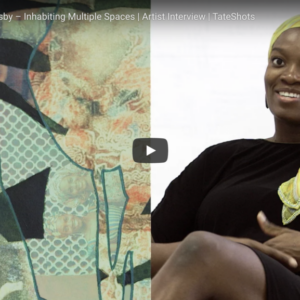
Njideka Akunyili Crosby

Talking Points: Yinka Shonibare

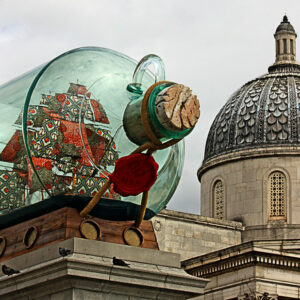
Yinka Shonibare's message in a bottle, Photograph by Feggy Art


DrawAble: Making Layered Portraits by Mike Barrett Part Two

See This Resource Used In Schools…

Pupil Working on His Layered Portrait by Sarah Longley

You May Also Like…

Pathway: Exploring Identity

This is featured in the 'Exploring Identity' pathway

This is featured in the ‘Exploring Identity’ pathway

Talking Points: Njideka Akunyili Crosby

Njideka Akunyili Crosby