Talking Point: Alice Kettle

Why do you think artists throughout history have used stitch to tell stories?
Alice Kettle uses cloth and thread to make large, colourful artworks. She builds up layers of machine stitching, creating lines, shapes and areas of colour across the surface. Her work brings together stories from folklore and mythology with stories from her own life, showing us how textiles can be used to share real and imagined worlds.
Watch the videos below and use the following questions to explore Alice Kettle’s work.
Please Note:
This page includes links and videos from external sites, verified at publication but subject to change.
Teachers should review all content for classroom suitability.
Report any issues, and check school firewall settings if videos don’t play.





Alice Kettle
Alice Kettle is a contemporary textile/fibre artist based in the UK. Alice originally trained as a painter and will often begin her work with a painted background which she then embroiders on. Her large scale work is composed of individual tiny stitches, which combine to form great swathes of colour, painterly backgrounds incorporating rich hues.
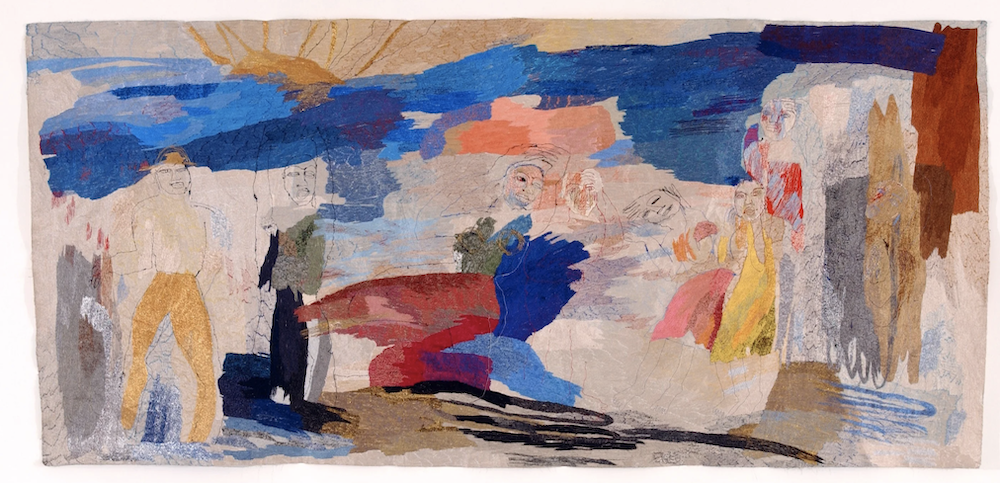
Alice Kettle, Odyssey, thread on canvas (2003)
The Scalloped Edge
Alice Kettle worked with a group of women in Madeira to explore how the traditional stitching commonly seen in Madeiran embroidery could inspire contemporary work and create a thread between old and new. Together, they created a collaborative piece exploring different traditional stitches and motifs.
Alice Kettle went on to create large-scale embroideries that shared stories from Madeiran medieval folklore. This project demonstrates the power of collaboration and the sharing of knowledge across cultures.
“The project uses stitch as a common cultural language to make connections through motif, process and metaphor. The sharing and exchange of the tacit knowledge with the local community in a series of collaborative works forms an important part of this collection.
Embroidery in Madeira as with British stitchwork, is undertaken primarily by women. The exhibition uses distinctive elements of Madeiran embroidery reinterpreted into my contemporary works in machine and hand stitch. Titled the scalloped edge, which is a feature of this embroidery, it draws upon the characteristic palette of white or blue and the repeated flowing lines in satin stitch and long-and-short stitch.” – Alice Kettle
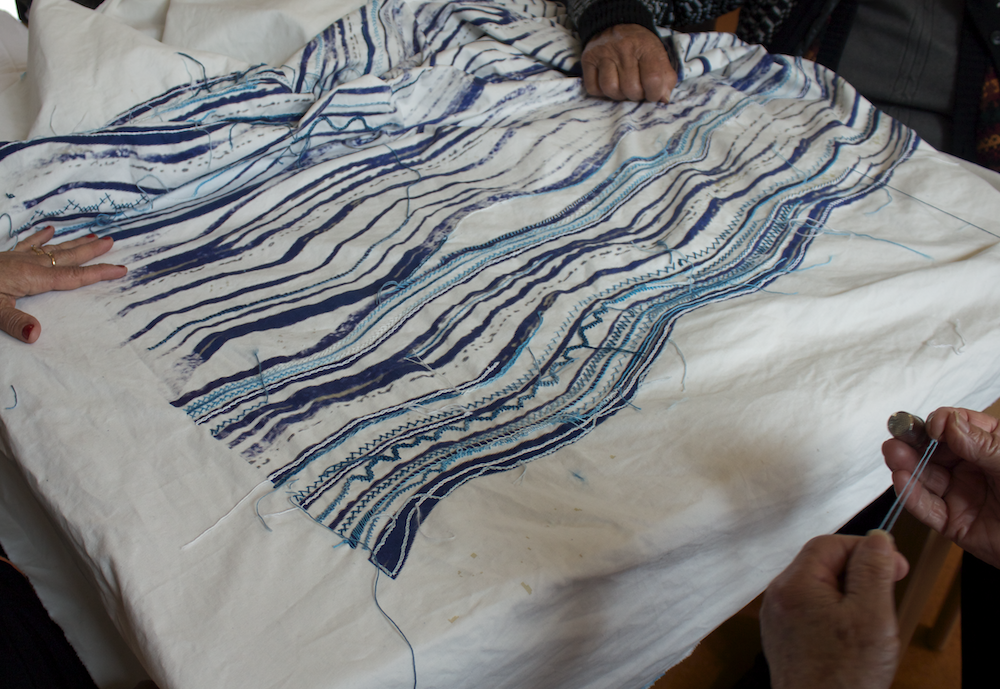
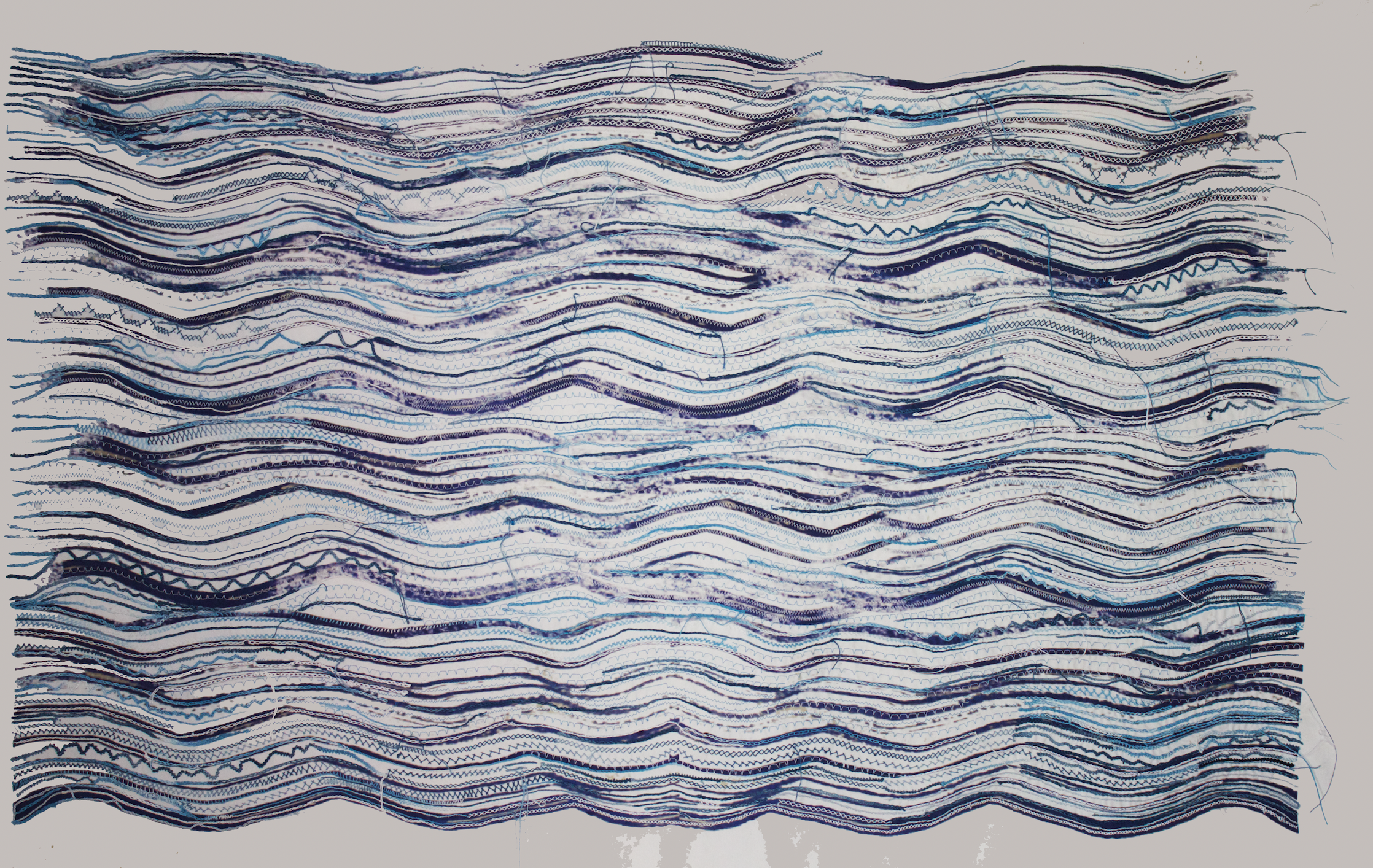
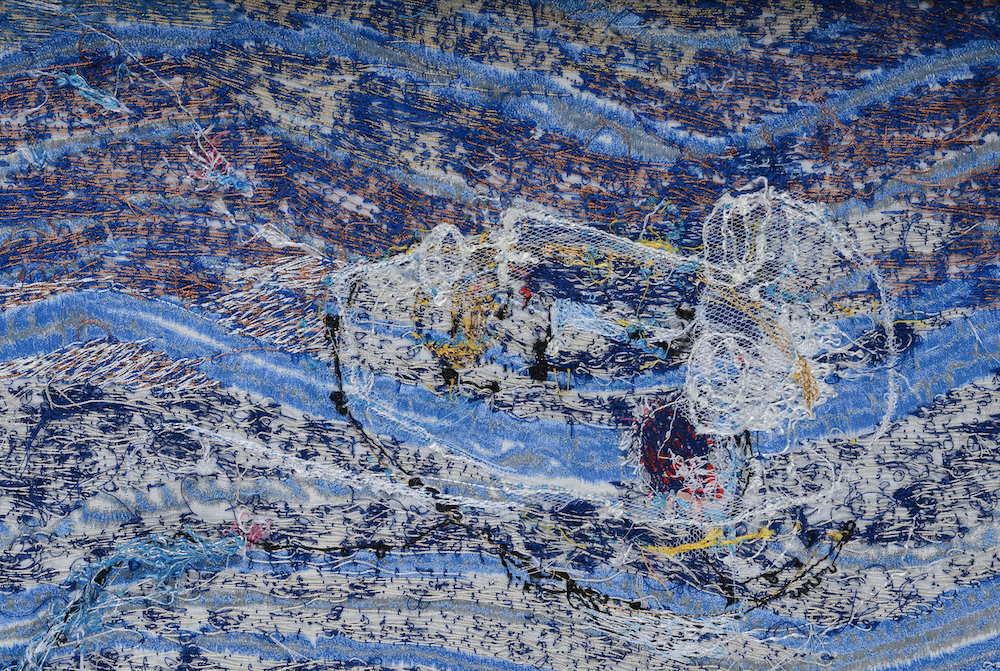
Sea Figure, Alice Kettle, 2016, Thread on linen, 223 x 128 cm
Questions to Ask Children
Why do you think the palette of white and blue was used to create these artworks?
Describe the lines and marks you can see. What do they remind you of?
How does the work make you feel?
How do you think that collaboration benefitted the community and the artist?
How does scale impact the viewers experience of the work?
Threadbound
Watch this video to find out more about Alice’s recent collection for the exhibition ‘Threadbound’.
Questions to Ask Children
What do you like/dislike about the work that you can see in this video?
Did one textiles piece stick in your mind? Why?
If you combined an image of yourself with a plant, what would you choose? Why?
This Talking Points Is Used In...
using sketchbooks to make visual notes
Show me what you see