Remembrance Day Peg Soldiers

By Mandy Barrett

In this post Mandy Barrett shows us how she inspired the children at Gomersal Primary School to create a powerful installation commemorating the 75th Anniversary of D Day. Encourage your children to get creative whilst helping them understand the significance of this anniversary in the post below. This activity can be adapted for all primary ages.
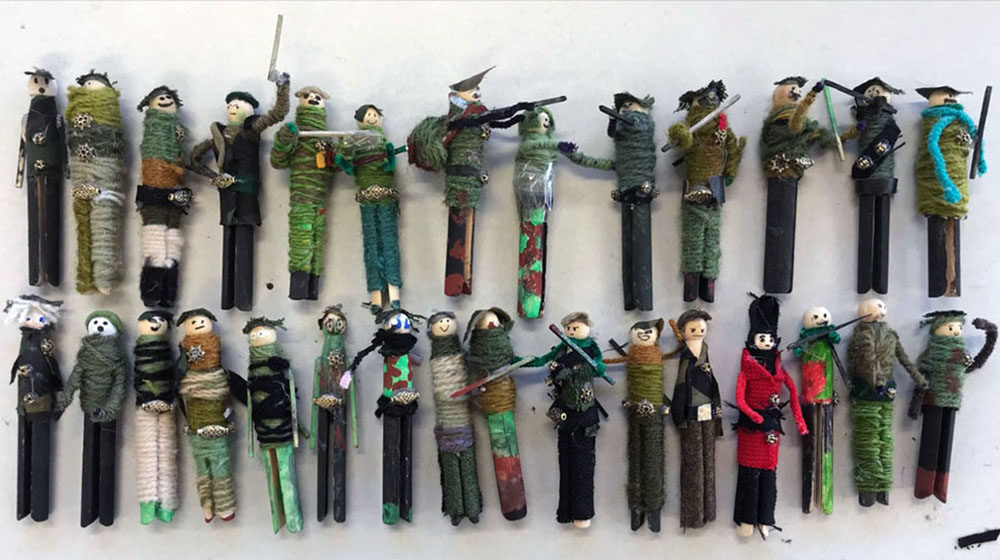
Individual Peg Soldiers By Mandy Barrett Remembrance Day or Armistice Day comes around each year, in the United Kingdom, on the 11th November. It is at this time that we take part in numerous activities, to teach our children the importance of remembering the sacrifices of those who served for our country during the wars.

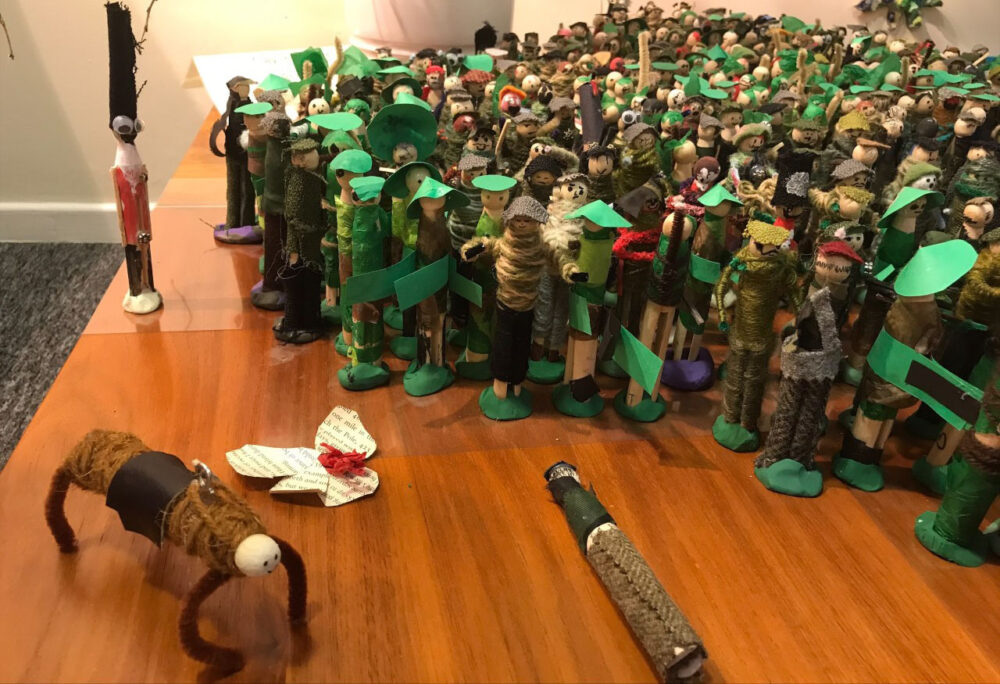
To mark the 75th anniversary of the D Day landings, we wanted to create a memorable art installation. Something that would be meaningful, make an impact on our children and help them to understand the significance of this anniversary. In the past we have created displays of poppies but wanted this year’s to be different. Our children find it difficult to visualise large numbers, in fact many adults do too. I will never forget the impact of seeing the ceramic poppies displayed in London. A stark visual, to aid the comprehension of what the numbers actually represent. I wanted our school display to do the same.

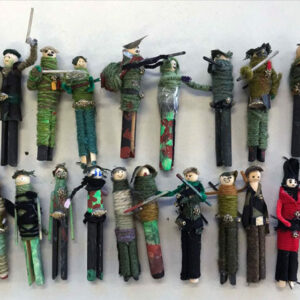
We decided to create our own visual army with every child and adult in school. Each person was given a wooden dolly peg and asked to design their own soldier to be part of a battalion. What would 420 peg soldiers all look like displayed together? How would this portray a sense of community and camaraderie?
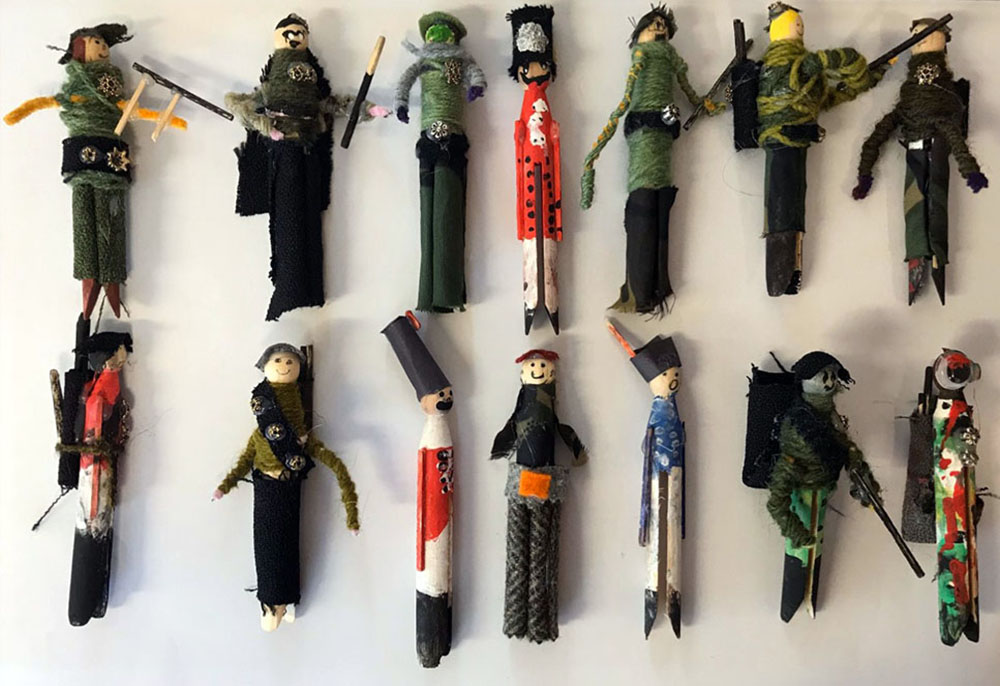
The children learnt about different battalions and looked at a range of uniforms from various army regiments, both past and present. We also looked at the range of materials and fabric available to us from the school cupboards. The children used their sketchbooks to consider how they would turn their wooden peg into a soldier. What would they need? How would we fix the materials to the peg? Time was allocated for the children to explore and design. We talked about camouflage and why the Queen’s guard wore red (because that certainly doesn’t help them to blend in with their environment).

The battalion slowly began to grow as each year group tackled this project in a slightly different way. Some of our youngest children, painted their pegs with black trousers and a green top. Some children chose to use different colours. Some added matchsticks or pipe cleaners for arms and carefully considered the expressions on their peg doll’s face. Some soldiers had helmets while others were given hair. What became increasingly evident was these little peg dolls were all unique and each had their own personality. One Year 6 child even had the idea to turn their peg into a War Horse.Peg Soldier Development By Mandy BarrettOur older children spent time adding finer details to their soldier. Wool was carefully wrapped around the peg to create the uniform and fixed into place with either PVA glue or a glue gun. Some created medals and backpacks and a small group of children wanted to add guns and grenades. The children were very much encouraged to be creative, resulting in some incredibly detailed soldiers. The children named their soldiers and began telling stories of their lives. Where were they travelling to? Who were the family members they had left behind? The links to Literacy were innumerable.Peg Soldiers In Rows By Mandy BarrettFinally, we displayed the battalion of soldiers all together in our school reception area. A lump of plasticine was used on the base of the peg to help the soldiers stand to attention. This is what 420 peg soldiers look like and we were able to use this as a teaching point when discussing figures and numbers relating to the war. Throughout the project we constantly remembered, thought and reflected on events from the past.
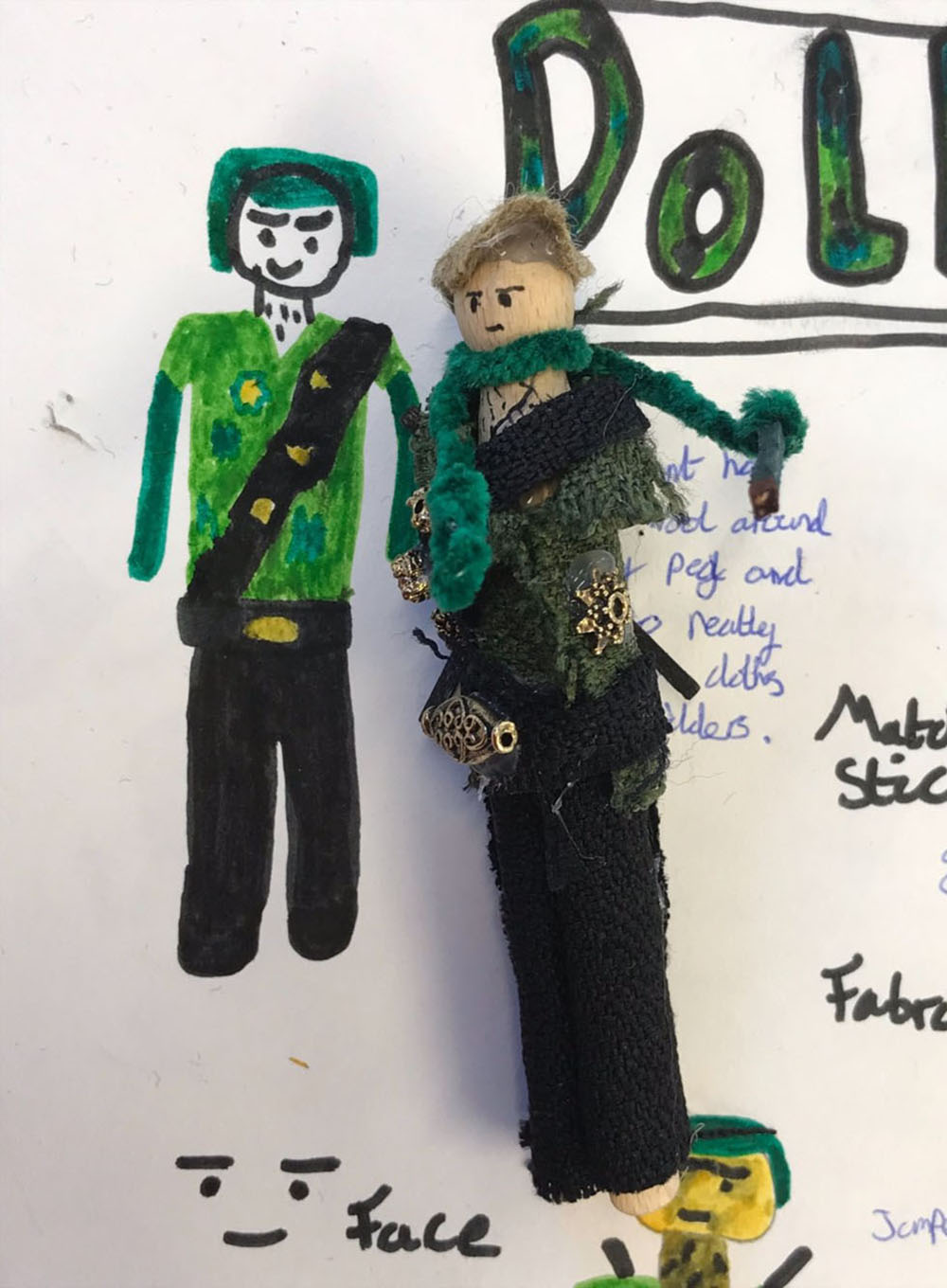
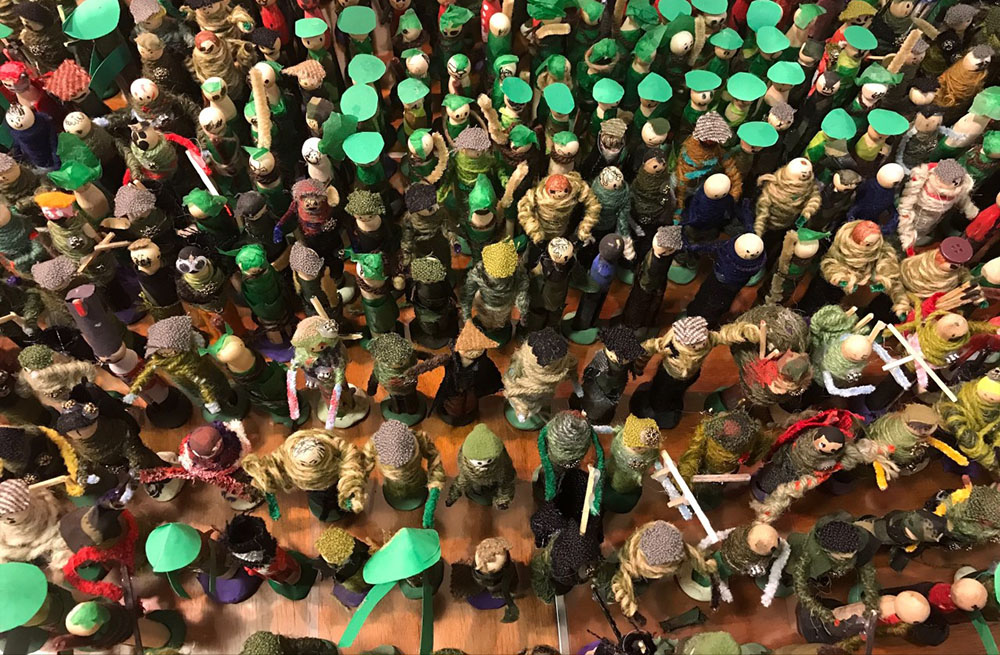
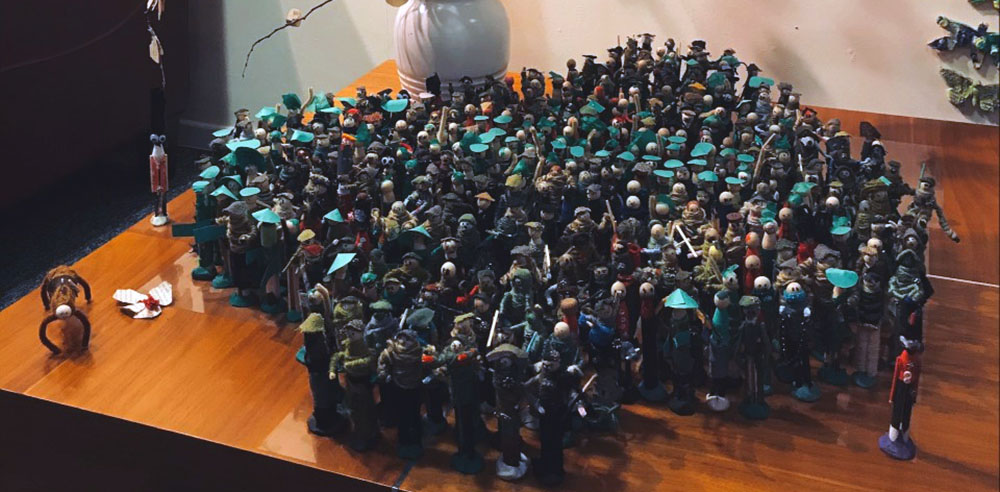
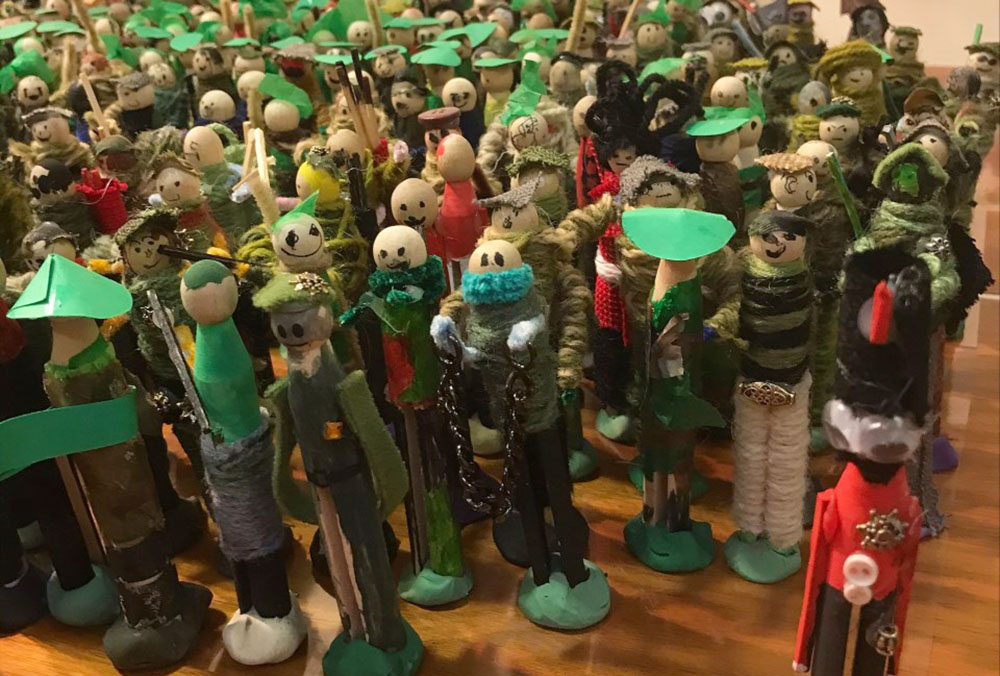
Peg Platoon By Mandy Barrett Peg Soldiers By Mandy BarrettPeg Soldiers And A Peg Horse By Mandy Barrett


This is a sample of a resource created by UK Charity AccessArt. We have over 1500 resources to help develop and inspire your creative thinking, practice and teaching.

AccessArt welcomes artists, educators, teachers and parents both in the UK and overseas.

We believe everyone has the right to be creative and by working together and sharing ideas we can enable everyone to reach their creative potential.

What We Like About This Resource….

“It’s great to see a different approach to thinking about remembrance day. These peg soldiers are a refreshing alternative to artwork inspired by poppies. The processes involved encourage children to focus on fine motor skills: wrapping embroidery thread around the peg and creating small detailed clothes and helmets. These dolls look particularly effective when standing as a collection and would make a poignant alternative to a standard display board” – Rachel, AccessArt

See This Resource Used In Schools…
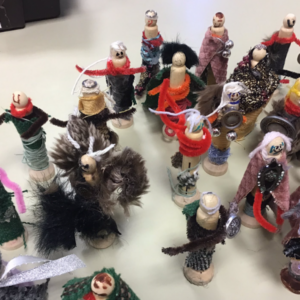
Year 3 Trinity St. Michaels

You Might Also Like….


An Exploration of Paul Nash

An Exploration of Paul Nash


For Remembrance Day

For Remembrance Day

World War l Mail Art


World War l Mail Art


The Transformation Project

You May Also Like…

cardboard detail 3b

Transforming Cardboard with Andrea Butler

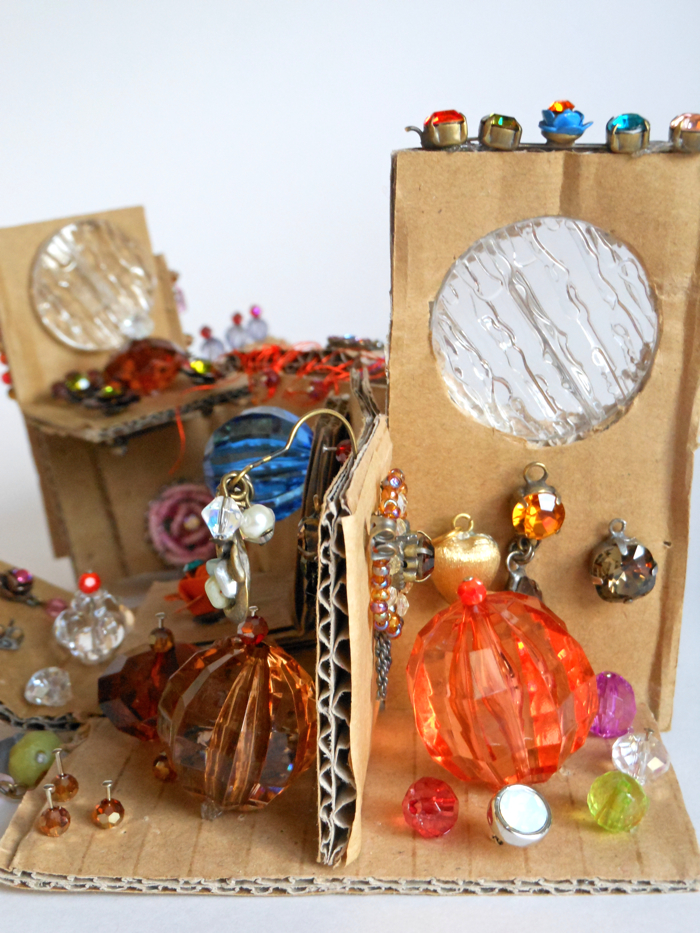
Artist Andrea Butler shows how to explore simple design and construction using cardboard and jewellery. Read More


Download an Editable Version of the AccessArt 2020 Progression Plan


Turkish Map Fold

What We Like About This Resource….

“This activity is a great example of how we can use paper as the focus of creativity. Often we use paper purely for drawing or painting on, but here, it is central to the activity itself. While these particular folded sculptures have their roots in Turkish culture, you could still deliver the activity if looking at things like Origami too, thus linking it across different cultures” – Rachel, AccessArt

You Might Also Like….

Puzzle Purses Part 1

Puzzle purse making process by Eilis Hanson

Puzzle Purses Part 2

An unfolded origami puzzle purse by Eilis Hanson

Paperback Figures

paper pair for upload


World War I Mail Art

What We Like About This Resource….

“This project links poignant subject matter with meaningful art processes and local history. What we learn about the re purposing of materials, (in this case spent ammunition) re affirms how we can use what is around us as a starting point to making and creating. You could extend or adapt this project by looking at broken pottery, re purposing that into new sculptures that link with Roman or other local historical cultures” – Rachel, AccessArt

You May Also Like….

Henry Moore's Shelter Drawings

Henry Moore’s Shelter Drawings

Remembrance Day Soldiers

Remembrance Day Soldiers

For Remembrance Day
For Remembrance Day

Which Artists: Claire Harrup

What We Like About This Resource….

“We really enjoyed reading about the process of creating art work according to a design brief and how the experience of this differs to when an artist begins with their own idea or concept. That’s not to say an artist can’t approach a brief with their own individual style and ideas, but what this post shows us is that there can be a balance between the two. This would be a great resource to show older KS pupils who may be beginning to consider their options beyond Primary School”. – Rachel, AccessArt
You Might Also Like….

Pathway: 2D Drawing to 3D Making

This is featured in the '2D Drawing to 3D Making' pathway

This is featured in the ‘2D Drawing to 3D Making’ pathway

Talking Points: Packaging Design

Orange Juice Redesign https://www.youtube.com/watch?v=TzzlNni_K4o&t=364s

What is Typography

What is typography

Which Artist: Rachel Parker

Fabrics for Dashwood Studio by Rachel Parker

Repeating Patterns

Wallpaper Mockup Rachel Parker

Block Printing Repeat Patterns

Andy McKenzie and Jan Ayton stamp printing


Which Artists: Ava Jolliffe


Which Artists: 2B or Not 2B


Sketchbook Journey At Haslingfield Primary School


Creativity Medals

See the Resource Used in Schools…

Year 1, Ruth at Carden Primary School, Brighton

What We Like About This Resource….

“The sentiment behind this resource idea is lovely and it provides an opportunity to really develop some fine motor skills as well as independence of approach. Taking ownership of the medal design means the sense of achievement is heightened beyond the children just being given one. You can really imagine the positive energy that would surround this activity within a classroom, with each child working on a shared project but embarking on their own creative journey.”  – Rachel, AccessArt

You May Also Like….

Pathway: Playful Making

Featured in the 'Playful Making' pathway

Featured in the ‘Playful Making’ pathway

Talking Points: Introduction to sculpture

What is Sculpture

Clay Art Medals

Clay Art Medals by Sharon Gale

Talking Points: Nnena Kalu

Jennifer Lauren Gallery Work By Nnena Kalu

Talking Points: Linda BEll

Linda Bell at Arts Fringe


Making Musical Instruments

What We Like About This Resource….

“It’s great to see music being explored in this way, and combining it with making creates a really interesting immersive project. This activity would work well as part of an extended project looking at musical instruments around the world and some of the natural materials they are made from.” – Rachel, AccessArt

You Might Also Like….

Pathway: Music and art

This is featured in the 'Music and Art' pathway

This is featured in the ‘Music and Art’ pathway

Talking Points: Linda BEll

Linda Bell at Arts Fringe

Talking Points: Nnena Kalu

Jennifer Lauren Gallery Work By Nnena Kalu

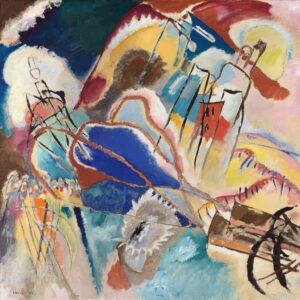
talking points: wassily Kandinsky

"File:Vasily Kandinsky, Improvisation No. 30 (Cannons), 1913, 1931.511, Art Institute of Chicago.jpg" by Wassily Kandinsky is marked with CC0 1.0.

drawing source material: orchestras

Orchestra

A Cheerful Orchestra

One of our favourite musicians!


Touch Wood

What We Like About This Resource….

“You can get a real sense of the environment in this post and how this could provide so much inspiration for creative projects. We are aware there the challenges to exploring the outdoors when many schools are in towns and cities. A way around this could be to have a regular collection of natural objects within the classroom and using them as a stimulus to respond creatively in sketchbooks or in extended projects” – Andrea, AccessArt

You Might Also Like….

Woodland Exploration

Wild Imagination by Caroline Wendling and Deborah Wilenski

Visual Arts PLanning: Tees, Forest and Landscapes

Wax resist leaves by pupils at Dent School, facilitated by Rosie James


Which Artists: Su Blackwell

What We Like About This Resource….

“It’s really interesting to hear how Su’s career path evolved organically, and how experimenting with different disciplines such as ceramics and sculpture whilst studying Textiles at the RCA began her journey towards paper craft and books. We really like how the small book sculptures inspired the larger scale set designs for The Snow Queen. They transfer so effectively to the stage and you can imagine how engaging it would be for a young audience to recognise letters and words on lampposts and other scenic elements”. – Rachel, AccessArt

You Might Also Like….

Creating a Book World

Creating a Book World

Sketch Set Design Models

Sketch Set Design Models

Set Design for Primary Aged Children

Set Design for Primary Aged Children


Henry Moore’s Shelter Drawings

You May Also Like…

Pathway: Exploring Form Through Drawing

This is featured in the 'Exploring Form Through Drawing' pathway

This is featured in the ‘Exploring Form Through Drawing’ pathway

Watercolour Washes Inspired by the Tapestries of Henry Moore

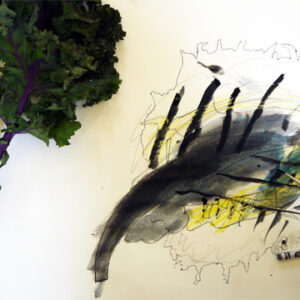
Curly kale watercolour study, by Kelly aged 7


Working with Dogwood

What We Like About This Resource….

“It’s lovely to see a resource that centres on a particular material and the scope it offers. I particularly like how the dogwood is used here to make wooden beads. This idea could be developed further by looking at how wood has been used to make jewelry throughout history and within many different cultures.” – Rachel, AccessArt.

You Might Also Like….

Woodland Exploration

Wild Imagination by Caroline Wendling and Deborah Wilenski

Visual Arts Planning: Trees, Forests and Landscape

And the work quickly starts to grow - Bluebell forest SC


Which Artists: Toby Pritchard

What We Like About This Resource….

“It’s a really positive thing for an artist to share the concept of the creative journey. At AccessArt we believe journeys are pretty important and we are pleased to show this in action through Toby Pritchard’s post. We particularly like the anthropomorphic element, and how this really brings life to Toby’s work.” – Rachel, AccessArt

You May Also Like….

Anthropomorphic Animal Paintings

Anthropomorphic Animal Paintings

Exploring Animation

Exploring Animation

Teaching for the Journey not the Outcome

Teaching for the Journey not the Outcome


Dropped Cone Sculptures with Julia Rigby

What We Like About This Resource….

“There’s a really fun element to this activity which is you can imagine all children really enjoying! The idea of food on large scale is a great starter for a sculpture project and an early exploration of working in 3D. What’s really positive to see in this project is how the children used their sketchbooks to design their ice creams prior to working in 3D. They then had the opportunity to re visit and refine their ideas as they worked. This provides a sold foundation for the concept of design development and design through making- both of which underpin any visual arts or design project or profession. For more support on how to develop sketchbook practice in your setting please see our Sketchbook Journey” – Rachel, AccessArt

You Might Also Like….

Art Club Cafe

Art Club Cafe

Communal Drawing: Summer Picnic

Communal Drawing: Summer Picnic

Redesigning Food Packaging

Redesigning Food Packaging


Portrait Club

What We Like About This Resource…

“We’re really grateful to Jake from Draw Brighton for sharing this activity which became so well received during lockdown 2020. 

This is the perfect reminder that wherever we are in the digital or physical world, we have our eyes, hands and faces, and drawing provides a wonderful opportunity to come together in small groups to make sketches of each other. Use this activity as an ice breaker before a workshop, or as a transition activity between classes or events. Thank you Jake!” Paula, AccessArt

You Might Also Like…

Pathway: Exploring Identity

This is featured in the 'Exploring Identity' pathway

This is featured in the ‘Exploring Identity’ pathway

Talking Points: Njideka Akunyili Crosby

Njideka Akunyili Crosby

Making Physical or Digital Layered Portraits

Let Me Inspire You by Mike Barrett

Introduction to Portraits

hester berry IMG3-4

Exploring Portraits in Graphite, Collage and Clay

Exploring Portraiture with Eleanor Somerset


Which Artists: We are out of office


Gabby Savage-Dickson: Etching

What We Like About This Resource…

“These are such beautiful and evocative images – certain to inspire. There is a lot of potential for schools to explore Gabby’s work as a way to inspire pupils to create their own imagery inspired by literature, or inspired by imaginative writing by pupils.

Although etching might not be particularly accessible to many schools, there are low tech ways of approaching the process (see below) which mean pupils can explore similar ways of working in the classroom.” Paula, AccessArt

You May Also Like…

Dry Point Etching

Dry Point Etching

Printmaking Using Packaging

Printmaking Using Packaging

MonoPrinting with Carbon Paper

MonoPrinting with Carbon Paper