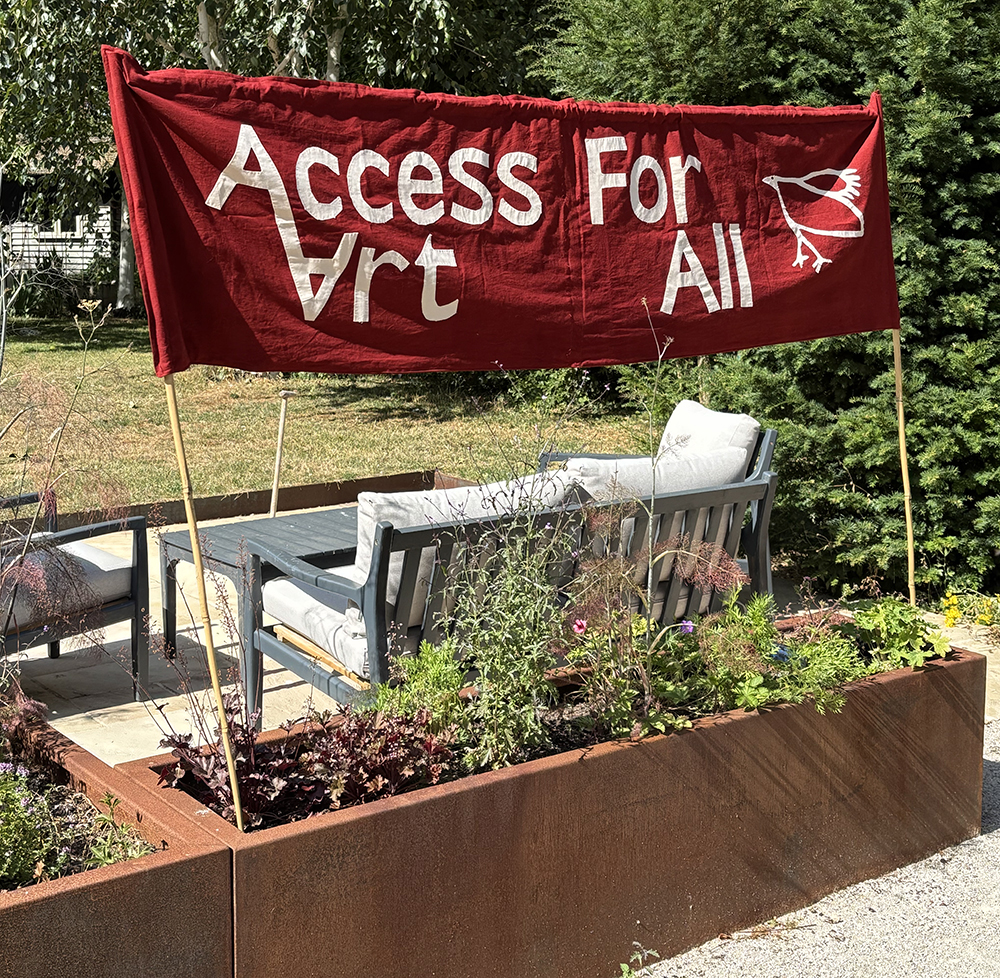
Sewn banners sit within a long and powerful tradition of creativity and activism, where textiles, stitch, colour and symbol are used to make visible what communities care about. From suffrage banners to trade union, peace and protest banners, making by hand has enabled people to gather, speak collectively and claim space. In this post, we document how AccessArt made a sewn banner to help create a strong visual presence at advocacy events.
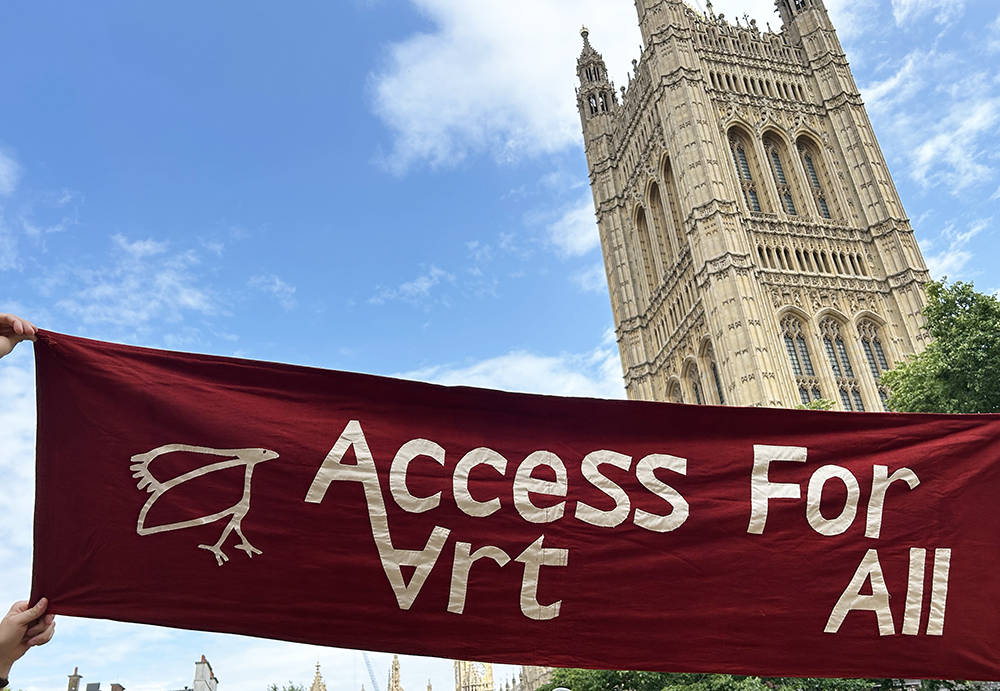
As a Subject Association for art, representing over 24,000 members, and as a visual arts educational charity, we always try to balance our practical work creating resources for teachers and learners with our advocacy work, raising awareness of the importance of arts education for all. With the Curriculum and Assessment Review, the government’s response to that review, and a whole raft of proposals aimed at providing a world-class curriculum for all, the wider arts education community has, in many ways, never felt more united in its message. It felt like an appropriate time to make a banner that AccessArt could use at events to help create greater visibility. Inspired by the beautiful banners created by trade unions and the Suffragette movement, we decided our banner needed to be carefully crafted and beautiful to look at.
To Begin
Letters were drawn on paper to act as templates. We sketched these freehand, working between measured lines, but you might decide to enlarge letters downloaded from the internet.
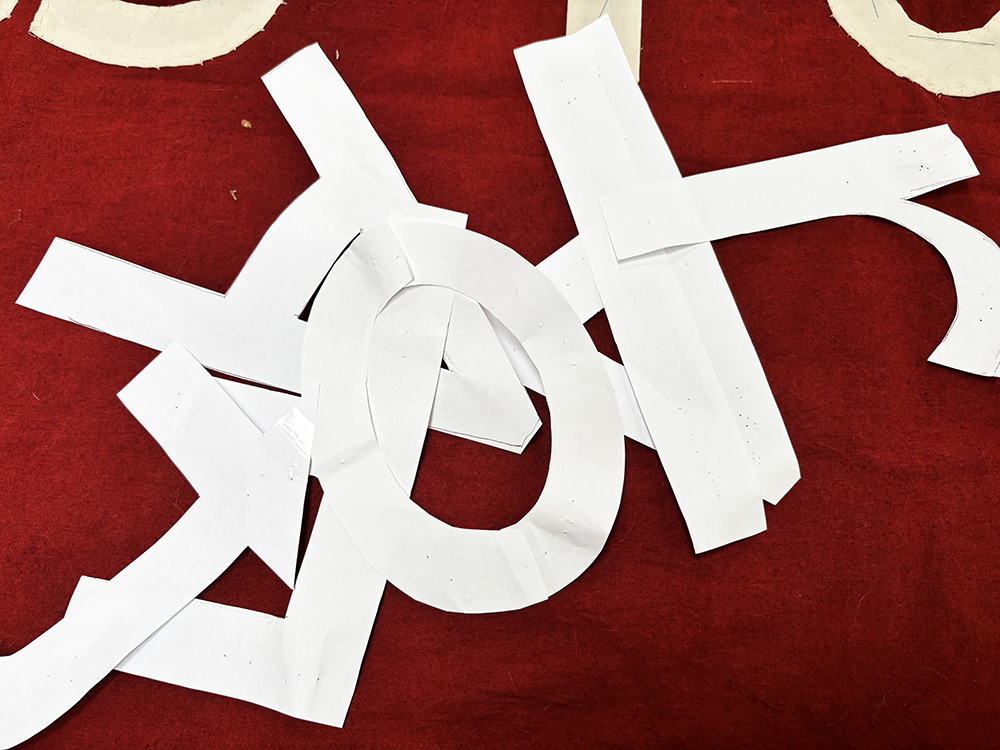
We then used the paper letters to cut out a fabric letter that was 1cm larger in every dimension than the paper template, and then a letter cut from iron-on interfacing. The shape cut from interfacing needed to fit the reverse of the letter, as it was to be ironed onto the back of the fabric letter.
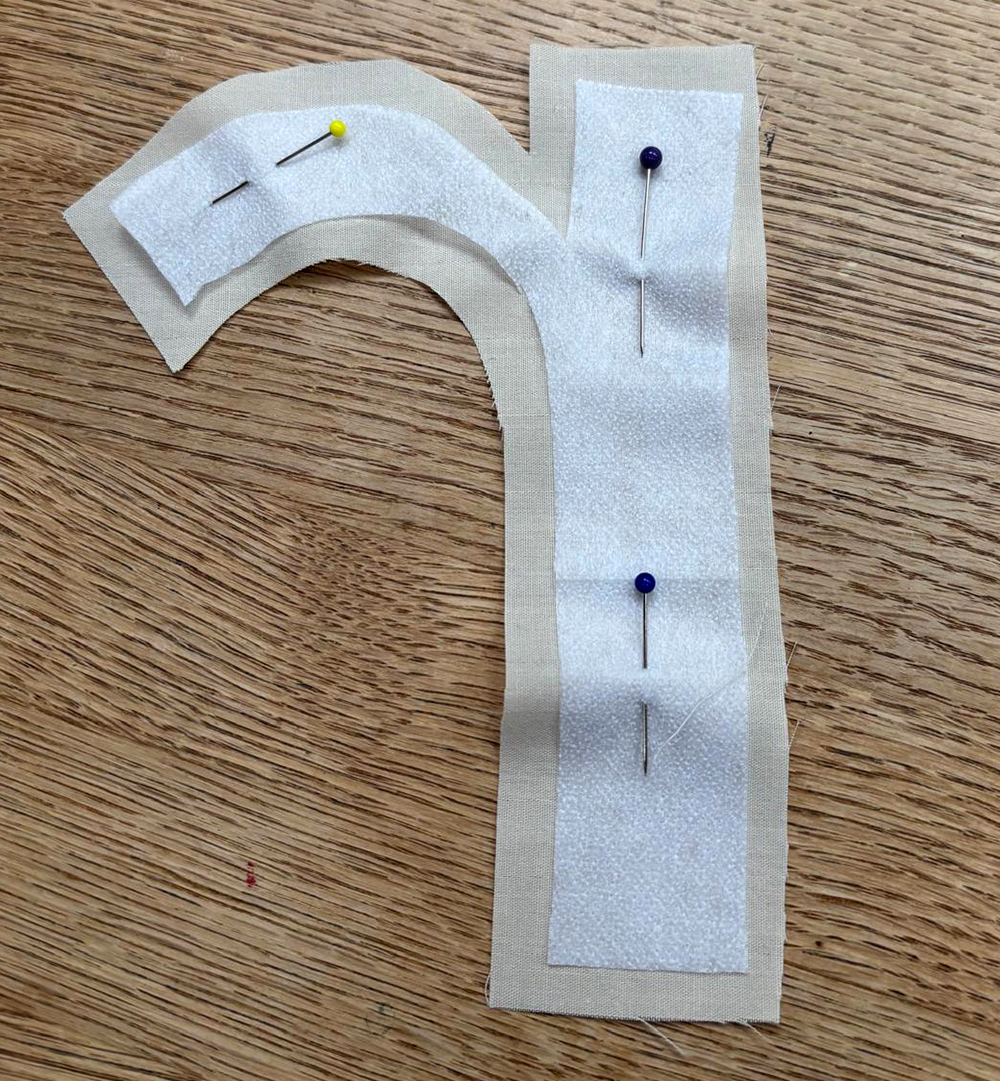
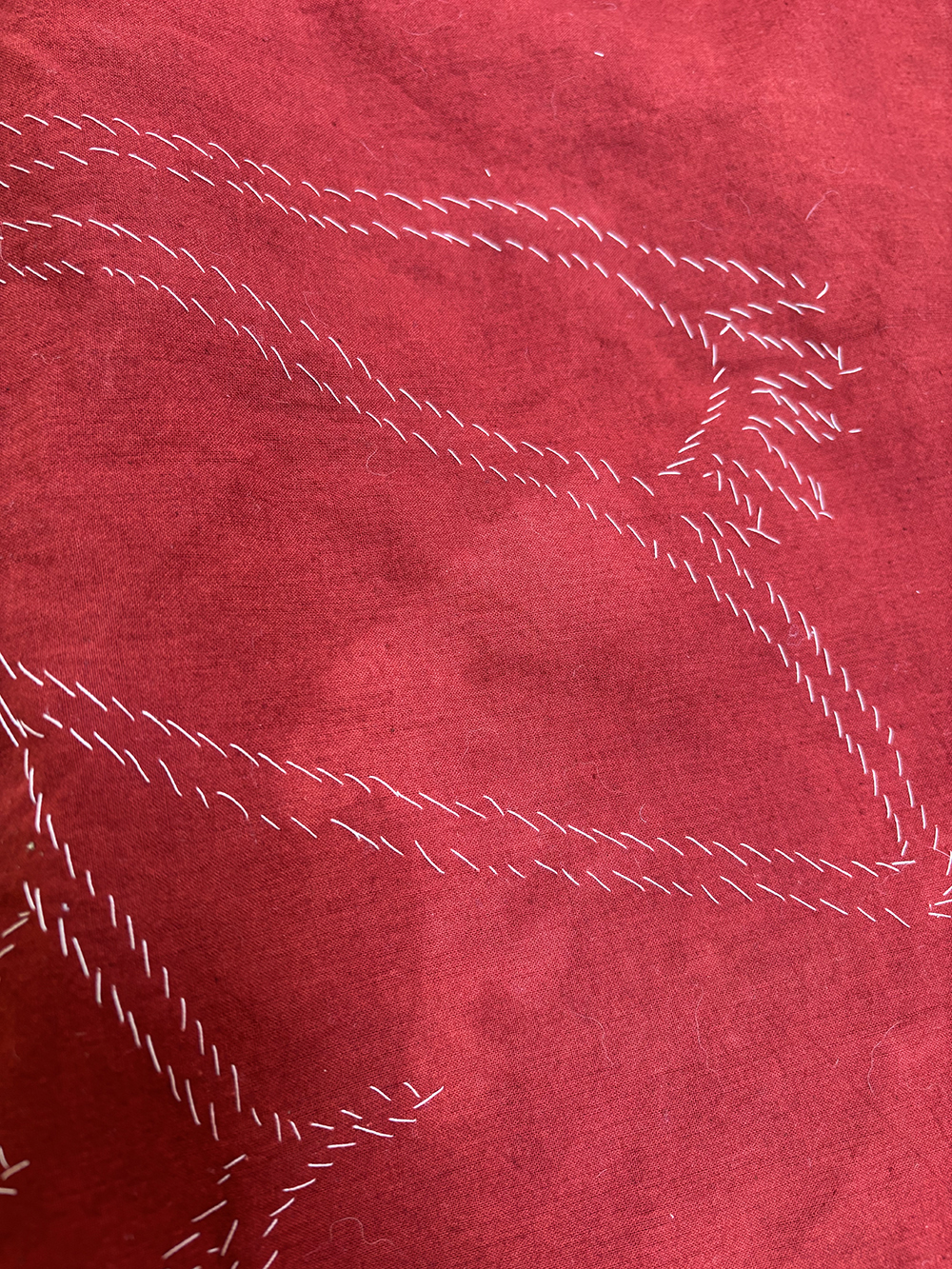
Using a running stitch, we hemmed each letter around the interfacing.
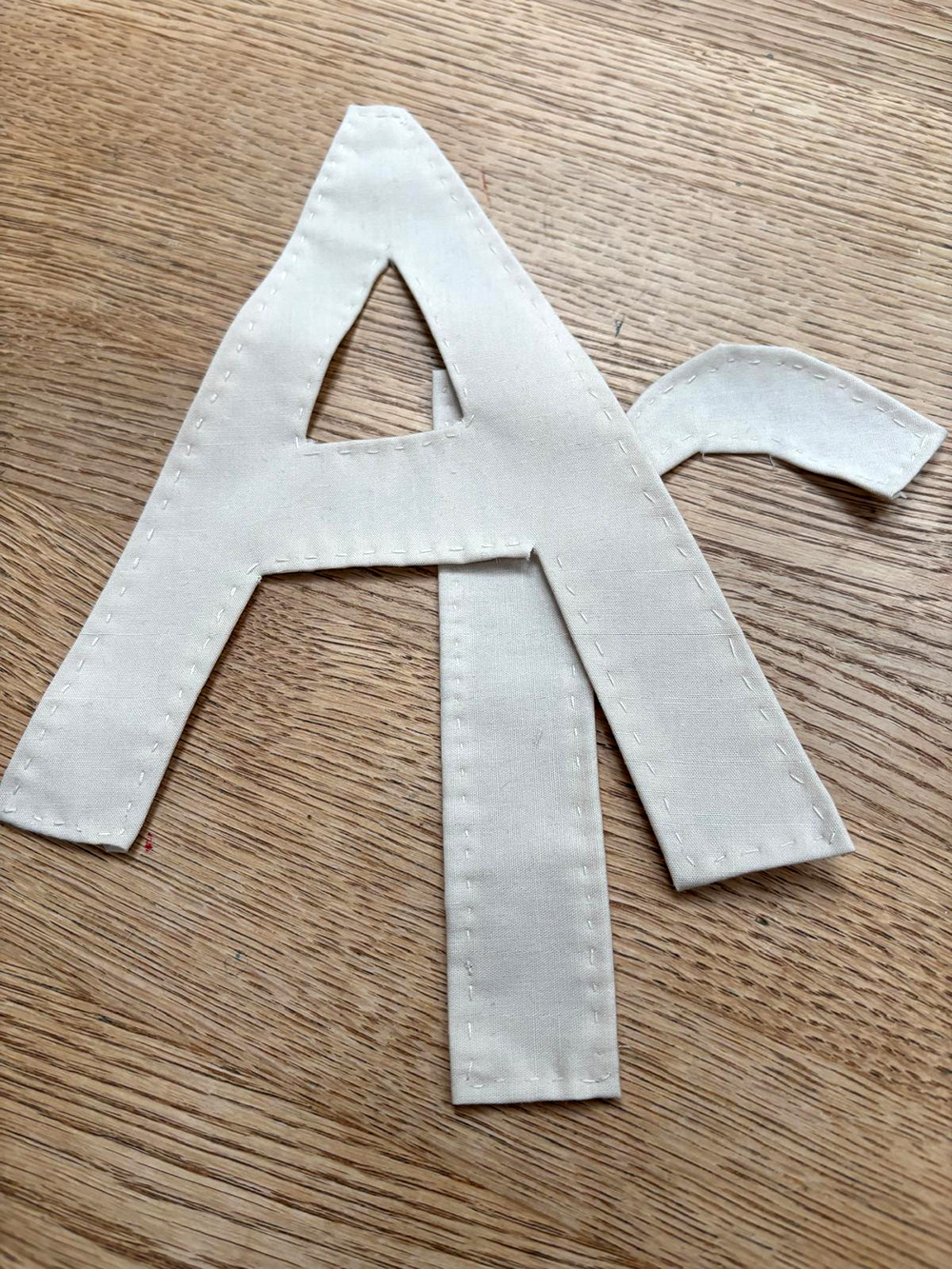
We then pinned the hemmed letters to the banner background, using a chalk pencil to mark out positions to ensure everything was straight.
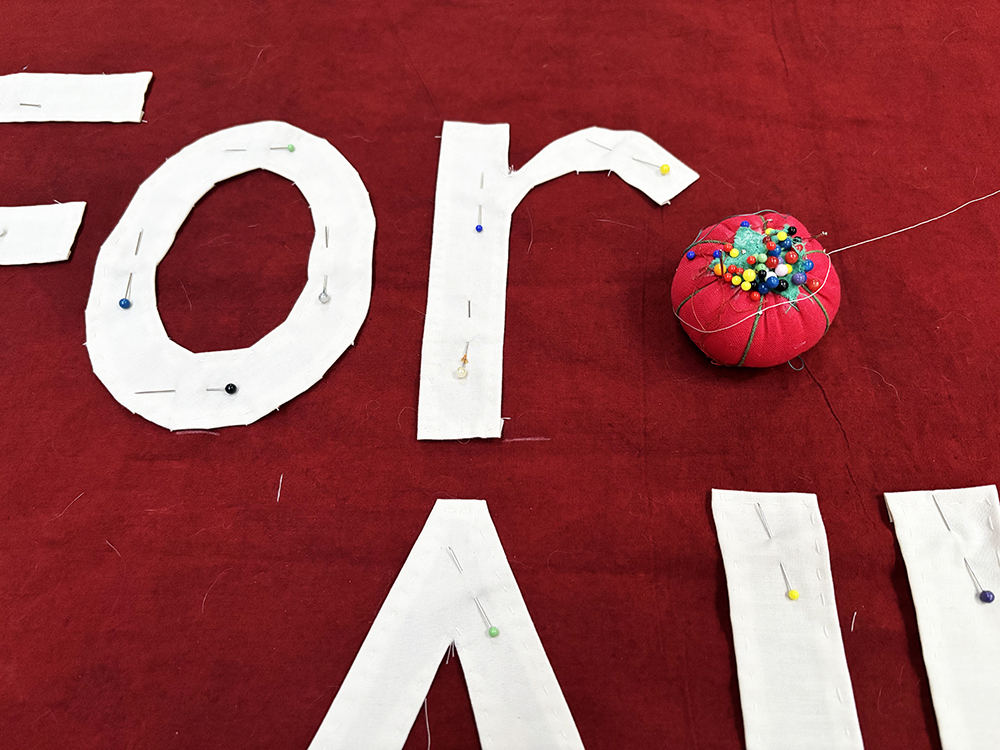
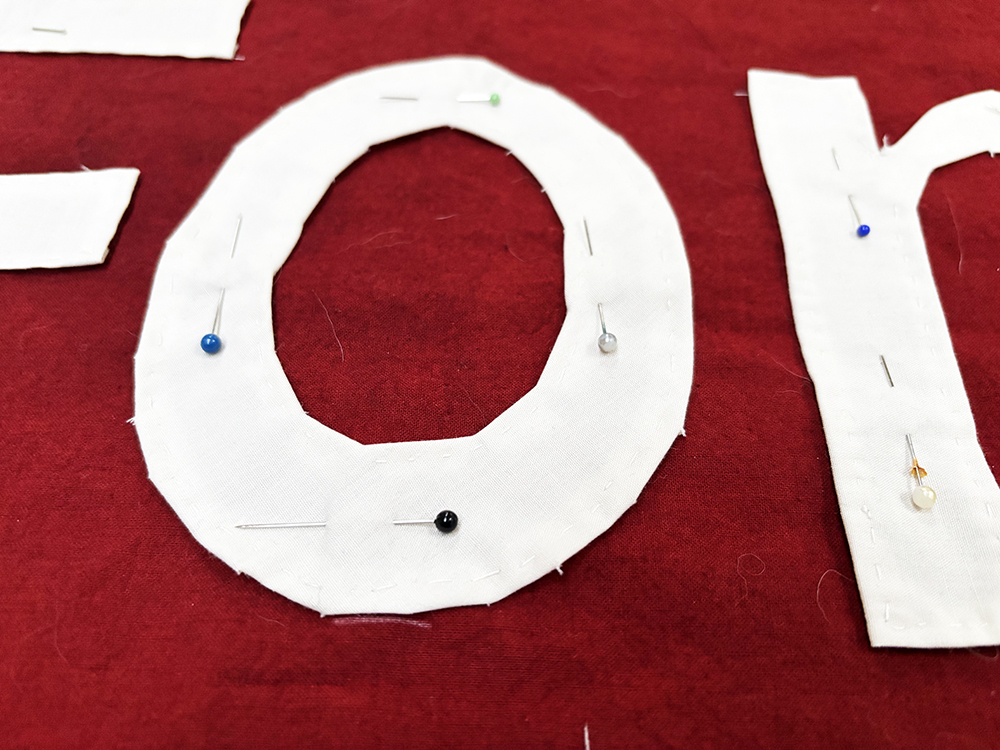
We used a small overcast stitch to simply attach the edges of each letter to the banner. We then ironed each letter down, using the interfacing to help fix the letters in place.
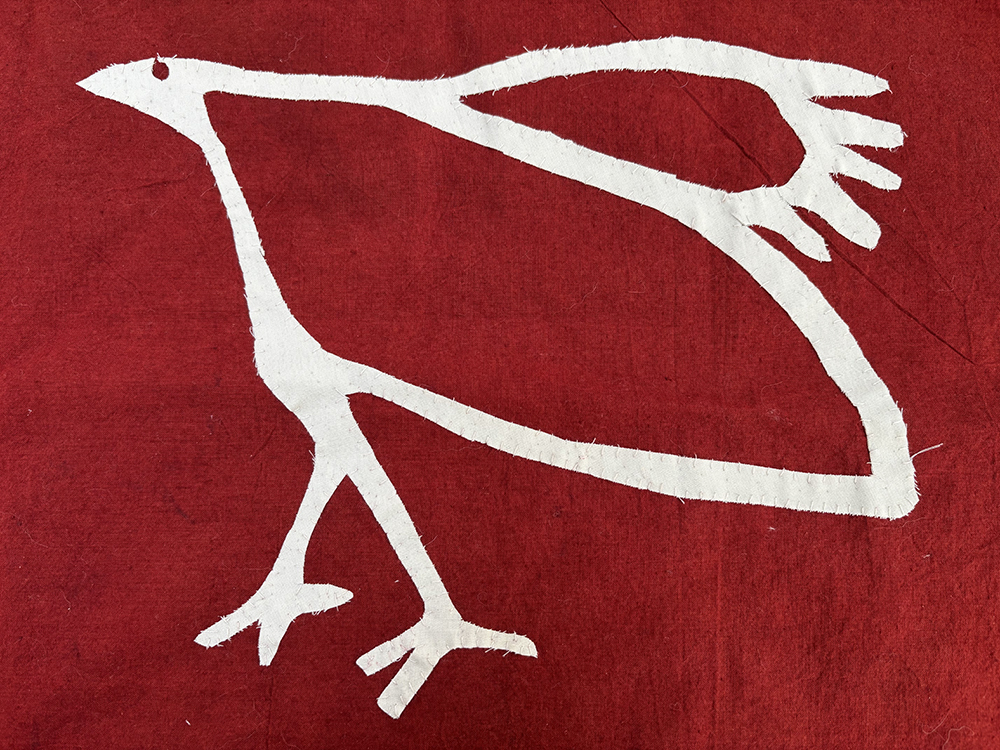
We scaled up the AccessArt bird using the grid method.
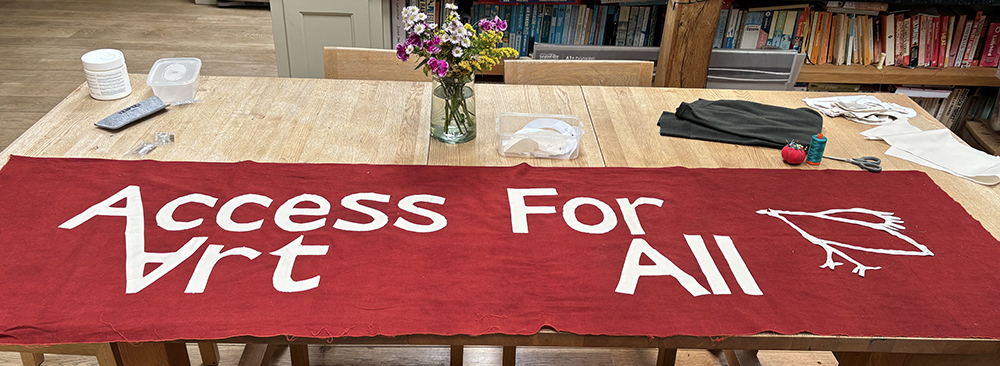
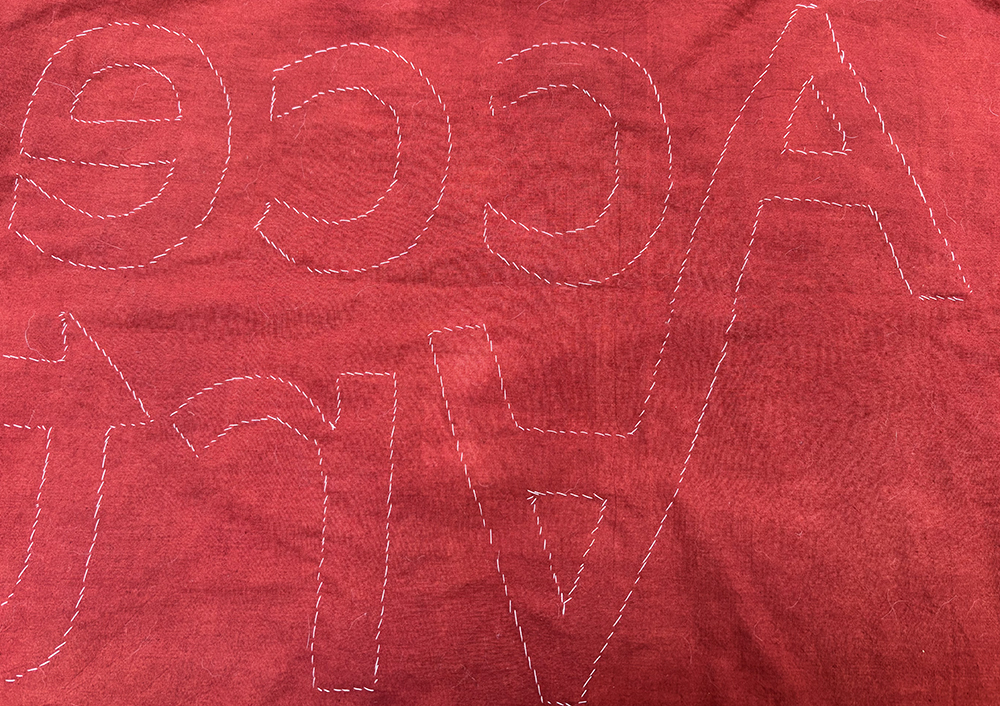
As we wanted the banner to display the message “AccessArt for All” from both the front and the back, we made two versions, one mirrored, so the text could be read from either side.
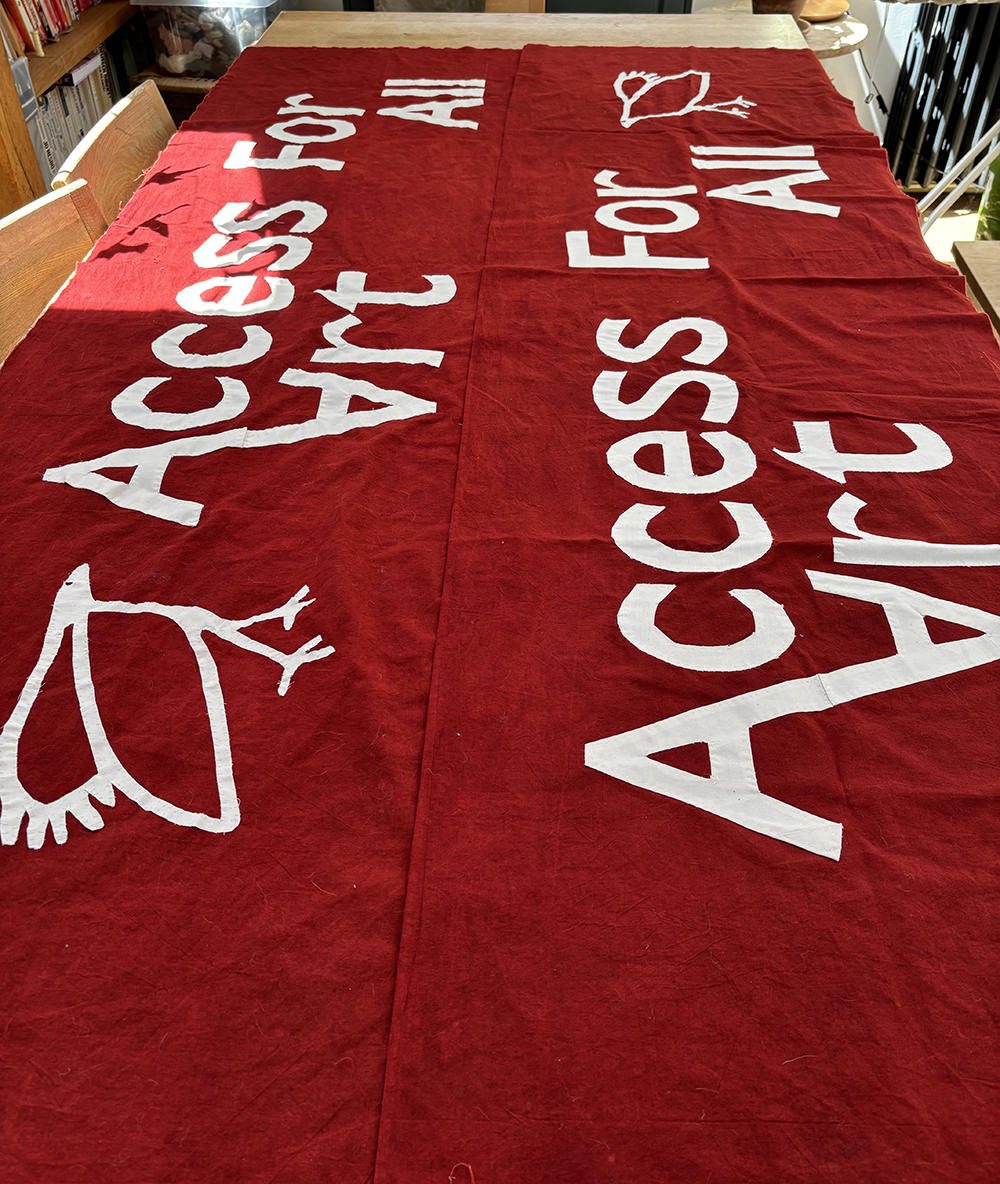
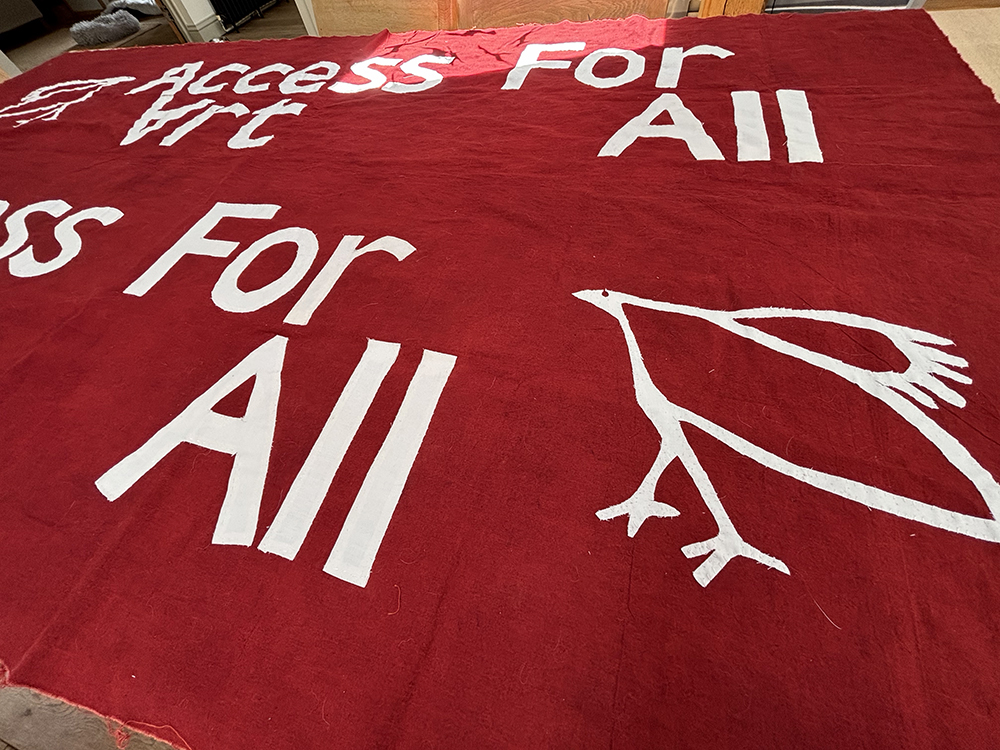
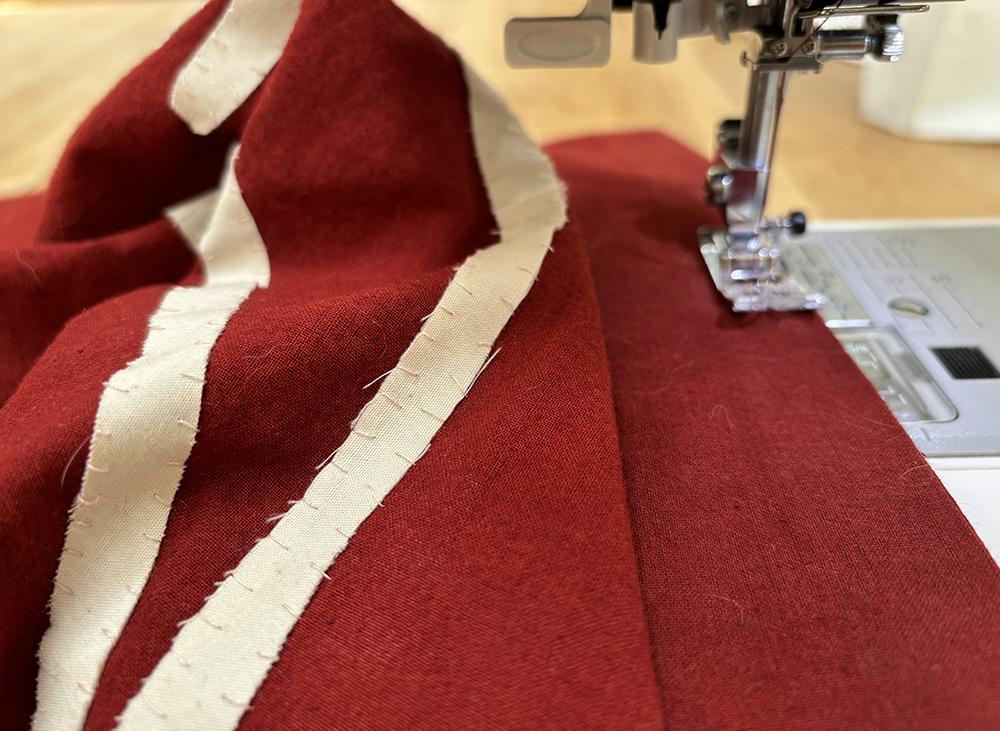
We then sewed them together (hemming as we went) using a sewing machine.
Time to take the “AccessArt for All” banner out into the world!
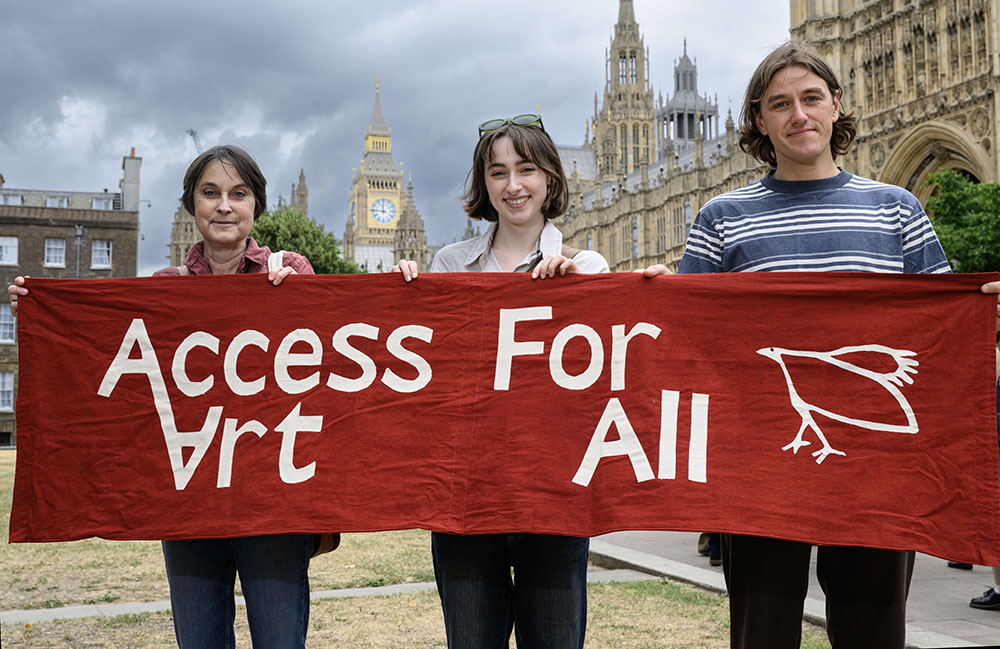
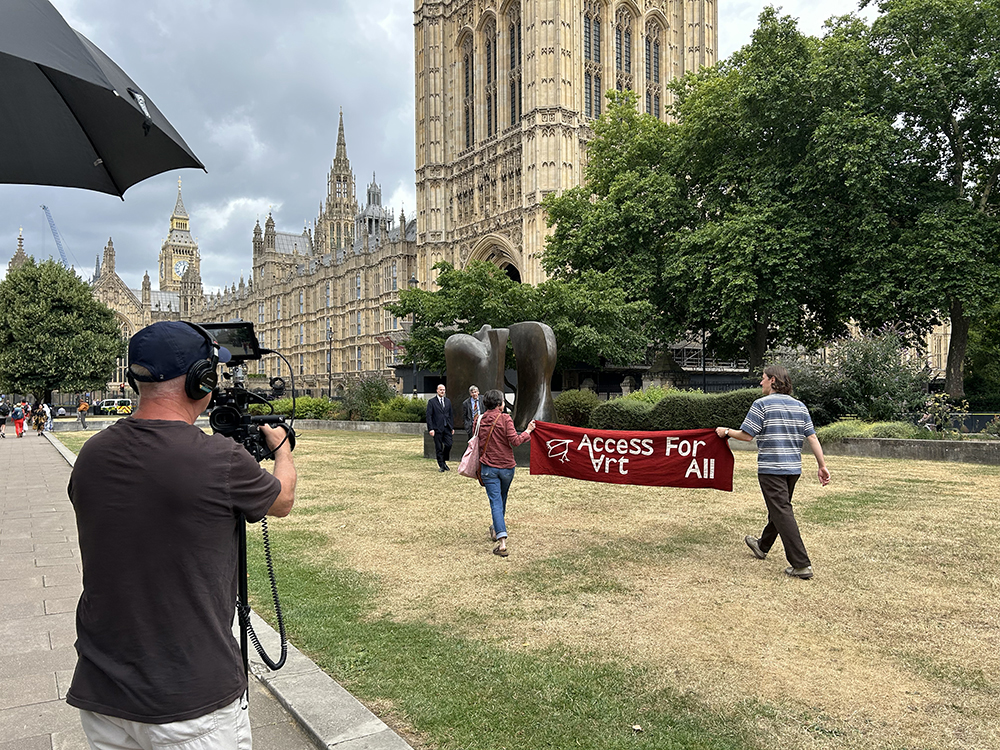
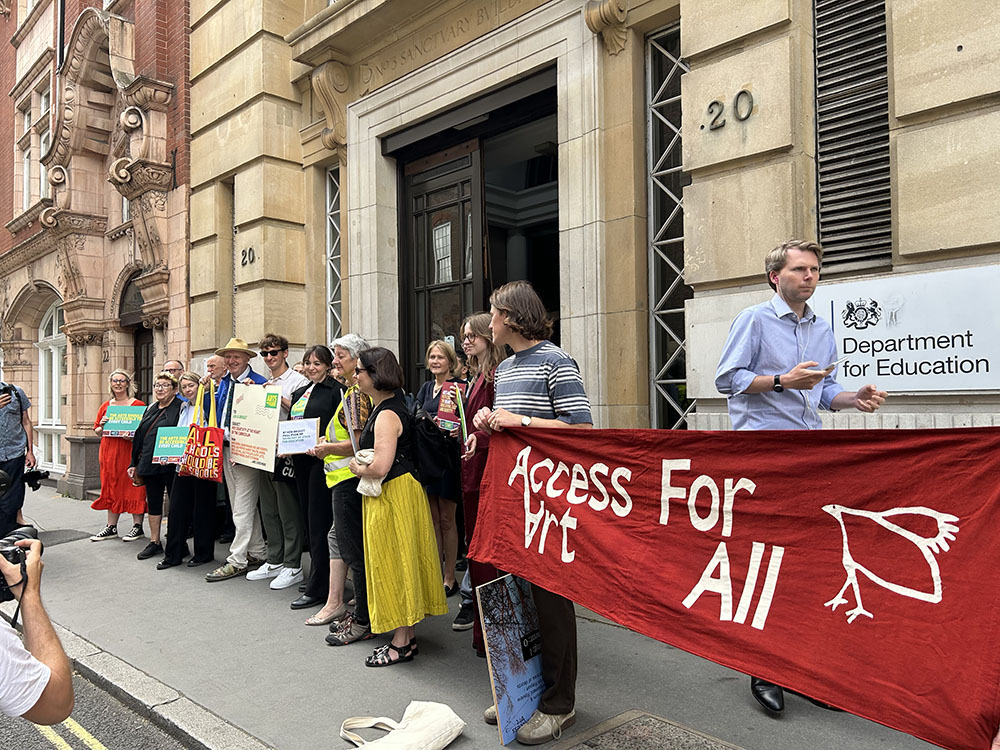
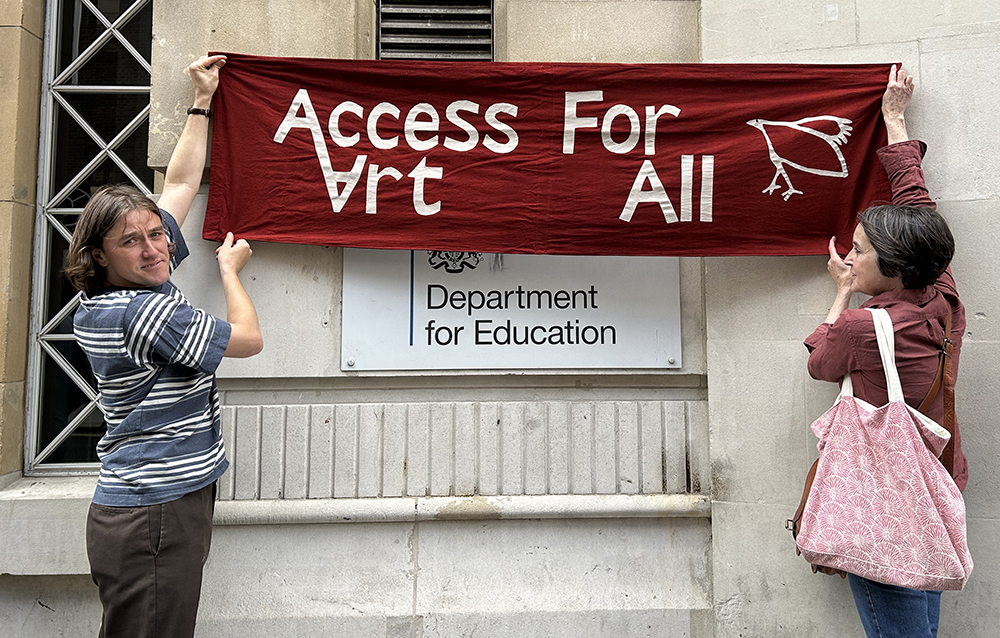
Banners can communicate hope, resistance, care and solidarity in ways that words alone sometimes cannot. Making a banner is also a collective act: it brings people together to think, talk, make and stand alongside one another. Banners help us claim space and show what matters to us. We hope the AccessArt banner encourages you to think about how you might make your own banner. What will it convey? Who will you make it with? Where will you take it?
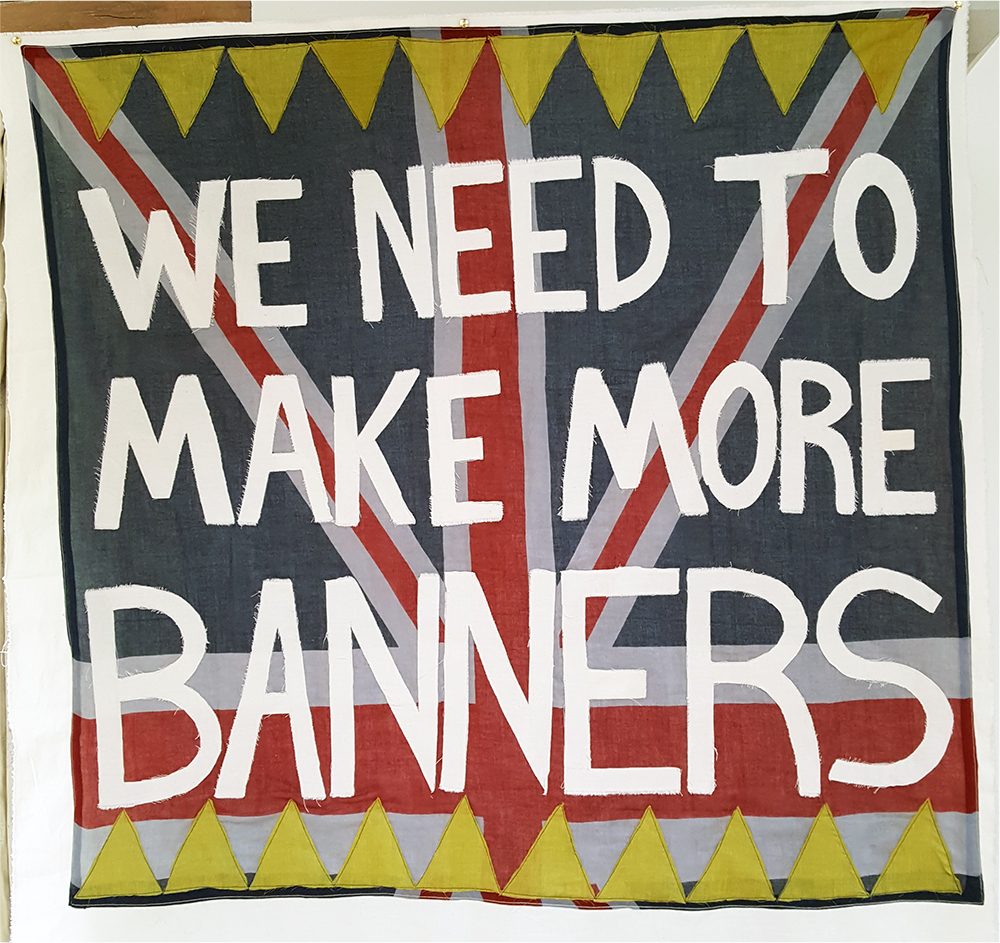
This is a sample of a resource created by UK Charity AccessArt. We have over 1500 resources to help develop and inspire your creative thinking, practice and teaching.
AccessArt welcomes artists, educators, teachers and parents both in the UK and overseas.
We believe everyone has the right to be creative and by working together and sharing ideas we can enable everyone to reach their creative potential.
You May Also Like
ten minutes, five times a week
the drawing journey
all drawing resources
What We Like About This Resource…
‘This resource really demonstrates how art can successfully bring awareness to important humanitarian issues, promote inclusivity and can give a platform to those who otherwise wouldn’t be heard. The links between text, photos and drawings are really strong and demonstrate the creative process used by Olivier from start to finish. I really like the inclusion of suggestions for students within the post, which encourage students to learn more about their community and to understand the experience of being displaced. This is turn will hopefully inspire the next generation to be part of an inclusive and empathetic society.‘ – Tobi, AccessArt
See This Resource Used in Schools…
You May Also Like…
Pathway: Festival Feasts
Talking Points: Claes Oldenburg
Talking Points: Nicole Dyer
Talking Points: Lucia Hierro
Drawing source material: Food
See the Pathway Used in Schools…
You May Also Like…
Pathway: working with shape and colour
Pathway: Print & Activism
Talking Points: What is a Screenprint?
What We Like About This Resource….
Working collaboratively towards a shared aim provides an alternative experience to working on individual projects. Creating together encourages listening, peer feedback and creative problem solving – all of which are hugely valuable in all areas of education” – Rachel, AccessArt
You May Also Like….
What We Like About This Resource….
“This project links poignant subject matter with meaningful art processes and local history. What we learn about the re purposing of materials, (in this case spent ammunition) re affirms how we can use what is around us as a starting point to making and creating. You could extend or adapt this project by looking at broken pottery, re purposing that into new sculptures that link with Roman or other local historical cultures” – Rachel, AccessArt
You May Also Like….
What We Like About This Resource…
“This resource shows pupils how the experience, background and passions of an illustrator all feed into his or her work.
We like the way Natsko shares how her experience over time informs her work. For example, her background as a “visitor” or person living in cultures which she isn’t initially familiar with, enable her to see that culture through fresh eyes. She takes these observations in through her sketchbooks, and then these inform her work at various points going forward. This is an important concept when facilitating art and developing pupils’ own creativity – and sketchbooks provide the perfect tool for building this experience.” Paula, AccessArt
You Might Also Like…
You Might Also Like…
Pathway: Print & Activism
Talking Points: Luba Lukova
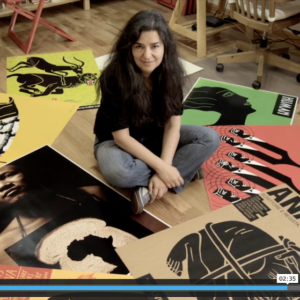
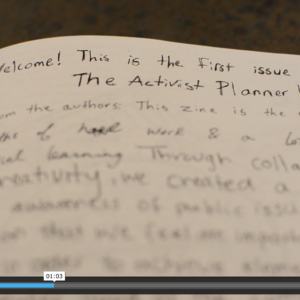
Talking Points: What is a Zine?
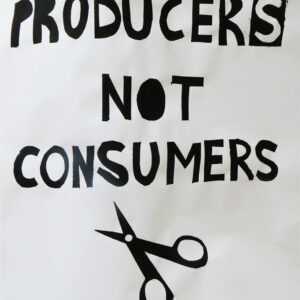
Making Large Scale, Screenprinted, Collaged, Co-Created Campaign Posters!
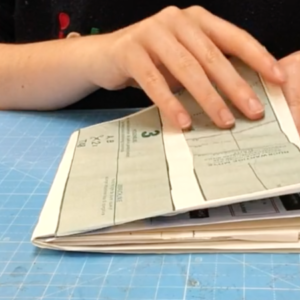
Making an Artist’s Book
Book Artists

You May Also Like…
Pathway: 2D Drawing to 3D Making
Talking Points: Packaging Design
What is Typography
Many thanks to accessArt Young Artist Rowan Briggs Smith
See This Resource Used In Schools…
You May Also Like…
Pathway: Exploring pattern
Talking points: Andy Gilmore
talking points: Louise Despont
You May Also Like…
Pathway: Print & Activism
Talking Points: Luba Lukova
Talking Points: Faith Ringgold
Talking Points: Kate DeCiccio
Talking Points: Shepard Fairey