Drawing with Scissors: Screen Printing Workshop in 3 Stages, Inspired by Matisse

By Jan Miller

This resource is part of a collection called Teaching Art to Year Three.

Based around an exploration of a historic painting (Penelope with the Suitors by Pinturicchio), the project shared below presents three activities which develop drawing, collage and printing skills, culminating in a modern interpretation of an old master and the creation of a collaborative artwork.


Inspired by Matisse

  • Context

    The focus for our artwork was Penelope with the Suitors, 1509 by Pintoricchio, displayed in the National Gallery, London. Participants developed an understanding of symbols as well as story-telling and the painting appealed to the youngsters:
    • Penelope weaving at the loom – unpicking the woven cloak each evening to avoid a pledge to marry when completed.
    • Suitors trying to impress Penelope in their finest clothes and disguise.
    • Wailing sirens in the sea.
    • Many hidden symbols such as cat, wool, bird, bow, boats and animals.
    • The project began with discussion of what may have happened before and following the scene in the painting. Children looked for symbolic imagery and questioned the meaning.

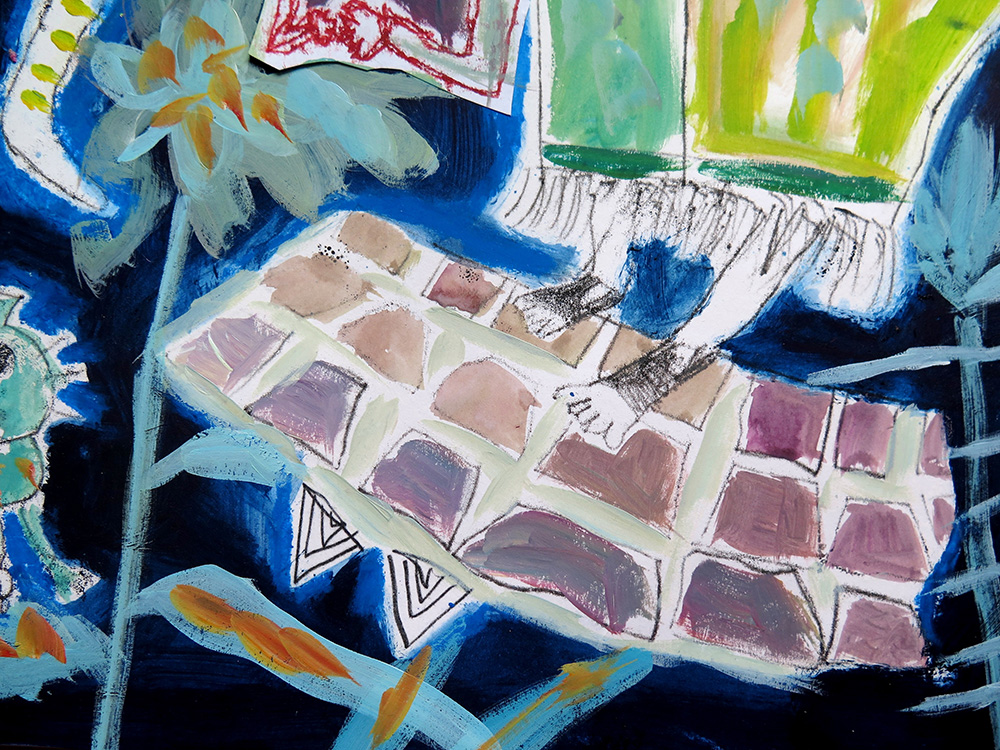
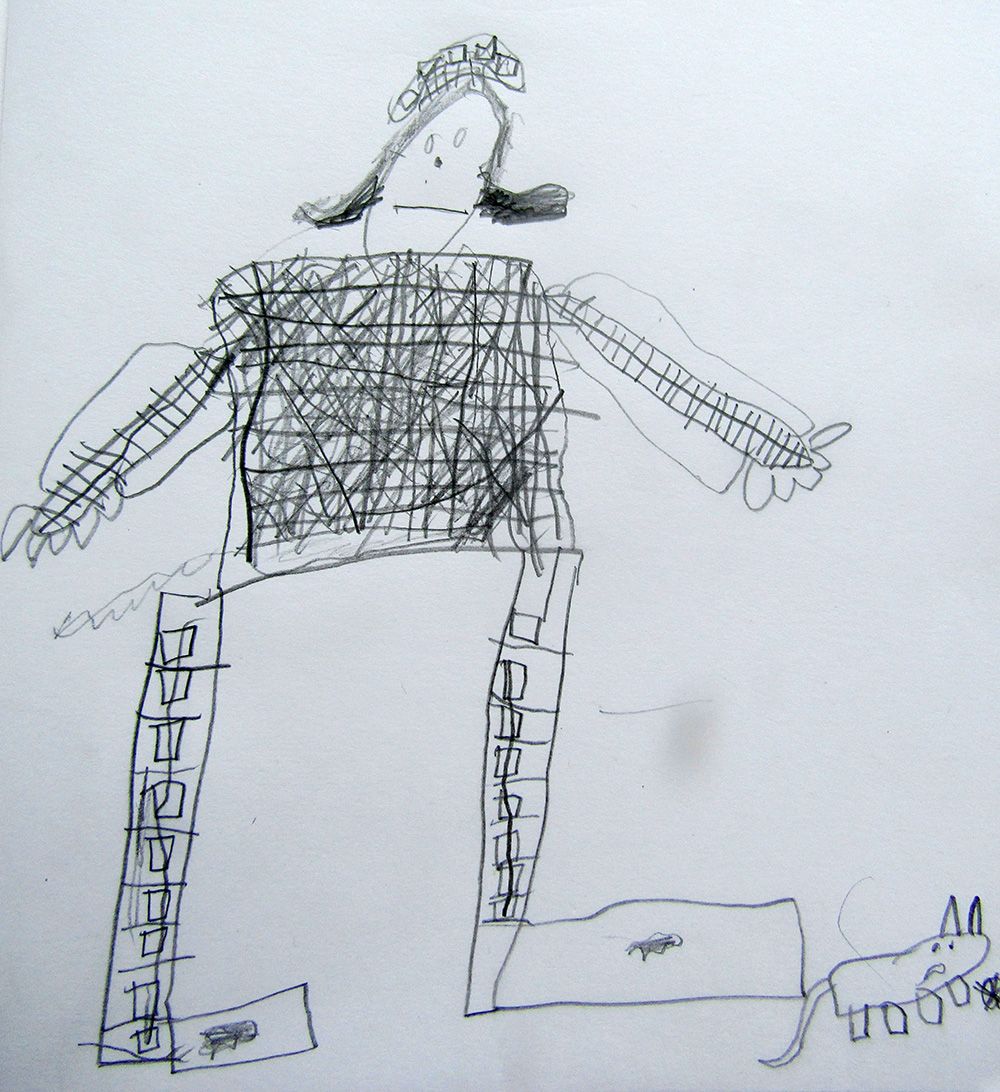
    The children wished to make their own modern version of the traditional painting, using simplistic symbols in a bright, modern palette. They questioned the composition: perhaps we could explore sizes with the largest shapes moved to the back. Would it work if we used a small figure and giant boots? Do we need a detailed cat or could we just use symbolic whiskers? Rather than a mermaid, could we just draw create part of the tail?

  • Who are the sessions aimed at?

    The sessions were run with children aged 8.

    The resources below can be used with children aged 7 to 11 (older KS 1 children and KS 2 children).

  • Which areas of exploration are covered?

    • Drawing and mark making (black felt tips/markers).
    • Drawing from observation.
    • Colour mixing (paint).
    • Drawing with scissors.
    • Explore scale, composition, negative space, layering & cropping.
    • Create a group composition using selected mages.
    • Develop a narrative though the symbols.
    • Appreciation of historic art.
    • Cross curricular links with History and English.
    • Using established art to inspire own work.
    • Making a shared final piece.


  • How much time is needed?

    Each of the six sessions took an hour with the whole class.

    If you were working with a smaller group of children the activities may take less time. Sketchbooks were available in all lessons to continue research drawing.

    The activities progressively built on each other and the children developed an understanding of process.

    If you followed all the sessions you would cover the areas of exploration listed.

    However, if time is limited, you could complete a smaller body of work in two or three sessions, depending upon your chosen area of interest. The final piece could be the collaboration of the coloured paper designs. The teacher could complete more of the preparation, such as making the painting papers or using supplied coloured paper. Smaller compositions could be made with the work of a couple of children or each table. Stencils could be drawn and cut out directly from the drawings.

    A different painting could be used as stimulus.

  • Where might the sessions be used?

    • Classrooms (as part of art lessons or workshop)
    • After school art club or AG&T group.
    • Community groups (i.e. Scouts and Guides)
    • Gallery, Museum or Art Organisation workshop.


  • Materials and Equipment

    – Poster paints and white emulsion.
    – Marker pens
    – Scissors
    – Newsprint
    – Screens for printing
    – Acrylic and screen extender
    – Squeegee
    – 1m fabric.
    – Craft knife/cutting board (gyro cut- a safer method of cutting paper shapes)

The focus for our artwork was Penelope with the Suitors, 1509 by Pintoricchio, displayed in the National Gallery, London. Participants developed an understanding of symbols as well as story-telling and the painting appealed to the youngsters:
• Penelope weaving at the loom – unpicking the woven cloak each evening to avoid a pledge to marry when completed.
• Suitors trying to impress Penelope in their finest clothes and disguise.
• Wailing sirens in the sea.
• Many hidden symbols such as cat, wool, bird, bow, boats and animals.
• The project began with discussion of what may have happened before and following the scene in the painting. Children looked for symbolic imagery and questioned the meaning.

The children wished to make their own modern version of the traditional painting, using simplistic symbols in a bright, modern palette. They questioned the composition: perhaps we could explore sizes with the largest shapes moved to the back. Would it work if we used a small figure and giant boots? Do we need a detailed cat or could we just use symbolic whiskers? Rather than a mermaid, could we just draw create part of the tail?

The sessions were run with children aged 8.

The resources below can be used with children aged 7 to 11 (older KS 1 children and KS 2 children).

• Drawing and mark making (black felt tips/markers).
• Drawing from observation.
• Colour mixing (paint).
• Drawing with scissors.
• Explore scale, composition, negative space, layering & cropping.
• Create a group composition using selected mages.
• Develop a narrative though the symbols.
• Appreciation of historic art.
• Cross curricular links with History and English.
• Using established art to inspire own work.
• Making a shared final piece.


Each of the six sessions took an hour with the whole class.

If you were working with a smaller group of children the activities may take less time. Sketchbooks were available in all lessons to continue research drawing.

The activities progressively built on each other and the children developed an understanding of process.

If you followed all the sessions you would cover the areas of exploration listed.

However, if time is limited, you could complete a smaller body of work in two or three sessions, depending upon your chosen area of interest. The final piece could be the collaboration of the coloured paper designs. The teacher could complete more of the preparation, such as making the painting papers or using supplied coloured paper. Smaller compositions could be made with the work of a couple of children or each table. Stencils could be drawn and cut out directly from the drawings.

A different painting could be used as stimulus.

• Classrooms (as part of art lessons or workshop)
• After school art club or AG&T group.
• Community groups (i.e. Scouts and Guides)
• Gallery, Museum or Art Organisation workshop.


– Poster paints and white emulsion.
– Marker pens
– Scissors
– Newsprint
– Screens for printing
– Acrylic and screen extender
– Squeegee
– 1m fabric.
– Craft knife/cutting board (gyro cut- a safer method of cutting paper shapes)

Week 1: Drawing Objects that Feature in the Painting

With marker pens on large newsprint paper, pupils drew objects that they identified as key features in the painting, which they studied.


Penelope with the Suitors about 1509, Pintoricchio
Pintoricchio, active 1481; died 1513
Penelope with the Suitors
about 1509
Fresco, detached and mounted on canvas, 125.5 x 152 cm
Bought, 1874
NG911
This painting is part of the group: ‘Three Frescoes from Palazzo del Magnifico, Siena’ (NG910-NG911; NG3929)
https://www.nationalgallery.org.uk/paintings/NG911

They used props from the Drama department for observation, and children also resourced objects and took photos themselves as reference, such as plastic animals, boots, hats, toy ships, wool, bows and arrows, weaving shuttle and costumes. Some used printed images as sources, including a bird, a loom and a mermaid. A continuous line was encouraged to create an expressive style. No pencils or erasers were allowed.


Please log in here to access full content.

Username
Password


Remember me
Forgot Password


To access all content, I would like to join as…
An Individual

Creative practitioners, educators, teachers, parents, learners…


An Organisation…

Schools, Colleges, Arts Organisations: Single and Multi-Users


AccessArt is a UK Charity and we believe everyone has the right to be creative. AccessArt provides inspiration to help us all reach our creative potential.

Making Monotypes Inspired by Degas


An Exploration of Artwork by Shepard Fairey


Screen Printing with Screen Mesh: Screen Printing Hack


Find Your Message (To The World)


You May Also Like…

Pathway: Print & Activism

This is featured in the 'Print & Activism' pathway

This is featured in the ‘Print & Activism’ pathway

Talking Points: Luba Lukova

Luba Lukova Vimeo Screenshot https://vimeo.com/34541872

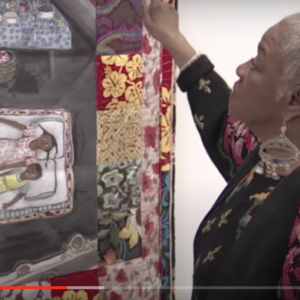
Talking Points: Faith Ringgold

Faith Ringgold Youtube Screenshot

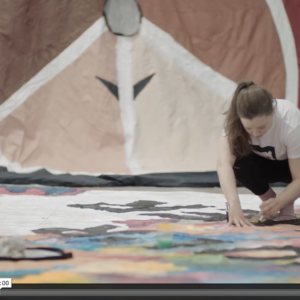
Talking Points: Kate DeCiccio

Adobe- Art As Activism Vimeo Screenshot

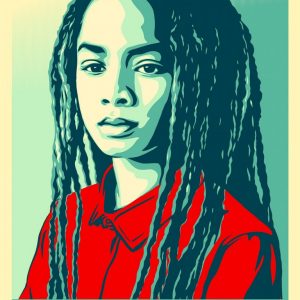
Talking Points: Shepard Fairey

Shepard-ProtectEachOther


Shepard Fairey, Propaganda Art, Screen Printing & Teenagers! Collection Page


Teenagers Make Propaganda Art Inspired by Shepard Fairey


See This Resource Used In Schools…

Year 6, Hill Top Primary Academy
Work produced by 12-14 year olds. Philippa McDonald of Creative Days
Jo Wilson and Beecroft Garden Primary School
Mr Ashley Larter and Mrs Emma Webster, Year 6, St Hilary's School

You May Also Like…

Pathway: Print & Activism

This is featured in the 'Print & Activism' pathway

This is featured in the ‘Print & Activism’ pathway

Talking Points: Luba Lukova

Luba Lukova Vimeo Screenshot https://vimeo.com/34541872

Talking Points: Faith Ringgold

Faith Ringgold Youtube Screenshot

Talking Points: Kate DeCiccio

Adobe- Art As Activism Vimeo Screenshot

Talking Points: Shepard Fairey

Shepard-ProtectEachOther


Screen Prints Inspired by Shepard Fairey


Explore and Draw


Screen Printing using Overlaid Pattern


Sketchbooks Made with Screenprinted Papers


Collagraphs Inspired by Architecture


“Heart-Work” an Arts and Wellbeing Project for Young People

Arts and Minds: Time to Introduce Ourselves – A Sculpture Challenge

Arts and Minds - Week 1 - SC

Arts and Minds: A ‘Heart-Work’ Conversation

Arts and Minds - Cambourne VC - Week Two - SC

Arts and Minds: Asemic Writing and Invented Text

Arts and Minds - Asemic Writing - week three -SC

Feeling Through Drawing

Arts and Minds Cambourne Village College - Week four

Drawing for Mindfulness

Arts and Minds - Cambourne - week five - SC

Arts and Minds: Expressive Monoprinting on a Big Scale

Arts and Minds - Cambourne - week six - monoprinting - SC

Constructing the World with Collage

Collage - Cambourne VC - SC

Building to the Limit

Building - Cambourne - week eight - SC

Manipulating Clay with Water

Clay - Cambourne - week nine- SC


Mayan Tabletop Eraser Printing Project


Mural and Workshop Project at Chesterton Community College in Collaboration with Jon Bates from Blight Society


InSET Day at Welland Academy: Exploring Printmaking Processes


Aluminium Foil Printing by Paul Carney


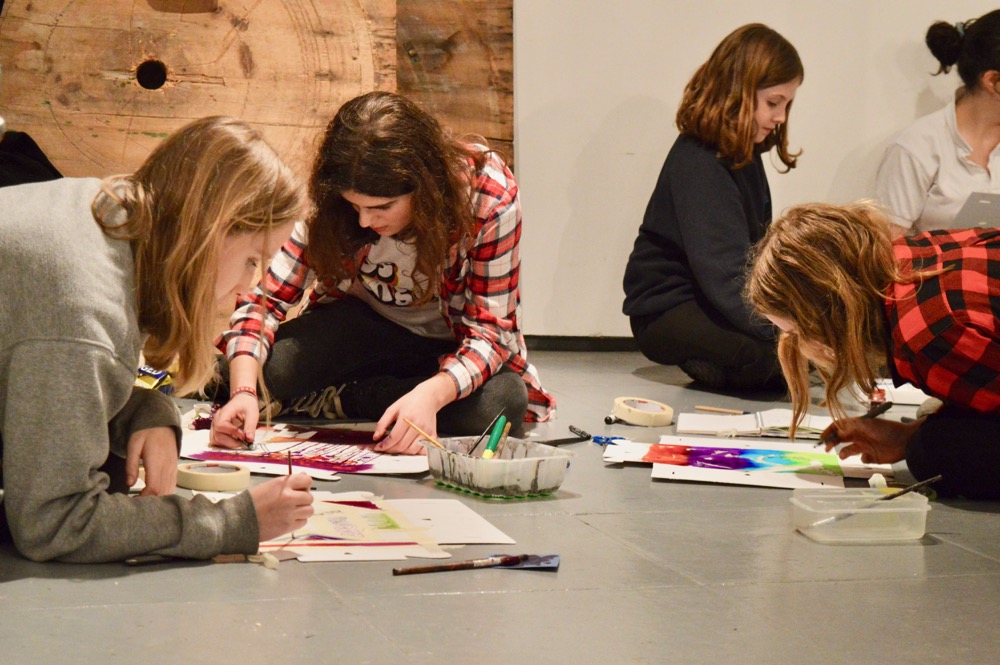
“Heart-Work” – A series of ‘Arts on Prescription’ style workshops for young people at Cambourne Village College with Arts and Minds; Led by Sheila Ceccarelli (Artist) and Yael Pilowsky Bankirer (Psychotherapist)

Arts and Minds: Time to Introduce Ourselves – A Sculpture Challenge

We kicked off the programme with a quick making challenge which would act as an ice-breaker and introduce students to an array of materials. We kicked off the programme with a quick making challenge which would act as an ice-breaker and introduce students to an array of materials.

Arts and Minds: Asemic Writing and Invented Text

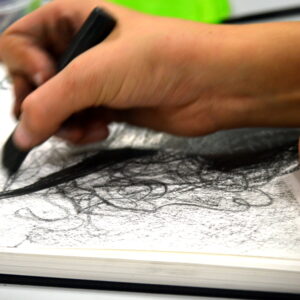
Students were given the opportunity to further explore expressive mark making as a tool for self-expression and a vehicle for communication. Students were given the opportunity to further explore expressive mark making as a tool for self-expression and a vehicle for communication.

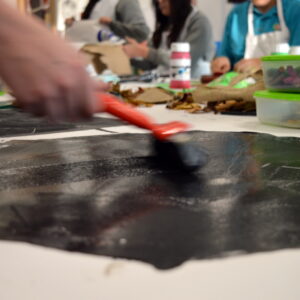
Arts and Minds: Expressive Monoprinting on a Big Scale

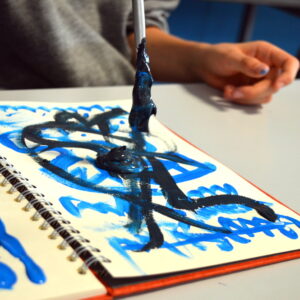
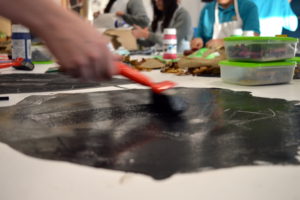
Students enjoyed monoprinting on a large scale by rolling printing ink and acrylic paint directly onto the table and experimenting with ways to take prints. Students enjoyed monoprinting on a large scale by rolling printing ink and acrylic paint directly onto the table and experimenting with ways to take prints.

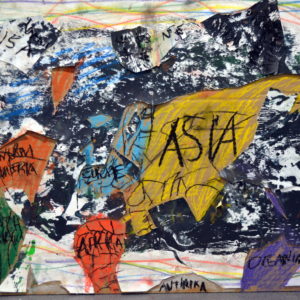
Constructing the World with Collage

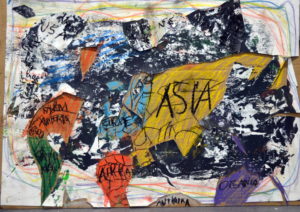
Students were invited to use their previously created monoprints to construct large scale collages inspired by the landscape surrounding the college. Students were invited to use their previously created monoprints to construct large scale collages inspired by the landscape surrounding the college.

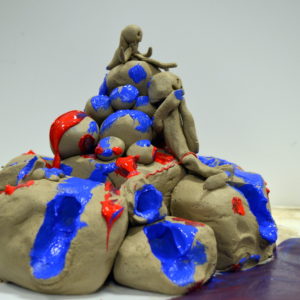
Manipulating Clay with Water

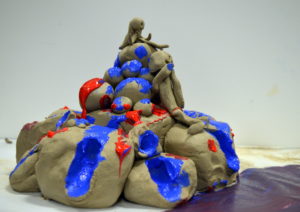
In this session teenagers had an abundance of clay and the freedom to play and manipulate form. In this session teenagers had an abundance of clay and the freedom to play and manipulate form.

With Special Thanks To:

And to Pink Pig sketchbooks for their continued support of AccessArt and providing young people with beautiful books for this project.


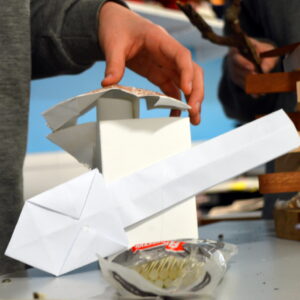
Building to the Limit

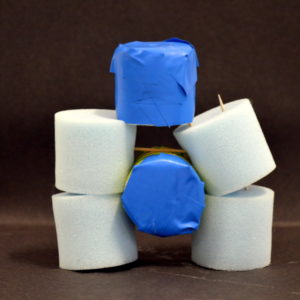
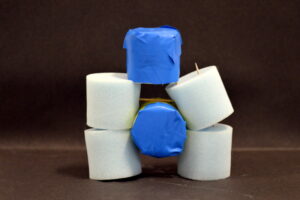
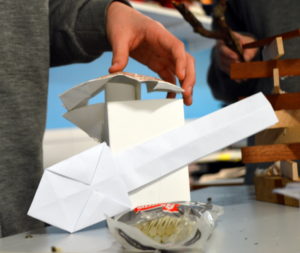
In this session students were given the challenge of making building blocks out of mixed media and using them to build a sculpture. They were encouraged to experiment with balancing different elements together and setting themselves the challenge of seeing how far they could build before their constructions collapsed. In this session students were given the challenge of making building blocks out of mixed media and using them to build a sculpture. They were encouraged to experiment with balancing different elements together and setting themselves the challenge of seeing how far they could build before their constructions collapsed.

Drawing for Mindfulness

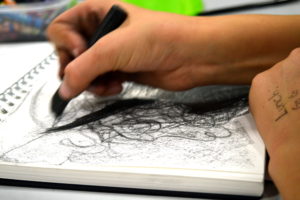
Students were guided on drawing exercises designed to explore drawing as a tool for seeing and being in the here and now. Students were guided on drawing exercises designed to explore drawing as a tool for seeing and being in the here and now.

Feeling Through Drawing

Students were led on a guided drawing experience of drawing through touch. Students were led on a guided drawing experience of drawing through touch.

Arts and Minds: A ‘Heart-Work’ Conversation

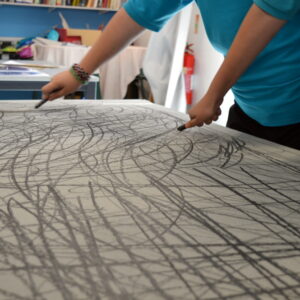
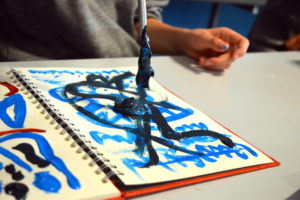
Teenagers were introduced to graphite, charcoal, masking tape and acrylic paint as mediums for communal expressive mark making. A collective drawing was produced, whereby students were encouraged to work in collaboration and in response to each other. Teenagers were introduced to graphite, charcoal, masking tape and acrylic paint as mediums for communal expressive mark making. A collective drawing was produced, whereby students were encouraged to work in collaboration and in response to each other.

UK Charity AccessArt welcomes artists, educators, teachers and parents both in the UK and overseas.

We believe everyone has the right to be creative and by working together and sharing ideas we can enable everyone to reach their creative potential.
Join AccessArt from only £3.50 per month and enjoy full access to hundreds more resources!


Arts and Minds: Constructing the World with Collage


Arts and Minds: Expressive Monoprinting on a Big Scale