‘Sketch Your World‘ is a collaboration between artist Phil Dean and AccessArt, aimed at helping students 16 and above be inspired by their local landscape.
Build your understanding of using sketchbooks out and about.
In this resource Phil Dean shares some of his sketchbooks and gives some tips for making the most of the sketchbook page when urban sketching.
Sketchbooks
A sketchbook for urban drawing has to be robust enough to cope with being thrown into a bag, jammed in a case, dropped on the ground and having liquid spilled over it. The binding needs to be strong and should allow the book to lie flat to enable sketches to stray across both sides of the spread.
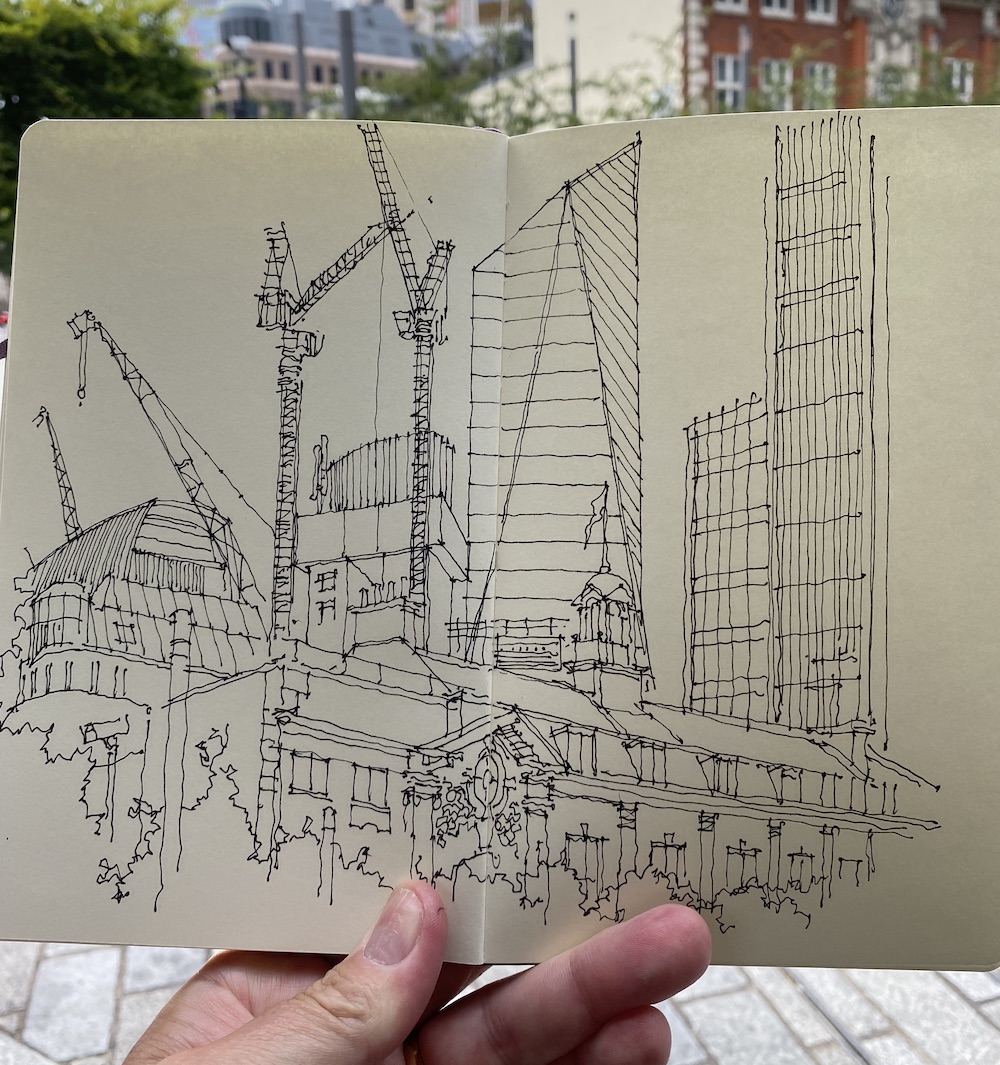 It’s important to think about what size of sketchbook will work best for your purpose. I find a smaller A5 sketchbook is the ideal size for sketching on the go. It’s agile, practical and unobtrusive, and the double-page spread is large enough to capture the bigger scenes, while also being perfect for more intimate sketches.
Many brands of sketchbook are available and my favourite is the Moleskine sketchbook range. There are cheaper alternatives, but some poorer-quality books shed pages too easily or are bound too tightly to lie flat. My advice would be to buy two or three different books and try out each one using different media such as ink, marker, pencil, charcoal to see which you prefer.
Paper
It’s important to use the right paper for the right material. Cartridge paper is good for most pens and pencils but if you add water to it, the paper will buckle. Watercolour paper is thicker and will take water well. As a general rule, the thicker the paper the more able it is to cope with the materials. Make sure you think about your materials and paper at the same time.
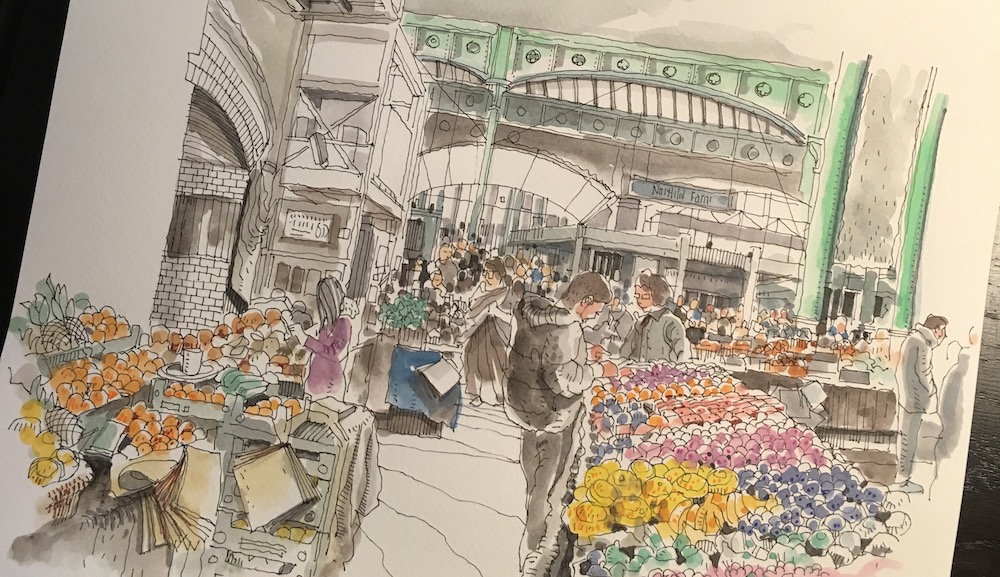 Landscape or portrait?
Although a portrait A5 sketchbook is my go-to size and format, other styles can spark inspiration just by virtue of their different size or shape. It’s a good idea to have a few alternative book types in your bag, in case a different style of book is better suited to the scene you’re sketching.
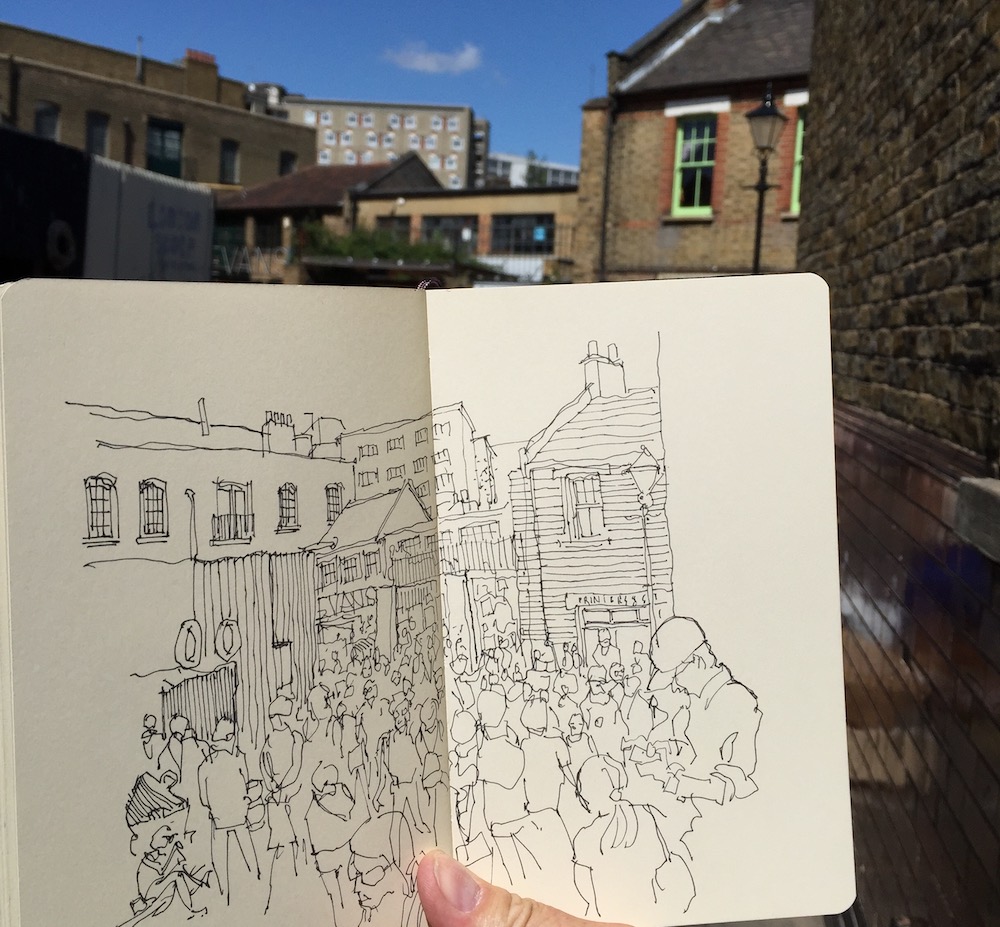 Wide landscape sketchbooks are great for cityscapes and sweeping vistas, square books provide an Instagram-friendly canvas and portrait-format sketchbooks can be great for fitting in taller buildings.
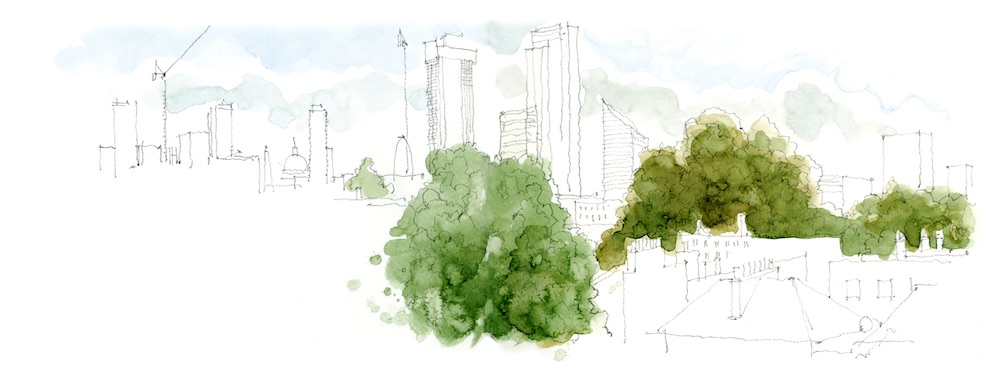 Sketchbook ‘rules’
It’s good to establish some sketchbook ‘rules’ before you get started because, rather paradoxically, these can help you get to know what works best for you. Some artists use their book as a pristine collection of artworks and others use it to jot and sketch everything they see. I’m in the latter camp and I prefer to see my sketchbook as a visual journal. It can be liberating to give yourself permission to make mistakes and move on to the next page. It’s also satisfying to look back on the abandoned sketches among the more successful drawings – it’s all part of your sketching journey.
The main rule for the urban sketcher, however, is simply to carry your book and pens with you at all times. I can never stress this enough as it’s the only way to ensure you draw constantly, which will continuously improve your work. You never know when you might see something that is crying out to be sketched, or find yourself with a spare 15 minutes while you grab a cup of coffee. Get your book out of your bag and get sketching!
Challenge:
Collect some different types of paper; vary the thickness, texture, colour and pattern. Create an elastic band sketchbook using to the video above. Think about your local landscape and make the sketchbook landscape/portrait/square accordingly. Draw your chosen subject matter, experimenting with different materials on different paper. Observe the relationship between the material and paper as you work.
Extension Challenge:
‘Sketch Your World’ is a collaboration between artist Phil Dean and AccessArt, aimed at helping students 16 and above be inspired by their local landscape.
<< Go back to Sketch Your World