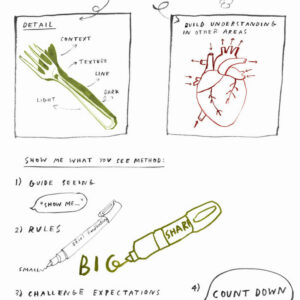
Talking Points: Frank Bowling

How can the way we use paint help us express what we want to say?
With no pre-planned approach, Frank Bowling built up layers of different materials over several months, applying paint in many different ways. Notes, chalk and glitter were incorporated into his paintings, acting as a kind of time capsule that tells a story about a time in his life.
Use the videos below and the questions which follow to begin a discussion based around Frank Bowling’s work.
Please Note:
This page includes links and videos from external sites, verified at publication but subject to change.
Teachers should review all content for classroom suitability.
Report any issues, and check school firewall settings if videos don’t play.





Frank Bowling
‘Frank Bowling has been hailed as one of the finest British artists of his generation. Born in British Guiana in 1934, Bowling arrived in London in 1953, graduating from the Royal College of Art with the silver medal for painting in 1962. By the early 1960s, he was recognised as an original force in London’s art scene with a style combining figurative, symbolic and abstract elements.’ – Explore Frank Bowling’s website.
Questions to Ask Children
What objects would you choose to include in a painting? Why?
How would you describe the way he works in one word?
How does scale impact the way that the artist works?
Questions to Ask Children
How does Frank Bowling’s work make you feel?
What do you like/dislike about Frank Bowling’s work?
How does scale impact the viewers experience of the work?
Which geometrical shapes would you include in your abstract painting? Why?
Choose one of Bowling’s paintings to look at in class:
Ask children to describe the colour palette, movement and texture. If you can see objects on the paintings take a closer look and think about why he might have chosen them.
This Talking Points Is Used In...
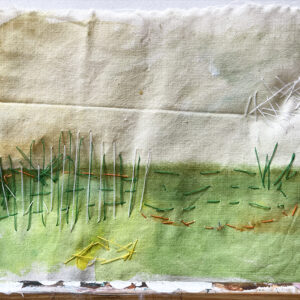
using sketchbooks to make visual notes
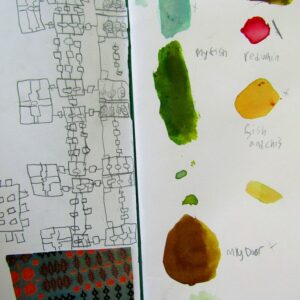
Show me what you see