How Tiny Art Schools Grow

Paula Briggs, Co-Founder, CEO & Creative Director of AccessArt explores the importance of the AccessArt Tiny Art School Movement and shares her own Tiny Art School experiences.

Apologies for the photo quality – many are copies of analogue images from many years ago. 
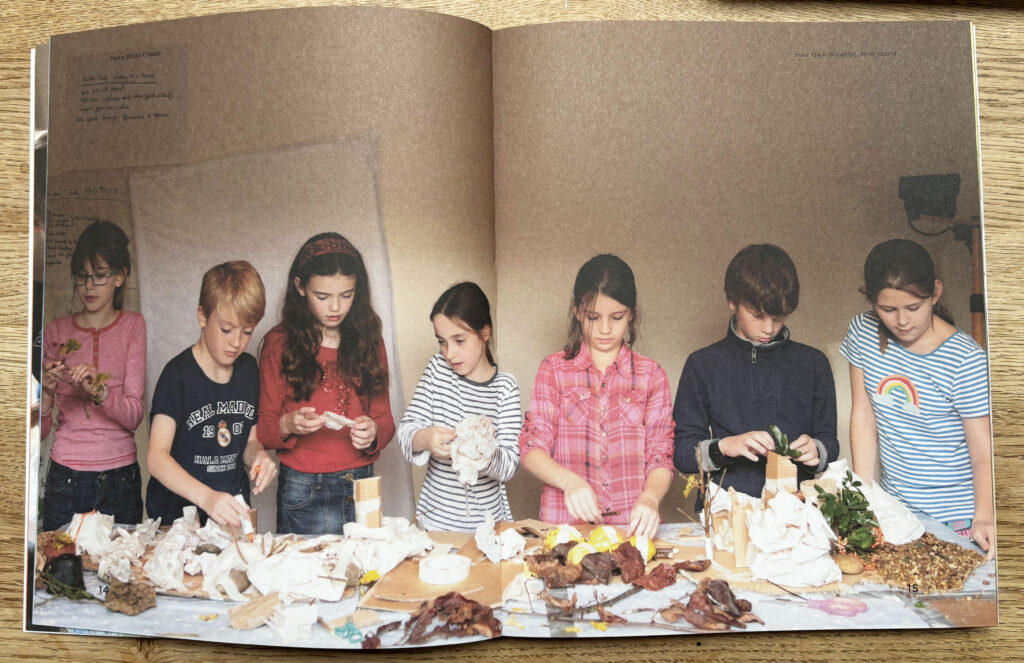
AccessArt Tiny Art School
Image from Make, Build, Create: Sculpture Projects for Children


“My own tiny art schools have formed and reformed themselves over the years, taking on the shapes that were right for me at the time. Sometimes they have lasted just a few weeks, appearing as an idea and dissolving when funding or energy stopped, and at other times they have lasted for years, creating their own energy and momentum to drive them into things which were much bigger than I could ever imagine.

During the final year of my BA Hons Fine Art in 1990, at the then Norwich School of Art, I began to think about what was next. Even at that time, opportunities for graduates to find work as visiting tutors were very limited, and I had the strong sense, right from the start, that I needed to create my own work, rather than rely on applying for external opportunities. So, during my last term, as I was putting together my degree show, I also started to make enquiries back in my home town of Sheffield, thinking about how I could share my skills as an artist, and create a small income for myself in the meantime.
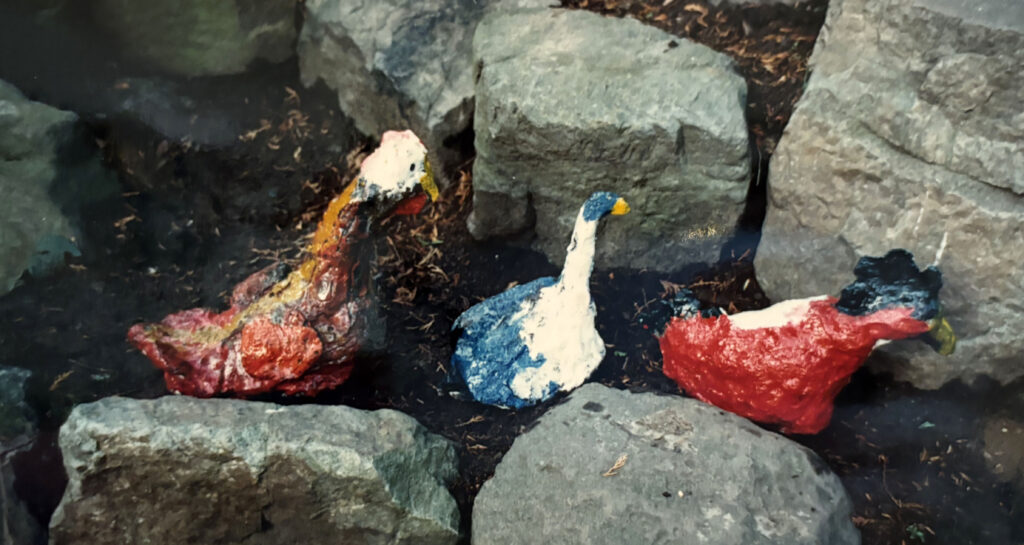
Cement birds, Whirlow Hall Farm, Sheffield 1990


Of course, there was no internet, and I can no longer recall the lengthy, drawn-out processes I must have gone through to find an audience, a location and funding. I chose a city farm on the edge of Sheffield, and I offered my skills as a sculptor working over a few weeks with a group of children from an inner-city school. We drew and we made – and because I had no experience of running workshops, I was of course overly ambitious. 30 children made large clay birds, which I made plaster moulds from, casting each bird in cement. When the children visited again, reunited with their transformed birds, they were painted in acrylic and varnished, to make a flock. The physical work was exhausting, but it was the first time I experienced that amazing feeling of changing someone’s day-to-day experience of life. The experience came in the form of a small boy called Wesley – someone who until the workshops, had not found a way to shine. But he shone – and he knew he did.

The funding for the workshops had come from some local authority arts grant I think, but it was very modest, and I ended up paying a college friend to help me with the casting as I couldn’t do it alone. I would have been financially better off taking a job in a bar or café, but I remember the feeling of satisfaction and identity I experienced after the workshops. As the friend and I sat in the pub, exhausted, sunburnt and covered in plaster, the sense of value and connection was huge. That feeling, fleeting as it was, sunk into my bones, and drove me forward.

There were more workshops in more venues. In the 90’s there were small amounts of cash floating about – always hard work to apply for, but I didn’t mind that. Most of my graduate friends were on the Enterprise Allowance Scheme – a government initiative that meant you could claim £40 a week for a small “enterprise” rather than claim a similar amount for looking for work. This meant that artists could, with all honesty (and great modesty) set aside time to explore options. I was also awarded a grant of £1500 from the Princes Youth Business Trust. My business plan was as an artist educator – and I spent the money on an Amstrad computer to write my letters of application and proposals, and a bandsaw.
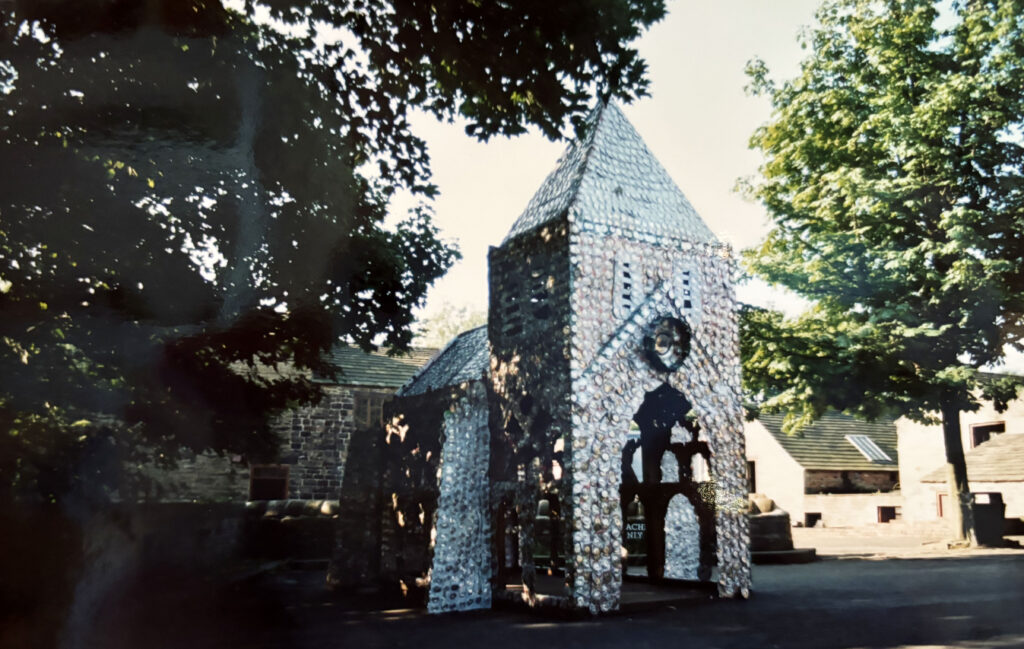
"Alcan Cathedral of Cans" Sculpture to raise awareness about recycling, Abbeydale Industrial Hamlet, Sheffield 1991
“Alcan Cathedral of Cans” Sculpture to raise awareness about recycling, Abbeydale Industrial Hamlet, Sheffield 1991


My forays into artist-led workshops were put aside whilst I undertook my MA at the Royal College of Art, but it was my time at the Royal College that affirmed to me that the connection with people who might describe themselves as not being artists, was vital. The Royal College at the time felt like a hermetically sealed unit, for Fine Artists anyway, where you were expected to make work which was understood (or not) by other artists. It stifled me. I couldn’t keep up, and my ego took a shot. I came away with the exact opposite feeling that I’d had after the long, hard workshop day – this time one of lack of purpose, lack of place. What use were my philosophical and artistic ramblings to the world? I couldn’t see it.

More workshops, this time through a residency I set up for myself in Chiswick House and Gardens. More local authority funding. More contact with not only young children, but also appreciative older ladies. My sense of worth slowly rippled around the edges.
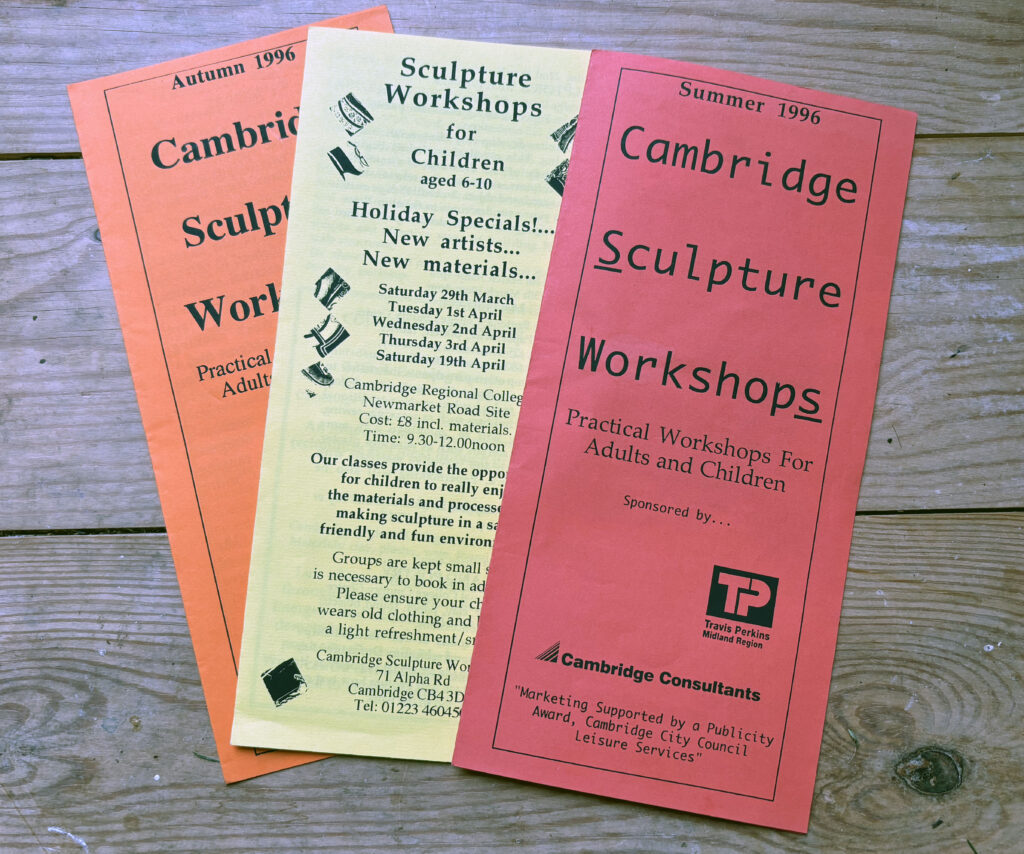
Cambridge Sculpture Workshops 1996

A move to Cambridge in 1995, (thank you world for the synchronicity), meant I was living in the same town as Sheila Ceccarelli, house mate and soul mate whilst we were at the Royal College of Art. Both of us were struck by the same post-RCA malaise. We sat down together in Sheila’s kitchen, to plan. No more alone, no more just me, now the two of us planned together. An organisation emerged: Cambridge Sculpture Workshops. We drew our logo with a mouse on Sheila’s old Mac, sitting next to each other. We wrote our sentences together, one dictating, one typing. Incredibly frustrating, and slow. But it was like we were holding hands, giving each other confidence to re-emerge. We applied for funding – Calouste Gulbenkian Foundation, local authority, National Lottery, Arts Council. Small, small pots. We networked – councils, museums, galleries, schools. And we lugged our stuff – Sheila’s car heaving with tools and materials.
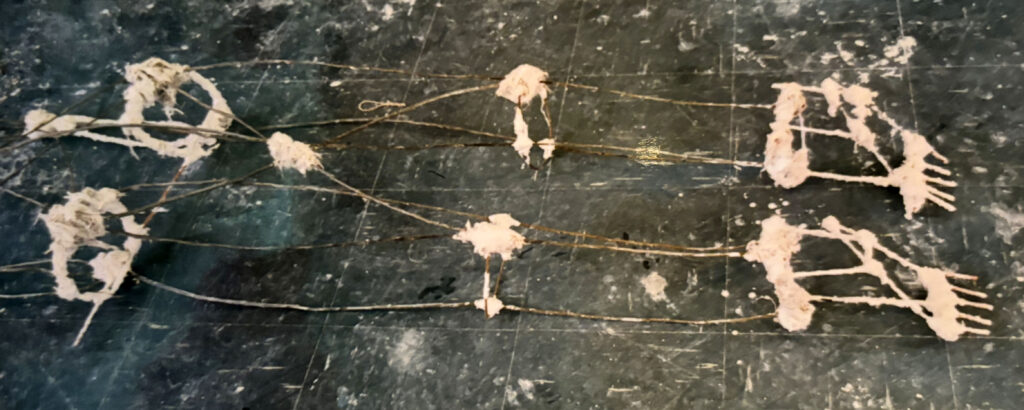
"Belonging to the Ground" sculpture, Kettles Yard studio, Cambridge 1997
“Belonging to the Ground” sculpture, Kettles Yard studio, Cambridge 1997


Kettles Yard allowed us to turn their education room into an 8 week sculpture studio, and workshop participants visited and traipsed their plastery feet back through the gallery. We ran regular sessions in other venues for all ages, offering children time and space to make a mess, and offering the middle-aged ladies of Cambridge Saturday art schools which they attended for all kinds of reasons. Lots, and lots, and lots of workshops in schools. And we built a Guy for the city bonfire, in a shopping centre with children and families, and we watched it burn, leave the fire, and float dangerously over the heads of the gathered bonfire night crowd (in 1996 there were few risk assessments, apparently). We learnt our craft, and we learnt how important it was to help provide opportunities for people to come together to make.
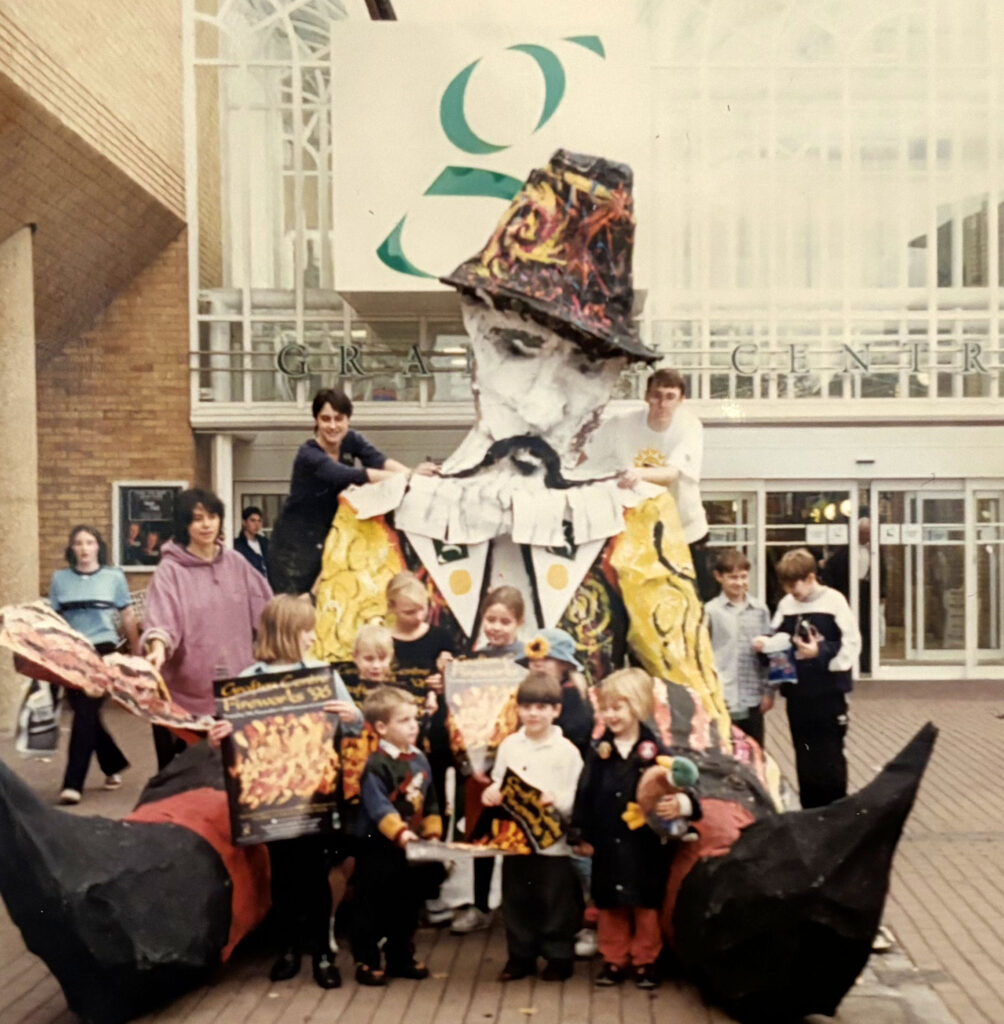
Guy, Cambridge, 1998


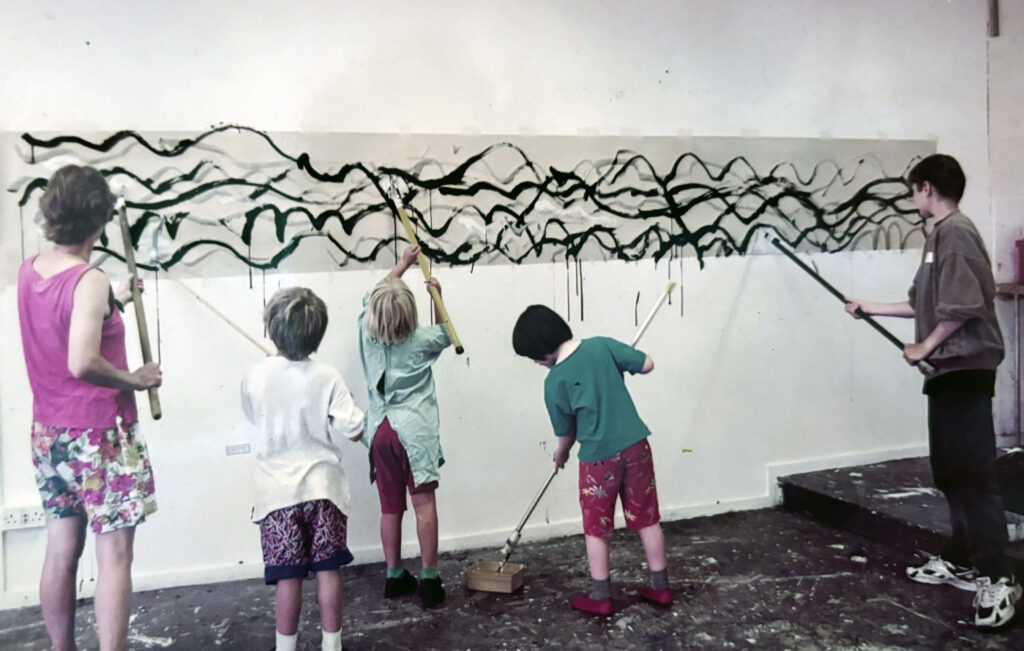
Family workshops, Cambridge 1997


Impington Village College, Cambridge 1998


AccessArt emerged from Cambridge Sculpture Workshops, giving us new opportunities to try different models of tiny art schools. Sheila and I had children of different ages, and we both had busy schedules (AccessArt was always woven around family), so we decided to divide and conquer – she would run workshops for children her daughter and son’s age in one part of Cambridge, and I would workshops for children of my daughters age in another. And so began my own daughter’s art education, at the age of four, as I designed and ran sessions based around what I thought she and her friends would enjoy. Income from the sessions was small (I think we charged £9 for an hour-long session, had no more than ten children, and paid rent to the village hall). But learning was intense, for me as well as the children. Better still, Sheila and I would return from the sessions, write up what we did, and share it on AccessArt for the other to see. And there was the beginning of the posts you see on AccessArt today. Suddenly the “value” of each session was enabled to grow – not just benefiting the children that attended, but also those that read about the ideas after the event.
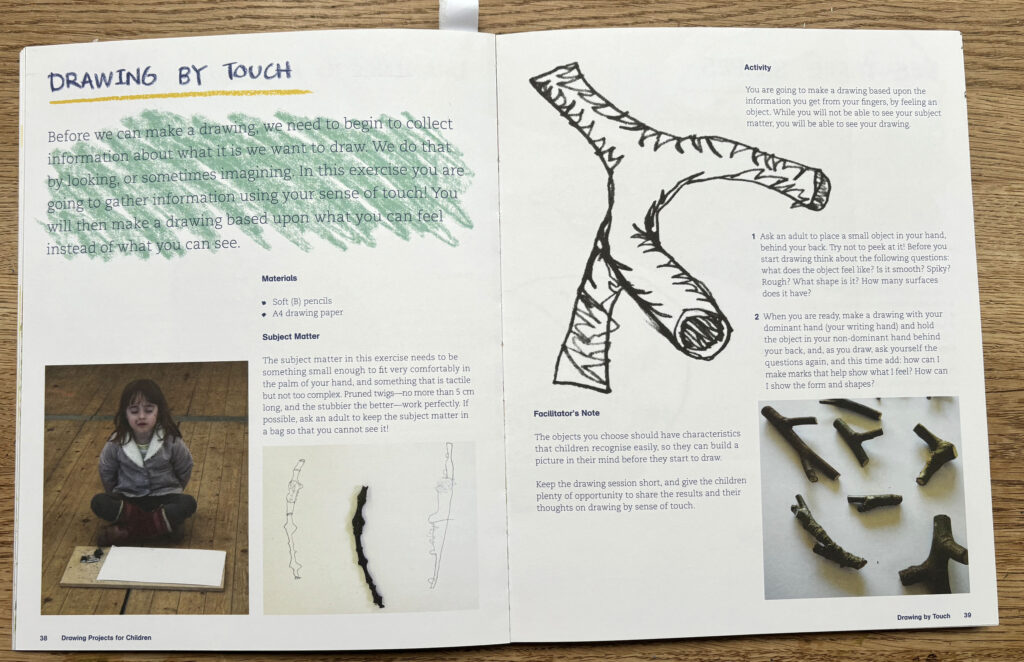
Drawing Projects for Children, 2015


As I realised a pedagogy was forming, I felt enabled to write books which further shared the ideas. Again, lots of learning, but always the feeling that to create income (this was at a time before AccessArt was able to pay Sheila and I a wage) we had to maximise in as many ways as possible our knowledge and experience: event, resource, book – all made sense.
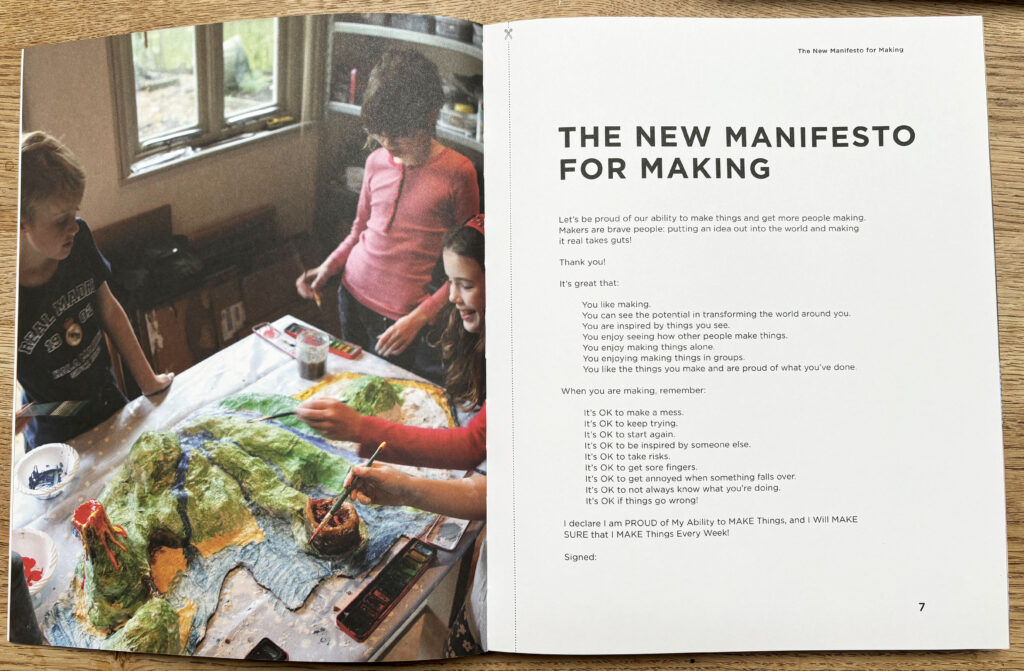
Make, Build, Create: Sculpture Projects for Children


Through always responding to what I felt the children and young people I met needed, new ways of creating tiny art schools emerged. When my daughter was 12, and she and her peers were one by one dropping primary school hobbies, the teenage Be A Creative Producer project began as a way of helping them explore how valuable their creative skills were, and how powerful collaborative working could be. For nine months the five teenagers came back to the house every Friday after school, and we turned the dining room into a studio where we animated, made sculptures, films and music. It was an intense and incredibly productive experience, which looking back I now see I could have only done with 12 year olds – any younger they wouldn’t have been ready for it, any older they would have resisted it – but it leaves an amazing legacy.

My latest tiny art school format is, I guess, our Substack-based Everyday School of Art which my daughter and I write together, as a way of exploring personal creativity as well as the importance of art education. And the other tiny art school – AccessArt itself!


So, a few tips, thoughts and opportunities for any artist educator interested in their own re-inventions of tiny art school formats:

  • AccessArt will help you where we can. The site is full of ideas to inspire your teaching. We are also in the process of creating case studies of the many ways other artist educators are running their own tiny art schools, and resources which share practicalities. Keep in touch via this page.
  • Remember (or know for the first time), that your skills as an artist educator are SO unique and valuable. Through working you will become to recognise that, as you see the effects of your work on others. Be proud about who and what you are, share your good energy, and trust your instinct.
  • Spin around. Look behind you, to the side, in front, up, down. Don’t assume you know where you’ll work, who you’ll work with. Maximise the results of any opportunity by writing and sharing. Think what you can do around the actual thing itself.
  • Keep re-inventing yourself, or what you do. Don’t be afraid to stop, start, and make things fit in with your life. All the different experiences will ultimately weave together to form your unique offering.
  • It’s easy to want to hug the hard-earned experience to yourself, holding it tight so no one steals it, BUT you end up getting so much more back by sharing where you can, and in so doing building your reputation as an expert. Enjoy the momentum as it snowballs.
  • Find a friend. Collaboration has always helped me. Doing things alone, at the right time, has also always been enabling. But networks and communities are of course good – so seek them out – or make them.
  • Finally, be practical, but be philosophical and aspirational – let small ideas land in your head and don’t talk them down. Don’t talk yourself out of things. Talk other people into things.
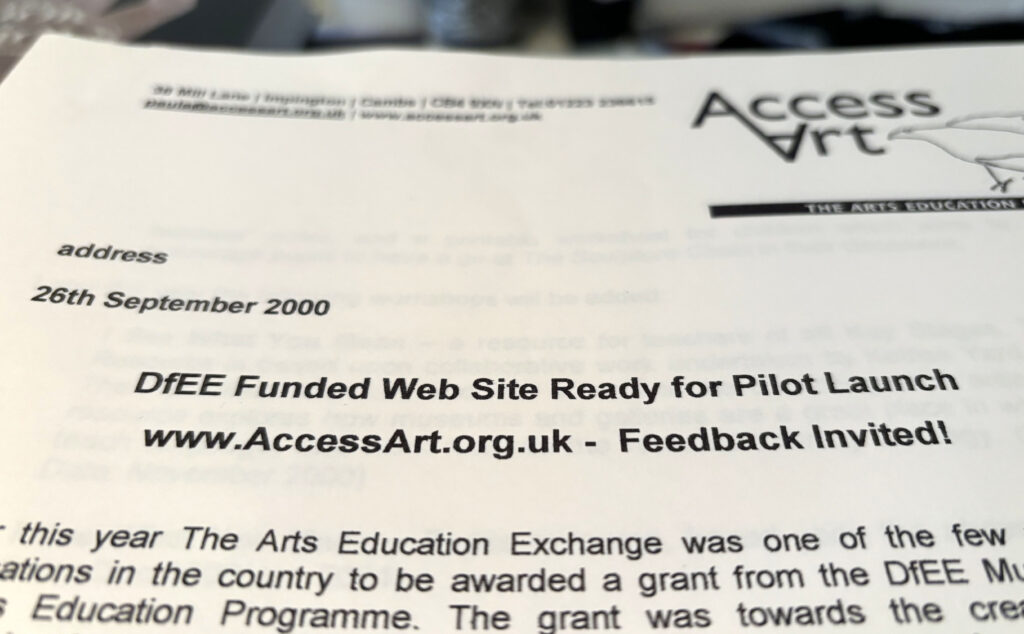
AccessArt Draft Website 2000


This is a sample of a resource created by UK Charity AccessArt. We have over 1500 resources to help develop and inspire your creative thinking, practice and teaching.

AccessArt welcomes artists, educators, teachers and parents both in the UK and overseas.
We believe everyone has the right to be creative and by working together and sharing ideas we can enable everyone to reach their creative potential.


Adapting AccessArt: Colour and Composition

You May Also Like

Manipulating Forms in Landscape Painting

A painted depiction of a lido.

Layered Colour Gestural Drawing

end2a

Cut Paper Collage Still Life

3


Can Labour Show It Really Understands The Power Of The Arts To Transform Lives?


What I Ate in a Day

You May Also Like

Drawing Prompt Cards

AccessArt Drawing for Mindfulness Prompt Cards

Watercolour Washes Inspired by the Tapestries of Henry Moore

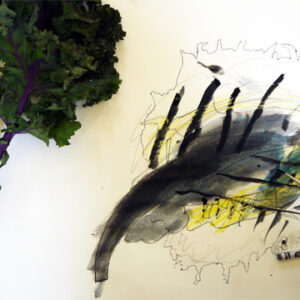
Curly kale watercolour study, by Kelly aged 7

Paint Your corner Shop

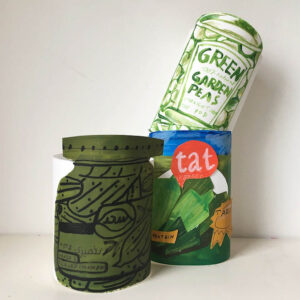
Final 3D Tins And Jars By Tobi Meuwissen


Adapting AccessArt: From 2D to 3D

You May Also Like

Manipulating Paper: Turning 2D into 3D

13

Making Prompt cards

AccessArt Making Prompt Cards Saatchi Learning Workshop By Lala Thorpe

playful making pathway

Medals by Jan Miller

ASTRONAUT PAPER BODY CASTS

Figures on wall - Astronaut body casts with Gillian Adair McFarland

Turkish map fold

Theresa Easton Turkish Map Fold

Adapting AccessArt: Playful Making Inspired by Nnena Kalu

Finished Group Sculptures Inspired by Nnena Kalu by Lorna Greenwood


Adapting AccessArt: Pattern and Colour

You May Also Like…

Screenprinting in the classrom

Overlaying Prints by Paula Briggs

SCREENPRINTING USING OVERLAID PATTERN

Over Printing to create pattern

exciting colour

DashwoodStudio Fabric Design by Rachel Parker

Creating Repeat Patterns With Rachel Parker

Finished Pattern Square By Rachel Parker


Illustrating a Book: The Making of Rabbit, Cactus, Accident

What We Like About This Resource…

“I really like how Yu-Ching’s process combines hand-drawing and painting, before moving across to digital. Combining those processes ensures that the illustrations retain a very warm, tactile look to them, but the digital element refines the imagery. We really like what Yu-Ching says about the benefits of silent books being universally understood and feel that the benefits and challenges of not using words means that the imagery has to be really clear, which encourages lots of exciting creative problem-solving.” – Tobi, AccessArt

You May Also Like…

Creating a Storyboard and dummy book

Final pages of concertina dummy book - Emma Malfroy

Drawable: the 3 Panel Challenge

The Three Panel Challenge by Rozi Hathaway

Drawable: My Tiger Sketchbook

Inbal Leitner

Illustrating The Jabberwocky

CKJabberwock - Ellie Somerset


Egg Box Gargoyles

You May Also Like….

Visual Arts Planning Collections: Cardboard and paper

cardboard detail 3b

Making a Sculptural Modroc Mask

Drawing feathers

Making a Mask from Sticks and Tissue Paper

Mask made from sticks and tissue paper

See This Resource Used in Schools…

Philippa McDonald, Creative Days


The Current Education System: Too Much Beta, Not Enough Alpha


Oak National Academy & The Art & Design Curriculum

During 2022 and 2023 AccessArt attended consultations organised by Oak National Academy to explore the potential for relaunching Oak after its initial creation during the pandemic. Like many educational publishers, we were concerned at the time about both the nature and quality of the resources created, the ethics of the creation of a curriculum by government, and also the potential impact of a so called “free” curriculum on commercial and charitable educational suppliers.

First, a little history about AccessArt. We are 25 years old this year, and we are proud to say that for the last few years we have become a self-supporting arts organisation, requiring no funding from outside sources. We are in this fortunate position because our (many thousands of) members pay a small subscription fee to access all our resources. In turn, this allows us to create new resources for our community, and most importantly, remain true to our vision and integrity. The insight, intelligence and pragmatic nature of our offering to schools means that we are privileged to help thousands of teachers inspire hundreds of thousands of pupils. This is no more in evidence than in the creation of the AccessArt Primary Art Curriculum. When we planned and created our curriculum, we were brave, followed our instinct and experience, and made certain that alongside the curriculum ethos and resources we created a support system and network to enable teachers to become enthusiastic, knowledgeable and confident art facilitators. The success of the curriculum has been recognised, with schools and Trusts recommending the flexible and empowering scheme to their colleagues. Our real pride though, is that artists, designers and craftspeople recognise the curriculum as being robust, exciting and rich – exactly the kind of experience they appreciate and value as artists.

So you can image we are justifiably proud of our achievement. We are now busy at work on our Key Stage 3 pathways, and beyond into adult and community education. Our vision is true, our team and trustees incredible, and our business model as a membership charity is strong.

In 2023 AccessArt was approached by Oak National Academy to explore partnership working in the creation of new curriculum resources, and later the same year I was approached to join the Expert Group. We turned both opportunities down. Here’s why.

There is currently a Judicial Review brought about by three claimants: The British Educational Suppliers Association (BESA), the Publishers Association, and the Society of Authors. This is also supported by the National Education Union who are participating as an “interested party”.

“The government’s plans for Oak will be an unprecedented and unevidenced intervention that will cause irreparable damage to the education sector as we know it. The government is in effect creating a one-size-fits-all state publisher that promotes a single curriculum, controlled by the Education Secretary of the day. This will undo years of work by publishers who have invested expertise over many decades in creating a rich range of world-leading resources for school children across the country.

“There is simply too much at stake to let these plans proceed unopposed. The potential impact on teacher autonomy, learner outcomes, and curriculum diversity and quality is too significant. That is why authors, publishers, educational suppliers, school groups, teachers’ unions, and others have all voiced strong concern over these plans.” Dan Conway, CEO of the Publishers Association

“If we don’t act now, educators will be left with one set of state approved online resources which will threaten diversity and choice, remove financial incentives, and damage the healthy competition which is at the heart of educational publishing. The result will likely be a weaker overall pool of resources, greater challenges for teachers, and a negative impact on students’ learning.” Nicola Solomon, Chief Executive of the Society of Authors

“Converting Oak from an emergency response to Covid to a permanent part of government is a decision with ominous implications. Without consultation or parliamentary debate, the government has taken a long stride towards directing the detail of teachers’ work. Unless its actions are challenged, what is now presented as an optional resource will soon become the norm in schools. The government should recognise its limits: it does not have the capacity, the imagination and the understanding to intervene in this way.” Kevin Courtney, Joint Gen Sec, NEU.

The concerns echoed by the case brought to Judicial review, are echoed by the National Education Union. Key NEU concerns:

Claims that OAK is “by and for teachers” and “operationally independent” of Government misrepresent its true nature: OAK is under the ultimate control of ministers. Its resources are produced by a range of organisations by way of a commercial tendering process.

The Government’s business case for Oak is clear that it will be “continuously strategically aligned with Government policy as it develops over time”.

OAK’s status means there is a risk its materials will be seen as Government approved and “safe”.
This will increase pressure for schools to use their products, particularly given the pressures that Ofsted exerts, and its current focus on curriculum

Examples of how OAK is aligned with Ofsted include:

Each of the “Subject Expert Panels” set up to advise on the production of Oak materials includes an Ofsted Inspector

The Government’s business case for the OAK ALB acknowledged that Ofsted’s overall emphasis, since 2019, on the curriculum within school inspections “may…be influential in shaping and accelerating the uptake of [Oak’s] service.”

Read the Full NEU Statement here.

We believe Oak is a flawed and dangerous idea, and we are not alone. We believe that whilst Oak attempts to involve experts in its creation, the mechanisms and ethos behind creation of resources will ultimately restrict and control. And let’s remember that whilst Oak touts itself as being “free”, it does in fact cost money which the government could choose to spend in wiser ways to value teachers, build knowledge and seek real vision. Those original consultations we attended? We see no evidence of listening to what we heard during those sessions, and in many other education roundtables, as a no thank you to Oak National Academy.

As a Subject Association and charitable organisation which has worked long and hard to develop expertise which develops and enables our community of users to feel supported, inspired and empowered, AccessArt will continue to work independently through our principles and practice to support our members. We thank you for your continued support and understanding about what’s really important in art education.

Paula Briggs, CEO & Creative Director AccessArt, April 2024

Explore…

Taking Control of the narrative

Read why we need to change the narrative and speak with more courage about the purpose of education...

“I realised through conversations with school leavers that they could no longer use words like intuition, entitlement, dreaming, invention, play. These words are unfamiliar to them, and they no longer resonate. These words, and therefore the ways of being they describe, are not available to them right now.”

Read why we need to change the narrative and speak with more courage about the purpose of education…

Not just ideas: Action Too

Explore and understand all that AccessArt has achieved and the impact we are making

“One cold, rainy morning in January 1999, I received a phone call from the then DfES. The woman started the call with the words: “What is the best news someone could call you with on such a rainy January day?””

Explore and understand all that AccessArt has achieved and the impact we are making


Ice Worlds

You May Also Like…

Pathway: Using Art To Explore Global Issues

This resource is features in the 'Using Art To Explore Global Issues' pathway

This resource is features in the ‘Using Art To Explore Global Issues’ pathway

Drawing Source material: ice

Iceberg by Frances Hatch

Talking Points: Drawn To Antarctica

Travelling to the Antarctic by Frances Hatch

Mini world Lightboxes

Mini World Lightboxes by Anna Campbell


Why Use Drama in an Art Lesson?


Drama Activity: An Art Conversation


Drama Activity: Hot-seating a Character


Drama Activity: Spontaneous Role Play


Drama Activity: Freeze Frame and Thought-tapping


Drawing from Life with Lance Richardson: 3 Sketchbook Exercises

You May Also Like

Drawing From Life: How Artists Use Sketchbooks

Sketchbook Pages by Caroline Bevan

The Sketchbook Journey

Food Sketchbook by Tobi Meuwissen

Video enabled resources: Sketchbooks

Mixed Media Paintings by Clare Boreham


Drawing From Life: How Artists Use Sketchbooks

You May Also Like

Drawing from Life with Lance Richardson: 3 Sketchbook Exercises

Sticking Paper Into The Sketchbook by Lance Richardson

The Sketchbook Journey

Food Sketchbook by Tobi Meuwissen

Video enabled resources: Sketchbooks

Mixed Media Paintings by Clare Boreham


Sketch Your World: Drawing The Details


Sketch Your World: Perspective