Talking Points: The Haptic Body


How can art help us explore what it feels like to be in our bodies?
The word haptic comes from the Greek haptikos, meaning ‘able to touch’.
In art, we use the word haptic to describe artwork that connects us to the physical and emotional experience of the body. We can experience depictions of the body in artwork in an almost physical way, sensing its weight, movement, tension or presence.
Explore using the sources below, then discuss the questions provided.
Please Note:
This page includes links and videos from external sites, verified at publication but subject to change.
Teachers should review all content for classroom suitability.
Report any issues, and check school firewall settings if videos don’t play.



Haptic art is art that makes us think about how something might feel. We use our own experiences of our bodies to connect with the artwork. We might touch the art, if we are allowed, but we can also imagine how it feels just by looking at it. Its shape, texture and materials can make us have a physical feeling or reaction.
Shape and Form
Artists sometimes change or exaggerate the shape or form of the human body to help us understand a feeling, experience or story.
During the Renaissance, a style called Mannerism emerged. Artists exaggerated or distorted things like body proportions, poses and balance to communicate emotions and influence how the viewer might feel.
In Michelangelo’s Pietà below, Jesus’ body is shown with long, heavy arms and a smaller lower body. He also looks small compared with Mary, who is holding him. These choices help us imagine the weight and sadness of the moment.

The Deposition from the Cross is an altarpiece, completed in 1528, depicting the Deposition of Christ by the Italian Renaissance painter Jacopo Pontormo.
In Pontormo’s painting, the figures twist, bend and lean into one another. Their unusual poses help us feel the sadness and emotion of the scene. Mary appears to faint and is supported by the people around her. Her larger proportions compared with the other figures emphasise her importance in the painting, while the figures packed closely around her appear to form a support system.
At the front, a man crouches as he carries the weight of Jesus’ body. His pose and expression help us imagine both the physical weight of the body and the emotional weight of his sadness.

Questions to Ask Children
What do you think is happening in the artwork?
Can you spot any characteristics of mannerism?
Why do you think the artist has chosen to emphasis these elements in particular?
Materials
When we look at art, we notice what it looks like as well as what it is made from. Different materials can make us feel different things. For example, an artwork made from real meat might make us feel uncomfortable or even disgusted not only because we know what meat feels and looks like, but also because meat draped in a human form connects it to the human body. Artists can use these feelings to help us think about bigger ideas and questions.
Questions to Ask Children
What is your immediate reaction to the dress made from meat?
Why is that your reaction?
How do you think it would feel to wear the dress?
Why did the artist choose meat as the material?
If you wanted to make the audience feel warm and safe when they looked at your artwork, what materials would you choose and why?
Challenges to develop your understanding of the haptic nature of body
1. Explore through inner reflection…
This activity is about noticing how your body feels, rather than how it looks. You are going to be your own life model.
Choose a pose and stay still. You can close your eyes if it helps. Think about each part of your body and notice what you can feel. Where does your body feel heavy, relaxed, stretched, wobbly or strong? Stay in the pose for a little while, as you may notice more feelings over time.
When you are ready, open your eyes and choose your art materials. Make a figure that shows how the pose felt, rather than exactly what your body looked like. You can stretch, squash or change parts of the figure to show the different feelings you noticed.
If you need to, return to the pose and notice how your body feels again.
Explore exaggeratied poses and drawings using Quentin Blake’s Drawing as Inspiration.
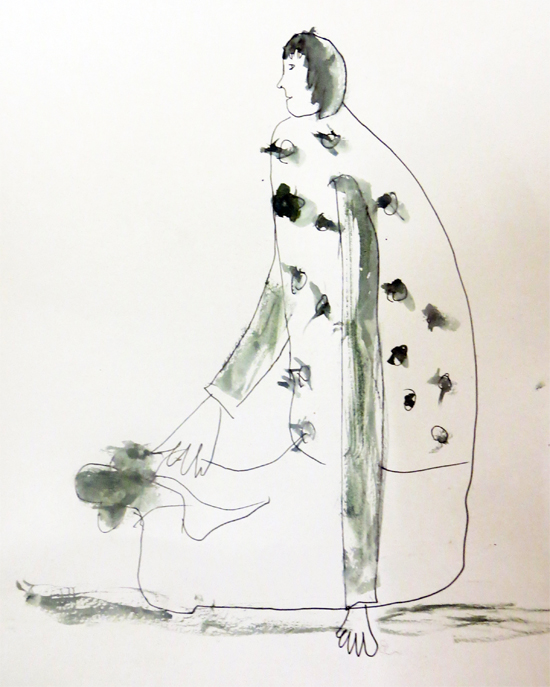
2. Explore by touch…
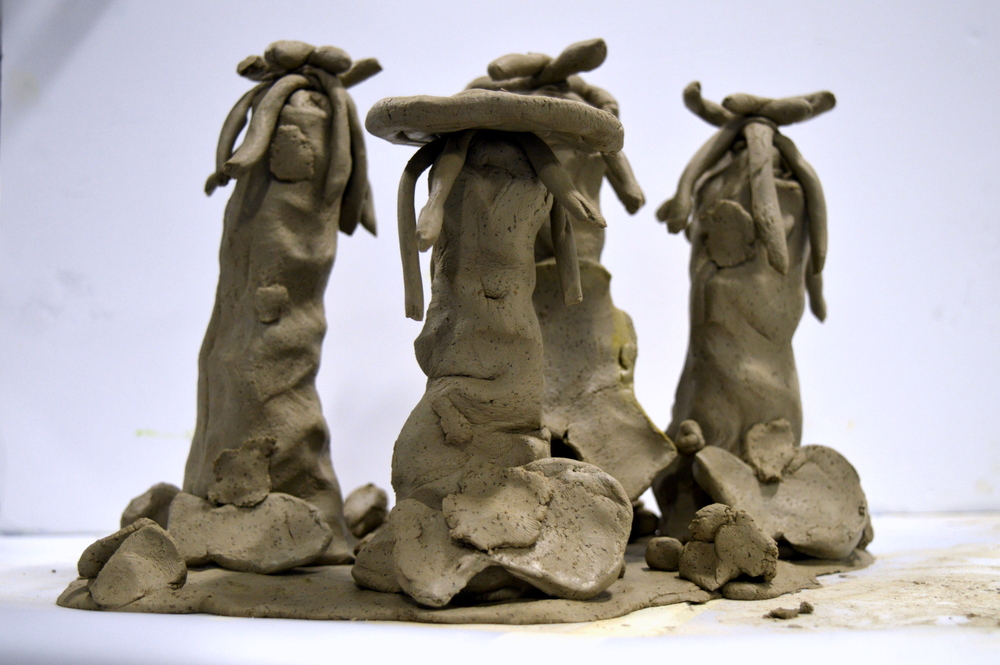
Take a lump of clay or another modelling material. Close your eyes or wear a blindfold, and make a sculpture of a head, hand or foot. Keep on touching the part of your body as you make for reference.
Try this for five or ten minutes, or longer if you can.
When you have finished, open your eyes and look at your sculpture. Remember, it might look different from what you expected.
You may also like to explore clay and the human form through Quick Clay Figurative Sketches.
You May Also Like...
using sketchbooks to make visual notes
Sensing Form: Using Feel to Manipulate Clay

sensory sculpture inspired by barbara hepworth
feely drawings