Wish List

By Dr. Penny Hay

The aim of sharing wish lists is that we might be able to see where we can better support and learn from each other.

What Do You Wish For …

I wish for a world that is full of hope and imagination. In these uncertain times, I love Rebecca Solnit’s words, “Hope locates itself in the premises that we don’t know what will happen. In the spaciousness of uncertainty is room to act.” (Solnit, 2016)
Vital to creative education is the need to encourage imaginative spaces for hope, and to help teachers, artists and children to be more conscious of how they can use, inhabit and develop these spaces. I have been incredibly conscious of this over the past 18 months, as we struggle to look forwards and find educational paths ahead that will inspire renewed and re-energised creative action.

Children Playing By Penny HayThe arts invite this creative action, and they are a human right fundamental to our democratic freedoms. I am convinced of the power of the arts to be transformational for individuals and our society. I wish for everyone to explore and celebrate their imagination and creativity. I wish for every child to flourish, no matter what their background or circumstance.

Creativity is a way of being in the world. Creativity and imagination are innate human capacities – they are the essence of what makes humans special. Creativity is about human potential – and not just the domain of the arts. However, I teach art because it makes visible our creative human potential – the way we can learn in, about and through the arts, to imagine possibilities, explore ideas and express our personal, social and cultural identities and to make sense of the world and to make meaning.

Children especially have a powerful drive to explore, hypothesise, make connections and communicate ideas. I want this creativity to have a space to breathe: “Imagine a world where our children are engaged in serious creative play, where their environments are full of space and light … where adults are companions in the children’s enquiries about the world … creative adults who show a deep respect for children’s ideas, theories and fascinations.” (Hay et al 2008).

Children are active citizens and protagonists of their own learning. They think through their hands, hearts and minds. This thinking through making, using intelligent materials, involves a dynamic process that is always evolving, adapting and finding new possibilities. Being an artist involves asking good questions, solving problems, making sense and making meaning. The adult then becomes a ‘lender of tools and processes’ (Vea Vecchi in Edwards et al) in co-enquiry, not a director of outcomes.

Pedagogy and Activating Creative Agency

We all have agency, our collective imagination, ideas and related action can make a difference to all of our lives, but this needs nurturing in order to flourish. We have proof through the pandemic that the arts support children’s happiness and wellbeing. As Sir Ken Robinson said, we want to support the development and well-being of the whole student, intellectually, physically, spiritually, and socially, recognising the vital interdependence of all of these aspects of development, within each student and the community as a whole.

The term pedagogy encompasses the principles, practice and profession of teaching – our approach to teaching and learning and the shaping of the learning environment as a whole. A creative reflective pedagogy that is co-designed and embedded is essential – inviting trust in children and young people’s ideas and respect for all learners, listening to different voices and expression in one hundred languages (Loris Malaguzzi in Edwards et al).

As adults we can create the conditions for children to grow and flourish through supporting children’s learning identity as artists and embedding a creative and reflective pedagogy. Human flourishing is developing a love of learning, to find intrinsic motivation and self-determination in everything we do. I wish for an education system that values curiosity, joy and pleasure in learning, opening minds through empathy, sensitivity and compassion.

Children In Class By Penny HayAs adults we can help children and young people develop artistic ‘habits of mind’ – creative thinking, imagination, playfulness and reflection. Valuing uncertainty and embracing failure is central in the artistic process – we all learn through making mistakes and experimentation. If children see themselves as artists they can play with possibilities and help to make the creative process visible. Being an artist also involves asking questions, solving problems, thinking through materials, making sense and making meaning.

Lily (age 7 years) shared her thoughts with me about being an artist,
‘It’s easy! Have a great imagination, and then you will have great ideas
be positive, don’t worry if you make mistakes
be good at playing
be good at thinking,
be thoughtful
art is about everything!’

During my PhD (forthcoming publication Children are Artists in 2022) interrogated my own professional practice as an artist educator. I drew on collaborative research I had conducted with the educational charity 5x5x5 (now House of Imagination) giving particular attention to four strands of research – creative values, environments, relationships and dispositions – and how these might support an individual child’s developing identity as an artist. This research evidenced the key characteristics of the role of adults in this process, with a focus on valuing self-directed enquiry (rather than adults’ prescriptions) and an emphasis on the child’s developing ideas and self-concept as an artist, inviting children to explore their imagination and generate ideas in a wide range of media.

In tandem with this research, House of Imagination operates as a studio environment for children and young people to work alongside artists and creative professionals, as creative role models. House of Imagination offers an alternative, creative approach to learning, reconceptualising the curriculum with the city as a campus for learning. Together with children, schools, artists and local arts organisations, we research experimental sites for pedagogical innovation to place children’s agency at the centre. These spaces can be interrogated to distil a repertoire of creative pedagogical characteristics that optimise freedom, agency, choice and imagination. Our local spaces include galleries, museums, libraries, theatres, public squares, streets, riversides and parks. This year we helped to produce the Forest of Imagination 2021 in Bath, including an installation of The Living Tree inside the egg theatre, where children and families were invited to play, explore, learn and create alongside artists, educators, musicians and dancers.

Children Working Inside And Outside By Penny Hay

Embedding Creativity

Our creative methodology in the House of Imagination – everyone an artist – drives our ambition for artistic excellence and creative education. Everyone can be given the time, space and attention to realise their creative potential in a creative and nurturing environment. Our strapline is ‘inviting the freedom to follow your fascinations’. It is important to emphasise possibilities not prescriptions, starting with the individual’s interests and inquiries. House of Imagination engages artists, researchers and educators in creative and reflective practice that places the arts, creativity and wellbeing at the heart of a future pedagogy.

A creative pedagogy to embed the arts and culture in learning and everyday practice is vital for the development of every child, thinking especially about the creative capabilities needed now and in the future. Art experiences show us that the imagination and creativity are not marginal but central to the healthy development of individuals and society. An effective, democratic and inspirational creative pedagogy needs to reflect on who we are and what we can do now, but also on what we want to do in the future and the kind of society and communities we want to live in.

References
Edwards, C. et al (1998) The Hundred Languages of Children – Advanced Reflections. Greenwich, Connecticut: Ablex Publishing. Edwards et al 1998

Hay, P. et al (2008) Researching Children Researching the World: 5x5x5=creativity. Trentham. Edwards et al 1998

Solnit, R. (2016) Hope in the Dark, Canongate.

Websites

https://www.bathspa.ac.uk/our-people/penny-hay/

http://houseofimagination.org/

http://www.forestofimagination.org.uk/

https://www.compound13.org/


This is a sample of a resource created by UK Charity AccessArt. We have over 1500 resources to help develop and inspire your creative thinking, practice and teaching.

AccessArt welcomes artists, educators, teachers and parents both in the UK and overseas.

We believe everyone has the right to be creative and by working together and sharing ideas we can enable everyone to reach their creative potential.


Which Artists: The Life & Works of Madge Gill

What We Like About This Resource….

“The life of Madge Gill that Sophie Dutton recounts here gives us real insight into the challenges that Madge Gill experienced, and how these challenges would have been common among women at the time. When we study the work of Artists, it adds a rich context to our experience of their work to consider their personal history, and helps us ask questions like ‘why do you think the Artist painted in this way or was inspired by this subject matter?’ If you introduce your class to Madge Gill, begin with looking back over her younger life to try and better understand her motivations as an Artist” – Rachel, AccessArt

You May Also Like….
I am AccessArt: Ann Rippin

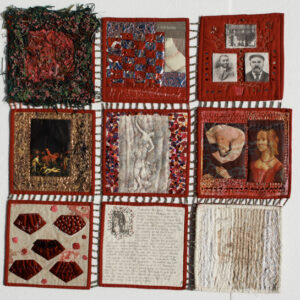
I am AccessArt: Ann Rippin

Making Batik Textiles in the Classroom

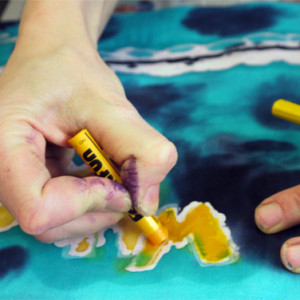
Making Batik Textiles in the Classroom

How I Use Drawing and Sketchbooks

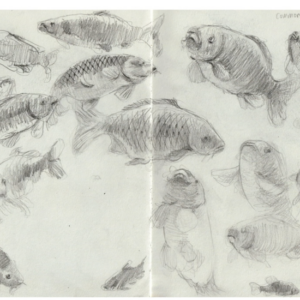
How I Use Drawing and Sketchbooks


Transformation of Materials Inspired by El Anatsui

See This Resource Used in a Pathway…

cardboard structure 1b

Transforming Materials into Sculpture

This pathway shares how teachers might take inspiration from El Anatsui and encourage pupils to think how they might disassemble objects around them to transform them into sculptural pieces. Read More. 


The Transformation Project

You May Also Like…

cardboard detail 3b

Transforming Cardboard with Andrea Butler

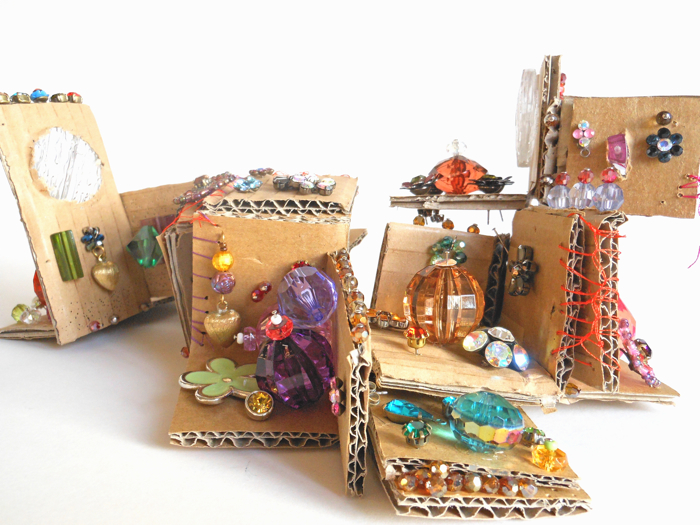
Artist Andrea Butler shows how to explore simple design and construction using cardboard and jewellery. Read More


Download an Editable Version of the AccessArt Progression Plan


Turkish Map Fold

What We Like About This Resource….

“This activity is a great example of how we can use paper as the focus of creativity. Often we use paper purely for drawing or painting on, but here, it is central to the activity itself. While these particular folded sculptures have their roots in Turkish culture, you could still deliver the activity if looking at things like Origami too, thus linking it across different cultures” – Rachel, AccessArt

You Might Also Like….

Puzzle Purses Part 1

Puzzle purse making process by Eilis Hanson

Puzzle Purses Part 2

An unfolded origami puzzle purse by Eilis Hanson

Paperback Figures

paper pair for upload


Which Artists: Liz West

What We Like About This Resource….

“It’s really interesting to hear how the interest Liz has in the quality of light comes from a personal place and is something she has responded to since childhood. Seeing how her work has developed over the years is therefore a really positive re enforcement that individual creative journeys, where nurtured, are so central to a rich arts education. We also love hearing Liz is always on the ‘quest for knowledge’ – meaning she is open to her ideas constantly evolving and the process of gathering new information and inspiration never stops!” – Rachel, AccessArt

You May Also Like…

Pathway: Brave Colour

This is featured in the 'Brave colour' pathway

This is featured in the ‘Brave colour’ pathway

using sketchbooks to make visual notes

Find out how pupils can respond to artists work in sketchbooks

Find out how pupils can respond to artists work in sketchbooks

Show me what you see

Enable close looking and drawing with this exercise

Enable close looking and drawing with this exercise

Lightbulb Art

Drawing with Light - A workshop facilitated by Sharon Gale

Mini World Light Boxes

Lighting up the miniworld

Visual Arts Planning: LIght and Dark

Glow in the dark architectural maquette


World War I Mail Art

What We Like About This Resource….

“This project links poignant subject matter with meaningful art processes and local history. What we learn about the re purposing of materials, (in this case spent ammunition) re affirms how we can use what is around us as a starting point to making and creating. You could extend or adapt this project by looking at broken pottery, re purposing that into new sculptures that link with Roman or other local historical cultures” – Rachel, AccessArt

You May Also Like….
Henry Moore's Shelter Drawings

Henry Moore’s Shelter Drawings

Remembrance Day Soldiers

Remembrance Day Soldiers

For Remembrance Day

For Remembrance Day


Which Artists: Claire Harrup

What We Like About This Resource….

“We really enjoyed reading about the process of creating art work according to a design brief and how the experience of this differs to when an artist begins with their own idea or concept. That’s not to say an artist can’t approach a brief with their own individual style and ideas, but what this post shows us is that there can be a balance between the two. This would be a great resource to show older KS pupils who may be beginning to consider their options beyond Primary School”. – Rachel, AccessArt

You Might Also Like….

Pathway: 2D Drawing to 3D Making

This is featured in the '2D Drawing to 3D Making' pathway

This is featured in the ‘2D Drawing to 3D Making’ pathway

Talking Points: Packaging Design

Orange Juice Redesign https://www.youtube.com/watch?v=TzzlNni_K4o&t=364s

What is Typography

What is typography

Which Artist: Rachel Parker

Fabrics for Dashwood Studio by Rachel Parker

Repeating Patterns

Wallpaper Mockup Rachel Parker

Block Printing Repeat Patterns

Andy McKenzie and Jan Ayton stamp printing


Which Artists: Theresa Easton

What We Like About This Resource….

“It’s interesting to hear Theresa describe Printmaking as a social activity, with the shared use of materials and equipment so central to the practice. This could be a positive way of working for lots of children in school, where instead of just working on individual art work, they can collaborate and embrace the creative sharing experience!” – Tobi, AccessArt.

You Might Also Like….

Monoprint Animals

Monoprint Animals

Screen printing Inspired by Matisse

Screen printing Inspired by Matisse

An Exploration of Shepherd Fairey

An Exploration of Shepherd Fairey


Thoughts About the Art & Design Curriculum by Paul Carney


An Exploration of Pandora’s Box

You Might Also Like….

Ancient Greek Lyres

Ancient Greek Lyres

Decorative Coil Clay Pots

Decorative Coil Clay Pots

Visual Arts Planning: Clay

Visual Arts Planning: Clay


Which Artists: Ava Jolliffe


Which Artists: 2B or Not 2B


Sketchbook Journey At Haslingfield Primary School


Creativity Medals

See the Resource Used in Schools…

Year 1, Ruth at Carden Primary School, Brighton

What We Like About This Resource….

“The sentiment behind this resource idea is lovely and it provides an opportunity to really develop some fine motor skills as well as independence of approach. Taking ownership of the medal design means the sense of achievement is heightened beyond the children just being given one. You can really imagine the positive energy that would surround this activity within a classroom, with each child working on a shared project but embarking on their own creative journey.”  – Rachel, AccessArt

You May Also Like….
Pathway: Playful Making

Featured in the 'Playful Making' pathway

Featured in the ‘Playful Making’ pathway

Talking Points: Introduction to sculpture

What is Sculpture

Clay Art Medals

Clay Art Medals by Sharon Gale

Talking Points: Nnena Kalu

Jennifer Lauren Gallery Work By Nnena Kalu

Talking Points: Linda BEll

Linda Bell at Arts Fringe


Making Musical Instruments

What We Like About This Resource….

“It’s great to see music being explored in this way, and combining it with making creates a really interesting immersive project. This activity would work well as part of an extended project looking at musical instruments around the world and some of the natural materials they are made from.” – Rachel, AccessArt

You Might Also Like….

Pathway: Music and art

This is featured in the 'Music and Art' pathway

This is featured in the ‘Music and Art’ pathway

Talking Points: Linda BEll

Linda Bell at Arts Fringe

Talking Points: Nnena Kalu

Jennifer Lauren Gallery Work By Nnena Kalu

talking points: wassily Kandinsky

"File:Vasily Kandinsky, Improvisation No. 30 (Cannons), 1913, 1931.511, Art Institute of Chicago.jpg" by Wassily Kandinsky is marked with CC0 1.0.

drawing source material: orchestras

Orchestra

A Cheerful Orchestra

One of our favourite musicians!


Touch Wood

What We Like About This Resource….

“You can get a real sense of the environment in this post and how this could provide so much inspiration for creative projects. We are aware there the challenges to exploring the outdoors when many schools are in towns and cities. A way around this could be to have a regular collection of natural objects within the classroom and using them as a stimulus to respond creatively in sketchbooks or in extended projects” – Andrea, AccessArt

You Might Also Like….

Woodland Exploration

Woodland Exploration

A Passion for Woodworking

A Passion for Woodworking

Visual Arts PLanning: Tees, Forest and Landscapes

Visual Arts PLanning: Tees, Forest and Landscapes


Which Artists: Jason Line

What We Like About This Resource….

“It’s always so inspiring to hear how different artists work and we particularly like the detailed references Jake makes to his process – marking out the composition using neutral tones; adding and taking away compositional elements and gradually building in more colour and detail. Delivering a still life session in a classroom could begin with this process and encourage the practice of looking at positive and negative space. Some suggested resources below also touch on this”. – Rachel, AccessArt

You Might Also Like….

Tackling Still Life for Children

Tackling Still Life for Children

Drawing Negative Space

Drawing Negative Space

Visual Arts Planning: Still Life

Visual Arts Planning: Still Life


Which Artists: Su Blackwell

What We Like About This Resource….

“It’s really interesting to hear how Su’s career path evolved organically, and how experimenting with different disciplines such as ceramics and sculpture whilst studying Textiles at the RCA began her journey towards paper craft and books. We really like how the small book sculptures inspired the larger scale set designs for The Snow Queen. They transfer so effectively to the stage and you can imagine how engaging it would be for a young audience to recognise letters and words on lampposts and other scenic elements”. – Rachel, AccessArt

You Might Also Like….

Creating a Book World

Creating a Book World

Sketch Set Design Models

Sketch Set Design Models

Set Design for Primary Aged Children

Set Design for Primary Aged Children