
Making a Creative Response Arts and Culture Enrichment in your School
Enrichment sessions, both within and beyond the curriculum, give pupils the chance to explore inspiration from all kinds of sources and feel enabled to make a personal and creative response. By offering a wide range of starting points (or better still enabling pupils to find their own starting points), every pupil has the opportunity to find something that sparks their curiosity.
It’s useful for pupils to become familiar with the phrase “make a creative response.” Once pupils understand what we as educators mean by the phrase, they can use it as a tool to help them create work inspired by a stimuli or starting point. By approaching the stimuli with curiosity, reflecting on what they see and connecting it to their own experiences, they can create work that is relevant, original and uniquely their own.
Explore the following activities to:
-
Enable pupils and teachers to better understand the phrase “make a creative response”
-
Open minds as to where we might find stimuli for our own work
-
Encourage pupils to be brave and place their own experiences, ideas and interests at the heart of what they create
When used together, these experiences help pupils (and teachers) develop a richer understanding of how to turn a starting point into something personal, while discovering that inspiration can be found everywhere.
Why choose activities from the Making a Creative Response Pathway?
The ideas on this page are designed to help you think about how you can create an exciting enrichment offer in your school.
The ideas in this pathway help schools meet the DfE Enrichment Benchmark:
-
An enrichment offer that works in partnership
How might these activities be embedded into your enrichment offer?
In particular, the activities and approaches outlined on this journey are suited to:
-
Art clubs during lunch or after school
-
Smaller group activities within the curriculum
-
Activities after a visit to a museum or gallery
-
Activities within or beyond the curriculum run by visiting artist educators
-
Art weeks
Tips!
What is a creative response? (video coming soon?)
The ‘making a creative response’ approach encourages pupils to create work that is individual and divergent in nature. In contrast, a more convergent activity might result in similar outcomes, for example, a class of pupils each creating a pastiche of Van Gogh’s Sunflowers.
Find out more about ‘Convergent and Divergent Activities and Approaches’ here (coming soon).
Find inspiration in exhibitions to help you recognise creative starting points and develop them into engaging activities.

Enable pupils and teachers to better understand the phrase “make a creative response“
Explore the “Making a Creative Response” resource to build understanding of this approach. Find examples and tips.
Resources

Open minds as to where we might find stimuli for our own work
Creative inspiration is everywhere. If it’s something we can see, touch or experience through our senses, it can become the starting point for creative exploration.
You might be more familiar with traditional sources of inspiration, such as paintings or sculpture, which can provide rich starting points for exploration. But creativity doesn’t always have to begin in a gallery. By broadening what we can be inspired by, we encourage pupils to move through the world with curiosity and notice the creative potential in everyday places, objects, people and experiences. This helps pupils see that opportunities for creative exploration and inspiration are all around them.
1. Understand where you we can find creative stimuli
Galleries are a great source of inspiration, but it’s important to remember that the artworks they hold didn’t begin there. Every artwork has its roots in something beyond the gallery, a lived experience, a story, a place, an object or a moment of curiosity. So when we look to galleries for inspiration, it’s important to understand that creative responses can come from everywhere.
Artists and artworks offer rich opportunities for creative exploration when we see them as the beginning of a journey, not the end point. Rather than asking pupils to copy what they see, we can use them to inspire curiosity, experimentation and original thinking. The resources below will help you discover where to find artists and how to explore their work in a way that enables exciting open-ended exploration.
Finding artists in your local community is a great place to start when building partnerships beyond the school. Local artists are likely to have shared experiences with your pupils, having a deeper connection to the place they all call home. Discover practical advice to help you find and choose local artists to work with in your school.
Exhibitions are a rich source of inspiration for creative exploration. Look out for exhibitions in your local area and, if you can, visit the gallery before bringing your pupils. It’s also worth getting in touch to see whether they have an education team who can help you plan your visit or provide additional support.
If you’d like to explore artworks as creative stimuli in the classroom, Finding Inspiration in Exhibitions will help you facilitate projects that spark inspiration and encourage pupils to develop their own creative responses.
2. Help pupils understand how they can engage with stimuli to make a creative response
Inspiration isn’t limited to galleries. It can be found in everyday objects, people’s stories, photographs, music, books and the natural world. It’s important to introduce pupils to a wide range of creative stimuli. The more varied their experiences, the broader their understanding of what can inspire creative responses.
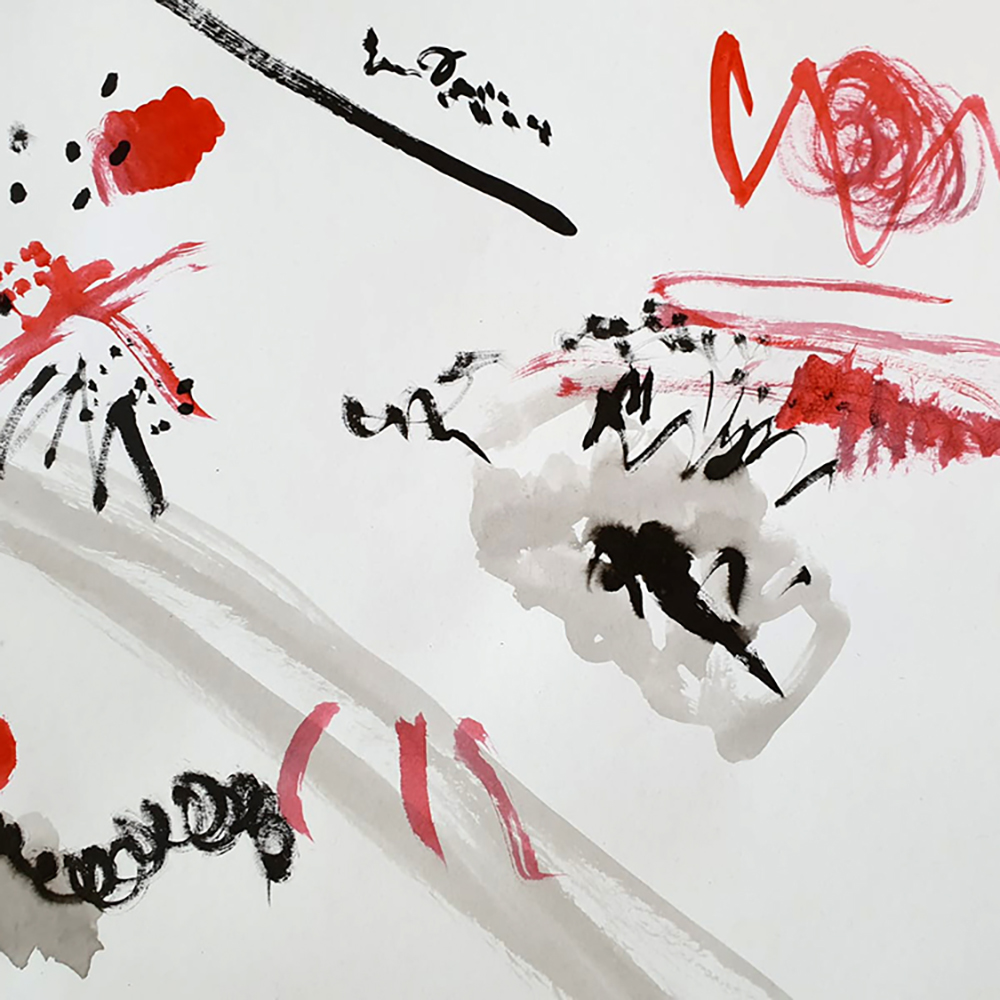
Inspiration can come from all kinds of art forms, including music. In Mark-making and Sound, pupils respond to music through mark-making, capturing spirit and atmosphere and allowing the rhythm and flow of the music to influence their drawings.
Engaging with stories from the local community can be a powerful stimulus for creative exploration. It broadens pupils’ perspectives while building meaningful connections beyond the school. With Stories and Faces, pupils can create portraits celebrating their lives and stories of those in their community.
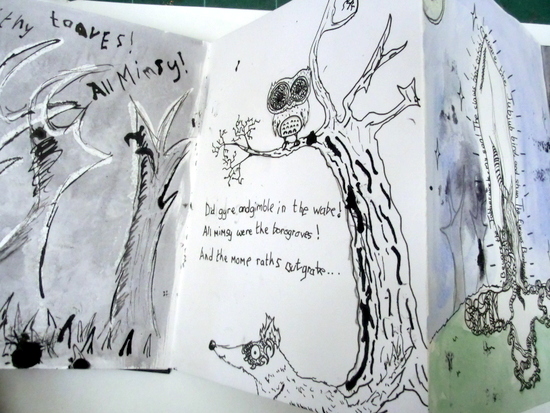
Books, stories and poems provide rich language and vivid imagery encouraging pupils to imagine, interpret and respond in their own unique ways. Explore Illustrating the Jabberwocky to see how text can evoke atmospheric drawings and visual storytelling.
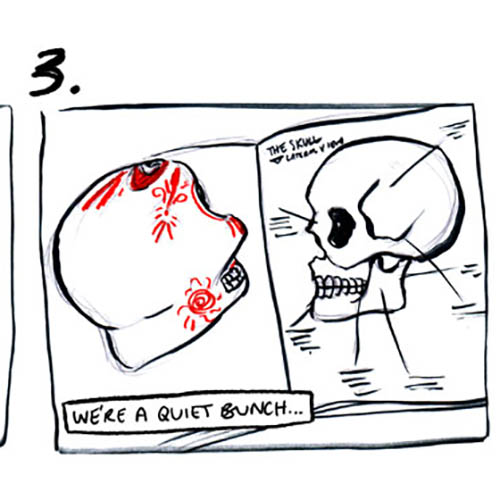
Objects can be great starting points for creative exploration. From an apple to an ancient artefact, every object has a story to tell and looking closely at the objects around us with imagination can inspire new responses. In the 3-panel Drawing Challenge pupils make connections between everyday objects and use their imaginations to build a narrative around them.
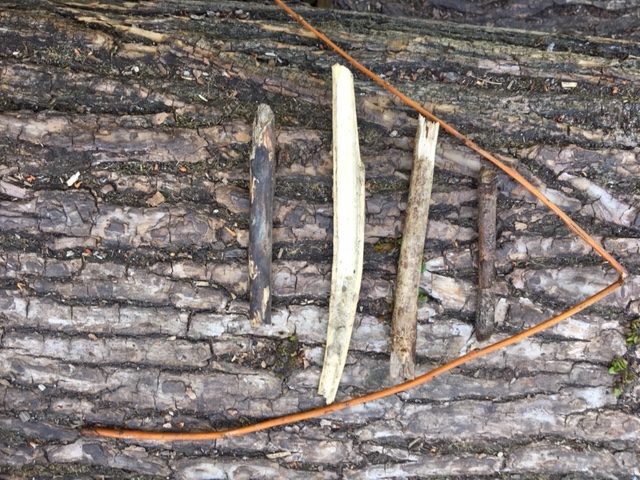
See how play can lead to creative responses in Patterns with Nature. Gather found objects, arrange them in different ways and see what happens. When pupils know their work doesn’t have to be permanent, they’re often more willing to play and experiment.
When using an artwork as a creative stimulus, think of it as a starting point rather than an end point. In Splendour and Opulence Inspired by Klimt, pupils explore Klimt’s use of pattern and mark-making through collage, painting and printmaking. By offering a range of materials and the freedom to choose how they respond, pupils create personal, varied and individual outcomes.
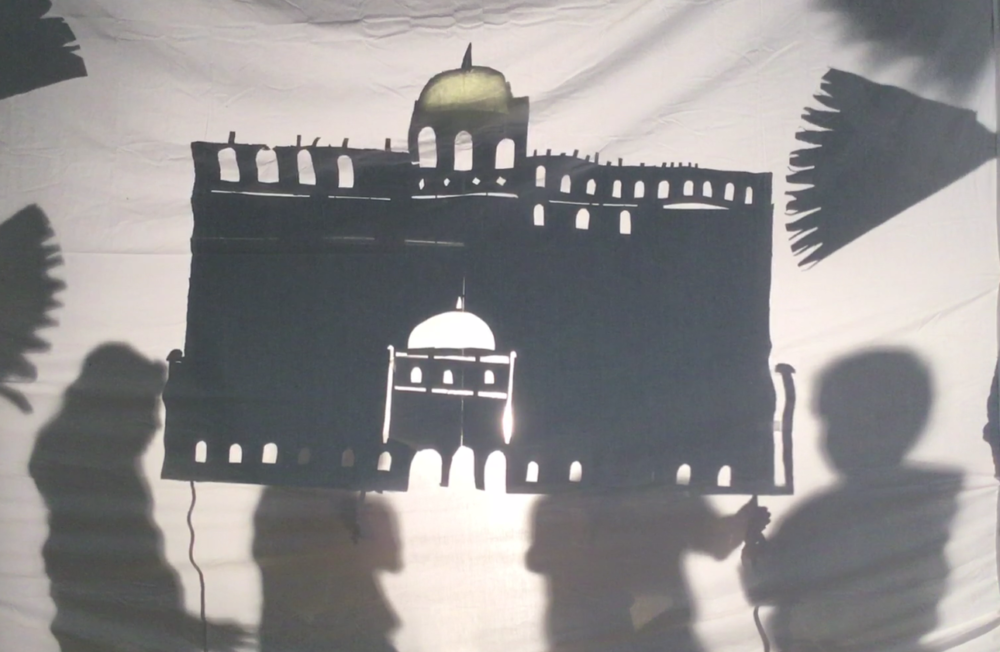
Cultural and historical traditions are rich sources of inspiration and offer opportunities to make cross-curricular connections. When pupils are invited to respond creatively to events, traditions or experiences beyond their own, making a creative response can help make it feel more meaningful. See how pupils combine puppet making and performance to create a collaborative, memorable response.
Resources
finding artists in your community

finding an exhibition near you
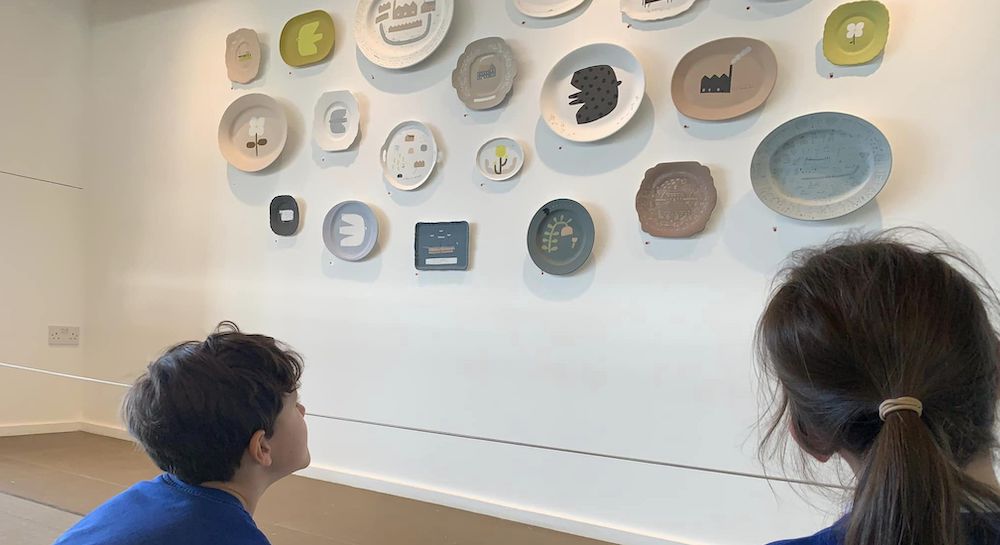
finding inspiration in exhibitions

mark-making and sound
Stories and faces

ILLUSTRATING THE JABBERWOCKY
3-panel drawing challenge
patterns with nature
splendour and opulence inspired by klimt

SHADOW PUPPET MAKING AND PERFORMANCE
Encourage pupils to be brave and place their own experiences, ideas and interests at the heart of what they create
In a curriculum with clear structures and assessment requirements, creating space for pupils to make choices about their learning based on their experiences can feel a little unfamiliar for both teachers and pupils. Yet it’s often where some of the richest learning happens. Provide them with opportunity and choice, and pupils will gain the confidence to explore their ideas, express themselves and take ownership of what they create.
Our Creative Community: A Pupil-led Project encouraged pupils to engage with their local area by connecting with artists who live in their town. Through a series of extra-curricular sessions over nine months, a small group of pupils met a range of local artists and chose who they wanted to work with, shaping both the direction and outcomes of the project.
Resources
our creative community
