AccessArt Exemplar Primary Art Plan + Progression Plan 2020

PLEASE NOTE

AccessArt has created a new Primary Art Curriculum which you can find here. 

Schools will continue to have access to our old Exemplar and Progression Plan (below) but we urge new schools to follow the new curriculum available here. 

AccessArt has created 3 plans to help Primary schools deliver a rich, exciting and relevant art education.

1) The EYFS Exemplar Curriculum Plan
2) The Primary Art Curriculum Plan
3) The AccessArt Progression Plan

The AccessArt EYFS & Primary Exemplar Plans

  • What Are the Aims of the Exemplar Currciulum Plans?

    • To provide schools with a rounded art curriculum for ages 5 to 11 (Primary) and help in establishing an open approach to creativity for the under 5s (EYFS).

    • To provide NQTs, art coordinators and all primary teachers with the skills and resources to deliver an engaging, relevant curriculum.

    • To suggest visual arts educational activities which will promote open-ended, creative learning.

    • To provide ideas, inspiration and techniques to enable children to explore a wide variety of media in drawing, sketchbooks, sculpture, painting, printmaking, and design.

  • Using & Developing the Plan in Your School

    The exemplar plan is a suggested way forward. If a school were to follow the plan (based upon tried and tested teaching), by the end of Year Six the pupils would have received an exceptional and rounded creative education. However we appreciate each school, class and pupil has individual needs, and that many teachers and schools will prefer to use this plan as a starting point to be adapted. We value this evolution: please do get in touch to share your successes!

    Find out how to scaffold the projects in the plan with sketchbooks and drawing, to ensure even richer journeys and outcomes.

  • How it Works

    • Click on the Year buttons within the plan to see the exemplar plan for each year.

    • Each year is split into 6 projects, one for each half term. Click on the suggested resources within each plan and you will be taken to fully illustrated resources which describe the aims, techniques and and outcomes of that particular activity.

    • Within each year, we have tried to balance development of skills in the main artform areas and with a variety of media.

    • The plan for each year builds upon previous skills learnt. However, the plan and the suggested activities within each year are transferable and adaptable. For example, you are able to switch activities within a school year, or even between school years, to suit your broader curriculum and the needs of your pupils.

  • Accessing the Resources

    • Whilst many of the resources are free to access, you will need to be a member to access the majority of our resources.

    • AccessArt is a UK charity (1105049) which aims to inspire and enable high quality visual arts teaching and learning. We receive no core or revenue funding, instead we rely on income from membership to continue to develop our activities. AccessArt has over 18000 members and is trusted by schools across the country to help develop their teaching and learning.

    • Membership (and access to all resources), starts at just £42 per year.

    Join AccessArt

  • Further Information about the Curriculum

    Please see this page here for a detailed breakdown of AccessArt’s approach to the currciulum for KS1 and 2. 

  • To provide schools with a rounded art curriculum for ages 5 to 11 (Primary) and help in establishing an open approach to creativity for the under 5s (EYFS).

  • To provide NQTs, art coordinators and all primary teachers with the skills and resources to deliver an engaging, relevant curriculum.

  • To suggest visual arts educational activities which will promote open-ended, creative learning.

  • To provide ideas, inspiration and techniques to enable children to explore a wide variety of media in drawing, sketchbooks, sculpture, painting, printmaking, and design.

The exemplar plan is a suggested way forward. If a school were to follow the plan (based upon tried and tested teaching), by the end of Year Six the pupils would have received an exceptional and rounded creative education. However we appreciate each school, class and pupil has individual needs, and that many teachers and schools will prefer to use this plan as a starting point to be adapted. We value this evolution: please do get in touch to share your successes!

Find out how to scaffold the projects in the plan with sketchbooks and drawing, to ensure even richer journeys and outcomes.

  • Click on the Year buttons within the plan to see the exemplar plan for each year.

  • Each year is split into 6 projects, one for each half term. Click on the suggested resources within each plan and you will be taken to fully illustrated resources which describe the aims, techniques and and outcomes of that particular activity.

  • Within each year, we have tried to balance development of skills in the main artform areas and with a variety of media.

  • The plan for each year builds upon previous skills learnt. However, the plan and the suggested activities within each year are transferable and adaptable. For example, you are able to switch activities within a school year, or even between school years, to suit your broader curriculum and the needs of your pupils.

  • Whilst many of the resources are free to access, you will need to be a member to access the majority of our resources.

  • AccessArt is a UK charity (1105049) which aims to inspire and enable high quality visual arts teaching and learning. We receive no core or revenue funding, instead we rely on income from membership to continue to develop our activities. AccessArt has over 18000 members and is trusted by schools across the country to help develop their teaching and learning.

  • Membership (and access to all resources), starts at just £42 per year.

Join AccessArt

Please see this page here for a detailed breakdown of AccessArt’s approach to the currciulum for KS1 and 2. 

Download The AccessArt EYFS Exemplar Plan

EYFS Exemplar Plan

Download the Powerpoint Version

Download the PDF Version

Download The AccessArt Primary Exemplar Plan
miro

Download the PDF Version

AccessArt Members Only:

Download an Editable Powerpoint Version of the AccessArt Progression Plan

Please note, AccessArt members can download the PPT version of our AccessArt Progression Plans so that you can edit the documents to suit your school’s needs. However please be aware that we regularly update our documents in response to changing requirements, and to developing resources on our site, so you will want to check in each year with the master version to check for relevant recommended changes.

The AccessArt Progression Plan

Please Note: There is a new version of the Progression Plan here. 

  • What Are the Aims of the AccessArt Progression Plan

    The AccessArt Progression Plan attempts to balance a number of important elements in art education. Create opportunities for new experiences balanced with:

    • Time for repeated practice.
    • Structured learning, balanced with.
    • Space for personal exploration.
    • The accumulation of technical skills and contextual knowledge, balanced with growing self-awareness of what it is to be a creative being.

    Through all of the above, our aim is to enable individual pupils to make appropriate choices regarding materials and processes and to be empowered towards making a personal, creative response. 

    The plan is based upon a creative and holistic approach, which shows the inter-relations between various aspects of the visual arts, demonstrating how subject knowledge, skill and progression is built when all the elements work together.

    We acknowledge the importance of teaching specific skills, sensitively modelling some materials, and introducing a wide variety of materials, concepts and artists as soon as possible.

    We also advocate the importance of pupils being enabled to follow their own creative pathway, and the progression plan shows how this might best be encouraged to happen. When to let a child go, (and we would always argue that that should be as as soon as possible) and how to enable that exploration, is key to a successful art education.

    The progression plan attempts to balance two very important elements of a high quality visual arts education: 1) practice with 2) novelty. The plan demonstrates how opportunities can be created for repeated practice and consolidation of skills, alongside opportunities to introduce new materials and concepts to feed and excite the creative process.

    We are keenly aware that many of teachers in primary schools are not specialist art teachers, and in many cases they did not have a comprehensive art education themselves. The progression plan links to example AccessArt resources to help non-specialist teachers understand how best to facilitate art.

    Finally our progression plan was written from a slightly different perspective than many. It is less about measuring the progress of pupils, but instead it attempts to pinpoint the stages of opportunity which should be presented by teachers. If the appropriate opportunities are created, then pupils will progress.

  • Assessment

    There are no national standards set in art for primary-aged children.

    AccessArt advocates for conversation-based assessment in art which takes place on an ongoing basis.  The conversations might take place as a class, as a group, or one to one and will feed into processes of reflection and evaluation. These are not activities which should just take place at the end of projects, but throughout the creative process. This makes assessment meaningful, and not a tick-list process which bears no use or relevance to the child.

    This kind of assessment requires that the teacher is actively involved in each learning journey of every child, which we understand is potentially time consuming. We believe this type of assessment underpins good teaching and leads to better outcomes, especially in such a sensitive area as nurturing a child’s creativity.

    Explore a resource of facilitating a gently and reflective class crit.

  • Vocabulary

    We will be producing a full guide to progression in vocabulary in 2021, including a glossary, but in the meantime key words, ideas and phrases are highlighted in pink on the Progression Plan

  • What is our Approach Based Upon

    AccessArt is the specialist provider of visual arts educational resources in the UK. We have over 20 years experience of facilitating the visual arts in schools.

    Our progression plan is based upon the expertise within the AccessArt team.

    The plan takes into account current National Curriculum guidelines, and bases its end of year descriptors on those supplied by the NSEAD curriculum.

    We would also like to thank Susan ColesPaul Carney and Mandy Barrett for their generosity in sharing their ideas and approaches in relation to progression and assessment with the primary field.

    We would like to take the opportunity to thank all those working in the field, and acknowledge that the skills and experience of all those in the field build upon and benefit from an open and ongoing conversation.

  • Disclaimer

    We believe the curriculum we present via our Exemplar Plans, and our working methods shared via our Progression Plan, provide schools with a way to access a rich art education for pupils, of which schools can be proud.

    The curriculum AccessArt shares is based upon our ethos which has developed over many years and which we believe has creative integrity. In the creation of the Progression Plan we have taken the opportunity to present schools with what we believe will be the best possible art education for their pupils, building and enhancing upon what already exists.

    Schools should note that the majority of our resources are created by artist-educators. Some but by no means all were created in formal education settings. It is up to teachers to assess on an individual or school community basis if the resources are right for your school, and how they might best be adapted to suit your needs.

    All resources cited in both the Exemplar Plans and the Progression Plan are examples only, and there are many more resources in the evolving AccessArt database which may suit your needs better.

    AccessArt presents our work to schools in good faith, but we cannot guarantee and are not responsible for the way the approach is received.

    Explore the new AccessArt Primary Art Curriculum.

The AccessArt Progression Plan attempts to balance a number of important elements in art education. Create opportunities for new experiences balanced with:

  • Time for repeated practice.
  • Structured learning, balanced with.
  • Space for personal exploration.
  • The accumulation of technical skills and contextual knowledge, balanced with growing self-awareness of what it is to be a creative being.

Through all of the above, our aim is to enable individual pupils to make appropriate choices regarding materials and processes and to be empowered towards making a personal, creative response. 

The plan is based upon a creative and holistic approach, which shows the inter-relations between various aspects of the visual arts, demonstrating how subject knowledge, skill and progression is built when all the elements work together.

We acknowledge the importance of teaching specific skills, sensitively modelling some materials, and introducing a wide variety of materials, concepts and artists as soon as possible.

We also advocate the importance of pupils being enabled to follow their own creative pathway, and the progression plan shows how this might best be encouraged to happen. When to let a child go, (and we would always argue that that should be as as soon as possible) and how to enable that exploration, is key to a successful art education.

The progression plan attempts to balance two very important elements of a high quality visual arts education: 1) practice with 2) novelty. The plan demonstrates how opportunities can be created for repeated practice and consolidation of skills, alongside opportunities to introduce new materials and concepts to feed and excite the creative process.

We are keenly aware that many of teachers in primary schools are not specialist art teachers, and in many cases they did not have a comprehensive art education themselves. The progression plan links to example AccessArt resources to help non-specialist teachers understand how best to facilitate art.

Finally our progression plan was written from a slightly different perspective than many. It is less about measuring the progress of pupils, but instead it attempts to pinpoint the stages of opportunity which should be presented by teachers. If the appropriate opportunities are created, then pupils will progress.

There are no national standards set in art for primary-aged children.

AccessArt advocates for conversation-based assessment in art which takes place on an ongoing basis.  The conversations might take place as a class, as a group, or one to one and will feed into processes of reflection and evaluation. These are not activities which should just take place at the end of projects, but throughout the creative process. This makes assessment meaningful, and not a tick-list process which bears no use or relevance to the child.

This kind of assessment requires that the teacher is actively involved in each learning journey of every child, which we understand is potentially time consuming. We believe this type of assessment underpins good teaching and leads to better outcomes, especially in such a sensitive area as nurturing a child’s creativity.

Explore a resource of facilitating a gently and reflective class crit.

We will be producing a full guide to progression in vocabulary in 2021, including a glossary, but in the meantime key words, ideas and phrases are highlighted in pink on the Progression Plan

AccessArt is the specialist provider of visual arts educational resources in the UK. We have over 20 years experience of facilitating the visual arts in schools.

Our progression plan is based upon the expertise within the AccessArt team.

The plan takes into account current National Curriculum guidelines, and bases its end of year descriptors on those supplied by the NSEAD curriculum.

We would also like to thank Susan ColesPaul Carney and Mandy Barrett for their generosity in sharing their ideas and approaches in relation to progression and assessment with the primary field.

We would like to take the opportunity to thank all those working in the field, and acknowledge that the skills and experience of all those in the field build upon and benefit from an open and ongoing conversation.

We believe the curriculum we present via our Exemplar Plans, and our working methods shared via our Progression Plan, provide schools with a way to access a rich art education for pupils, of which schools can be proud.

The curriculum AccessArt shares is based upon our ethos which has developed over many years and which we believe has creative integrity. In the creation of the Progression Plan we have taken the opportunity to present schools with what we believe will be the best possible art education for their pupils, building and enhancing upon what already exists.

Schools should note that the majority of our resources are created by artist-educators. Some but by no means all were created in formal education settings. It is up to teachers to assess on an individual or school community basis if the resources are right for your school, and how they might best be adapted to suit your needs.

All resources cited in both the Exemplar Plans and the Progression Plan are examples only, and there are many more resources in the evolving AccessArt database which may suit your needs better.

AccessArt presents our work to schools in good faith, but we cannot guarantee and are not responsible for the way the approach is received.

Explore the new AccessArt Primary Art Curriculum.

download The AccessArt Progression Plan
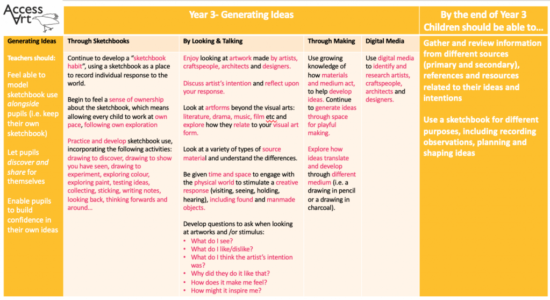
AccessArt Progression Plan for Primary Art

Download the PDF Version

download The AccessArt Progression Plan for MAKING
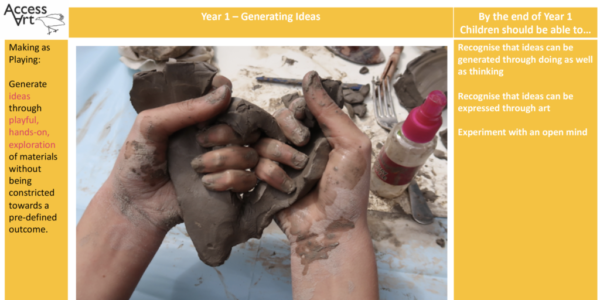
Progression Plan Making

Download the PDF Version

Access the Web Browser Version of the Exemplar Plan
Click on the Year Groups below

Year One
Ages 5 to 6

Ages 5 to 6

Year Two

Ages 6 to 7

Ages 6 to 7

Year Three

Ages 7 to 8

Ages 7 to 8

Year Four

Ages 8 to 9

Ages 8 to 9

Year Five

Ages 9 to 10

Ages 9 to 10

Year Six

Ages 10 to 11

Ages 10 to 11

Join AccessArt!

From just £42 per year, schools gain access to over 1500 unique resources to help develop your teaching, themed visual arts planning pages and discount on our distance learning courses. AccessArt was founded in 1999 and has grown through collaboration with a variety of schools, arts organisations, agencies, museums, galleries and individuals. The Exemplar Curriculum is free to access and share. To benefit from all the resources embedded in the plan, join AccessArt from only £3.50 per month. <a href="" class="shortcode button    "xlarge" style="background-color: "#d1cf30";color: "#000000";">Join Us!</a>

Join thousands of other schools and teachers who use AccessArt to deliver great art teaching

From just £42 per year, schools gain access to over 1500 unique resources to help develop your teaching, themed visual arts planning pages and discount on our distance learning courses. AccessArt was founded in 1999 and has grown through collaboration with a variety of schools, arts organisations, agencies, museums, galleries and individuals. The Exemplar Curriculum is free to access and share. To benefit from all the resources embedded in the plan, join AccessArt from only £3.50 per month. Join Us!
Opportunity to Join AccessArt: Membership & General Administrator Role

The deadline for applications has now passed. 

To help us serve our growing membership, AccessArt is ready to welcome a new person to join our friendly team!

Role:

Membership & General Administrator:  to help us process memberships and build relationships with schools, and to process Zoom CPD admin.

Hours:

The role is offered on a permanent basis (after a 3 month probationary period) working 21 hours per week. Hours should be worked during office hours (9.00 – 5.00) and be spread over 4 days. You need to be based in the UK. The role is fully remote.

Salary:

£16 per hour (equivalent to £31,200.00 per year working full time).

Timeline

  • Deadline for Receipt of Applications: Tuesday 26th March 2024 (Closed)

  • 1st Round Interviews (via Zoom): 9th April

  • 2nd Round Interviews (via Zoom): 19th April

  • Role Begins: May 2024

Job Pack

Pls find full details of role and how to apply here. 

This role requires specific skills and experience. Please do only apply for this role if you feel you have the skills and experience we are looking for.

Pls note that as we expect a great deal of interest in the role we are not able to reply to personal questions via email – instead we encourage you to read the document above for all details.

Monday 4th March 2024

AccessArt membership administrator
25 years image 500px

Job Pack

Pls find full details of role and how to apply here. 


Quiz Question Clips!
This page is a page holder for the question numbers the teenagers are working on as part of the How To Be A Creative Producer project. Find out more about the project and how the animations are being created here.

Question 1

Question 2

Question 3

Question 4

Question 5

Question 6

Question 7

Question 8

Question 9

Question 10

Question 12

Question 13

Question 15

Question 16


Use Scrapstores!
Scrapstores enrich visual arts learning by making it more accessible, sustainable, and creatively engaging.

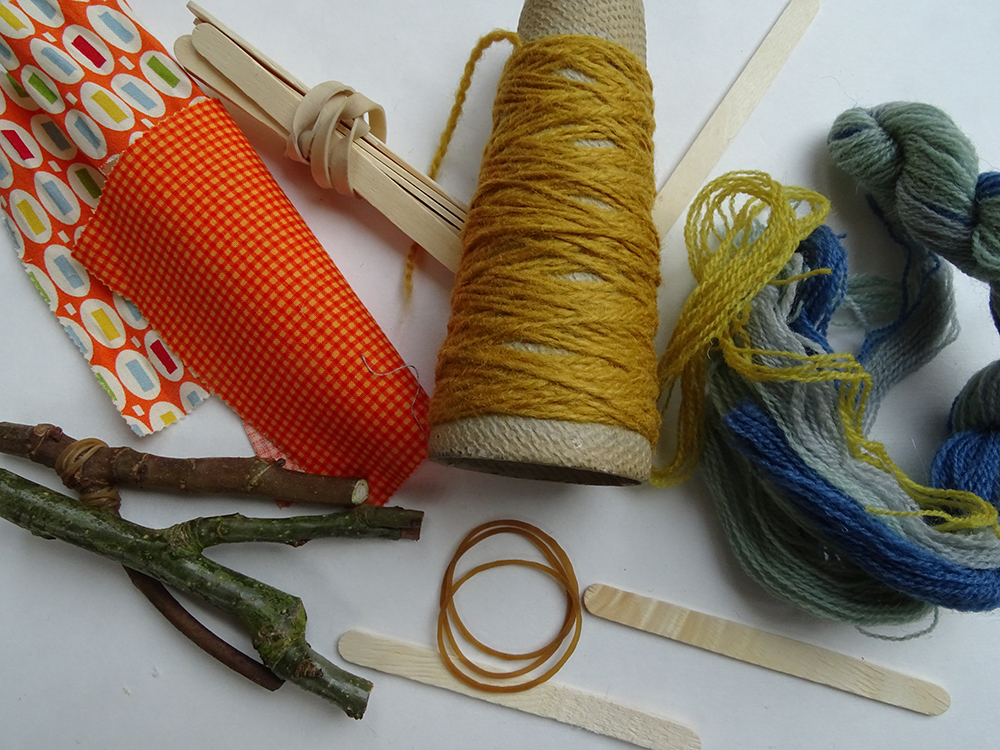
If you run an after-school art club, visiting your local scrap store can help you access a wide range of high-quality art and craft materials for your members. The range of materials in scrapstores changes from day to day and could include card, paper, textiles, paint, corks, wool, cardboard tubes, netting, gauze and a thousand other things!

All scrapstores have different means of accessing their scrap materials. In some, you need to pay an individual membership fee, whilst in others, you simply pay for the scrap you take on the day. Below is a list of scrapstores nationwide, with contact details for each. If you are interested in listing your scrap store on the AccessArt website, then please contact us.

You can see inspiring resources on using scrapstore materials here: A Wealth of Materials


materials for making worry dolls

Use this directory to find a scrapstore near you.


Renée Materials (Online)

“Renee Materials is the UK’s first digital marketplace for circular material trade. We reduce waste and cut emissions on a large scale by offering businesses offcuts, surplus stock, and leftover materials for reuse.”

Address and Opening Times:

(Shoreditch Hub)
Shoreditch Town Hall Main Entrance
380 Old St
London
EC1V 9TL  

Online – With a London pop up Tuesdays and Fridays 1pm – 6pm (Shoreditch Hub)
Online orders 24/7

Open to the public 


Play Resource, Belfast

Play Resource is the centre for arts, play and education based in Belfast with membership open to groups working with children and young people and community groups across Northern Ireland.

We collect waste materials from industry, then reuse it into a free source of play, arts, and creativity for children and young people. With over 25 years’ experience, we take pride in being able to provide groups with real value for money, a unique package of resources, support and information.

Annual Membership will make any group’s budget stretch further, with access to the Scrapstore for free unlimited collections of scrap materials like paper and card, bottles, tubes. Shopping in the Art & Play Shop with products up to 50% cheaper than elsewhere, Creative Paths offers bursaries for group art projects giving you an artist to work with your group, hundreds of creative ideas & inspiration for group activities.”

Address and Opening Times:

North City Business Centre
2 Duncairn Gardens
Belfast
BT15 2GG

Monday 9.30am – 5pm
Tuesday 9.30am – 5pm
Wednesday 9.30am – 5pm
Thursday 9.30am – 7pm
Friday 9.30am – 5pm
Saturday Closed
Sunday Closed

Free to the public, with membership available


Birmingham PlayCare Network, Birmingham

“Enjoy the joy of crafting while helping the environment at BPCN.”

Address and Opening Times:

The Hollymoor Centre
Manor Park Grove
Northfield
West Midlands
B31 5ER

Monday Closed
Tuesday 10am – 4pm
Wednesday 10am – 4pm
Thursday 10am – 4pm
Friday 10am – 4pm
1st and 3rd Saturdays of the month 10am – 2pm
Sunday Closed

Open to the public


Scrap Magic, Bradford

“Based at the Wibsey Community Garden’s site since 2018, Scrap Magic recycles waste products to use as safe craft material. We are a community service which aims to provide affordable and sustainable resources for craft and play for local families, individuals and people who work with children. We promote and encourage the potential of waste materials for play, creativity and imagination. Waste materials are low cost and provide endless opportunities alongside their environmental benefits reducing landfill waste.”

Address and Opening Times:

Wibsey Community Garden
Scrap Magic Store Interior
Wibsey Park
Wibsey
Bradford
BD6 3QD

Monday 11am – 3pm
Tuesday 11am – 3pm
Wednesday Closed
Thursday 11am – 3pm
Friday 11am – 3pm
Saturday 10am – 1pm
Sunday Closed

Open to the public


Scraptastic, Bradford

“Scraptastic is a Community Interest Company. We are open to anyone who wishes to visit. We are a not for profit organisation. Any profits made are reinvested into the company. Our aim is to promote and encourage the use of waste materials and resources for creative re-use and play.”

Address and Opening Times:

49 Bradford Road
Shipley
Bradford
BD18 3DS

Monday Closed
Tuesday 10am – 4pm
Wednesday 10am – 4pm
Thursday 10am – 4pm
Friday Closed
Saturday 10am – 2pm
Sunday Closed

Open to the public


The Scrap Space, Brighton

The Scrap Space redistributes donated waste for art, craft, play, theatre and DIY, at low cost.”

Address and Opening Times:

Community Base
113 Queens Road
Brighton
BN1 3XG

Termtime
Monday 2pm – 5pm
Tuesday 10am – 1pm
Wednesday 1pm – 4pm
Thursday 10am – 12pm
Friday 11am – 1pm
Saturday 10am – 12pm
Sunday Closed

School Holidays
Monday 2pm – 5pm
Tuesday 10am – 1pm
Wednesday Closed
Thursday 10am – 12pm
Friday Closed
Saturday 10am – 12pm
Sunday Closed

Membership required


Children’s Scrapstore, Bristol

“The Children’s Scrapstore is a reuse charity dedicated to helping businesses divert reusable waste away from landfill and to help improve art and play opportunities for children, young people and adults.”

Address and Opening Times:

Scrapstore House
21 Sevier Street
Bristol
BS2 9LB

Address and Opening Times:

Monday Closed
Tuesday 10am – 5pm
Wednesday 10am – 5pm
Thursday 11am – 5pm
Friday 10am – 5pm
Saturday 10am – 5pm
Sunday Closed

Membership required


Refresh High Wycombe, Buckinghamshire

“Refresh The Marketplace is a wonderful scrap store based in Church Street, right here in the heart of High Wycombe. Our aim is to encourage you to Reduce, Reuse, Recycle and Create. We have a huge selection of surplus and unwanted stock all donated by local businesses and individuals.”

Address and Opening Times:

16 Church Street
High Wycombe
HP11 2DE

Monday Closed
Tuesday 10am – 5pm
Wednesday 10am – 5pm
Thursday 10am – 5pm
Friday 10am – 5pm
Saturday 10am – 5pm
Sunday 1pm – 5pm

Open to the public


Bits and Bobs, Cambridge 

“Our Scrapstore is named Bits and Bobs because that’s exactly what you’ll find. In amongst the rolls of colourful card, massive containers full of fabric scraps, there are lots of things we don’t even have names for.”

Address and Opening Times:

3 Commercial Road
March
Cambridgeshire
PE15 8QP
01354 607667

Address and Opening Times:

Monday 10am – 4pm
Tuesday 10am – 4pm
Wednesday 10am – 4pm
Thursday 10am – 4pm
Friday 10am – 4pm
Saturday 10am – 4pm
Closed Sundays and Bank Holidays

Membership required


Re-Imagine Resource Centre, Cambridgeshire

At Re-Imagine, we are finding creative ways to help look after our planet.  We are passionate about being creative to be well, and I provide making sessions in-store and run outreach workshops for all types of groups, as well as a fully stocked resource warehouse full of amazing items to be turned into something eco-fabulous.

We collect wonderful materials that businesses normally just throw away, and for a tiny fee, make them available for you to transform into works of art, to play with or wherever your imagination leads…”

Address and Opening Times:

We are on the same site as Witchford Household Recycling Centre.

Witchford Household Recycling Centre
Stirling Way
Witchford
CB6 3FA

Monday Closed
Tuesday Closed
Wednesday 10am – 2pm
Thursday Closed
Friday Closed
Saturday 10am – 12pm
Sunday Closed

Open to the public


ReCreate, Cardiff

“Re-Create is a charity based in Ely, Cardiff. We collect stuff destined for landfill & encourage re-use, play and creativity.”

Address and Opening Times:

Ely Bridge Industrial Estate Wroughton Pl
Cardiff
United Kingdom
CF5 4AB

Monday Closed
Tuesday Closed
Wednesday Closed
Thursday 10am – 4pm
Friday 10am – 4pm
Saturday 10am – 4pm
Sunday Closed

Open to the public


Halton Play Council Limited, Cheshire

“Halton Play are a charity whose aim is to raise funds to enable us to promote children’s play. We run a shop that sells everything to do with art and craft, children’s toys, stationery, paper, card, as well as donated items.”

Address and Opening Times:

Halton Play Children’s Charity
10 Mersey Road
Runcorn
Cheshire
WA7 1DF

Monday 9am – 4pm
Tuesday 9am – 4pm
Wednesday 9am – 4pm
Thursday 9am – 4pm
Friday 9am – 4pm
Saturday Closed
Sunday Closed

Open to the public


Wiltshire Scrapstore, Chippenham

“Wiltshire Scrapstore is an award winning environmental and community charity situated on the outskirts of Lacock. We collect resources that would otherwise go to landfill and redistribute them for creative activities and projects of all kinds, from arts and crafts to DIY.”

Address and Opening Times:

Unit 5
Griffin Farm
Bowden Hill
Lacock
Chippenham
SN15 2PP

Monday Closed
Tuesday 10am – 5pm
Wednesday 10am – 5pm
Thursday 10am – 5pm
Friday 10am – 5pm
Saturday 10am – 4pm
Sunday Closed

Open to the public


Cornwall Scrap Store, Cornwall

Cornwall ScrapStore stocks an amazing range of interesting, unusual and unique materials and products, which can be used in art, craft and play activities for all ages.”

Address and Opening Times:

Goonmarris
St Austell
PL26 7QX

Monday Closed
Tuesday 10am – 5pm
Wednesday 10am – 5pm
Thursday Closed
Friday Closed
Last Saturday of the month 10am – 5pm
Sunday Closed

Membership required


Saltash Scrapstore, Cornwall

“Saltash Scrapstore has two shops in Saltash Fore Street dedicated to resale of donated scrap items. This is used to promote art and crafts and encourage reuse, repair, repurpose and recycling to keep items out of landfill and help the environment. Profits are used to promote local projects in line with our objects.”

Address and Opening Times:

89 Fore St
Saltash
PL12 6AE

Monday Closed
Tuesday 10am – 4pm
Wednesday 10am – 4pm
Thursday 10am – 4pm
Friday 10am – 4pm
Saturday 10am – 2pm
Sunday Closed

Open to the public


Crow Recycling, Coventry

“At Crow Recycling we are passionate about supporting our community. The Scrapstore is intended as a low cost resource, helping make the arts accessible to as many people as possible and providing a hub for crafting socially and bringing people together.”

Address and Opening Times:

Crow Recycling
Orchard House
Sparkbrook Street
Hillfields
Coventry
CV1 5LB

Monday 9.30am – 3pm
Tuesday 9.30am – 3pm
Wednesday 9.30am – 3pm
Thursday 9.30am – 3pm
Friday By appointment only on Friday mornings – please message or ring 02476 552444
Saturday Closed
Sunday Closed

Membership required


Derby Scrapstore, Derbyshire

Derby Scrapstore is filled with many different recycled materials – fabric, plastics, ribbons, wood, wool, cardboard and paper. You’re welcome to visit and see what we offer before joining.”

Address and Opening Times:

6 – 10 Werburgh Street
Derby
DE22 3QG

Monday 10am – 2pm
Tuesday 10am – 2pm
Wednesday 10am – 2pm
Thursday Closed
Friday Closed
1st and 3rd Saturday of the month 10am – 2pm
Sunday Closed

Membership required


Exeter Scrapstore, Devon

Exeter Scrapstore is a unique arts and craft shop based in Belmont Park. The Scrapstore contributes positively to the environment by reducing waste send to landfill and by raising awareness of the value of re-use within the community. It provides a variety of wonderful, reclaimed materials from businesses and industries that have chosen to recycle their off-cuts and surplus. Offering clean, quality scrap to be used in creative activities, including education, play, arts and crafts.”

Address and Opening Times:

Monday Closed
Tuesday Closed
Wednesday Closed
Thursday 11am – 5pm
Friday 11am – 5pm
Saturday 11am – 3pm
Sunday Closed

Open to the public, members get 50% off


Dorset Scrapstore, Dorset

“At Dorset Scrapstore we encourage the whole community to reduce waste, reuse items, and recycle, by promoting environmental awareness and creativity. We are always really happy to teach people – especially children – about recycling and the environment – if you’d like to plan a visit or find out more, please contact us.”

Address and Opening Times:

Unit 23
Cortry Close
Poole
Dorset
BH12 4BQ
Dorset

Monday Closed
Tuesday 10am – 4 pm
Wednesday 10am – 4 pm
Thursday 10am – 4 pm
Friday 10am – 4 pm
Saturday 10am – 4 pm
Sunday 10am – 2 pm

Membership required


Change Clothes CLG, Dublin

“Looking for affordable, creative supplies? Change Clothes is the perfect place to stock up on materials for sewing, crafting, or upcycling projects.”

Address and Opening Times:

Change Clothes CLG
The Digital Depot
The Digital Hub
Roe Lane
Dublin 8
D08 TCV4

Monday Closed
Tuesday Closed
Wednesday Closed
Thursday 12pm – 4pm
Friday 12pm – 4pm
Saturday 12pm – 4pm
Sunday 12pm – 4pm

Open to the public


SCRAP Antics, Dundee

“At SCRAP Antics you can find a constantly evolving stock of materials ranging from wood and hand tools to paper, fabric, yarn, card and stationery. If you look hard enough, you’re also bound to find some unusual and fascinating oddities!

The ScrapStore is an invaluable resource for artists, students, theatres, schools, nurseries, volunteer groups, small businesses, craftspeople, parents with young children, DIY fanatics. Anyone with an interest in creativity and sustainability!”

Address and Opening Times:

Unit 2, Meadow Mill
West Hendersons Wynd
Dundee
DD1 5BY  

Monday Closed
Tuesday 11am – 5pm
Wednesday 11am – 5pm

Thursday 11am – 5pm
Friday 12pm – 4pm
Saturday 12am – 4pm
Sunday Closed 

Membership required


Eastbourne Scrapstore, Eastbourne

“Eastbourne Scrapstore is a place where you can donate & buy cheap recycled arts and crafts materials & do your bit to recycle. Our volunteers sort the scrap & we also offer free and low-cost workshops where you can learn new skills and meet new friends.”

Address and Opening Times:

Elsie Woolmer Hall
Langney Community Centre
Etchingham Road
Eastbourne
United Kingdom
BN23 7DX

Monday Closed
Tuesday 10am – 3pm
Wednesday 9.30am – 2.30pm
Thursday 10am – 3pm
Friday 9.30am – 2.30pm
Saturday 10am – 2.30pm
Sunday Closed

Open to the public


Borders Scrapstore, East Scotland

Borders Scrapstore is an exciting resource centre that takes so called ‘waste’ materials and makes them available.”

Address and Opening Times:

Unit 4
Selkirk
TD7 5NY 

Monday Closed
Tuesday 10am – 4pm
Wednesday 10am – 4pm
Thursday 2pm – 5pm
Friday Closed
Saturday Closed
Sunday Closed

The Fisherrow Centre
South St
Musselburgh
EH21 6AT

Monday 1.30pm – 4.30pm
Tuesday Closed
Wednesday 9.30am – 4pm
Thursday Closed
Friday Closed
Saturday Closed
Sunday Closed

Membership required 


Artytime Scrapstore, East Sussex

Artytime is a community arts project based in Crowborough and run by volunteers. Our Scrapstore is at the heart of what we do, offering recycled materials for members to use in their art and craft projects. This helps reduce waste while inspiring imaginations across the community.”

Address and Opening Times:

Jarvis Brook recreational park
Crowborough
East Sussex
TN6 2EG

Monday 3.30pm – 5.30pm
Tuesday 9.30am – 11.30am
Wednesday: 9.30am – 1.30am
Thursday 4pm – 6pm
Friday Closed
Saturday Closed
Every 2nd & last Sunday of the month 10am – 12pm

Opening times are during term time. Please note these may change in the holidays depending on volunteer availability.

Donation required, or sign up for membership


The Pyramid Resource Centre, Essex

“The Pyramid Resource Centre opened in 1999 with 3 years of funding from The National Lottery. We are now self-sufficient (well just about! ) We provide a range of services, primarily the scrapstore but also a well-stocked handicraft materials shop, toy library, musical instruments and sensory equipment hire.”

Address and Opening Times:

Resource Centre, Pyramid
Heath Rd
Grays
Essex
RM16 3AP

Monday 9am – 1pm
Tuesday 9am – 1pm
Wednesday 12pm – 4.30pm
Thursday 9am – 1pm
Friday 9am – 1pm
Saturday (1st Saturday of the month only) 9am – 1pm
Sunday Closed

Membership required


The Gloucestershire Resource Centre, Gloucester

The Gloucestershire Resource Centre has been promoting creativity in the arts, health, play and education sector through the re-use of materials from industry and business for over 32 years now. We don’t specialise in any type of materials, as we have to run with the surplus being generated by local businesses within our catchment of Gloucestershire at the time. We rely on the national community of scrap stores to exchange materials, so we can provide variety and choice for our 1300-plus members.”

Address and Opening Times:

City Works
Alfred Street
Gloucester
GL14DF

Monday Closed
Tuesday 10 – 7pm
Wednesday 10 – 5pm
Thursday 10 – 5pm
Friday Closed
Saturday Closed
Sunday Closed

Membership required


M24 Arts & Crafts, Greater Manchester

https://www.facebook.com/M24ArtsandCrafts

M24 Arts & Crafts are a small business supplying arts and craft materials, yarn, haberdashery and more. We run weekly craft and chat sessions, hold workshops for different crafts, host events and parties. We also have pre-loved goodies in our recycle and re-use area!”

Address and Opening Times:

Pioneer House
7-15 Lodge Street
Middleton
United Kingdom
M24 6AA 

Monday 10am – 4pm
Tuesday 10am – 4pm
Wednesday 10am – 4pm
Thursday 10am – 4pm
Friday 10am – 4pm
Saturday 10.30 am – 3.30pm
Sunday Closed 

Open to the public 


Waterside Scrapstore, Hampshire

Waterside Scrapstore is packed to the rafters with crafty delights, all donated by local businesses and individuals. We have a huge range of materials from paper, card, fabric and ribbon to plastics, containers and paints with many unusual items in between.”

Address and Opening Times:

Sunnyfields Farm
Jacob’s Gutter Lane
Totton
United Kingdom
SO40 9FX

Monday 3pm – 5pm
Tuesday 10am – 12pm
Wednesday 10am – 12pm
Thursday 10am – 12pm
Friday Closed
Saturday 10am – 12pm
Sunday Closed

Membership required


Rose Tinted Rags, Hereford

“Rose Tinted Rags is a “textile Resource & Arts Centre selling Vintage and Modern fabrics, haberdashery, curtains, antique lace, wool and assorted miscellanea. Arts workshop working with adults with disabilities.”

Address and Opening Times

Monday 9.30am – 4.30pm
Tuesday 9.30am – 4.30pm
Wednesday 9.30am – 4.30pm
Thursday Closed
Friday Closed
Saturday Closed
Sunday Closed

Union Walk
Commercial Rd
The Country Bus Station
Hereford
HR1 2EP

Open to the public


Hull Play Resource Centre, Hull

“The Hull ScrapStore was set up in 1988 and is run by a small team of core staff and dedicated volunteers. As well as providing scrap in the store, we facilitate a large number of creative art and play workshops.”

Address and Opening Times:

Hull Scrap Store
Dairycoates Avenue
Hull
East Yorkshire
HU3 5DB

Monday 10am – 2pm
Tuesday 10am – 2pm
Wednesday 10am – 2pm
Thursday 10am – 2pm
Friday Closed
Saturday 10am – 2pm
Sunday Closed

Open to the public


Ragtag Arts, Kendal

“The environment is at the heart of our Ragtag Arts. This is evident in all that we do, from running the community scrapstore, making repurposed craft kits, working in partnership with sustainable providers, and our extensive workshop program in schools and at events and festivals.”

Address and Opening Times:

No 8 Elephant Yard
Kendal
LA9 4QQ

Monday Closed
Tuesday 10am – 4pm
Wednesday Closed
Thursday 10am – 6pm
Friday 10am – 4pm
Saturday 10am – 4pm
Sunday Closed

Membership required – free


The Children’s SCRAP Project, London

The Children’s S.C.R.A.P project is a registered charity No. 281010 which collects, stores and distributes clean, safe, industrial waste to schools, nurseries, colleges, special needs groups, churches, hospital wards, playgroups, community groups and charitable organisations involved in education.”

Address and Opening Times:

137 Homerton High St
London
E9 6AS

Monday 10am – 6.45pm
Tuesday 12pm – 4.45pm
Wednesday 12pm – 4.45pm
Thursday 12pm – 4.45pm
Friday Closed
Saturday Closed
Sunday Closed

Membership required


Work and Play Scrap Store, London

“Do you need inspiring, cheap arts and crafts and design materials, or props for your productions or unusual creative play resources? Do you want to use more sustainable materials? For an economical fee, you, your school or your group can join the Work and Play Scrapstore based in Tooting and have unlimited access to our materials for your projects, all of which are saved from landfill. Paper and paint, textiles and trimmings, buttons and bubble wrap, wood, foam, fine wire, and so much more… come and visit us and see for yourself.No need to book an appointment, just come and look around!”

Address and Opening Times:

Hazelhurst Estate
13 Blackshaw Road
London
SW17 0DA

Monday Closed
Tuesday 11am – 5pm
Wednesday Closed
Thursday 11am – 5pm
Friday Closed
Plus, the first Saturday & third Saturday of the month 11am – 4pm
Sunday Closed

Membership required 


Community Scrapstore, North Somerset

The Community Scrapstore is an Aladdin’s cave full of marvellous and sometimes quirky resources that will fire the imagination and spark creativity and play.”

Address and Opening Times:

66 Gazelle Road
Weston-super-Mare
BS24 9ES

Monday 11am – 4pm
Tuesday 9am – 1pm
Wednesday Closed
Thursday 11am – 4pm
Friday 11am – 4pm
Saturday 9am – 2pm
Sunday Closed

Membership Required


Orinoco Scrapstore, Oxford

Orinoco is an Oxfordshire scrap store with a long history of using creativity, craft and play to inspire the reuse of materials that would otherwise end up in landfills. It would be easy to assume that this little charity is all about scrap, but take a look behind the lorry loads of materials saved, and you’ll find a source of affordable resources for schools and organisations working with children and young people across Oxfordshire. For more information, have a look at our website.”

Address and Opening Times:

111-113 Pound Way
Templars Square Shopping Centre
Cowley
OX4 3XH
Tel. 07763 923746
Email. oxford@orinoco.org.uk

Monday Closed
Tuesday 12pm – 4pm
Wednesday 10.30am – 4pm
Thursday 10.30am – 4pm
Friday 10.30am – 4pm
Saturday 10.30am – 4pm
Sunday Closed

Open to the public


Community Scrap Shack, Stoke-on-Trent

Community Scrapstore is an ‘Aladdin’s Cave’ full of exciting and affordable reclaimed resources suitable for use in play and creativity, and is open to families, individuals, schools and community groups as day or annual members.”

Address and Opening Times:

Unit 2
7 China Street
Fenton
Stoke-on-Trent
ST4 3NJ

Monday Closed
Tuesday 9.30am – 4.30pm
Wednesday 9.30am – 4.30pm
Thursday 9.30am – 4.30pm
Saturday 9.30am – 2pm
Sunday Closed

Open to the public with membership available


The Recycle Yard, Wakefield

The Recycle Yard Ltd recycles waste from the local area that can be reused for arts, crafts and play. We support local schools, nurseries, community groups, charity groups etc by supplying them with low cost materials or through donations.”

Address and Opening Times:

16D Healey Road
Ossett
United Kingdom

Monday 10am – 2pm
Tuesday 10am – 2pm
Wednesday 10am – 4pm
Thursday Closed
Friday Closed
Saturday 10am – 2pm
Sunday Closed

Open to the public


Use this directory to find a scrapstore near you.


Teenagers Visit Norwich University of the Arts

Many thanks to Lynne Simpkin and Sam Webber from Norwich University of the Arts for making the teenagers from the “How to Be a Creative Producer” animation project so welcome when we visited the degree show. 

The teenagers were given a tour of the animation, architecture, photography, fine art, games art and design, VFX, illustration, and graphic communication shows, seeing at first hand the ethos of the “How to Be a Creative Producer” project at work. 

The teenagers also interviewed undergraduates to create video clips which will be used in the project. The clips will be integrated into the animation they teenagers are making. 


Ways to Join In!

Take two minutes out of your day to inspire the next generation of creatives! Find out how you can submit your voice here.

Follow the project on Instagram: accessartorguk #TeenageCreativity #HowToBeACreativeProducer

Sign up below to receive be updated as the How to Be a Creative Producer project progresses. AccessArt promises not to share your information with anyone else and you can unsubscribe at any time!

[si-contact-form form=’35’]


Ten Minutes, Five Times a Week

Backwards Forwards Line Drawing

Ten Minutes, Five Times a Week is a simple set of drawing exercises designed to get people drawing. The resources are aimed at a broad audience, but designed particularly with educators in mind.

Each exercise is designed to give non-specialist educators the confidence to approach drawing, by committing to regular, brief drawing activities for just one week.

Find a 45-minute session recording demonstrating the exercises and approaches you’ll find on the page below. 

WHAT ARE THE BENEFITS AND HOW DO WE FIT THE EXERCISES INTO THE DAY?

  • Who can I use the exercises with?

    The exercises are adaptable and suitable to learners in all settings, including EYFS, Primary and Secondary Schools, Health & Community Care, Home Education, Lifelong Learning and Museum and Gallery Education.

  • What might the benefits be?

    Our experience has shown the following benefits from similar projects:

    1. Opening minds as to what a drawing activity can be as both an activity and an outcome

    2. .

    • Improved dexterity (which also helps with handwriting).

    • Helps learners transition between parts of the day.

    • Improved concentration.

    • Improved sense of wellbeing through the mindful element to the exercises.

    • Improved drawing skills and improved creative confidence.

    • Improved confidence amongst non-specialist educators teaching art.

  • How might you fit the exercises into the day?

    Ten Minutes, Five Times a Week would make a great activity to start any session in your educational setting. Try swapping your usual morning activity with this challenge, and see how it impacts the week. You could also use the exercises immediately before any other art session as a way of helping learners transition and tap into their creativity.

    It’s worth noting that it doesn’t need to be a one-off venture: you can repeat the exercises as often as you want, as repetition provides an opportunity for learners to gain meaningful drawing skills over time.

The exercises are adaptable and suitable to learners in all settings, including EYFS, Primary and Secondary Schools, Health & Community Care, Home Education, Lifelong Learning and Museum and Gallery Education.

Our experience has shown the following benefits from similar projects:

  1. Opening minds as to what a drawing activity can be as both an activity and an outcome

  2. .

  • Improved dexterity (which also helps with handwriting).

  • Helps learners transition between parts of the day.

  • Improved concentration.

  • Improved sense of wellbeing through the mindful element to the exercises.

  • Improved drawing skills and improved creative confidence.

  • Improved confidence amongst non-specialist educators teaching art.

Ten Minutes, Five Times a Week would make a great activity to start any session in your educational setting. Try swapping your usual morning activity with this challenge, and see how it impacts the week. You could also use the exercises immediately before any other art session as a way of helping learners transition and tap into their creativity.

It’s worth noting that it doesn’t need to be a one-off venture: you can repeat the exercises as often as you want, as repetition provides an opportunity for learners to gain meaningful drawing skills over time.

Before you start…

Before Each Session: Set Expectations

The following exercises work best if the learners work quietly and with concentration. A quiet atmosphere will help learners tune into close seeing and set a calm and mindful intention for the session.

After Each Session: Reflect

At the end of each session, it’s worth investing two minutes in getting learners to walk around the room to look at each other’s work. This will help them focus and reflect on their experiences and the experiences of others. Reflection also gives learners space to recognise the value of the work that has been made. Learners might comment on what they like about their peer’s work.

At the End of the Week: Revisit

Please make time to revisit the exercises to allow learners to articulate and reflect upon their progress over the week. You may like to ask some questions…

  • What was their favourite exercise to do?

  • Which outcome do they feel was the most successful and why?

  • Is there something they would like to try next, for example, a new material?

You might like to give them a chance to repeat an exercise to allow them to consolidate their experiences and reflections.

The Five Drawing exercises…

Day 1. Continuous Line Drawing

Find out how to do a simple continuous line drawing exercise to start the week.

Find out how to do a simple continuous line drawing exercise to start the week.

Day 2. Backwards Forwards Drawing

The backwards forwards drawing exercise helps develop looking and sketching skills.

The backwards forwards drawing exercise helps develop looking and sketching skills.

Day 3. See 3 Shapes

Explore how to get children to describe an object in just three lines or shapes.

Explore how to get children to describe an object in just three lines or shapes.

Day 4. Thoughtful Mark Making

Find out how encouraging diverse mark making will improve drawing outcomes.

Find out how encouraging diverse mark making will improve drawing outcomes.

Day 5. Making Stronger Drawings

Explore how drawing on different surfaces helps encourage stronger mark making.

Explore how drawing on different surfaces helps encourage stronger mark making.


Why we Need to Teach Drawing in School

If you are new to teaching drawing in schools, please don’t think for a moment that drawing is a nice activity but one which serves little purpose in the real world.

The following film was made by The Big Draw 

Straight from the horses mouth, the awards body OCR stresses why we need to encourage pupils to study creative subjects:

  1. The arts make self starters and develop emotional intelligence
    All require the student to set their own agenda from within themselves, rather than follow set topics as in other subjects. They have to make independent decisions all the way, and be self-critical. They also need to be brave in exposing their creations, and accept criticism. Working in teams makes students into good communicators.
  2. The arts stretch…
    Music, art and drama require long hours of hard work and dedication. Students have to pay great attention to detail, to perfect and redo. Putting on a play, exhibition or concert takes strong organisational skills.
  3. Arts students are highly sought-after by employers
    Many employers now actively seek those who have studied the arts. Steve Jobs, founder of Apple, was fond of saying his success was due to his hiring artists and musicians fascinated by technology rather than computer geeks. Top talent management agency, The Curve Group specialising in financial and business services, concurs: “Employees with an arts degree have developed more quickly in their roles from the start. They have discipline, confidence and can accept criticism.”
  4. Arts ‘reach the parts other subjects can’t reach’
    The arts develop the broader dimensions of the human being – mind, body and soul. The arts can express the inexpressible and make sense of things that otherwise do not seem to. This can be very fulfilling and helps us function as human beings – which can only be good for society as a whole.
  5. Arts ‘reach the students other subjects can’t reach’
    Teachers find arts subjects particularly beneficial for two groups: those who struggle with traditional subjects and those who are high achieving. Less academic students can become defeatist if they feel they can’t achieve: drama, music or art can be the place they blossom. With studious students, the arts can bring them out of themselves and be a release.

Watch how learning about art and design can lead to work in this inspirational video by Creative Journey UK:

And finally, pls listen to Bob and Roberta Smith in this film by The Big Draw, explaining why we teach art in schools:


AccessArt Announces Partnership with Scola!

AccessArt is pleased to announce partnership with Scola. Based in Cheshire, Scola is a privately owned company formed in 1920. They sell the biggest range of UK manufactured paints, crayons, modelling materials and adhesives in the UK.

For many years AccessArt has been working to promote the importance of visual arts education. Through the creation of inspirational resources to enable creativity. AccessArt has helped inspire many hundreds of thousands of pupils, teachers, parents and artists.

We look forward to working with Scola to produce even more resources to help inspire the next generation of creative people!

Scola


Jan Miller: Our “Talented Art Teacher” Winner!

In 2016 AccessArt launched the Children’s Art Competition, supported by Cass Art. Amongst the categories for children we had one for teachers, to acknowledge all the hard work and dedication we know you put in to inspiring and enabling children.

Thank you to all the teachers who entered – you filled us full of enthusiasm and passion!

We’re very pleased to announce the winner: Jan Miller from Moreton Hall School in Oswestry. Congratulations Jan!

Jan impressed us with the sheer energy and range of her work with the children – we’re sure the snapshot of images below will give you a flavour of the work she submitted. We hope Jan will be collaborating with AccessArt very soon to create some resources for us, so watch this space!

Jan Miller – Talented Teacher Award


“I completed my degree in Illustration at Kingston University followed by a PGCE at UCL. I have almost 20 years experience of teaching Art, across the full primary and secondary age spectrum. My interests particularly lie in the students’ development of observational drawing and mixed media. I strongly believe in the use of personal sketchbooks at all levels. I expect the older students to have the same confidence and spontaneity as their younger counterparts. Similarly, I encourage the younger pupils to develop large work, over several sessions, alongside the older students. For several years I have been the Art Editor for SATIPS, a prep school magazine, to inspire Art teachers nationwide. I have recently developed Able, Gifted and Talented sessions for my own students and have extended this to a biannual event to other schools.”


AccessArt at the Houses of Parliament: Permission to Make

On Tuesday 3rd May 2016 Paula Briggs and Sheila Ceccarelli presented the AccessArt New Manifesto for Making at the Houses of Parliament, at the All Party Parliamentary Group for Art, Craft and Design Education.

Please read, share and comment. We welcome your views. Thank you.

“My name is Paula Briggs, and I’m here with my friend and colleague Sheila Ceccarelli, and together we co-founded AccessArt. Thank you to Susan Coles for inviting us to speak – we appreciate the opportunity, and to NSEAD and the Campaign for Drawing for their support. And it’s been wonderful to hear about the work taking place in schools across the country – very uplifting and a huge thank you for that.

To start, just a few words about AccessArt. AccessArt is a charity that aims to inspire high quality visual arts teaching, learning and practice. We do this through our evolving collection of online resources, online participatory projects and physical workshops and events. We were established in 1999 and we’re extremely proud of what we’ve achieved and of our creative output. There’s just two and a half of us: we’re unfunded – relying on income from memberships (we now have around 2000 members made up of 50% teachers and 50% creative practitioners) to carry out our activities.

I should also give you a little context about Sheila and I to make sense of what follows: Sheila and I were both makers as children. We were both lucky enough to have parents who gave us time, space and materials, and taught us that time spent making things was a good use of our time. We had teachers who valued making, and this shared passion was the driving force in our setting up AccessArt – a belief that we could inspire and enable others to pursue their own creative journey.

I want to speak today about how we (collectively) might give permission to the next generation to make. I use the word “make” in its loosest sense: to describe any activity which connects the hand, eye, brain, and which results in a transformative experience (transformative for both materials and the person involved, in addition to those who then experience the transformation third hand). Making a sculpture, making a print, making a model, making a film, making a painting, making a costume… the list goes on.

I think we should stop for a moment to recognise just what an incredible act that is – that we can take thoughts, impressions, instincts, add materials, and through our hands (and tools) manipulate those materials of the world to create something new. Let’s not underestimate what an important, unique, optimistic, intelligent act that is. And let’s remember how fundamental that is to us as a species – EVERYTHING around us is a result of our urge to transform, manipulate and reshape.

And yet, in 2016, we have children in schools who spend NO portion of their day, week and in some cases term, engaged in activities which involve them manipulating the world in a physical way.

  • Does it matter if children don’t use their hands to connect eye, brain, heart with the material world?
  • Do we want to create a future generation of creative contributors?
  • Do we want to empower children with the idea that they can transform the world for the better?
  • How will the artists, architects, craftspeople, makers, designers, builders, plumbers, carpenters, engineers, surgeons of the future begin to explore and realise their ability to manipulate?

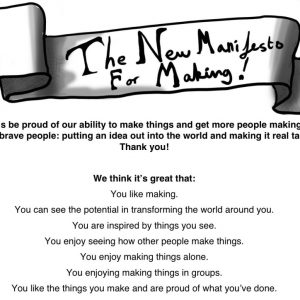
AccessArt has tried throughout its 27 years, to remain apolitical. Instead we attempt to create positive and outward looking projects in direct response to perceived need.  So, in recognition of the importance of our ability to make things, we have grouped our ongoing strands of activity, described below, into the AccessArt New Manifesto for Making. The Manifesto describes four key areas that AccessArt has identified in which we can work together to bring change. We hope this inclusive action plan will enable us ALL to support and enable making and makers. Please join in where you can.

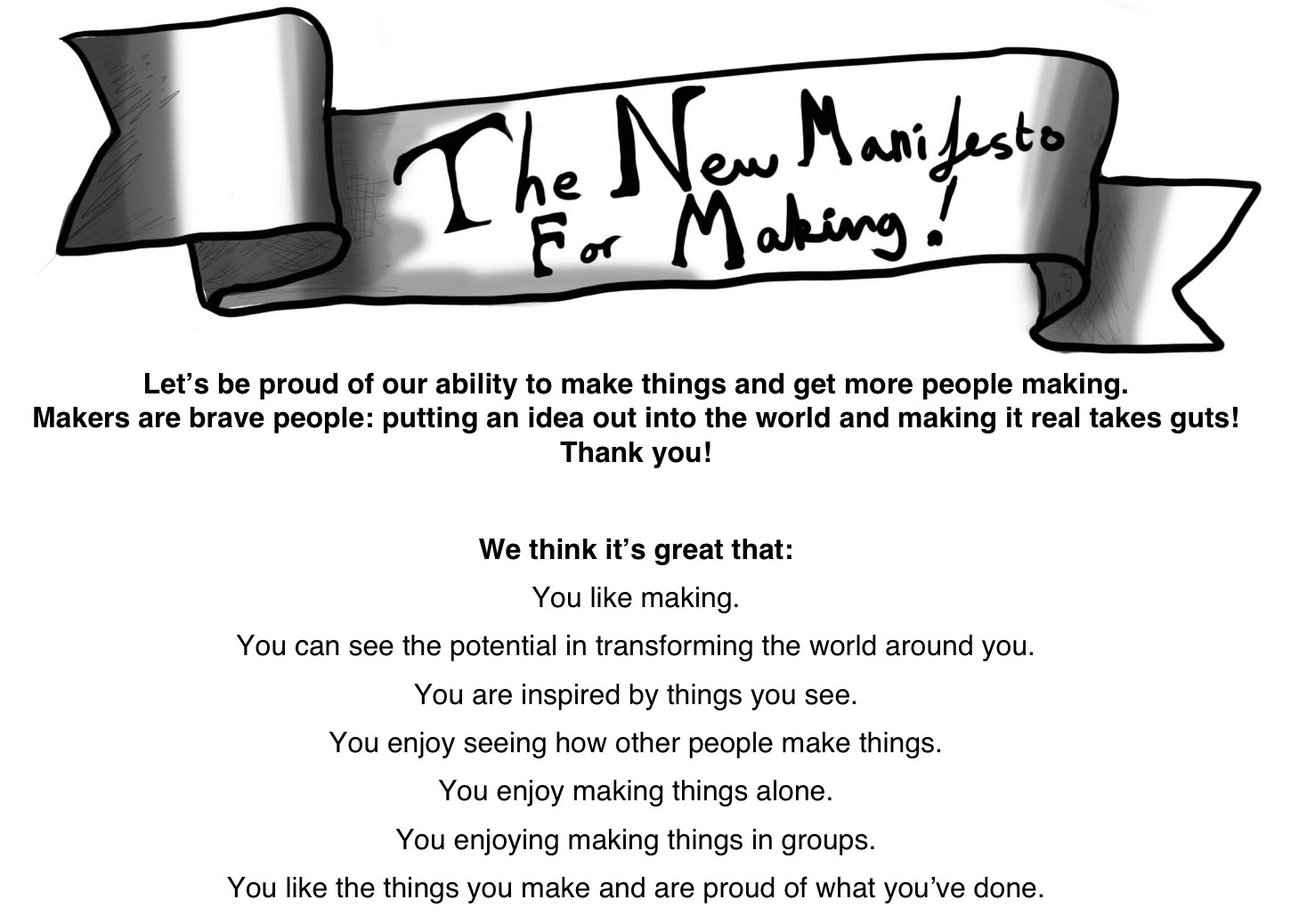
The AccessArt New Manifesto for Making

No. 1 Quality of Experience

First of all, we need to be brave. Because we want to defend art, I think sometimes it’s hard for us to admit that actually we have a lot of art in schools across the country which is not well taught. We need to recognise that not all art teaching is actually worth defending. That was really hard for me to write, and I do not like to criticise, and I certainly do not mean to criticise those who are teaching. There is a great deal of very good (outstanding) teaching in art, and lots of average teaching in art. We recognise the reasons for the (well-meant) but less-than-great teaching in art is often due to lack of specialist teachers and lack of training opportunities for those involved, as well as time and money pressures. BUT, until we raise standards in art teaching, across the board, then it will be hard for us to always defend the importance of art in schools, and the opportunities for children to make will continue to decline:

So, putting aside the teaching which is already outstanding, we need to concentrate on making sure that all art in schools is taught with as much rigour as any other subject. I certainly don’t mean rigorously assessed and didactically delivered. There are many creative ways to teach rigorously. A lot of the making which takes place in schools is not of a good enough quality: there is an underestimation of what kind of materials and tools children can use, and of the kind of creative journey children are capable of. Making is often too easy, too controlled, too limited in scope and vision and the outcomes too closed and poor. And when we don’t respect the process of making, we drive the subject into a corner which we can easily get rid of: we talk ourselves out of the activity. We can do with out it. Gone.

So No.1, we need to work together to raise quality in art education – right from the youngest primary school children. What if:

  • We ASPIRE to deliver the best facilitation we can, wherever it takes place;
  • We REVERSE the deskilling of teachers through accessible, cost effective, relevant training (online and physical);
  • We SHARE examples of good practice, which is most definitely happening around the country.

NO. 2 Artists CAN transform lives

It’s not that artists make better teachers, but they can make a different kind of teacher, and one which complements existing teaching. What if:

  • Artists are encouraged to see their potential as educators? How can we enable artists to recognise their unique skills as communicators, enablers and inspirers?
  • Artists see artist in education opportunities as a role to aspire to, not a role to fall back on?
  • Every artist works with a group of children and changes lives one child at a time?
  • It turns out that artists can save the world?

No. 3 Empowering parents to ask

Parents feel enabled to contact their child’s school if they have concerns about maths, english, friendship problems… What if:

  • Parents understand the importance and gravity of the lack of making in their child’s school week? Not just to potential artists and makers, but also to architects, builders, plumbers, engineers, scientists, surgeons… anyone who exists in the physical world (all of us), those who aren’t motivated or feel included by existing lessons, those who are in danger of exclusion, those who struggle socially…
  • Parents begin to understand the problem with the disconnect between a school which doesn’t provide opportunities for hands-on experience of the physical world, with high quality creative experience, and the statistics about the cultural economy (at the moment parents are not aware of the disconnect);
  • Parents feel able to ask of the school the simple question “What did my child make with their hands this week?”

No. 4 Telling children it’s more than OK…

We all need someone to give us permission to make:

You May Also Like…

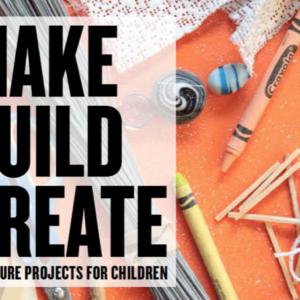
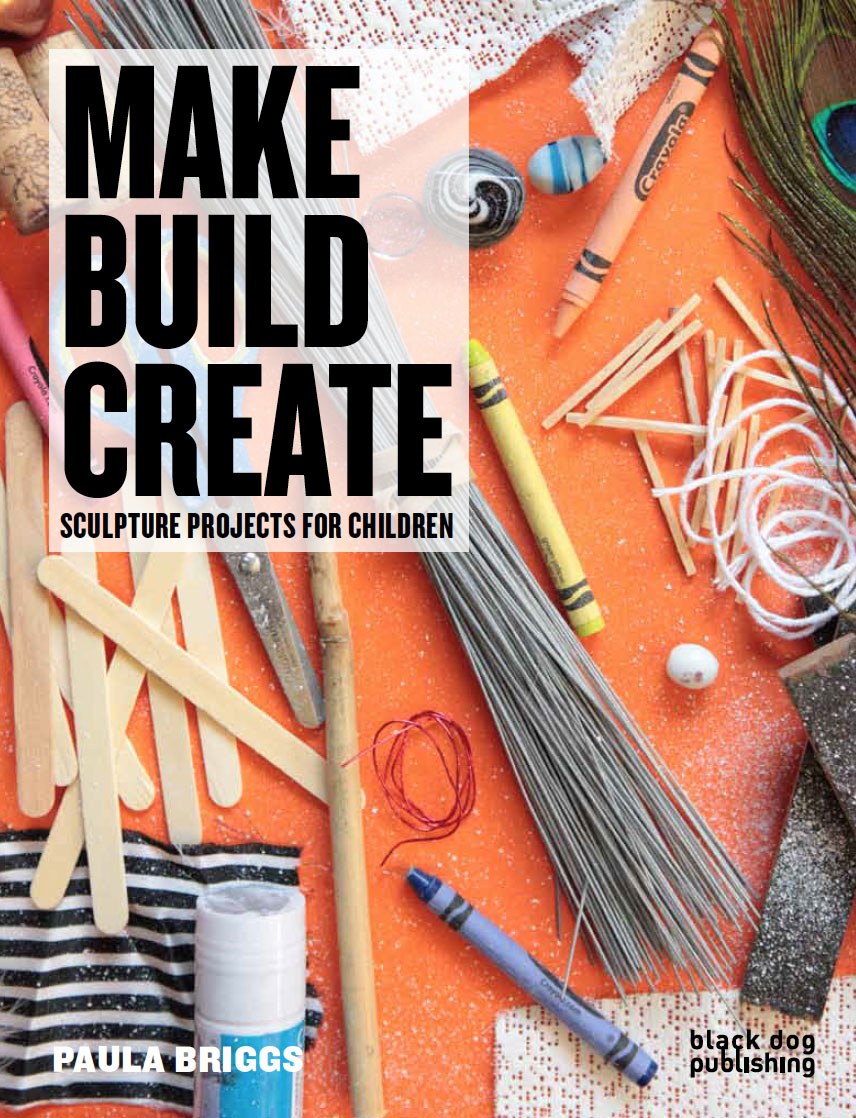
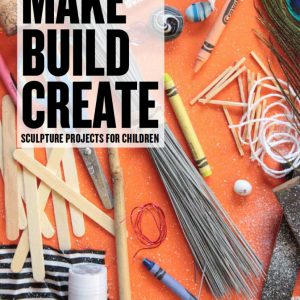
Make, Build, Create: Sculpture Projects for Children by Paula Briggs

Published by Black Dog Books

Published by Black Dog Books

#WHATDIDMYCHILDMAKE

A collection of resources to consider how you can increase opportunities for making

A collection of resources to consider how you can increase opportunities for making


Be a Resource Contributor


Working_with_adults_and_children_outdoors-by-Mostyn-de-Beer.jpg

AccessArt is a unique organisation!

We work in collaboration with artists, educators, schools, museums, galleries and arts organisations to create inspirational visual arts resources. 

Find out how you can be an AccessArt resource contributor below.

Please contact content@accessart.org.uk for more information.

Year 6, Ruth at Carden Primary School

A big part of what makes AccessArt special is the evolving collection of unique resources which form a huge pot of inspiration for our users.

As well as inspiring others, these resources also serve to highlight artist educator practice, providing a ‘shop window’ for your work so that you can reach new audiences and find new work. They also help provide a legacy home for projects which might otherwise not get shared quite so effectively.

Resource contributors can live in the UK or overseas. You might be working alone, in partnership or with another organisation. Wherever possible we try to ensure contributors are paid for their contribution.


find our more…

Information for Artist Educators

Find out how to propose a resource if you are an Artist Educator.

Find out how to propose a resource if you are an Artist Educator.

See all current contributors

See the creative practitioners and artist educators who have created posts for AccessArt.

See the creative practitioners and artist educators who have created posts for AccessArt.


Two Beautiful Books to Inspire Teaching & Learning

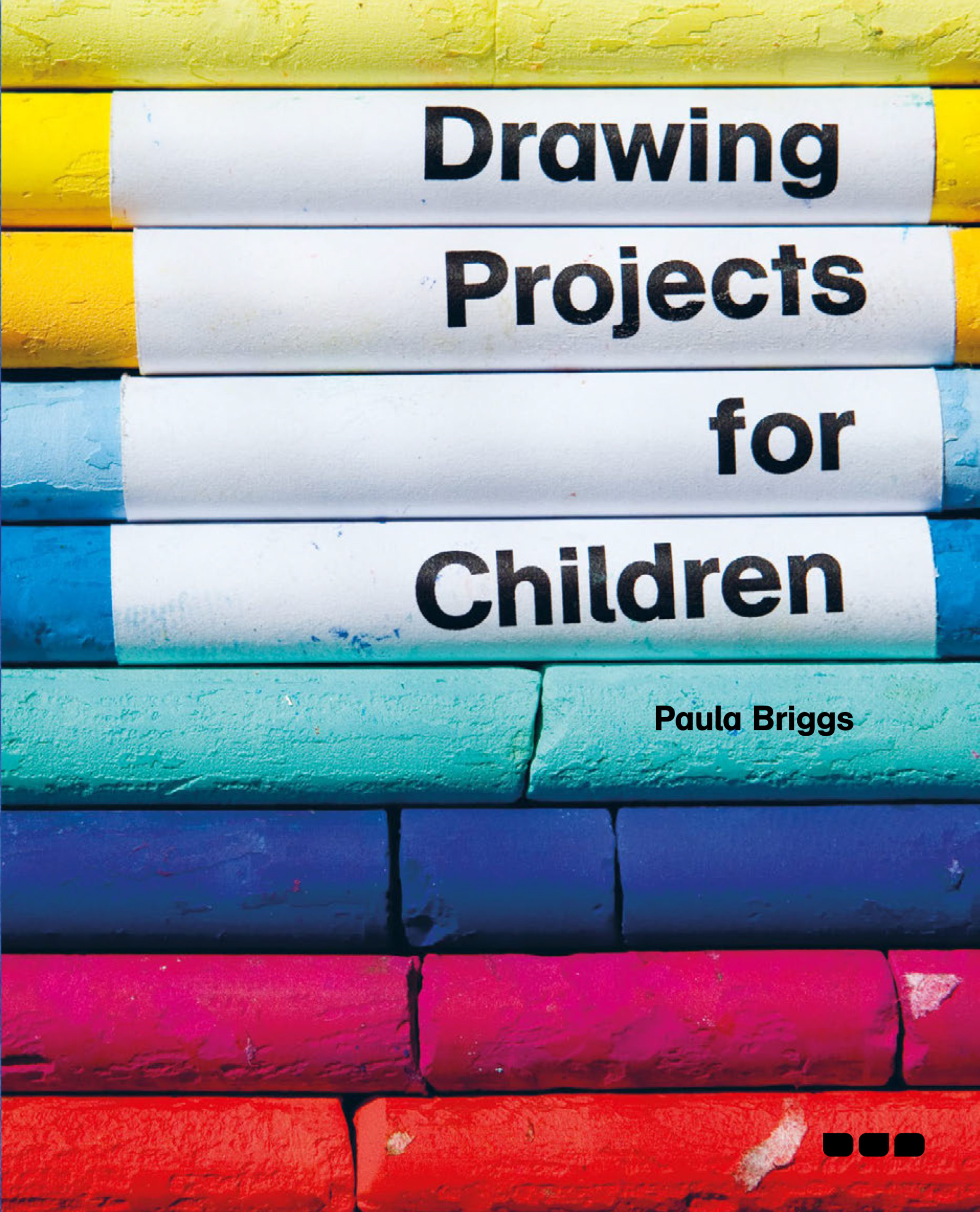
Drawing Projects for Children and Make Build Create aim to inspire and enable children, teachers, facilitators and workshop leaders to explore drawing and sculpture in an active and adventurous way.

Find further details about each book, including reviews, below. 

*The exercises and projects in these books are aimed at children aged 5 to 12, however the majority of the projects can easily be adapted for older pupils and adults too.

Drawing Projects for Children

Drawing Projects for Children by Paula Briggs

Make, Build, Create: Sculpture Projects for Children

Published by Black Dog Press

Black Dog Press_full logo

Ros Corser

Make Build Create by Paula Briggs is an informative and helpful manual that describes a series of creative sculptural projects designed to engage all. Beautiful photographs run throughout the book, making it as visually appealing as it is inspiring. Thank you, Paula, for such an inspirational book, encouraging “hands-on art” for everyone.

Amanda Warren, NSEAD Network

Make, Build, Create is an inspiring book. Like its predecessor ‘Drawing Projects for Children’, it is beautifully produced, with beguiling photographs and a carefully laid out task which is easy to access whilst being packed with inspiration.

Based on the premise that children love to make things but probably are given insufficient opportunity, the book guides the reader through some basic premises (such as “Why make?”) and useful information about equipment and safe procedures. Some of the materials suggested may have been neglected in recent years (I confess it is a long time since I used plaster in powder form), and there are zany ideas, too. Making a plinth for a figure looks sure to appeal! And those wire insects! The photos can easily be shared with a group of children to inspire them or to illustrate processes.

My only query is who the book is aimed at. To begin with, I thought it was a book for children, but the foreword is definitely for teachers and facilitators. But does it really matter? The book is sumptuous, gorgeous, and appealing. Paula Briggs has done it again; let’s get making! 

Amanda Morris-Drake, Darwin Centre for Young People

Full of excellent ideas and beautifully presented.


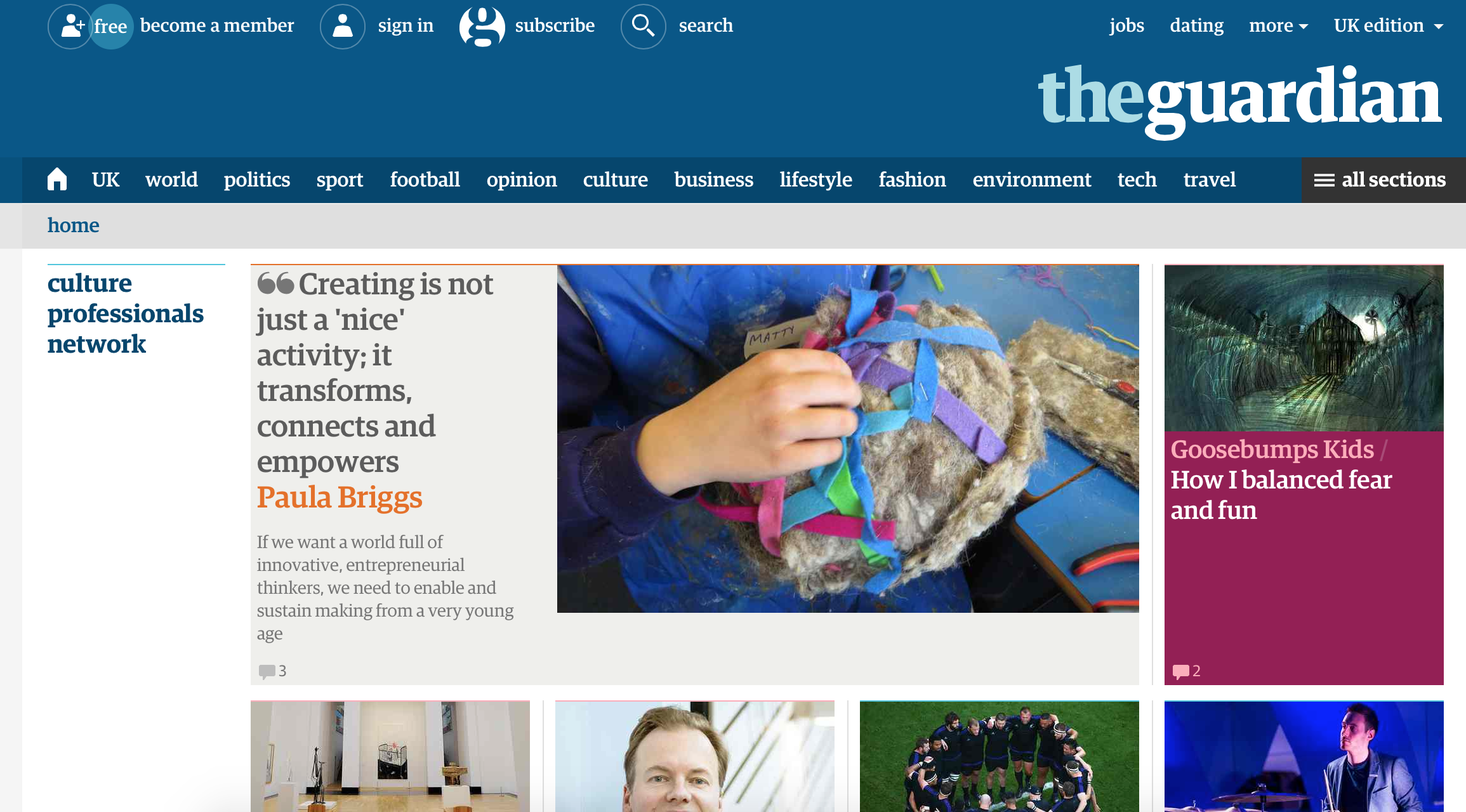
AccessArt & The Guardian

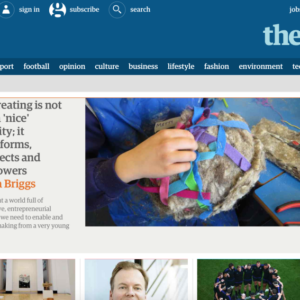
“If we want a world full of innovative, entrepreneurial thinkers, we need to enable and sustain making from a very young age”

Paula Briggs from AccessArt writes about the importance enabling making in schools.

Screen Shot 2016-03-17 at 19.34.47


The AccessArt Village

The AccessArt Village

Where did the AccessArt Village Come From?

The end of 2018 also says goodbye to the AccessArt Village and this special project which started with a gift to AccessArt, from Appletons Wool, of a huge box of wool, which arrived on our doorstep in February 2016.

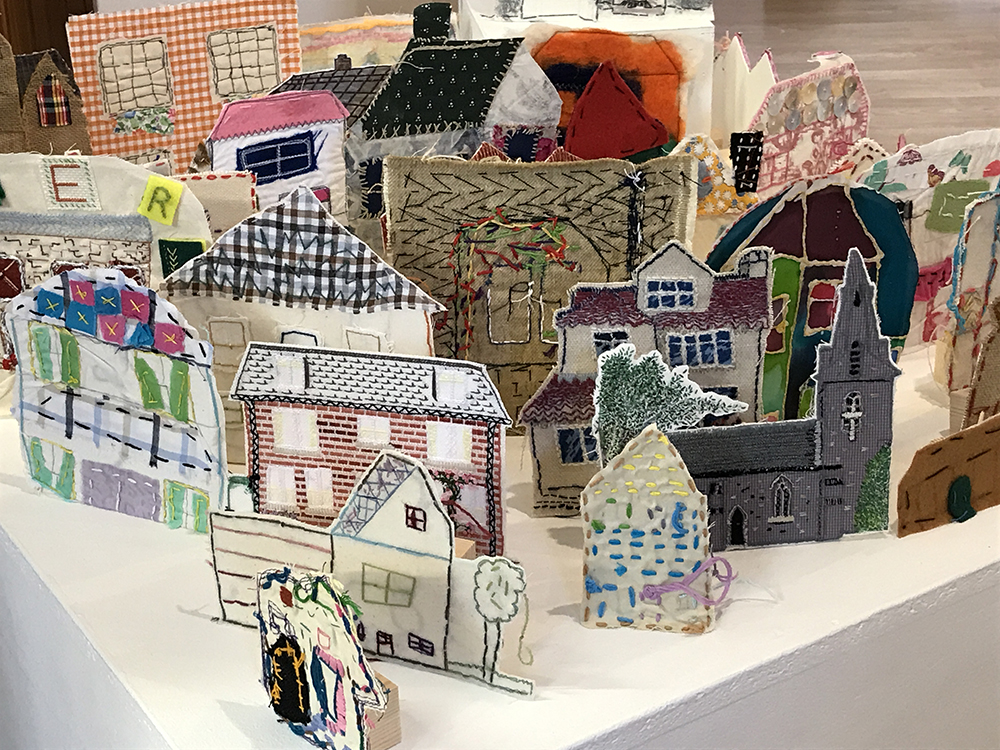
In a spontaneous moment, Paula Briggs, co-director of AccessArt, invited followers of AccessArt to join in the creation of an artwork ‘celebrating the diversity’ of the AccessArt community. Paula invited participants to draw a simple image of their own home and to ‘sew the image on a 20cm square of fabric’ and then send it back to AccessArt. The individual houses were then to be ‘brought together by a textile artist’ in ‘one amazing artwork’. And that was how the AccessArt Village began.

Little did Paula know that her email invite would lead to a project spanning almost three years and the sparking of creative responses from almost 700 individuals, from all walks of life and ages. A true celebration of individuality, community and creativity.

The AccessArt was ran by #TeamAccessArt, host galleries and participants on a voluntary basis with no renumeration for time and effort.

The AccessArt Village

The project is now closed for submissions. We received over 700 sewn squares, from all kinds of audiences all over the world.

Finding Inspiration the AccessArt Way

Paula’s initial way to excite creativity and get the project underway was to create a series of resources to kick start the project and enable AccessArt followers to easily participate. Paula wanted to encourage participation across all ages and abilities from art novices to experienced artists.

Paula was then joined by artist Andrea Butler, in creating a series of resources to inspire creative actions.

Creating Your Sewn Square

This resource provided the starting point for the project and how to make a sewn square. This resource provided the starting point for the project and how to make a sewn square.

Make a Stitched Drawing of a House in an Hour

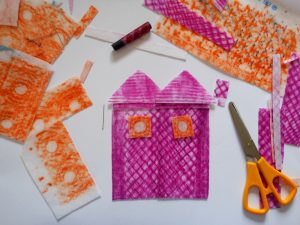
Andrea Butler explores approaching embroidery/stitching like the processes of making a collage or mark making: "hanks of wool and shapes cut from fabric can act as an equivalent to paint or coloured paper; stitches are very like the lines and marks you can create with felt tips, markers or coloured pencils." Andrea Butler explores approaching embroidery/stitching like the processes of making a collage or mark making: “hanks of wool and shapes cut from fabric can act as an equivalent to paint or coloured paper; stitches are very like the lines and marks you can create with felt tips, markers or coloured pencils.”

Draw your home: collage, stitch and fabric crayons

Andrea Butler shows how to use fabric rubbings and simple stitching to make a colourful collage of a home. Andrea Butler shows how to use fabric rubbings and simple stitching to make a colourful collage of a home.

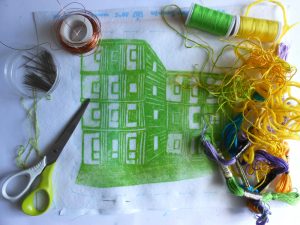
Collagraph, Collage and Stitch: Make a Image of Your Home on Fabric

Andrea Butler combines making a collagraph print with fabric and stitch to create a 2D image which could then be used to make a sculptural model house. Andrea Butler combines making a collagraph print with fabric and stitch to create a 2D image which could then be used to make a sculptural model house.

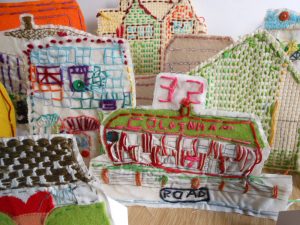
Make a Model Stitched House

This resource marks the turning point of the AccessArt Village Project and when the idea took off for the stitched houses to be transformed into 3D stand alone pieces. In this post Andrea Butler shares with participants the process. This resource marks the turning point of the AccessArt Village Project and when the idea took off for the stitched houses to be transformed into 3D stand alone pieces. In this post Andrea Butler shares with participants the process.

Setting to Work on Making the AccessArt Village

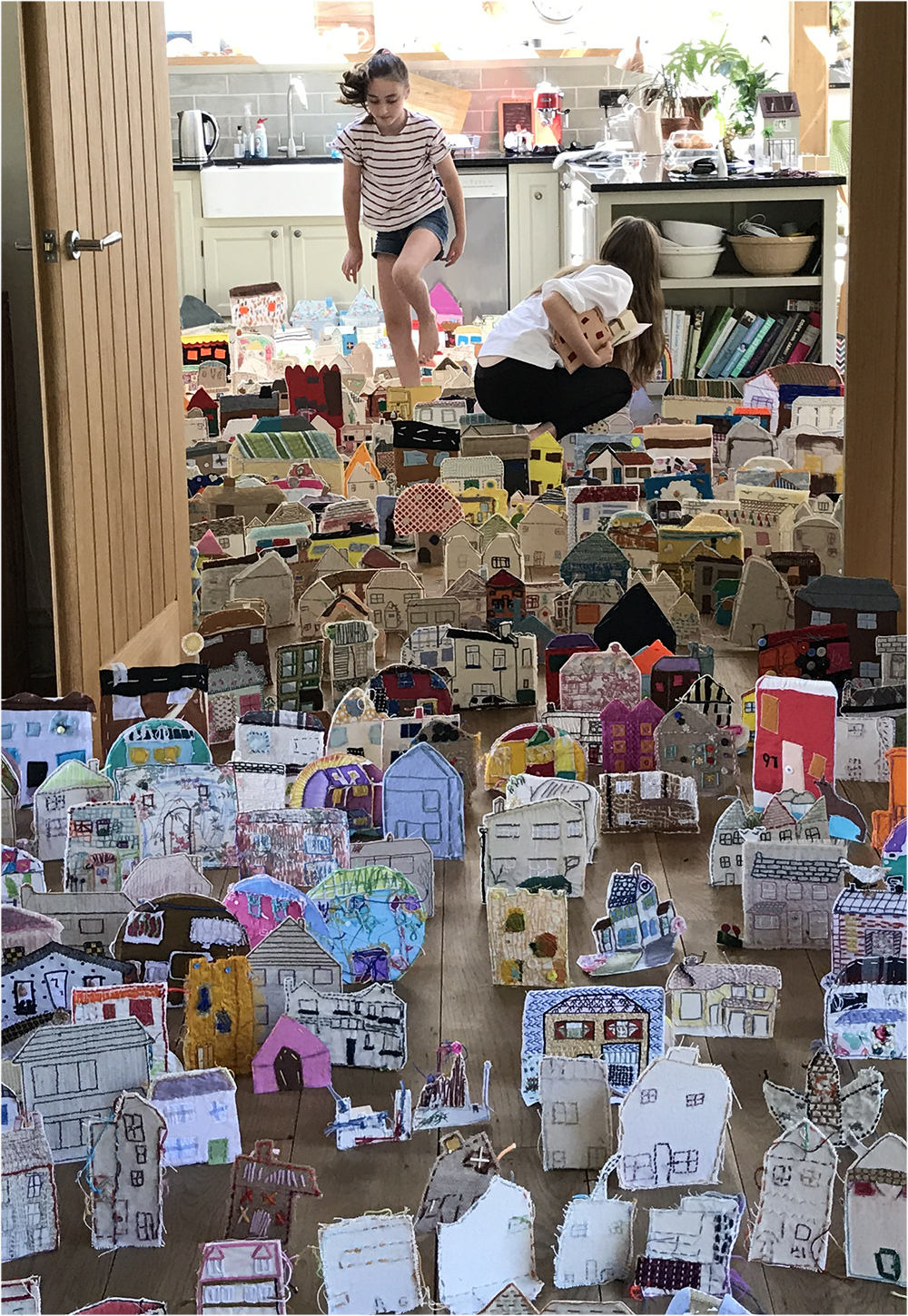
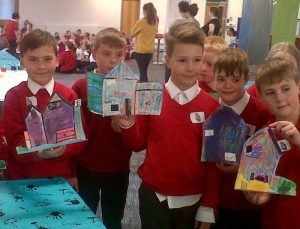
The AccessArt Village came to life when sewn houses started to arrive back. The magnitude of the response to the call was incredible, with almost 700 houses arriving back to AccessArt from a broad spectrum of venues including schools, hospitals, libraries, Brownie groups, Art clubs, Art groups and galleries from all around the United Kingdom and as far as South Africa. 

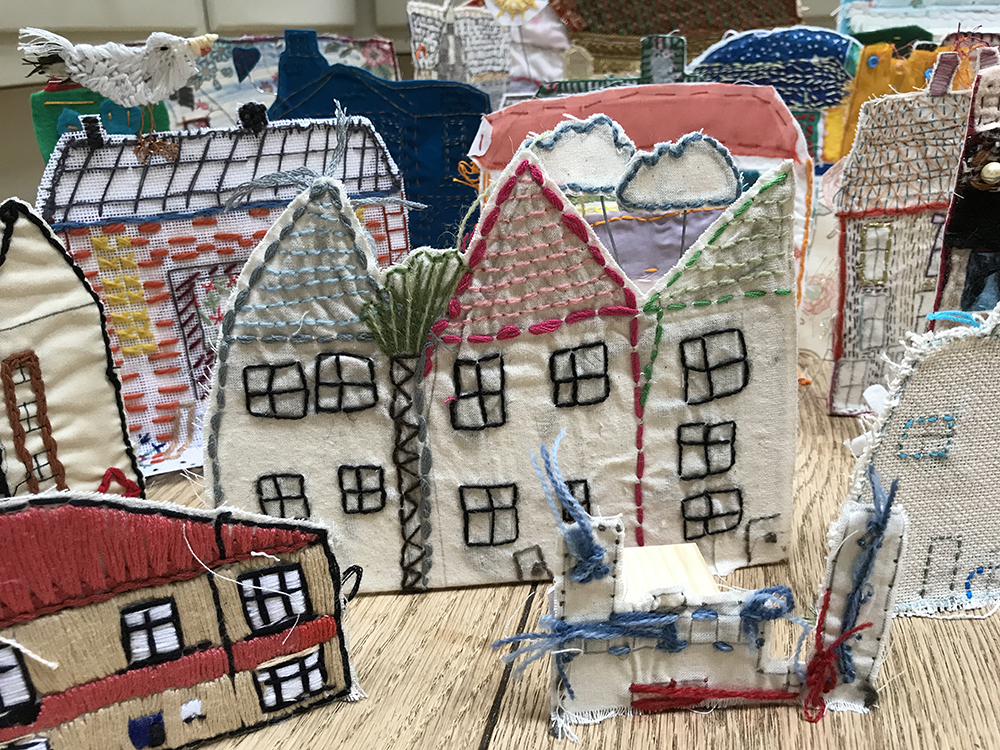
Andrea Butler, from #TeamAccessArt, donated vast amounts of time, ingenuity and creativity to the project. Over the course of a year, she lovingly and painstakingly mounted the houses. Every house was given its own time and great attention was paid to detail. Andrea used her creative sensitivity to respond to the originality of each piece and all the houses were treated equally and with great and equal respect, whether made by a young child or established artist. Andrea was joined by Paula and Sheila Ceccarelli over the summer of 2017 to complete the task of mounting the houses.

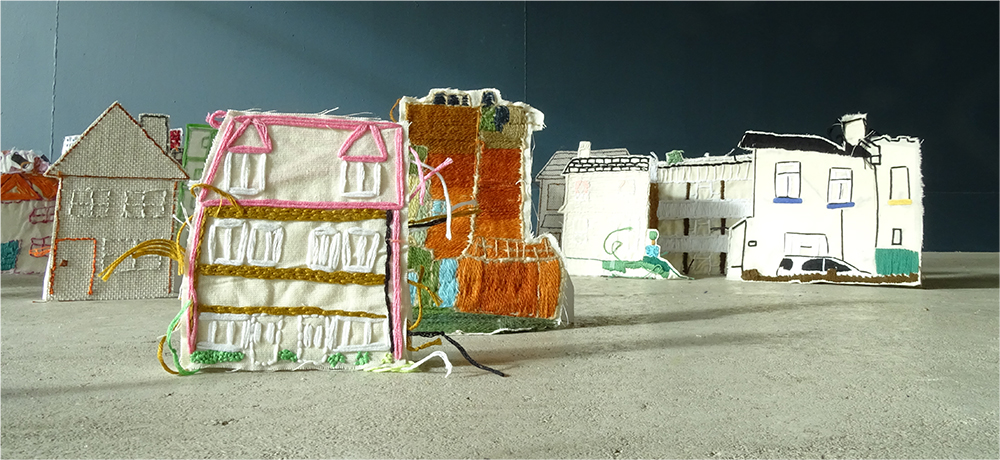
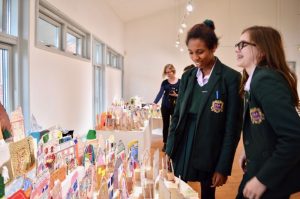
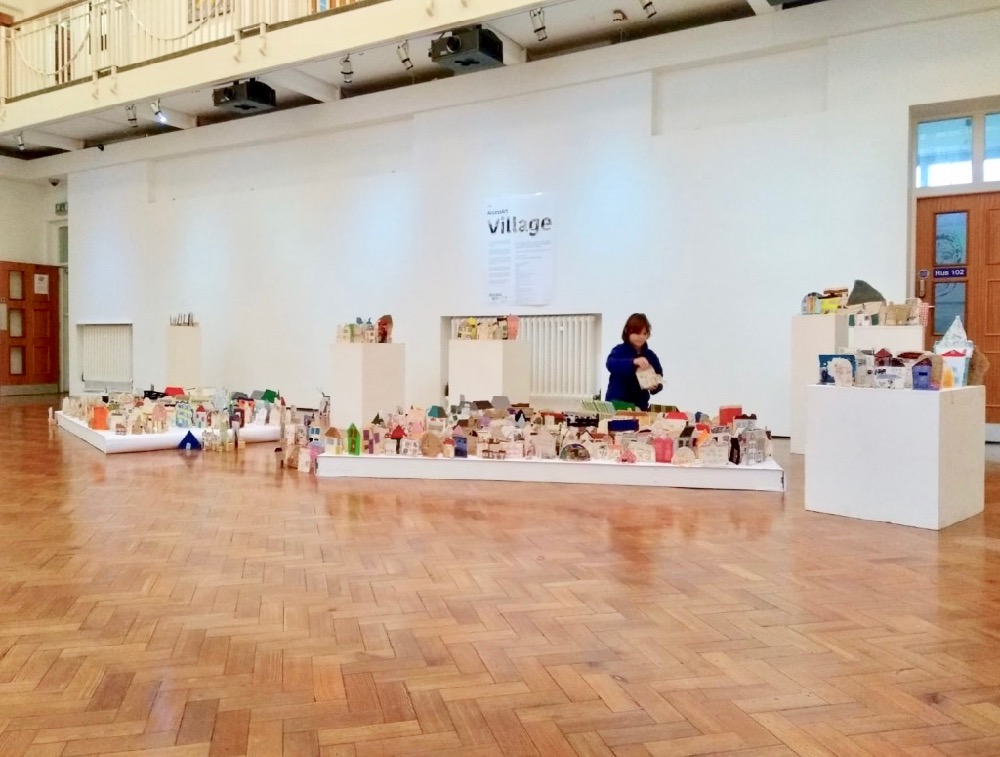
The result of all this hard work and participation was an installation of over 700 3D models which juxtaposed work by children at the start of their creative lives next to that of accomplished artists and older generations. Whilst highlighting the character and individually of each piece, the project celebrated diversity and reminded us of the universal sanctity of “home”. Most poignant were those houses contributed by individuals who, for reasons of health or vulnerability, were away from home when they made their creations.

A Call for a Host Venue

Seeing how enthusiastically the project was being received by the AccessArt community, in January 2016, Paula sent out another email calling for ‘Host Partners’ to exhibit the AccessArt Village. The call was met with an enthusiastic response from schools and galleries across the county. The variety venues to respond to the call demonstrated the breadth of AccessArt’s engagement with its community and also the geographical span of its reach. 

September 2017 to November 2018: The Village went on tour!

The AccessArt Village Tour gave many people joy, from when it was first seen, in September 2017, in the rural setting of Farfield Mill, in the Cumbrian Hills. Since then it has been cherished by people visiting Mansfield Central Library, in the heart of the country, followed by Brentwood Road Gallery, Frances Bardsley School, Romford in a sub-urban venue, east of London.
In 2018 the Village was seen in the North East seaside town of Whitley Bay in the Old Gala House, Galashiels, and then finally came home to Cambridge on the 24th November 2 The AccessArt Village Tour gave many people joy, from when it was first seen, in September 2017, in the rural setting of Farfield Mill, in the Cumbrian Hills. Since then it has been cherished by people visiting Mansfield Central Library, in the heart of the country, followed by Brentwood Road Gallery, Frances Bardsley School, Romford in a sub-urban venue, east of London.
In 2018 the Village was seen in the North East seaside town of Whitley Bay in the Old Gala House, Galashiels, and then finally came home to Cambridge on the 24th November 2

Making an Ink and Wax Village with Pupils in Mansfield

One of the highlights of the AccessArt Village Tour when Sheila Ceccarelli worked in Mansfield Central Library with children from Berry Hill Primary School. One of the highlights of the AccessArt Village Tour when Sheila Ceccarelli worked in Mansfield Central Library with children from Berry Hill Primary School.

The AccessArt Village and How a Small Idea can be Big

This AccessArt workshop was led by Sheila Ceccarelli for year nine students at Frances Bardsley Academy in Romford, where the The AccessArt Village was displayed in the school’s adjacent Brentwood Road Gallery, in January 2018. This AccessArt workshop was led by Sheila Ceccarelli for year nine students at Frances Bardsley Academy in Romford, where the The AccessArt Village was displayed in the school’s adjacent Brentwood Road Gallery, in January 2018.

A Grand Finale for the AccessArt Village as Cambridge Welcomes the AccessArt Village

The very special homes, handmade by children in schools and hospitals, artists, young people and community groups, were exhibited and sold, in collaboration with Emmaus, Homeless Charity, Cambridge.

The AccessArt Village completed its year long AccessArt Village Tour of the UK and was seen, for one day, as a pop-up exhibition, ‘Cambridge Welcomes the AccessArt Village,’ in the Ruskin Gallery in November 2018

The very special homes, handmade by children in schools and hospitals, artists, young people and community groups, were exhibited and sold, in collaboration with Emmaus, Homeless Charity, Cambridge.

Special Thanks

Rachel Hurcomb & 1st Stretton St Mary’s Brownies, Sarah Williams & 1S, St John’s College School, Pupils from King’s Worcester School, Amber Smith, Chailey School, Jean Goodall, Barbara Latham, Jill McDermott, Julie Ashfield, Evonne Bixter & pupils from St Augustine of Canterbury Catholic High School, Natti Russell & members of Art4Space, Sharon Gale & The Art Cabin at Northaw C of E Primary School, Morgain Murrey Williams & students from Chesterton Community College, Jo Evans & Yr 2, Southbank International School, Victoria Lowe & pupils from Eyemouth High School, Helen Walsh & The Heathlands Project, Tullie Textiles, Tullie House Museum and Art Gallery, Beth Shearing, Louise Shenstone & “Making It’, Rhondda Cynon Taf, Kate Gwen Jones & Yrs 9, 10 and 11 Art Textiles, Stanley Park High School, Megan Stallworthy & pupils from Sticklepath Community School, Liz Cook & children from Great Ormand Street Hospital, Heather Wilson, Isabel Brown, Rosie James & pupils at Dent C of E Primary School, Annabel Johnson & the Children’s Art School Wimbledon, Helen Jones & Yr 8 textile students, George Salter Academy, Sam Downer & pupils from St John’s College School, K Sellens & pupils from Lansbury Lawrence Primary School, Andrea Butler, Craft and textile groups, Inspire: Culture, Learning and Libraries, Notts, Yr Four pupils, Berry Hill Primary School, Morag Thomson Merriman, Sandy Wright & pupils from All Saints Anglican/Methodist Primary School C Wimberley & The Art Club, Poppleton Rd Primary School, Jacqui Stewart & the Cotton Candy Art Group, Helena Malan & pupils from Eureka Primary Grade Eight, Burgersdorp, Reg. Charity No: 1105049 South Africa.

Supported by Appletons Wool

AccessArt is a UK education charity with over 850 resources to help develop and inspire creative thinking, practice and teaching.

AccessArt welcomes artists, educators, teachers and parents both in the UK and overseas.

We believe everyone has the right to be creative and by working together and sharing ideas we can enable everyone to reach their creative potential.

Join AccessArt from only £3.50 per month and enjoy full access to hundreds more resources!


#WhatDidMyChildMake

Making_a_mobile_sculpture-by-Mostyn-de-Beer

AccessArt has been working for many years to help support and promote making as an activity which children need to be doing more of in schools (and possibly at home too!).

Enjoy the collection of resources below, and consider how you can increase opportunities for making in classrooms, schools, community organisations, studios, museums, galleries and homes in your area.

Join AccessArt

Explore Resources For Making…

Explore 3D Making Materials

Paper Bowl by Lisa Smith

Explore Disciplines in 3D

Sculpture of a Bird by Ellie Daly

The New Manifesto For Making!

banner

What Did My Child Make With Their Hands This Week?

Screen Shot 2016-01-06 at 10.18.00

AccessArt at the Houses of Parliament

16

Making Large Scale, Screenprinted, Collaged, Co-Created Campaign Posters!

33

AccessArt writes for the Guardian

Screen Shot 2016-03-17 at 19.34.47

Make, Build, Create now Launched

Black Dog Publishing 2016

Black Dog Publishing 2016


The New Manifesto for Making!

Paula Briggs and Sheila Ceccarelli have been working to support making in schools for over 20 years. Find out more about our #WhatDidMyChildMake campaign.

Please share! Print out this PDF version and post it in your school, museum, gallery, community centre or home.

Manifesto for Making

Manifesto for Making


You May Also Like…

Make, Build, Create: Sculpture Projects for Children by Paula Briggs

Published by Black Dog Books

Published by Black Dog Books

#WHATDIDMYCHILDMAKE

A collection of resources to consider how you can increase opportunities for making

A collection of resources to consider how you can increase opportunities for making


AccessArt Participatory Projects

For many years now AccessArt has been creating online participatory projects which aim to draw in new audiences, and to give those involved the opportunity to join in a shared experience and explore new materials, techniques and ideas. The projects are always inclusive and welcoming to all ages, all abilities, all backgrounds…

Enjoy exploring all our participatory projects below. Make sure you are registered top left to ensure you hear when new projects are launched. Please share this page using #artparticipate.

Explore…

Many of our online participatory projects are time sensitive in terms of their being a gallery to upload to for example. However we have listed all our projects below, as even those which have finished still offer inspiration in the form of free PDF’s to download etc.

Ten Minutes, Five Times a Week


Ten Minutes, Five Times a Week is a simple set of drawing exercises designed to get people drawing. Aimed at a broad audience, but designed in particular with teachers in mind, we hope you will use Ten Minutes, Five Times a Week as a way to introduce drawing to your pupils, and to begin to explore how AccessArt can help enrich art teaching and learning in your school.


Ten Minutes, Five Times a Week is a simple set of drawing exercises designed to get people drawing. Aimed at a broad audience, but designed in particular with teachers in mind, we hope you will use Ten Minutes, Five Times a Week as a way to introduce drawing to your pupils, and to begin to explore how AccessArt can help enrich art teaching and learning in your school.

The Two Halves Drawing Project


Our latest participatory project! Open to everyone across the world!


Our latest participatory project! Open to everyone across the world!

We Have Hands!


Join in with this important project by sending images of hands making


Join in with this important project by sending images of hands making

Take a Seat


Making project in partnership with One Button UK


Making project in partnership with One Button UK

The Transformation Project: Jewellery


Making project in partnership with One Button UK


Making project in partnership with One Button UK

The Visual Encyclopedia


Drawing project in partnership with the Big Draw (now closed)


Drawing project in partnership with the Big Draw (now closed)

Draw my Dinner


Drawing project in partnership with the Big Draw (now closed)


Drawing project in partnership with the Big Draw (now closed)

Treasure Box


Making project (now closed)


Making project (now closed)

The AccessArt Village


Our largest participatory project yet, (now closed, but you can see the resulting touring exhibition at venues across the UK)


Our largest participatory project yet, (now closed, but you can see the resulting touring exhibition at venues across the UK)

Every Drawing Tells a Story


Drawing Challenge in partnership with The Big Draw 2015


Drawing Challenge in partnership with The Big Draw 2015

The Drawing Challenge


Drawing Challenge in partnership with Black Dog Publishing


Drawing Challenge in partnership with Black Dog Publishing

The Loom Band Bike


Making project (now closed)


Making project (now closed)

Share-a-Bird Project


Making, drawing and painting project (now closed)


Making, drawing and painting project (now closed)

Drawing with Stuff


Drawing project in partnership with the Big Draw (now closed)


Drawing project in partnership with the Big Draw (now closed)

With thanks to our past and present participatory project partners:

If you are an arts organisation or business, and would like to talk to AccessArt about working in partnership to deliver an AccessArt participatory project, please do get in touch via info@accessart.org.uk or 01223 262134.

AccessArt Participatory Projects


The Friday Club

By Paula Briggs

For many years I have been running an after school artclub for children aged 6 to 10 in village halls in the Cambridgeshire area. It’s been an absolute pleasure; in addition to helping to develop a passion for drawing and making in the children who have attended, it has also helped feed my own creative development, led to numerous AccessArt resources, and even a book. Alongside my classes, my colleague Sheila Ceccarelli has been leading a classes with teenagers and in doing so has created a hugely valuable legacy of resources which explore teenaged creativity.

We get lots of emails from members of AccessArt telling us about the clubs that they run – some after school clubs, some in studios in gardens, some in village halls. We also get lots of emails from artist educators who are thinking of setting up such projects, and who would like advice about how to do so. Over the next few months we hope to publish some examples of different creative club formats, how they were set up and how they work in practice, with the aim of inspiring more artist educators!

If you have a club format you’d like to share, please do get in touch!

The Friday Club

This Friday I’m looking forward starting a brand new art club with 6 young and very talented ten year olds. The Friday Club is a re-invention of the old AccessArt Art Club for ages 6 to 10.

The children will be meeting for an hour each Friday, for five week blocks (at a cost of £40). Our meeting room / studio will be a small summerhouse at the end of the garden, where we can leave work between sessions. Working over 5 weeks will allow us to work on projects over a longer period of time, with more of an emphasis on discover and self-led journeys, and less emphasis on weekly outcome.

In fact one of the main foci of the sessions will be to “become journeyful”. The phrase was coined by my daughter (a member of the Friday Club), as I was trying to explain how I wanted the children to feel completely enabled to take risks and enjoy the creative journey, and to take away any pressure surrounding the end result. We decided we’d create a “Be Journeyful Wall” on which we post up work (all stages) which celebrates and supports this ethos. This is something I’d like to progress further in work in schools – encouraging displays of artwork to be about journey rather than end result.


Most importantly I’d like the children to take ownership of the sessions and their creative journeys. Whilst I’ll set the theme for each 5 week block, around a particular process, technique, concept, material or artist, I hope the children will decide the driection of the activity.

The children have agreed a few Friday Club “rules” which they would like to work towards:


Don’t forget to contact AccessArt if you’d like to share your experience in setting up and running art clubs.

Drawing Outside & Never-ending Landscapes

Large-scale, Co-created Campaign Posters

Barbie & Ken Transformation

Shipwrecked! Shadow Play


What Makes AccessArt Special?

<< Back to: All You Need To Know

Close up of an apple in pencil crayon by Jan Miller

AccessArt inspires and supports high-quality visual arts teaching, learning, and practice as a member-driven community. Discover what we stand for and how you can get involved below.

AccessArt is a unique organisation.

We believe that:

  • Art helps us thrive.

  • Art education can help us build a better world.

  • Every child and young person is entitled to a high-quality art education.

  • Every person, whatever their age, background, or culture, deserves the opportunity to explore how art can help them find their voice.

AccessArt is a leading provider of visual arts education resources in the UK, offering inspiration and ideas to the wider community.

Our reputation as experts in the field has been built through the vision and dedication of our passionate team, and trustees—alongside the support of a creative community of over 24,000 artists, teachers, and facilitators who both use our resources and actively contribute their ideas.

How We Evolved

In 2011, as the economic climate tightened and funding became harder to secure, AccessArt made the conscious decision not to apply for core or revenue funding. Instead, we set out to become a self-sustaining arts organisation.

A membership scheme was introduced, and for a small fee, our community was invited to join AccessArt in return for full access to all our resources. The income generated through membership now allows AccessArt to be self-funding—enabling us to follow our own vision and expertise as we continue to grow the organisation on behalf of our members.

Join Us

AccessArt really works.

It’s built on the idea of a shared “pot” of creativity. Teachers and artist-educators are openly invited to contribute visual arts education ideas, aligning with our ethos of promoting transferable, open-ended creative learning. All contributors are paid for their work.

As the pot of resources has grown—now with over 1,800 tried-and-tested activities adaptable to different audiences—so too have the opportunities for our members to develop their understanding and practice in arts education.

As a charity, we deliberately keep membership fees low, ensuring no one is excluded from accessing our work on financial grounds.

We hope you’ll feel inspired by what we stand for and what we offer. Now more than ever, we need to work together and speak out about the value of visual arts education—for individuals and for society.

Be Inspired,

Paula Briggs, CEO & Creative Director, AccessArt


What Did Your Child Make With Their Hands This Week? (and why it is important)

By Paula Briggs and Sheila Ceccarelli

If you are a parent of a primary-aged child, please ask yourself “What did my child make with their hands this week?

For many years, AccessArt has been actively inspiring making through the sharing of excellent practice. However small the making journey, and whether the outcome leans towards craft, fine art or design, the very act of transforming the materials of the world is one of empowerment, and the skills involved need time, space and input just like any other area of learning.

Working the Modroc with fingers and hands to create the form and smooth the texture - Portia lyre SC

We are always so grateful to be in contact with the many thousands of inspirational supporters of visual arts education – the advocates, teachers, artist-educators, facilitators, parents, arts organisations and of course the learners themselves, who all understand the value of visual arts education, and all of whom work so hard to help nurture creativity.

However, now more than ever AccessArt is becoming aware that many children are not being given the opportunities to explore making. Schools face great time pressure to deliver “more academic” subjects, and there is a shortage of specialist teachers. Whilst many children do benefit from fantastic art teaching, others do not have art lessons on a regular basis, and the teaching can be less rigorous than in other subjects.

Evidence suggests that in 2012, 1 in 12 people worked in the creative industries, and the cultural and creative industries are the fastest growing industries in the UK*. If we do not provide our children with the opportunity to develop their creativity, and we as parents do not demand a place for creativity within our schools, then we are failing to enable our children to meet their potential, and we are not preparing them adequately for the future:

“The pipeline to the creative industries begins at preschool, continues through primary school, through to secondary school and into HE and FE. At each of these stages, and every time we fail to provide an opportunity for children and young people to explore their relationship with the world through making and drawing, we weaken this pipeline, and potentially prevent the next generation of creative individuals from helping build the creative industries of the future.” Paula Briggs, AccessArt

As parents, we want to support our schools and our children’s education, and we recognise teachers work very hard to deliver the best education possible. However, if you feel your school might do more to support your child’s creativity, then there are some simple positive things which can be done:

Show your Support and Interest

You probably know what your child is learning about in maths and english, but what about in art?

Take an active interest in art in school and find out what your child is learning about. How often do they have art lessons? What are the lessons like? What are they learning about? Which materials are they experiencing?

Ask!

Time spent making, or time spent drawing, is never time wasted: it is an investment. Art should have an equal weight to other curriculum areas, and in fact there is a body trying to move away from a focus on STEM (Science, Technology, English, Maths) towards STEAM (Science, Technology, English, Art, Maths).

If you do feel your child would benefit from more time spent on creativity, then do express your concerns to the school. There may be many reasons for the perceived lack:

  • Priority given to other subject areas/time pressure on the school day. Some schools choose not to timetable art for a short time each week and instead choose to run art weeks. If a school offers pupils 1 hour art per week, that equates to approximately 39 hours of art per year. Find out how your school timetables art lessons, and if art seems thin on the ground due to time pressure, request art as a subject is given more weight. You might also want to contact the school governors with your concern.
  • Lack of specialist teaching/knowledge. Most primary schools have an art or creativity coordinator who will help teachers plan the curriculum in this area. Subject knowledge can be built through organisations such as AccessArt, which aims to inspire and enable schools through the sharing of resources, or NSEAD, who have regional networks to support teachers. Make sure your school knows about these organisations and about how they support art teachers.

Please get in touch if you would like more help as a parent to help support creativity in children.

Bob and Roberta Smith Message from Sophie Leach Nsead on Vimeo.

You May Also Like…

Make, Build, Create: Sculpture Projects for Children by Paula Briggs

Published by Black Dog Books

Published by Black Dog Books

#WHATDIDMYCHILDMAKE

A collection of resources to consider how you can increase opportunities for making

A collection of resources to consider how you can increase opportunities for making